
Polyrhachis robsoni
- Sci. Name
- Polyrhachis robsoni
- Subgenus
- Cyrtomyrma
- Tribe
- Camponotini
- Subfamily
- Formicinae
- Author
- Kohout, 2006
- Distribution
- Found in 1 countries
Introduction
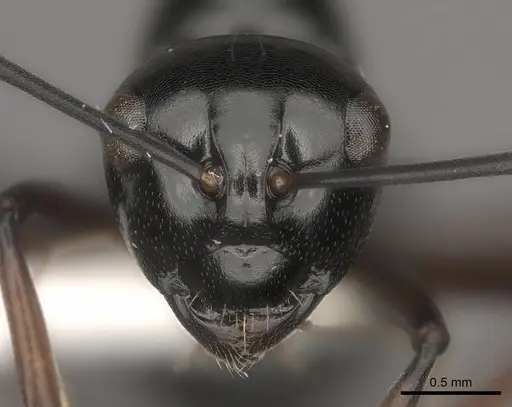
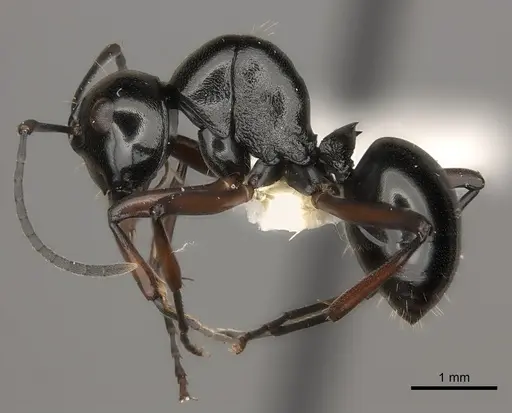
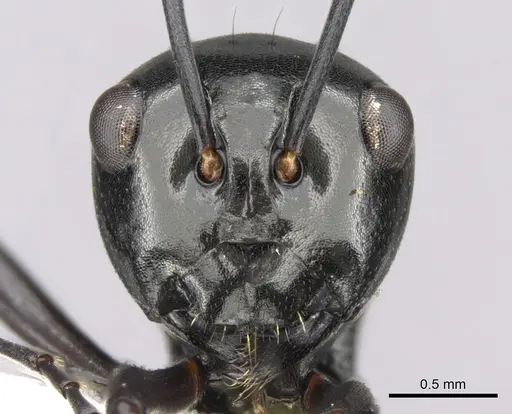
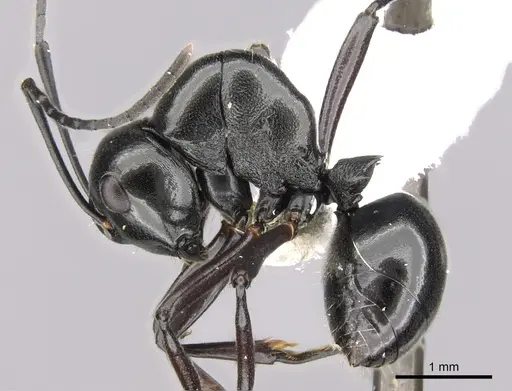
Polyrhachis robsoni is a weaver ant native to the rainforests of north Queensland, Australia . Workers are up to 6.5 mm long, mostly black with reddish-brown legs and antennae, and have a highly arched mesosoma, toothed pronotal shoulders, and four spines on the petiole . Colonies are polydomous, building multiple connected nests in trees and shrubs by weaving leaves with silk from larvae . This species exhibits a supercolonial structure with dimorphic queens: large macrogynes up to 8.8 mm and smaller microgynes . Studies show up to 16 queens per nest, with workers showing negligible aggression between nests .
Quick Summary
- Difficulty: Medium
- Origin & Habitat: North Queensland, Australia, from Cooktown to Mission Beach, plus Thursday Island in Torres Strait. Nests in lowland and riparian rainforests, building nests between leaves on lower branches of trees and shrubs [1][2][3].
- Colony Type: Polygynous colonies with dimorphic queens (macrogynes and microgynes) [4].
- Size & Growth:
- Queen: Macrogynes up to 8.8 mm, microgynes smaller [1]
- Worker: Up to 6.5 mm [1]
- Colony: Up to 115 workers per nest, with colonies spanning multiple nests [4]
- Growth: Moderate (inferred from genus patterns)
- Development: Estimated 6-8 weeks at optimal temperature (inferred from related species) [1] (Development time not specifically studied, estimates based on related Polyrhachis species)
- Antkeeping:
- Temperature: Keep at 24-28°C [1]
- Humidity: Keep the nest substrate consistently moist but not waterlogged, as they are arboreal nesters in rainforests [1]
- Diapause: No, tropical species, no hibernation needed [1]
- Nesting: Arboreal weavers need vertical space with materials to weave. Provide plant material or twigs in a Y-tong nest [2][3]
- Behavior: Peaceful and non-aggressive toward colony members [4]. Workers are monomorphic [6]. Escape risk is moderate due to climbing ability [1]. Primary defense is spraying formic acid, as they lack a sting.
- Common Issues: mold growth due to high humidity requirements, ensure good ventilation while maintaining moisture, queen loss in newly established colonies, polygynous colonies can survive queen loss better than single-queen species, escape prevention, while not tiny, they are excellent climbers and will escape without barriers, temperature drops below 20°C can slow or stop brood development, keep warm year-round, improper nesting setup, they need vertical space and materials to weave, not just horizontal chambers
Housing and Nest Setup
You need an arboreal setup that mimics their tree-dwelling lifestyle. Provide vertical space with climbing opportunities using a naturalistic formicarium with live or artificial plants [2][3]. They weave leaves with larval silk, so include materials like cotton or fabric pieces. Alternatively, use a Y-tong nest with added twigs. Because they are polydomous, provide multiple connection points. Ensure escape prevention with fluon on rims [2][3].
Feeding and Diet
Offer a varied diet: protein from small live or frozen insects 2-3 times per week, and sugar sources like honey water constantly available [1]. Remove uneaten prey after 24-48 hours to prevent mold [1].
Temperature and Seasonal Care
Keep the nest area at 24-28°C year-round [1]. Use a heating cable for a gentle gradient. They do not require diapause, temperatures below 20°C can slow brood development [1].
Colony Structure and Queen Care
Colonies are polygynous with dimorphic queens [4]. Macrogynes can found colonies independently, while microgynes are produced in established colonies [5]. Up to 16 queens per nest are possible, with negligible aggression between nests [4]. If a queen is lost, others can take over egg-laying [4].
Weaving Behavior
Workers use larval silk to weave leaves into nests [2][7]. This species lacks pupal cocoons, silk is used for nest construction [7]. Provide natural materials to observe this behavior [2][7].
Handling and Temperament
Workers are peaceful and non-aggressive [4]. They may bite if threatened but primarily defend by spraying formic acid. Handle gently to avoid stress [1].
Frequently Asked Questions
Is Polyrhachis robsoni good for beginners?
P. robsoni is intermediate in difficulty. Challenges include arboreal housing and warmth, but polygynous nature makes them more forgiving [1].
How long does it take for the first workers to emerge?
Estimated 6-8 weeks at optimal temperature, based on related species [1].
Can I keep multiple queens together?
Yes, this species is naturally polygynous with multiple queens per nest [4].
What do I feed Polyrhachis robsoni?
Offer small live insects 2-3 times weekly and constant sugar sources [1].
Do they need hibernation?
No, as a tropical species, they do not require hibernation [1].
How big do colonies get?
Up to 115 workers per nest, with colonies spanning multiple nests [4].
When should I move them to a formicarium?
Once the colony has 20-30 workers and shows weaving behavior, provide vertical space [1].
Why are my ants dying?
Common causes include low temperature, low humidity, mold, or improper diet. Check temperature and ensure proper care [1].
Report an Issue
The current care sheet is based fully on literature. See inconsistencies, or something that's incorrect? Please , it will be resolved after review from an admin. Contributing to the blogs tab also helps providing information, to make us be able to further improve the caresheets. Thank you for your support!
References

This caresheet is licensed under CC BY-SA 4.0 .
Community Blogs
CASENT0217437
View on AntWeb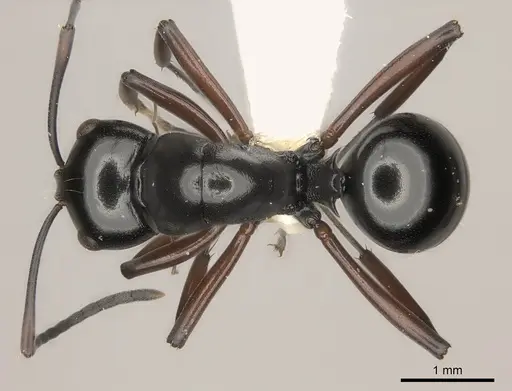
CASENT0281362
View on AntWeb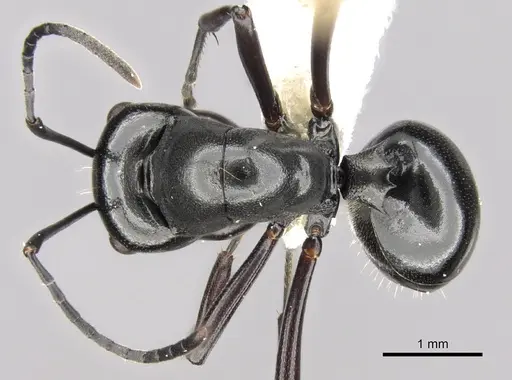
Literature
Loading distribution map...Loading products...