
Polyrhachis pirata
- Sci. Name
- Polyrhachis pirata
- Subgenus
- Myrma
- Tribe
- Camponotini
- Subfamily
- Formicinae
- Author
- Sorger & Zettel, 2009
- Distribution
- Found in 1 countries
Introduction
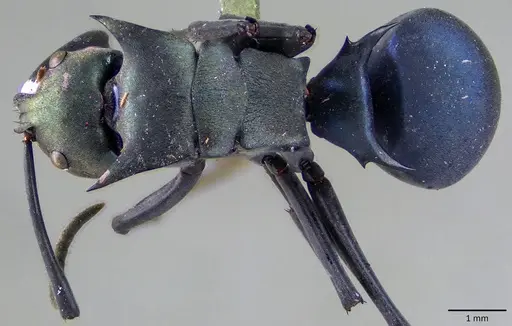
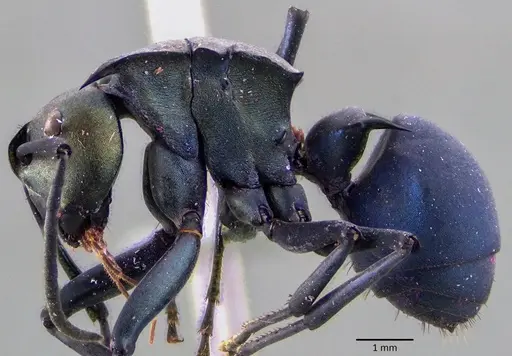
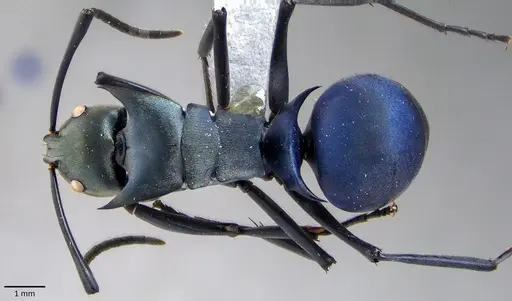
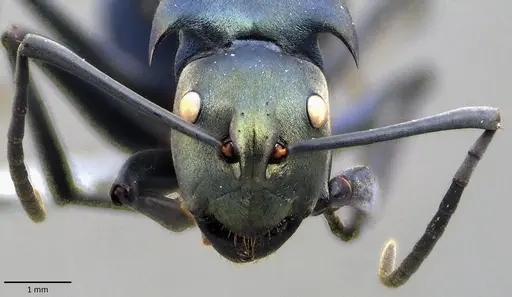
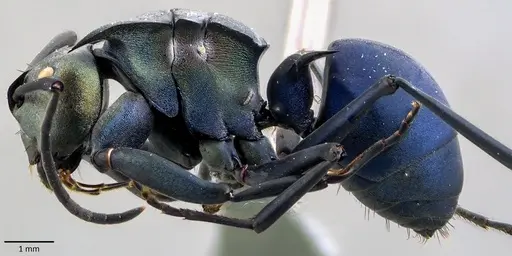
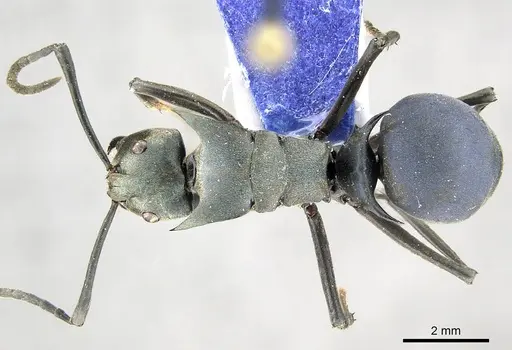
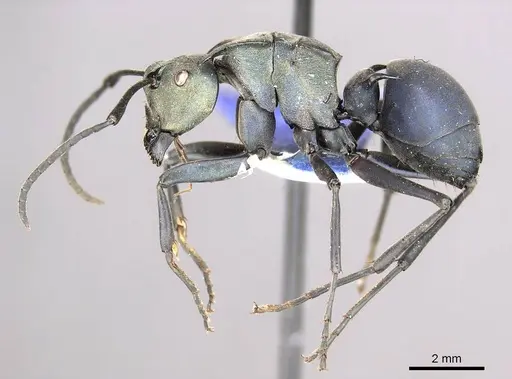
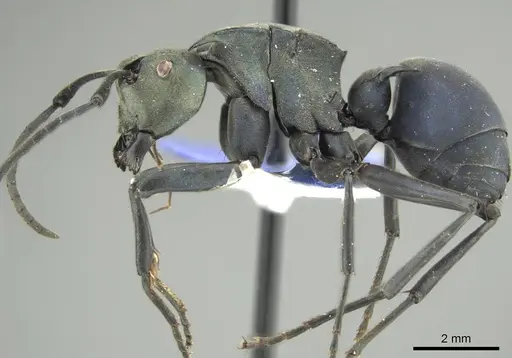
Polyrhachis pirata is a striking large ant species endemic to the Philippines, named for its pirate-like appearance – the stout body, distinct colors, and massive spines inspired the name 'pirata' . Workers are impressively large at 10.1–11.5 mm total length, with a dark head and mesosoma featuring a distinctive bluish-green to coppery shimmer, while the abdomen appears darker and more bluish . The most recognizable features are the long, massive pronotal spines that rise conspicuously above the front of the thorax, giving this species a dramatic appearance . This species belongs to the Polyrhachis cyaniventris group and was first identified in 2009 . What makes Polyrachis pirata particularly interesting is its habitat preference – unlike its common relative Polyrhachis cyaniventris, this species appears to favor more pristine natural habitats with dense tree coverage and may be restricted to lower altitudes . Workers have been observed foraging both on the ground and on leaves and twigs of small trees and bushes, suggesting flexible foraging behavior . However, nesting habits remain completely unknown, making this a challenging species for keepers who enjoy working with poorly documented species.
Quick Summary
- Difficulty: Hard
- Origin & Habitat: Philippines endemic – found in Central and Southern Luzon, Mindoro, Samar, and Leyte islands. Inhabits dipterocarp forests and abandoned coconut groves with high tree coverage, possibly restricted to lower altitudes [1][2].
- Colony Type: Colony structure is unconfirmed. Based on related Polyrhachis species, likely single-queen colonies, but this has not been documented.
- Size & Growth:
- Queen: Unknown – queen has not been described in scientific literature [1]
- Worker: 10.1–11.5 mm total length, 2.19–2.50 mm head width (head width is not body length) [1]
- Colony: Unknown – no colony size data available
- Growth: Unknown – growth rate has not been studied
- Development: Unknown – development timeline has not been documented. Based on typical Polyrhachis patterns, expect 6–10 weeks at tropical temperatures. (No direct development data exists for this species. Related Polyrhachis species typically develop in 6–10 weeks under warm conditions.)
- Antkeeping:
- Temperature: Keep warm, around 24–28°C. This is a tropical Philippine species requiring stable warmth [1].
- Humidity: Maintain high humidity – keep the nest substrate consistently moist but not waterlogged. Provide water access. [1]
- Diapause: Unknown – as a tropical species, likely no true diapause but may show reduced activity in cooler months.
- Nesting: Nesting habits unknown. Based on related species and habitat observations, likely nests in soil or rotting wood in forested areas. A naturalistic setup with soil substrate or a Y‑tong/plaster nest with moisture provision would be appropriate.
- Behavior: Workers are moderately active foragers found both on the ground and on vegetation [1]. Temperament is not well documented, but related Polyrhachis species are typically not aggressive. Escape risk is moderate – these are large ants but active climbers. Use standard barrier methods. The massive spines provide some defense, like other Formicinae, they spray formic acid from an acidopore – they do not have a functional sting.
- Common Issues: nesting habits are completely unknown – you will need to experiment with different nest types, no colony size data exists – expect moderate-sized colonies based on related species, queen has never been described – founding behavior is unconfirmed, tropical humidity requirements can lead to mold issues if ventilation is poor, limited availability – this is a rarely kept species with few breeders
Appearance and Identification
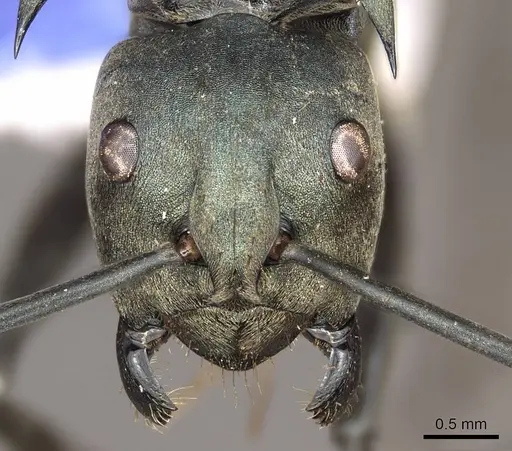
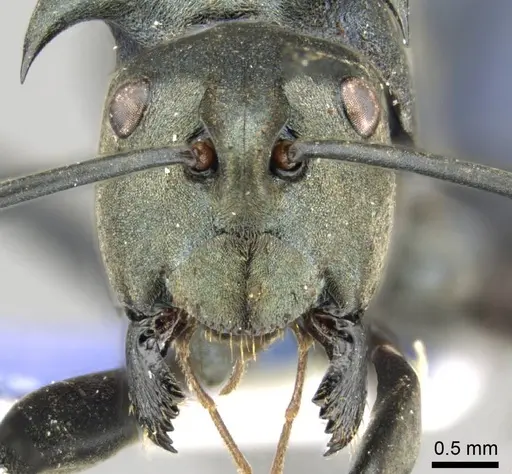
Polyrhachis pirata workers are large ants measuring 10.1–11.5 mm in total length [1]. The most distinctive feature is the pair of long, massive pronotal spines that project forward and upward, with triangular cross-sections that rise conspicuously above the anterior pronotal disk [1][2]. The head and mesosoma display a beautiful bluish-green to coppery metallic shimmer, while the petiole and gaster appear darker with a more intense blue sheen [1]. The antennae and legs are black except for the femora [1]. There is some intraspecific variation – specimens from Northern Samar tend to be smaller and more gracile with a distinctly more bluish gaster compared to those from Luzon [1]. This species is part of the Polyrhachis cyaniventris group, which contains several similar-looking Philippine endemics.
Distribution and Habitat
This species is endemic to the Philippines, known from central and southern Luzon, Mindoro, Samar, and Leyte islands [1][2]. The distribution appears restricted to the northern and eastern islands of the Philippine archipelago [3]. Polyrachis pirata has been collected in Quezon National Park in Luzon and in an abandoned coconut grove in Northern Samar [1]. Unlike its common relative Polyrhachis cyaniventris, this species probably prefers more natural habitats with higher tree coverage and may be restricted to lower altitudes [1]. Most specimens were collected on the ground, though individual workers have been found foraging on leaves and twigs of small trees and bushes [1]. This suggests the species is comfortable foraging both at ground level and in vegetation.
Nesting and Housing
Nesting habits remain completely unknown for this species – no nests have ever been documented in the scientific literature [1]. Based on the habitat observations (foraging on ground and vegetation in forested areas) and related Polyrhachis species, they likely nest in soil, rotting wood, or under stones in shaded forest environments. For captive care, a naturalistic setup with a deep soil layer works well, or you could use a Y‑tong or plaster nest with moisture provision. Since they forage both on the ground and in vegetation, include some climbing structures in the outworld. The key is maintaining high humidity while providing good ventilation to prevent mold. A moisture reservoir or regular misting helps maintain the damp conditions this tropical species requires.
Temperature and Humidity Requirements
As a tropical Philippine species, Polyrhachis pirata requires warm and humid conditions. Keep the nest area around 24–28°C – stable warmth is important for this species [1]. A heating cable on one side of the nest can create a gentle gradient, but ensure the ants can move away from heat if needed. Humidity should be maintained by keeping the substrate consistently moist but not waterlogged. Provide a water tube or shallow water dish for drinking access. Since their natural habitat includes forested areas with high tree coverage, they likely prefer shaded conditions rather than direct light. Avoid placing the setup in direct sunlight.
Feeding and Diet
The natural diet of Polyrhachis pirata has not been documented, but like other Polyrhachis species, they likely are omnivorous, feeding on honeydew, nectar, and small insects. For captive care, offer a varied diet: sugar water or honey as an energy source, and protein sources like mealworms, crickets, or other small insects. Based on related species behavior, they probably accept a wide range of foods. Feed protein 2–3 times per week and keep sugar water available constantly. Remove uneaten prey after 24–48 hours to prevent mold. Since workers forage on both ground and vegetation, they may accept food placed at different heights in the outworld.
Behavior and Temperament
Polyrhachis pirata workers are active foragers found both on the ground and climbing on vegetation [1]. The massive pronotal spines provide some defense, and like all Formicinae, they spray formic acid from an acidopore – they do not have a functional sting. Related Polyrhachis species are typically calm and can be handled without major issues. Workers are large (10–11 mm) but not particularly fast-moving, making them relatively easy to observe. They are climbers, so ensure your setup has good escape prevention – these ants will explore any gaps. The social structure and colony behavior remain unstudied, so observe your colony carefully to understand individual personality traits. This is a relatively new species in the antkeeping hobby, so each keeper's experience adds valuable information.
Frequently Asked Questions
How long does it take for Polyrhachis pirata eggs to become workers?
The development timeline has not been scientifically documented for this species. Based on typical Polyrhachis patterns, expect approximately 6–10 weeks from egg to worker at optimal tropical temperatures (24–28°C).
What do Polyrhachis pirata ants eat?
Their natural diet is unconfirmed, but like related Polyrhachis species, they likely eat honeydew, nectar, and small insects. In captivity, offer sugar water or honey for energy and protein sources like mealworms, crickets, or other small insects.
Can I keep Polyrhachis pirata in a test tube?
A test tube can work for founding colonies, but given their large size (10–11 mm workers) and unknown nesting habits, you may need to transition to a larger setup sooner than with smaller species. A naturalistic setup with soil or a Y‑tong nest with moisture provision is likely more appropriate for established colonies.
Are Polyrhachis pirata good for beginners?
This species is rated as hard because nesting habits are completely unknown, no queen has been described, and colony size/growth are unstudied. If you enjoy the challenge of keeping a poorly documented species and contributing to husbandry knowledge, it can be rewarding, but it is not recommended for beginners.
Do Polyrhachis pirata need hibernation?
As a tropical Philippine species, they likely do not require true hibernation. However, they may show reduced activity during cooler months. Maintain warm temperatures year‑round (24–28°C) for best colony development.
How big do Polyrhachis pirata colonies get?
Colony size is not documented in scientific literature. Based on related Polyrhachis species and their large worker size, expect moderate-sized colonies of several hundred workers rather than the massive colonies some ant species produce.
Can I keep multiple Polyrhachis pirata queens together?
Colony structure (monogyne vs polygyne) has not been documented for this species. Based on related Polyrhachis, single-queen colonies are likely, but this is unconfirmed. Combining unrelated queens is not recommended without documented evidence of polygynous tolerance.
What temperature should I keep Polyrhachis pirata at?
Keep them warm at 24–28°C. This is a tropical species requiring stable warmth. A heating cable on part of the nest can provide a temperature gradient, but ensure the ants can regulate their exposure.
Where is Polyrhachis pirata found in the wild?
Polyrhachis pirata is endemic to the Philippines, found on central and southern Luzon, Mindoro, Samar, and Leyte islands. They prefer natural forested habitats with high tree coverage at lower altitudes [1][2].
Report an Issue
The current care sheet is based fully on literature. See inconsistencies, or something that's incorrect? Please , it will be resolved after review from an admin. Contributing to the blogs tab also helps providing information, to make us be able to further improve the caresheets. Thank you for your support!
References

This caresheet is licensed under CC BY-SA 4.0 .
Community Blogs

Literature
Loading distribution map...Loading products...