
Polyrhachis menozzii
- Sci. Name
- Polyrhachis menozzii
- Subgenus
- Myrmatopa
- Tribe
- Camponotini
- Subfamily
- Formicinae
- Author
- Karavaiev, 1927
- Distribution
- Found in 2 countries
Introduction
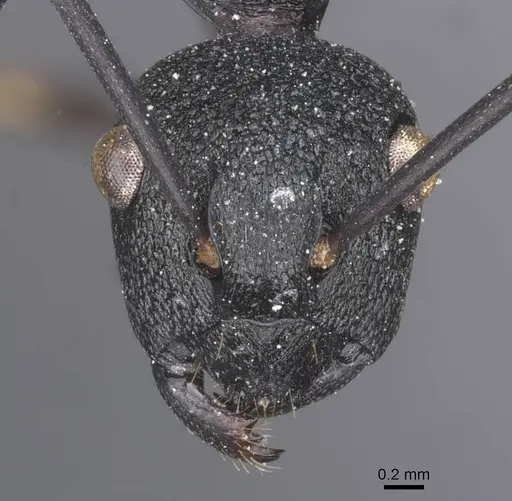
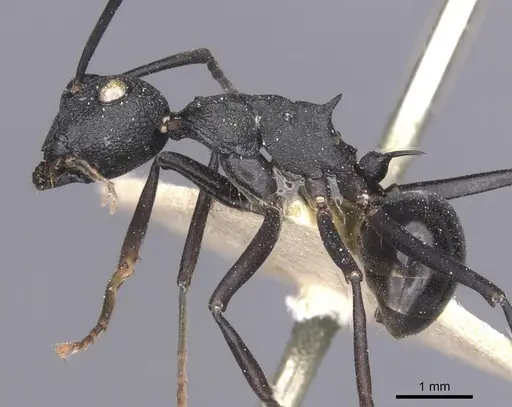
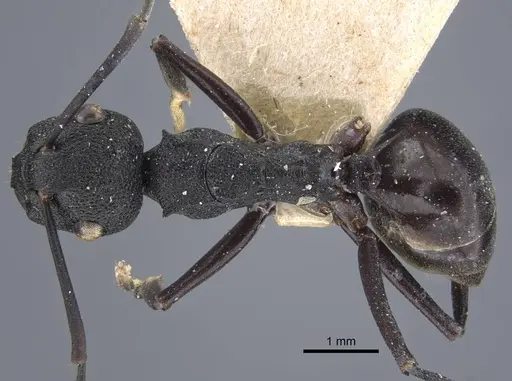
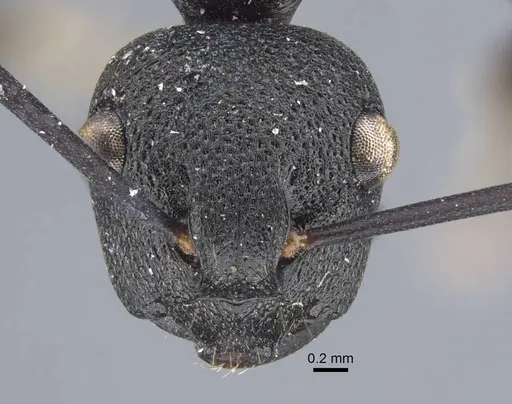
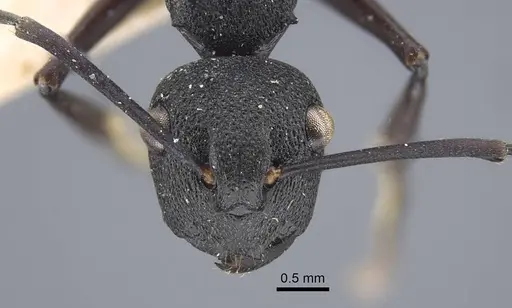
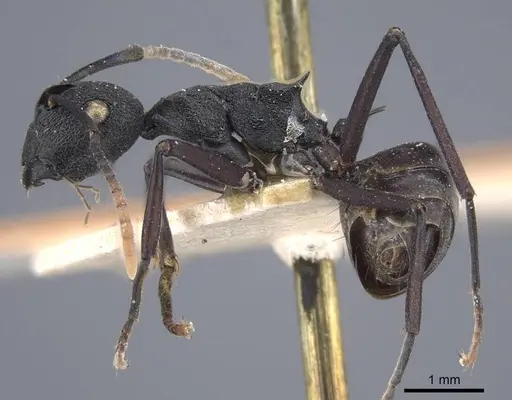
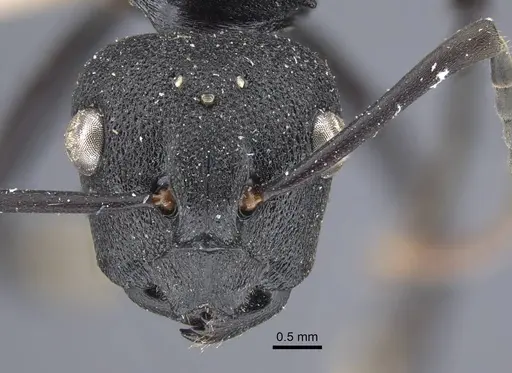
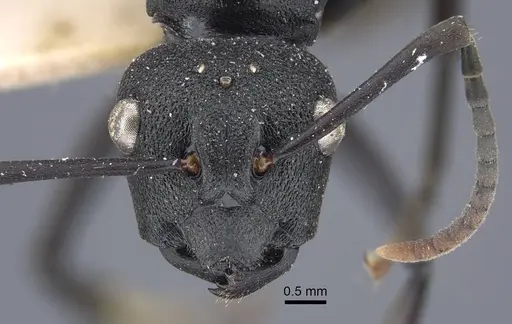
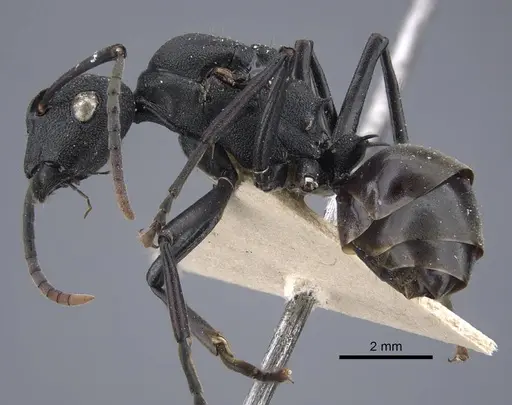
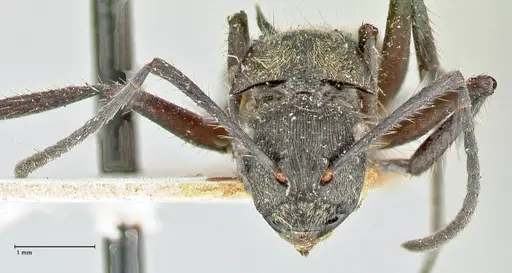
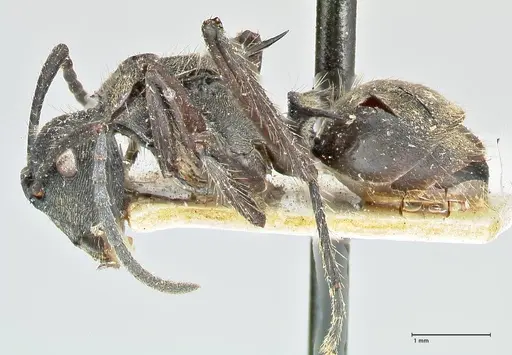
Polyrhachis menozzii is a medium-sized arboreal ant native to New Guinea and northern Australia. Workers measure about 7.56-8.67 mm in total length . They are black with reddish-brown mandibles and antennae . This species builds polydomous nests from silk and vegetation debris on rainforest tree leaves high above ground . Distribution is centered on New Guinea, with records from the Aru Islands and northern Queensland .
Quick Summary
- Difficulty: Medium
- Origin & Habitat: Native to New Guinea and surrounding islands, with populations in northern Queensland, Australia. Inhabits lowland rainforest canopies [1].
- Colony Type: Colony structure is unconfirmed. Polydomous nesting has been documented [1]. Based on typical Polyrhachis patterns, likely monogyne, but no specific study.
- Size & Growth:
- Queen: 9.12-11.69 mm [1]
- Worker: 7.56-8.67 mm [1]
- Colony: Unknown, no colony size data available
- Growth: Unknown, estimated as moderate based on genus patterns
- Development: Unconfirmed, estimates suggest 6-10 weeks at optimal temperature based on related species. (Development timeline has not been directly studied.)
- Antkeeping:
- Temperature: Keep warm, around 24-28°C, based on tropical rainforest origin [1].
- Humidity: Keep nest substrate consistently moist but not waterlogged, based on canopy-dwelling habitat [1].
- Diapause: No, tropical species do not require hibernation [1].
- Nesting: Arboreal nests in nature, in captivity, use Y-tong or naturalistic setups with vertical space [1].
- Behavior: Generally calm and not aggressive. They lack a functional sting and use formic acid spray for defense. Escape risk is moderate due to climbing ability, ensure enclosures are secure.
- Common Issues: Arboreal nature requires vertical space, test tube setups are unsuitable [1]., High humidity needs can lead to mold if ventilation is inadequate., Escape risk due to climbing ability, secure all gaps., Limited care data may lead to mistakes in colony management [1].
Natural History and Nesting
Polyrhachis menozzii is an arboreal ant species that builds its nests high in the rainforest canopy. Unlike most ants that nest underground, these ants construct polydomous nests from silk and vegetation debris attached to tree leaves [1]. This nesting strategy places them in the canopy layer, far above the forest floor. The only specimens collected in Australia came from light traps in lowland rainforest, suggesting they inhabit the canopy where they are rarely encountered [1].
Housing and Enclosure Setup
Keeping Polyrhachis menozzii successfully requires rethinking standard ant-keeping setups. Because they are arboreal, they need vertical space and elevated positions rather than horizontal ground-level nests. Use Y-tong nests or naturalistic setups with branches and leaves [1]. Ensure the lid is secure to prevent escapes, as they are excellent climbers.
Temperature and Humidity Requirements
As a tropical species, keep temperatures around 24-28°C and maintain high humidity [1]. Use a heating cable on one side of the nest for a gentle gradient, and keep the substrate consistently moist but not waterlogged.
Feeding and Diet
Polyrhachis ants are omnivorous, feeding on honeydew, nectar, and small insects in the wild. In captivity, offer sugar water or honey as a constant energy source, and provide small insects like fruit flies or mealworms for protein. No specific dietary data exists for this species, so follow general ant keeping practices.
Colony Development and Growth
Queens measure 9.12-11.69 mm and workers 7.56-8.67 mm in total length [1]. The colony development timeline has not been directly documented. Based on related species, expect the first workers to emerge approximately 6-10 weeks after queen lays eggs, assuming optimal conditions.
Behavior and Temperament
Polyrhachis menozzii workers are generally calm and not prone to aggressive behavior. They lack a functional sting and defend themselves by biting and spraying formic acid. Their arboreal, polydomous nature means they may prefer multiple hiding spots in captivity [1]. They are excellent climbers, so escape prevention is important.
Frequently Asked Questions
Can I keep Polyrhachis menozzii in a test tube setup?
Test tube setups are not ideal. They are arboreal ants that need vertical space and elevated positions [1]. Use Y-tong or naturalistic setups instead.
What temperature do Polyrhachis menozzii ants need?
Keep them at 24-28°C, based on their tropical rainforest origin [1].
How long does it take for Polyrhachis menozzii to produce first workers?
The exact timeline is unconfirmed, but estimates suggest 6-10 weeks at optimal temperature based on related species.
What do Polyrhachis menozzii ants eat?
They are omnivorous. Offer sugar water or honey and small insects like fruit flies or mealworms.
Are Polyrhachis menozzii good for beginners?
They are rated medium difficulty due to their arboreal nature and specific housing needs [1].
Do Polyrhachis menozzii need hibernation?
No, as a tropical species, they do not require hibernation [1].
How big do Polyrhachis menozzii colonies get?
Colony size data is not available for this species [1].
Where is Polyrhachis menozzii found in the wild?
Their distribution is centered on New Guinea, with records from the Aru Islands and northern Queensland, Australia [1].
What makes Polyrhachis menozzii different from other ants?
They build polydomous silk nests on leaves in the canopy, rather than nesting underground [1].
Report an Issue
The current care sheet is based fully on literature. See inconsistencies, or something that's incorrect? Please , it will be resolved after review from an admin. Contributing to the blogs tab also helps providing information, to make us be able to further improve the caresheets. Thank you for your support!
References

This caresheet is licensed under CC BY-SA 4.0 .
Community Blogs
CASENT0912147
View on AntWeb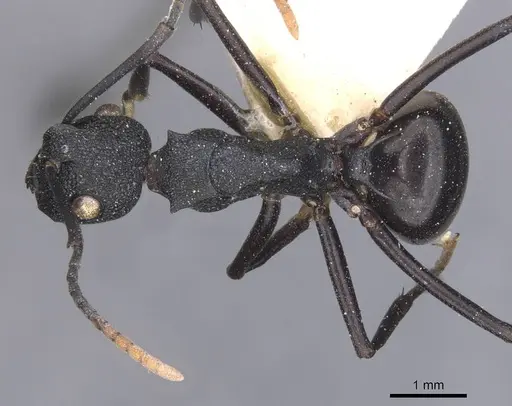
CASENT0917176
View on AntWeb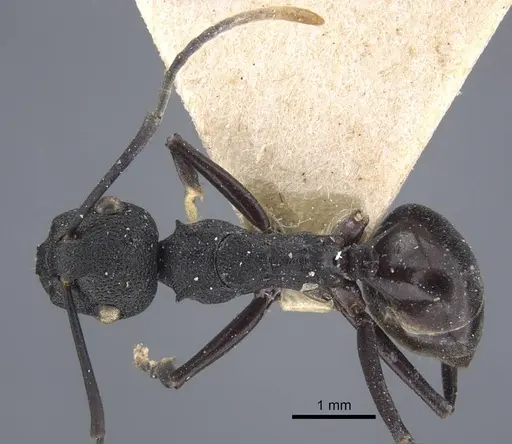
CASENT0917177
View on AntWeb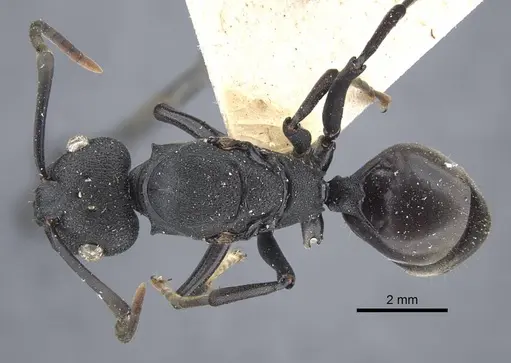
FOCOL2599
View on AntWeb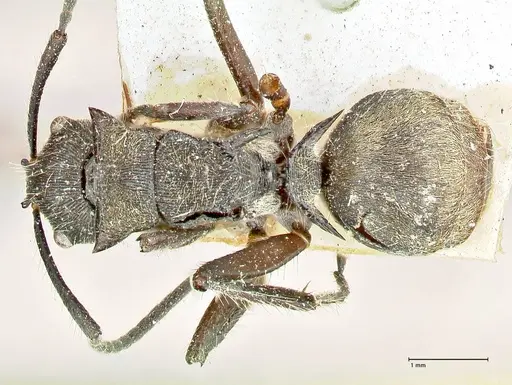
Literature
Loading distribution map...Loading products...