
Polyrhachis maculata
- Sci. Name
- Polyrhachis maculata
- Subgenus
- Campomyrma
- Tribe
- Camponotini
- Subfamily
- Formicinae
- Author
- Forel, 1915
- Distribution
- Found in 1 countries
Introduction
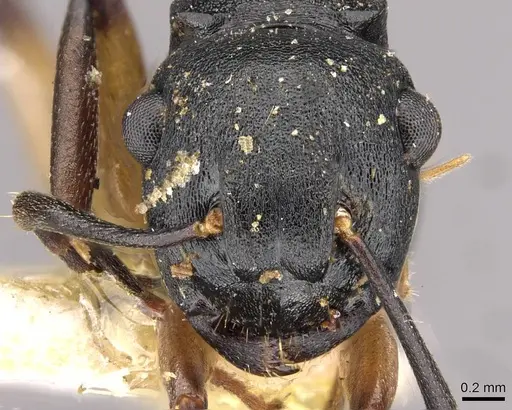
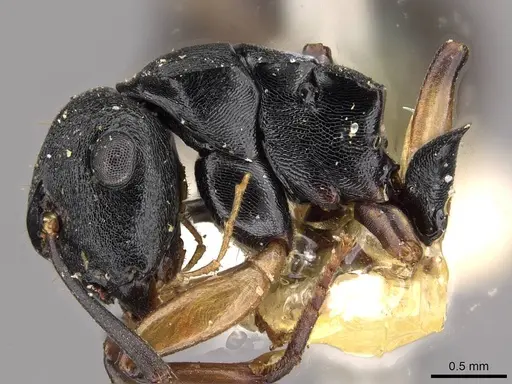
Polyrhachis maculata belongs to the subgenus Campomyrma. Workers are medium-sized, though exact measurements are unavailable. They have dark bodies with lighter markings and spiny projections on the thorax, which gives the genus its common name "spiny ants". These ants come from tropical Southeast Asia and northern Australia. They nest in rotting wood . Unlike some related species that weave leaf nests, this species stays in wood . They produce pupal cocoons .
Quick Summary
- Difficulty: Medium
- Origin & Habitat: Tropical Southeast Asia and northern Australia, nesting in rotting wood [1][2].
- Colony Type: Based on Polyrhachis patterns, likely monogyne (single queen). Multiple queen colonies are possible but unconfirmed for this species.
- Size & Growth:
- Queen: size data unavailable
- Worker: size data unavailable
- Colony: up to several hundred workers, estimated from related species
- Growth: Moderate
- Development: Unknown, direct measurements for Polyrhachis maculata are not available. (Development time is inferred from related Polyrhachis species, direct measurements for P. maculata are not available)
- Antkeeping:
- Temperature: Keep warm and stable, roughly mid-to-high 20s°C. Tropical ants need consistent heat year-round.
- Humidity: Keep the nest substrate consistently moist but not waterlogged. Provide a humidity gradient if possible.
- Diapause: No, tropical species do not require winter diapause.
- Nesting: Lignicolous (wood-nesting) species [1]. In captivity, they do well in Y-tong (AAC) nests, plaster nests, or setups with rotting wood. They prefer enclosed, dark spaces that mimic wood cavities.
- Behavior: Based on Polyrhachis patterns, they are typically active foragers and omnivorous. They climb well and explore the outworld actively. Temperament is generally calm, though they will defend their nest if threatened.
- Common Issues: mold growth from poor ventilation in humid setups, colony stress from temperatures dropping below 22°C, slow development due to cocooned pupae, escape through small gaps due to climbing ability, wild-caught parasites that are hard to treat in captivity
Housing and Nest Setup
Polyrhachis maculata nests in rotting wood [1]. In captivity, Y-tong (AAC) nests work well because they hold moisture and provide dark chambers. Plaster nests are also suitable. You can add corso bark or rotting wood to the outworld for a natural look. Make sure the nest material holds moisture without rotting quickly. Connect a water reservoir to the nest to maintain humidity over time.
Feeding and Diet
Like most Polyrhachis species, they eat both protein and sugar. Offer small insects like fruit flies or small crickets 2-3 times per week. Keep a sugar source like honey water or sugar water available at all times. Remove uneaten prey after 24-48 hours to prevent mold. Workers search for food actively in the outworld.
Temperature and Humidity
These are tropical ants that need warm, humid conditions. Keep the nest area at mid-to-high 20s°C consistently. Temperatures below 22°C can make the colony sluggish. Use a heating cable on one side of the nest to create a gentle temperature gradient if your room is cooler. Keep the nest substrate consistently moist but never waterlogged. Mist the nest area occasionally and use a water reservoir to maintain long-term humidity. Good ventilation prevents mold while keeping humidity stable.
Colony Development
Polyrhachis maculata produces pupal cocoons [2]. This means development takes longer than species with naked pupae. You cannot expect exact timelines, but expect the first workers to take several months to emerge. The first workers will be smaller than mature workers. Growth rate is moderate. Once the colony reaches a decent size, growth typically accelerates. Be patient with founding colonies. Do not disturb the queen during the founding phase.
Behavior and Temperament
Polyrhachis maculata workers are generally calm and not overly aggressive. They climb well and explore the outworld actively, especially at night. Unlike some arboreal Polyrhachis species that weave leaf nests, this species stays in wood due to its lignicolous habit [1]. Workers communicate through chemical trails and recruit nestmates to food sources. They are not particularly defensive and rarely use their acid spray, making them suitable for observation. However, they can escape through small gaps due to their climbing ability. Ensure your setup has tight-fitting lids and consider using fluon on rim edges.
Frequently Asked Questions
How long does it take for Polyrhachis maculata to produce first workers?
Unknown, direct measurements for Polyrhachis maculata are not available. Expect several months based on related species. The timeline may vary depending on temperature and feeding.
What do Polyrhachis maculata ants eat?
They are omnivorous. Offer small insects like fruit flies or small crickets as protein 2-3 times per week. Keep a sugar source available at all times, they readily accept honey water, sugar water, or pure honey.
What temperature do Polyrhachis maculata need?
Keep them at mid-to-high 20s°C consistently. They are tropical ants that need warmth year-round. A heating cable on one side of the nest can help maintain proper temperatures if your room is cooler.
Do Polyrhachis maculata need hibernation?
No, they do not require hibernation. Being tropical ants, they need warm temperatures year-round. Do not expose them to temperatures below 20°C for extended periods.
What type of nest is best for Polyrhachis maculata?
Y-tong (AAC) nests, plaster nests, or naturalistic setups with rotting wood work well. They prefer dark, enclosed spaces that mimic their natural wood cavities. Avoid open or exposed nest designs.
How big do Polyrhachis maculata colonies get?
Based on related species, colonies likely reach up to several hundred workers over time. Exact maximum colony size for this species is not documented in scientific literature.
Can I keep multiple Polyrhachis maculata queens together?
This is not recommended. While colony structure is not well-studied for this species, combining unrelated queens typically leads to fighting. Start with a single queen colony for best results.
Why are my Polyrhachis maculata dying?
Common causes include temperatures below 22°C, humidity that is too low or too high, mold from poor ventilation, or stress from disturbance during founding. Ensure consistent warmth, proper humidity, and minimal disturbance until the colony is established.
Are Polyrhachis maculata good for beginners?
They are rated as medium difficulty. They are more demanding than common temperate species due to their need for constant warmth and humidity. However, they are docile and interesting to watch. If you can maintain tropical conditions year-round, they can be a rewarding species.
Report an Issue
The current care sheet is based fully on literature. See inconsistencies, or something that's incorrect? Please , it will be resolved after review from an admin. Contributing to the blogs tab also helps providing information, to make us be able to further improve the caresheets. Thank you for your support!
References

This caresheet is licensed under CC BY-SA 4.0 .
Community Blogs
CASENT0910414
View on AntWeb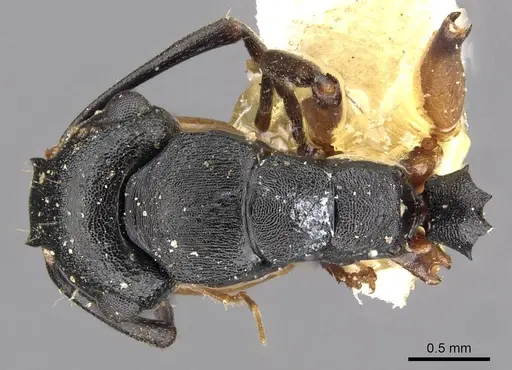
Literature
Loading distribution map...Loading products...