
Polyrhachis latharis
- Sci. Name
- Polyrhachis latharis
- Subgenus
- Myrma
- Tribe
- Camponotini
- Subfamily
- Formicinae
- Author
- Bolton, 1973
- Distribution
- Found in 1 countries
Introduction
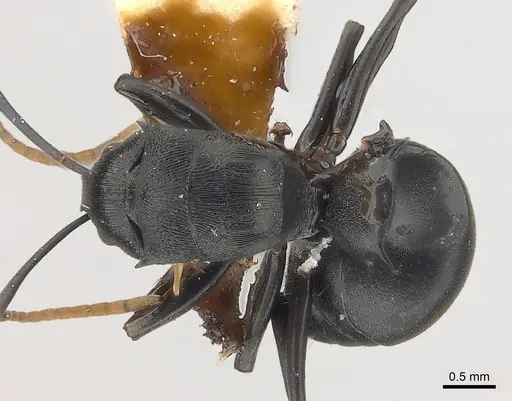
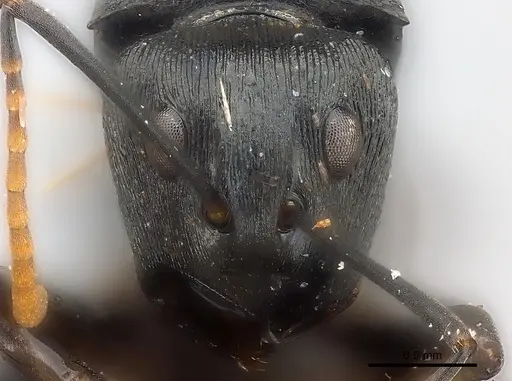
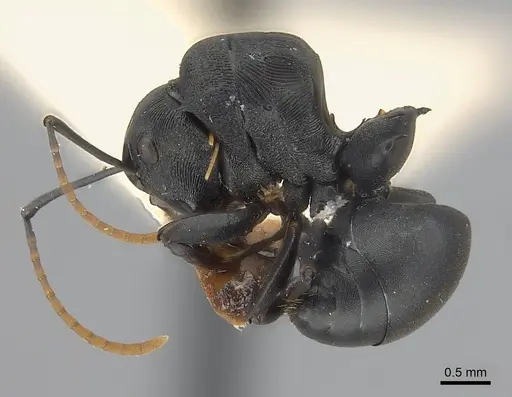
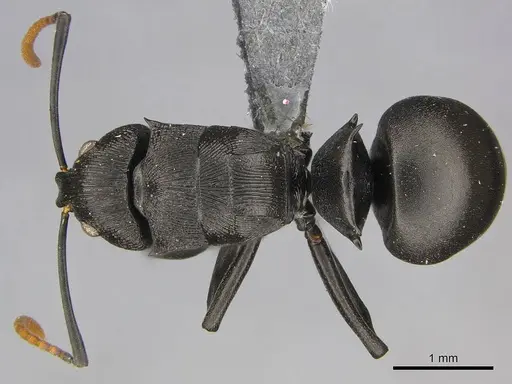
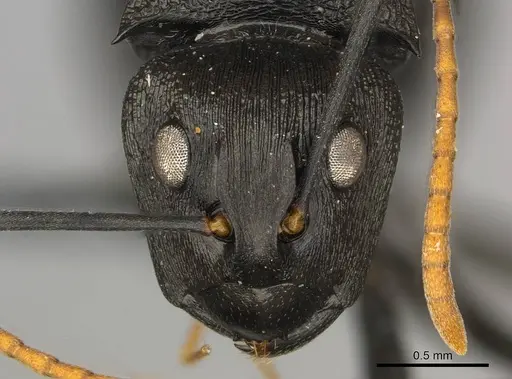
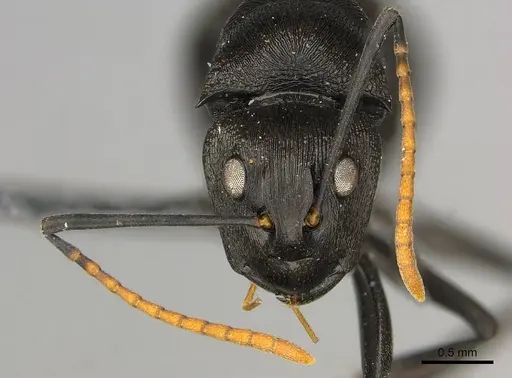
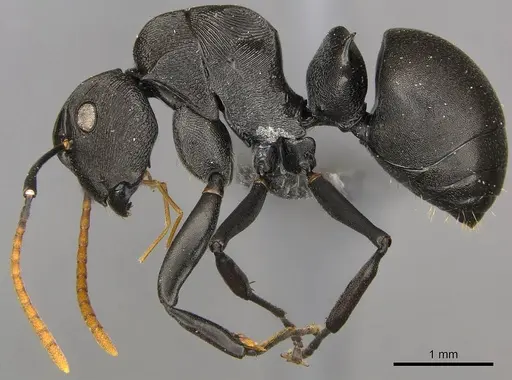
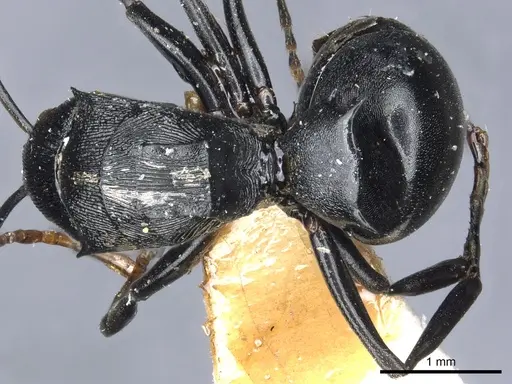
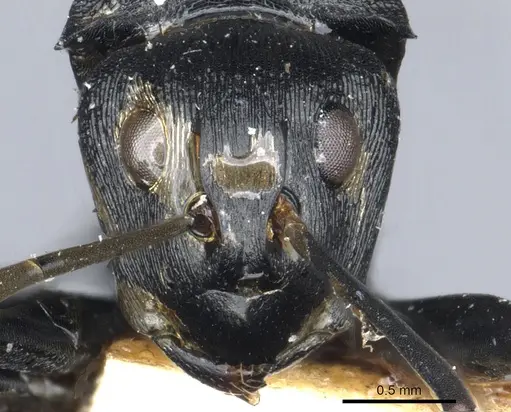
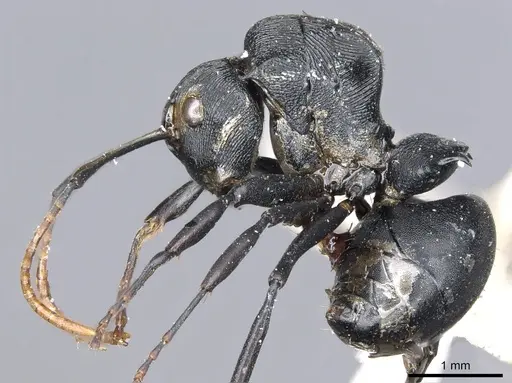
Polyrhachis latharis is a medium-sized arboreal ant native to West and Central Africa, found in Ghana and Congo . Workers measure 6.5-7.0mm in total length and are entirely black with yellow-brown antennae . They belong to the alexisi species-group within the subgenus Myrma and are recognized by their somewhat trapezoidal elongate head with faintly concave sides, four spines on the petiole, and a marginate pronotum and propodeum . They have no erect hairs on dorsal surfaces . This species is totally arboreal, living exclusively in primary forest canopies . Polyrhachis latharis is confined to densely forested regions and builds nests in tree hollows, under bark, or among epiphytes . Like other Polyrhachis, they have pupal cocoons . They are known to be parasitized by the zombie ant fungus Ophiocordyceps unilateralis in Africa .
Quick Summary
- Difficulty: Hard
- Origin & Habitat: West and Central Africa (Ghana, Congo), exclusively in primary rainforest canopies [1].
- Colony Type: Unconfirmed, no specific data on queen number from research context.
- Size & Growth:
- Queen: Size data unavailable, no total length measurements for queens in context.
- Worker: 6.5-7.0mm [1]
- Colony: Unknown
- Growth: Moderate, inferred from genus patterns.
- Development: Estimated 6-10 weeks based on related Polyrhachis species [3]. (Development time not directly studied, estimates based on genus-level data.)
- Antkeeping:
- Temperature: Keep warm, roughly 24-28°C, based on tropical arboreal ant patterns.
- Humidity: Keep nest substrate consistently moist but not waterlogged, as they are from humid forests.
- Diapause: No, tropical species do not require hibernation.
- Nesting: Arboreal setup essential. Use naturalistic enclosures with cork bark, branches, or Y-tong/plaster nests with climbing structures [3][4].
- Behavior: Generally calm and non-aggressive. Workers are active foragers in the canopy layer. Defense mechanism: spray formic acid, no sting. Escape risk moderate due to size, standard barrier methods work well.
- Common Issues: arboreal nature makes captive care challenging, they need vertical space and climbing structures., high humidity requirements can lead to mold if ventilation is poor., wild-caught colonies may arrive with Ophiocordyceps fungal parasites [5]., difficulty finding established colonies since they live in forest canopies., temperature drops below 22°C can slow colony activity.
Nest Preferences and Housing
Polyrhachis latharis is strictly arboreal, meaning it nests in trees rather than on the ground. In captivity, replicate this vertical lifestyle with naturalistic arboreal enclosures using cork bark, branches, or twigs for climbing and nesting [3][4]. You can also use a Y-tong or plaster nest, but provide climbing structures and keep nest chambers humid. These ants will not thrive in ground-based formicariums. Include pieces of bark or hollow twigs positioned in the upper portion of the enclosure.
Feeding and Diet
Polyrhachis ants are omnivorous, accepting both sugar sources and protein. Offer sugar water, honey, or diluted syrup regularly as a constant energy source. For protein, provide small insects like fruit flies, crickets, or mealworms 2-3 times per week. Remove uneaten prey after 24-48 hours to prevent mold.
Temperature and Humidity
As tropical arboreal ants, P. latharis needs warm and humid conditions. Keep temperatures around 24-28°C with a slight gradient using a low-wattage heating cable. Humidity should be high, mist the enclosure regularly and provide a water tube. Good ventilation is essential to prevent mold.
Behavior and Colony Dynamics
This species is relatively calm and not particularly aggressive. Workers are active foragers that patrol the canopy layer. They have four spines on their petiole for defense, but they spray formic acid instead of stinging. Colonies grow moderately over several years. The presence of pupal cocoons is normal for this species [3]. Watch for signs of fungal infection (Ophiocordyceps) and remove infected ants immediately [5].
Acquiring and Establishing Colonies
Polyrhachis latharis is challenging to acquire because it lives exclusively in forest canopies. Most colonies are wild-caught from Ghana or Congo. Inspect for signs of zombie ant fungus (Ophiocordyceps) and remove infected ants [5]. Established colonies with a laying queen are preferable to founding colonies. If you receive a founding queen, provide a quiet, dark, humid space without disturbance.
Frequently Asked Questions
Can I keep Polyrhachis latharis in a test tube?
Test tubes are not ideal. This species needs vertical space and climbing structures. Use a naturalistic arboreal setup with cork bark or a Y-tong/plaster nest.
What do Polyrhachis latharis eat?
They are omnivorous. Offer sugar water or honey constantly, and protein like fruit flies or mealworms 2-3 times per week.
How long does it take for first workers to emerge?
Estimated 6-10 weeks from egg to worker at optimal temperature, based on related species [3]. This is not directly studied for this species.
Are Polyrhachis latharis good for beginners?
No, this is a hard species due to strict arboreal needs, high humidity requirements, and challenge of obtaining healthy colonies.
Do Polyrhachis latharis need hibernation?
No, as tropical ants, they do not require hibernation. Keep temperatures stable year-round.
Why are my Polyrhachis latharis dying?
Common causes include low humidity, temperatures below 22°C, fungal infection (Ophiocordyceps), or inadequate climbing space. Check setup and remove infected ants [5].
How big do Polyrhachis latharis colonies get?
Colony size is unknown, as no specific data is available from research.
Can I keep multiple queens together?
Not recommended, as colony type is unconfirmed and combining queens could lead to conflict.
When should I move them to a formicarium?
Move when the founding setup becomes too small. For arboreal species, transition to a naturalistic arboreal enclosure with climbing structures.
Report an Issue
The current care sheet is based fully on literature. See inconsistencies, or something that's incorrect? Please , it will be resolved after review from an admin. Contributing to the blogs tab also helps providing information, to make us be able to further improve the caresheets. Thank you for your support!
References

This caresheet is licensed under CC BY-SA 4.0 .
Community Blogs
Literature
Loading distribution map...Loading products...