
Polyrhachis lanuginosa
- Sci. Name
- Polyrhachis lanuginosa
- Subgenus
- Myrma
- Tribe
- Camponotini
- Subfamily
- Formicinae
- Author
- Santschi, 1910
- Distribution
- Found in 1 countries
Introduction
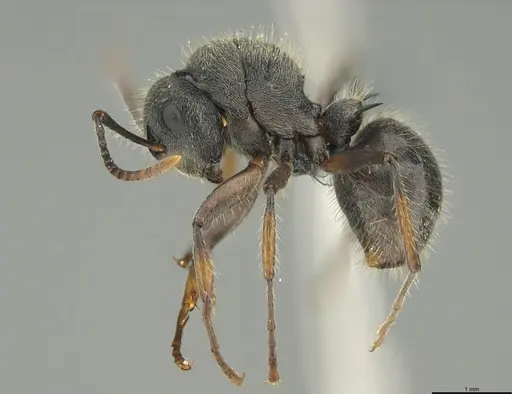
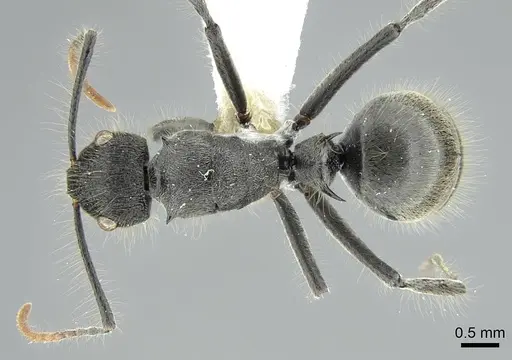
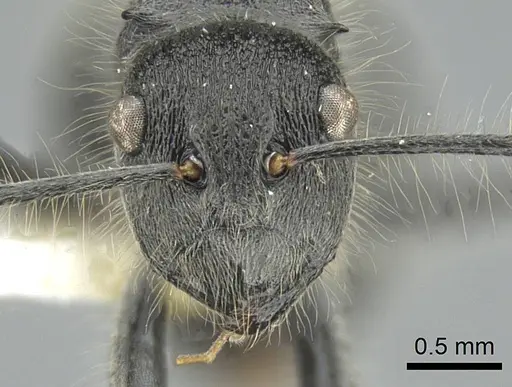
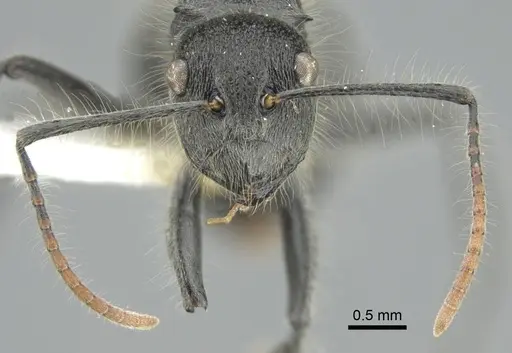
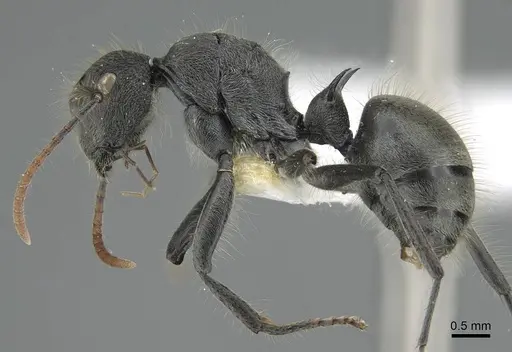
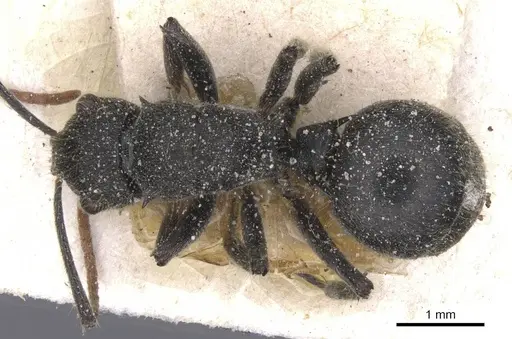
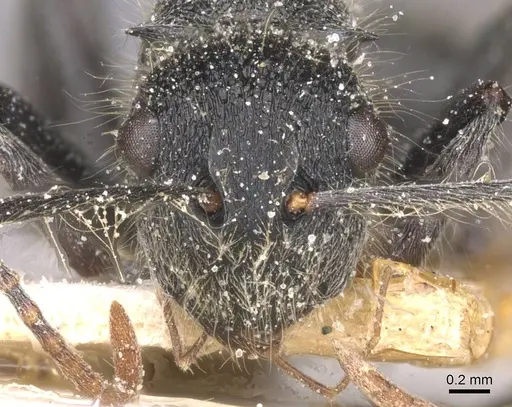
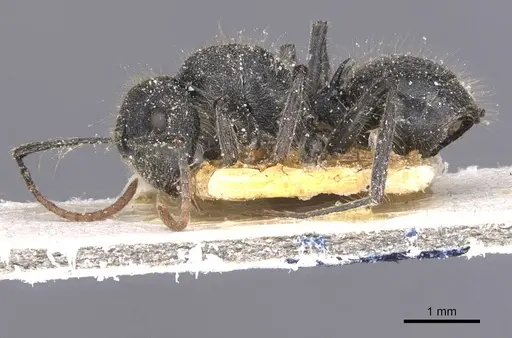
Polyrhachis lanuginosa is a medium-sized arboreal ant species native to central Africa, found in Cameroon and Congo. Workers have a total length of 5.9-6.1 mm , are black with abundant long yellow-white hairs, and have short spines on the pronotum and long spines on the petiole . This species belongs to the Polyrhachis revoili group and is characterized by transverse ridges on the propodeum . These ants live in tropical forest canopies and nest in trees. Research shows they are subordinate at food sources, avoiding conflict with more aggressive species . Their biology in the wild is poorly documented .
Quick Summary
- Difficulty: Medium
- Origin & Habitat: Central African forest in Cameroon and Congo, arboreal in tropical environments [2][3].
- Colony Type: Colony structure is unconfirmed for this species. Polyrhachis species are typically monogyne, but no specific data exists.
- Size & Growth:
- Queen: Size data unavailable, no measurements in literature.
- Worker: 5.9-6.1 mm [1]
- Colony: Colony size is unconfirmed, Polyrhachis colonies typically reach up to several hundred workers.
- Growth: Moderate
- Development: 8-12 weeks (Development data unavailable, estimates based on typical tropical ant development.)
- Antkeeping:
- Temperature: Keep warm, around 24-28°C, with a gentle gradient.
- Humidity: Keep nest substrate consistently moist but not waterlogged, as they are from humid forests.
- Diapause: No, tropical species do not require hibernation.
- Nesting: Arboreal nesting, use Y-tong or plaster nests with elevated chambers.
- Behavior: Workers are subordinate and avoid conflict [2][3]. They are peaceful and active foragers. Escape risk is moderate due to arboreal nature.
- Common Issues: Limited biological data means care is partially speculative, monitor colony response and adjust conditions accordingly., Arboreal nature requires elevated nest designs, standard ground nests may not work for established colonies., Tropical temperature requirements may need heating in cooler climates to maintain 24-28°C., As a lesser-kept species, finding established care guides is difficult, be prepared to experiment with conditions.
Natural History and Distribution
Polyrhachis lanuginosa is found in central Africa, specifically Cameroon and Congo. As an arboreal species, they live in tropical forest canopies rather than on the ground. Research confirms they nest in focal trees and are found in about 1 of 9 sampled trees [2][3]. The species was described by Santschi in 1910 and has several synonyms consolidated by Bolton in 1973 [1]. Workers are distinctive with long yellow-white hairs and spines on the pronotum and petiole [1].
Housing and Nest Preferences
Because this is an arboreal species, your setup should reflect their preference for elevated, enclosed spaces. Standard test tubes work for founding colonies, but established colonies do better in Y-tong (AAC) nests, plaster nests, or naturalistic setups with cork bark or wood pieces. Provide snug chambers and avoid fully horizontal dirt-filled setups. Include a shallow water source and maintain humidity without flooding the nest.
Feeding and Diet
Based on their subordinate behavior at baits, these ants are likely generalists feeding on honeydew, nectar, and small insects. In captivity, offer sugar water or honey constantly, and protein sources like small crickets or fruit flies 2-3 times per week [2]. Remove uneaten prey after 24-48 hours to prevent mold.
Temperature and Seasonal Care
As a tropical species, they require warm conditions year-round. Maintain temperatures between 24-28°C consistently. Use a heating cable on one side of the nest to create a gradient if room temperature is too low. They do not enter diapause, so keep temperatures stable.
Behavior and Colony Dynamics
These ants are docile and show subordinate behavior, avoiding conflict with more aggressive species [2][3]. Workers are active foragers in arboreal environments. Colonies grow moderately, with first workers emerging in about 8-12 weeks. The spines and hairs are not used for defense, instead, they spray formic acid like other Formicinae ants.
Challenges and Considerations
The lack of species-specific data means care is largely inferred from genus patterns. Monitor your colony and adjust conditions gradually. They may be sensitive to environmental changes due to their forest habitat. Finding experienced keepers for this species may be difficult, so consider joining antkeeping communities for support.
Frequently Asked Questions
How long does it take for Polyrhachis lanuginosa to produce first workers?
Development time is estimated at 8-12 weeks from egg to first worker at optimal temperatures. Be patient, as founding colonies can take several months.
What is the best nest type for Polyrhachis lanuginosa?
Y-tong (AAC) nests or plaster nests work well for established colonies. As an arboreal species, they prefer enclosed chambers that are not too large.
What do Polyrhachis lanuginosa eat?
They accept a generalist diet: sugar sources like honey or sugar water for energy, and small insects for protein. Offer sugar constantly and protein 2-3 times weekly [2].
Do they need hibernation?
No, being a tropical species from central Africa, they do not require hibernation. Keep temperatures stable year-round.
Are Polyrhachis lanuginosa good for beginners?
This species is rated as Medium difficulty. The limited biological data means keepers should have some experience with arboreal ants. They are peaceful but require specific conditions like warmth and elevated nests.
How big do Polyrhachis lanuginosa colonies get?
Colony size is not specifically documented, but Polyrhachis species typically reach up to several hundred workers.
Can I keep multiple queens together?
Polyrhachis species are typically monogyne, but this is unconfirmed for lanuginosa. Combining unrelated queens is not recommended due to potential aggression.
Why are my Polyrhachis lanuginosa dying?
Common causes include temperatures below 24°C, too-dry conditions, inappropriate nest types, or excessive disturbance. Review each parameter and adjust gradually.
Where is Polyrhachis lanuginosa found in the wild?
They live in central African forests in Cameroon and Congo, nesting in trees [2][3].
What temperature should I keep Polyrhachis lanuginosa at?
Keep nest temperatures between 24-28°C consistently. Use heating if room temperature is too low.
Is Polyrhachis lanuginosa aggressive?
No, research shows they are subordinate at food sources, meaning they avoid conflict [2][3]. They are peaceful ants.
Report an Issue
The current care sheet is based fully on literature. See inconsistencies, or something that's incorrect? Please , it will be resolved after review from an admin. Contributing to the blogs tab also helps providing information, to make us be able to further improve the caresheets. Thank you for your support!
References

This caresheet is licensed under CC BY-SA 4.0 .
Community Blogs
Literature
Loading distribution map...Loading products...