
Polyrhachis gravis
- Sci. Name
- Polyrhachis gravis
- Subgenus
- Campomyrma
- Tribe
- Camponotini
- Subfamily
- Formicinae
- Author
- Clark, 1930
- Distribution
- Found in 1 countries
Introduction
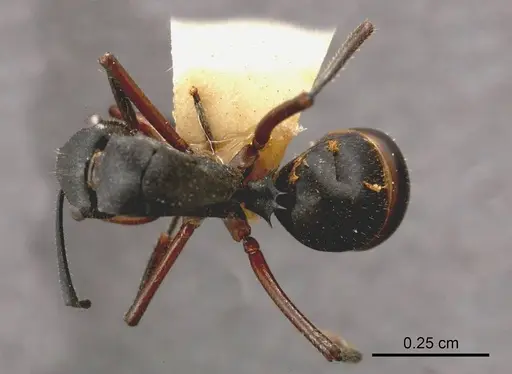
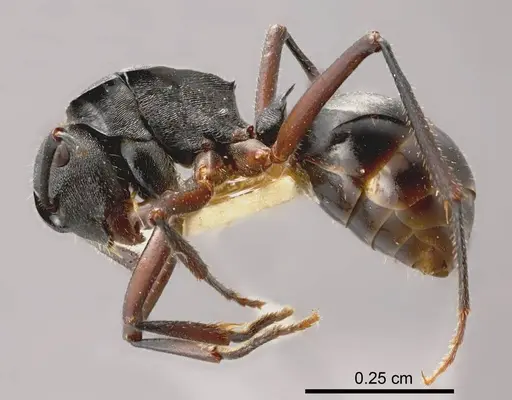
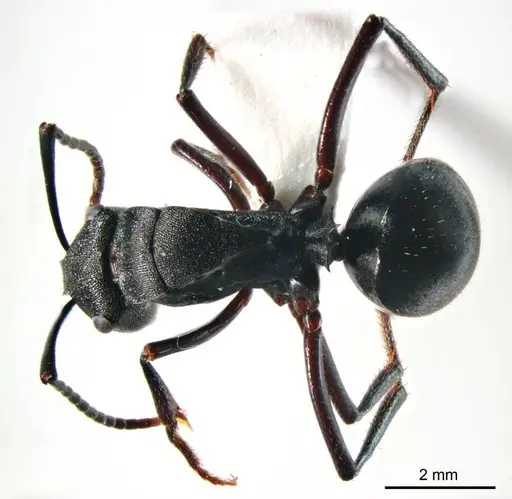
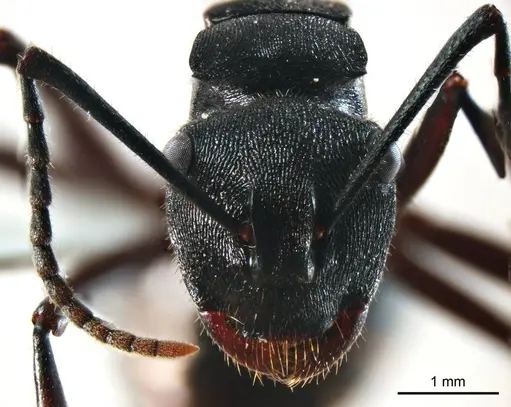
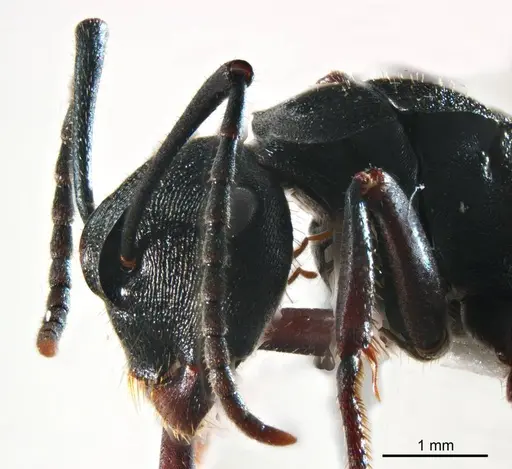
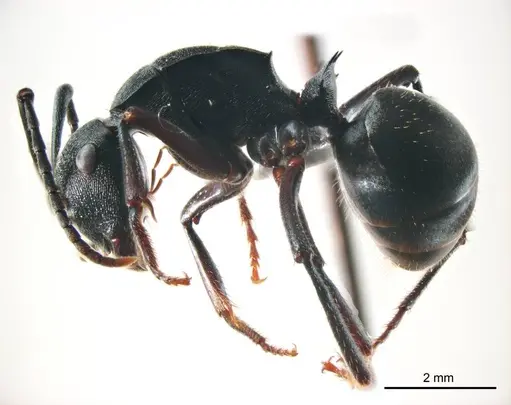
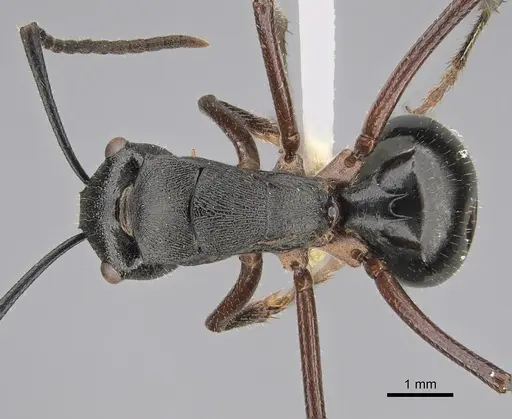
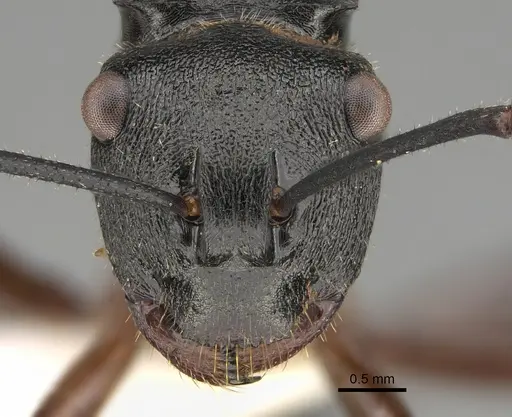
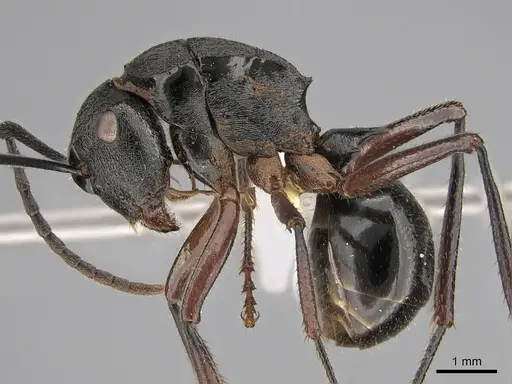
Polyrhachis gravis is a large ant native to the arid heartland of Australia. Workers measure about 8.72 to 10.58 mm in total length and are black with reddish-brown mandibles, antennae tips, legs, and posterior coxae. They have four sharp spines on the petiole, shiny bodies with longitudinal sculpturing, and short yellow hairs. This species belongs to the Campomyrma subgenus and is found in dry mulga woodlands and spinifex grasslands from Western Australia through the Northern Territory to western Queensland . What makes P. gravis notable is its adaptation to harsh, arid environments, but sexual forms and immature stages have never been documented, limiting knowledge of its biology .
Quick Summary
- Difficulty: Medium
- Origin & Habitat: Central Australia, including the Pilbara region of Western Australia, Northern Territory, and western Queensland. Inhabits dry mulga and spinifex grasslands [1][2].
- Colony Type: Unknown, sexual forms have not been described, so colony structure is unconfirmed [2].
- Size & Growth:
- Queen: Unknown, queens have not been described [2].
- Worker: ~8.72-10.58 mm total length [1].
- Colony: Unknown, no colony size data available.
- Growth: Unknown.
- Development: Unknown, no data available. Based on typical Formicinae patterns, development may take several weeks at optimal temperature. (No direct studies, inferred from related species.)
- Antkeeping:
- Temperature: Keep warm, around 24-28°C, with a gentle heat gradient for thermoregulation. Inferred from arid habitat.
- Humidity: Keep nest substrate dry to moderately moist, matching their natural arid conditions. Avoid constant dampness [1][2].
- Diapause: Likely yes, provide a cool period around 15-18°C for 2-3 months during winter, based on arid-zone patterns.
- Nesting: Lignicolous (wood-nesting) and subterranean in the wild [3][4]. Use Y-tong, plaster, or natural nests with dark, enclosed chambers.
- Behavior: Workers are large and have spiny petioles for defense. Generally docile compared to many ants. Escape risk is moderate due to size, standard barriers work. Formicinae spray formic acid, but no species-specific defense data [1].
- Common Issues: limited availability due to rarity in hobby and lack of captive breeding data., unknown colony structure makes housing arrangements challenging., no confirmed diet preferences, feeding guidelines are unconfirmed., development timeline unknown, hard to track colony progress., arid species may be sensitive to overwatering, keep conditions dry.
Natural History and Distribution
Polyrhachis gravis is endemic to arid central Australia, from the Pilbara in Western Australia to western Queensland. It inhabits dry mulga woodlands and spinifex grasslands [1][2]. The species was described in 1930 and shows little morphological variation across its range [1].
Nest Preferences and Housing
In the wild, P. gravis nests in wood (lignicolous) or underground [3][4]. For captivity, use Y-tong, plaster, or natural nests with dark, enclosed chambers. Keep substrate dry to moderately moist, matching their arid habitat [1].
Feeding and Diet
Specific diet is unconfirmed. As Formicinae, they likely accept sugar sources and protein. Offer sugar water or honey and insects like mealworms. Feed protein 2-3 times per week and remove uneaten prey after 24-48 hours.
Temperature and Seasonal Care
Maintain nest temperatures around 24-28°C with a heat gradient. During winter, provide a cool period of 15-18°C for 2-3 months to simulate natural cycles.
Behavior and Defense
Workers are large and have four sharp spines on the petiole for defense [1]. They are generally docile and active foragers. Escape risk is moderate, use standard barriers. Formicinae spray formic acid, but no species-specific data exists.
Challenges and Limitations
The main challenge is the lack of documented captive breeding information. Sexual forms are unknown, making nuptial flights and colony structure unconfirmed [2]. This species is rare in the hobby, and wild-caught colonies may face stress or parasites.
Frequently Asked Questions
How long does it take for Polyrhachis gravis to develop from egg to worker?
Development timeline is unknown. Based on typical Formicinae patterns, expect several weeks at optimal temperature.
What do Polyrhachis gravis ants eat?
Diet is unconfirmed, but they likely accept sugar sources and protein. Offer sugar water and insects like mealworms.
Can I keep Polyrhachis gravis in a test tube setup?
Test tubes may work for small colonies, but Y-tong or plaster nests are better due to their lignicolous nature and arid preferences [3].
Do Polyrhachis gravis ants need hibernation?
Likely yes, provide a cool period of 15-18°C for 2-3 months during winter.
Are Polyrhachis gravis good for beginners?
Not recommended due to limited care information and rarity. More established species are better for beginners.
How big do Polyrhachis gravis colonies get?
Colony size is unknown, no data available.
What temperature should I keep Polyrhachis gravis at?
Aim for 24-28°C with a heat gradient. Avoid prolonged temperatures below 20°C.
When do Polyrhachis gravis nuptial flights occur?
Unknown, sexual forms have never been documented [2].
Is Polyrhachis gravis monogyne or polygyne?
Unknown, colony structure has not been studied [2].
What humidity level do Polyrhachis gravis need?
Keep conditions dry to moderately moist, matching their arid habitat [1][2].
Why is my Polyrhachis gravis colony not growing?
Without established care guidelines, ensure proper temperature, humidity, and diet. Stress from capture is common in wild-caught colonies.
Report an Issue
The current care sheet is based fully on literature. See inconsistencies, or something that's incorrect? Please , it will be resolved after review from an admin. Contributing to the blogs tab also helps providing information, to make us be able to further improve the caresheets. Thank you for your support!
References

This caresheet is licensed under CC BY-SA 4.0 .
Community Blogs
Literature
Loading distribution map...Loading products...