
Polyrhachis cracenta
- Sci. Name
- Polyrhachis cracenta
- Subgenus
- Hagiomyrma
- Tribe
- Camponotini
- Subfamily
- Formicinae
- Author
- Kohout, 2013
- Distribution
- Found in 1 countries
Introduction
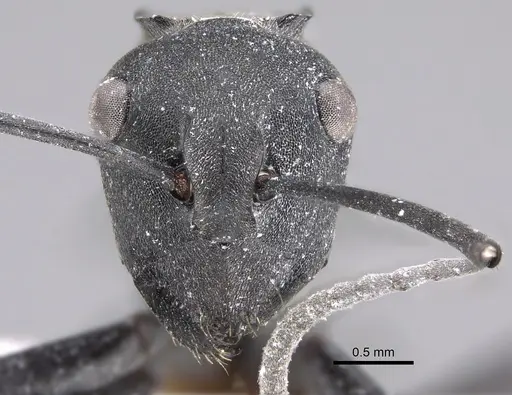
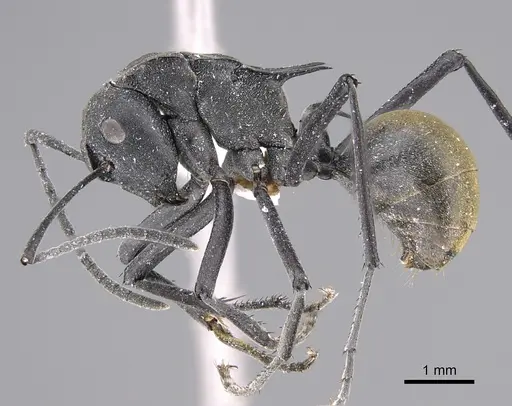
Polyrhachis cracenta is an Australian ant in the Hagiomyrma subgenus. Workers are 7.81-9.02 mm long , black with dark reddish-brown mandibles and golden pubescence on the gaster . It is found in northern Queensland, the Northern Territory, and Western Australia , nesting at the base of trees and saplings . This species is rare, having been collected only a few times, making it a unique choice for antkeepers interested in Australian natives.
Quick Summary
- Difficulty: Medium
- Origin & Habitat: Northern Australia (northern Queensland, Northern Territory, Western Australia). Ground-nesting at tree bases [1][2].
- Colony Type: Likely monogyne based on related Polyrhachis species, but unconfirmed for this species.
- Size & Growth:
- Queen: ~12.2-12.7 mm [2]
- Worker: ~7.8-9.0 mm [1]
- Colony: Colony size data unavailable, inferred to be moderate from genus patterns.
- Growth: Moderate, inferred from genus patterns.
- Development: Unknown, no specific data. Estimated 6-8 weeks based on related species patterns. (Development time is not studied for this species.)
- Antkeeping:
- Temperature: Keep warm, roughly 24-28°C, based on tropical species patterns. No specific research data available.
- Humidity: Keep nest substrate consistently moist but not waterlogged, with drier areas available. Based on ground-nesting habits [2].
- Diapause: No, tropical species do not require hibernation.
- Nesting: Ground-nesting species. Use Y-tong, plaster, or naturalistic nests with deep substrate [1][2].
- Behavior: Workers are moderately sized and forage on the ground. They lack a sting and spray formic acid for defense. Escape risk is moderate due to size, ensure secure lids.
- Common Issues: rare species with limited availability, may be difficult to acquire, ground-nesting behavior requires appropriate nesting setup with soil or deep chambers, specific humidity requirements may be challenging to maintain consistently, colony growth may be slow due to limited documentation of their biology, wild-caught colonies may have parasites or health issues from collection stress
Housing and Nest Setup
Polyrhachis cracenta is a ground-nesting species that prefers nesting at the base of trees and saplings [2]. In captivity, they do well in naturalistic setups with deep substrate or in formicariums designed for ground-nesting ants [1]. Y-tong nests with moisture chambers also work well, as do plaster nests that can maintain humidity. The nest should have a dark interior since these ants naturally nest underground. Provide a water tube and keep the nest substrate consistently moist. They need access to an outworld for foraging.
Feeding and Diet
Like most Polyrhachis species, these ants are omnivorous. They likely feed on honeydew, nectar, and small insects in the wild. In captivity, offer sugar sources like honey water and protein sources like small crickets or mealworms. Feed protein 2-3 times per week and keep sugar water available at all times.
Temperature and Seasonal Care
As a species from northern Australia, Polyrhachis cracenta prefers warm conditions. Keep the nest area at roughly 24-28°C for optimal colony health, based on tropical species patterns. They do not require true hibernation but may show reduced activity during cooler periods. Maintain stable temperatures year-round.
Colony Establishment
If you obtain a founding queen, provide her with a claustral setup, a test tube or small container with moist cotton and no food initially. The queen will seal herself in and raise the first brood alone. Once workers emerge, begin offering small amounts of sugar water and protein. Colonies grow at a moderate rate.
Behavior and Temperament
Polyrhachis cracenta workers are moderately sized and forage on the ground. They lack a sting and spray formic acid for defense. They are not particularly aggressive toward keepers but will defend their nest if threatened. Escape prevention is important due to their moderate size, ensure all connections are secure.
Frequently Asked Questions
How long does it take for Polyrhachis cracenta to produce first workers?
Based on related Polyrhachis species, expect first workers approximately 6-8 weeks after the queen lays eggs, at optimal temperatures around 26°C. This is an estimate since this specific species has not been studied in detail.
What do Polyrhachis cracenta ants eat?
They are omnivorous. Offer sugar water or honey water constantly, and protein sources like small crickets, mealworms, or fruit flies 2-3 times per week.
Can I keep Polyrhachis cracenta in a test tube setup?
Yes, test tubes work well for founding colonies. Provide a moist cotton ball for humidity and keep the tube in darkness. Once the colony grows, consider moving to a larger setup with deeper substrate.
What temperature do Polyrhachis cracenta ants need?
Keep them at roughly 24-28°C, based on tropical species patterns. No specific research data is available.
Are Polyrhachis cracenta ants good for beginners?
This species is rated as medium difficulty. While not the most challenging, they are rare and there is limited established husbandry information.
How big do Polyrhachis cracenta colonies get?
The maximum colony size is unknown for this rare species. Based on typical Polyrhachis patterns, colonies are likely moderate in size.
Do Polyrhachis cracenta ants need hibernation?
No, as a tropical to subtropical species, they do not require hibernation. Maintain stable temperatures year-round.
When should I move my Polyrhachis cracenta colony to a formicarium?
Move them when the test tube becomes crowded or when the water reservoir is depleted. A naturalistic setup with deep substrate works well for this ground-nesting species.
Why is my Polyrhachis cracenta colony dying?
Common causes include temperature too low, humidity too dry or too wet, mold from overfeeding, or stress from disturbance. Ensure proper conditions and minimize nest interference.
Where do Polyrhachis cracenta ants nest in the wild?
They are ground-nesting ants that prefer the bases of trees and saplings, often in areas with paperbarks [2].
Is Polyrhachis cracenta a rare species?
Yes, it is evidently a rare species that has been collected only on a few occasions [1][2].
Report an Issue
The current care sheet is based fully on literature. See inconsistencies, or something that's incorrect? Please , it will be resolved after review from an admin. Contributing to the blogs tab also helps providing information, to make us be able to further improve the caresheets. Thank you for your support!
References

This caresheet is licensed under CC BY-SA 4.0 .
Community Blogs
CASENT0887783
View on AntWeb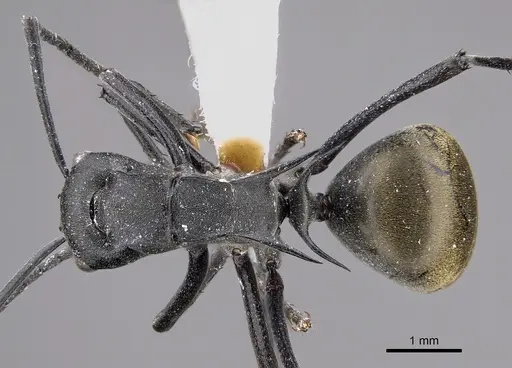
Literature
Loading distribution map...Loading products...