
Polyrhachis brevinoda
- Sci. Name
- Polyrhachis brevinoda
- Subgenus
- Cyrtomyrma
- Tribe
- Camponotini
- Subfamily
- Formicinae
- Author
- Kohout, 2006
- Distribution
- Found in 1 countries
Introduction
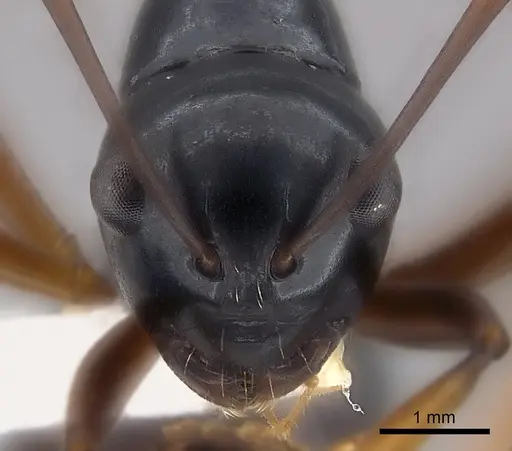
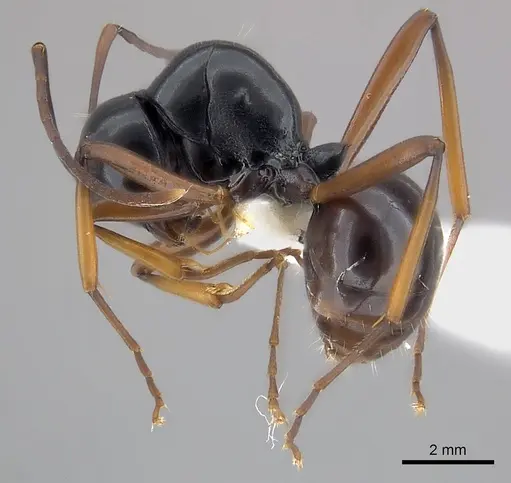
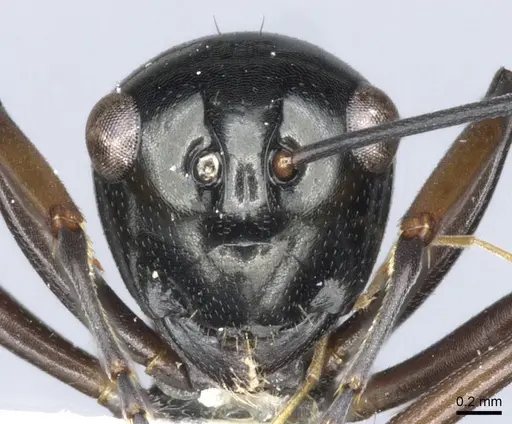
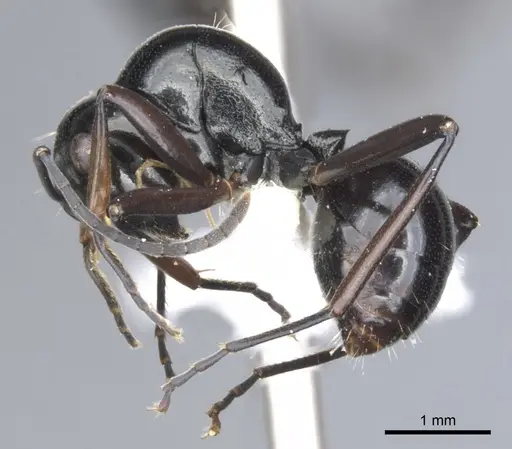
Polyrhachis brevinoda is a small arboreal ant native to the rainforests of north Queensland, Australia, and southern Papua New Guinea . Workers measure 4.89 to 6.05 mm in total length and are mostly black with dark reddish-brown legs and antennae . They belong to the subgenus Cyrtomyrma, which features very short petiolar spines that look like tiny denticles . These ants build silk nests between leaves in the lower canopy of wet rainforests . Unlike many other ants, they produce naked pupae without silk cocoons . They also rely on spraying formic acid from an acidopore instead of using a functional sting, which is typical for their subfamily. Their preference for building enclosed leaf nests in the lower arboreal zone makes them stand out among rainforest species.
Quick Summary
- Difficulty: Medium
- Origin & Habitat: Rainforests in the Wet Tropics region of north Queensland, Australia, extending to Cape York Peninsula and southern Papua New Guinea [1].
- Colony Type: Colony structure is unconfirmed. Based on typical Polyrhachis patterns, they likely form single-queen colonies, but this needs verification.
- Size & Growth:
- Antkeeping:
- Temperature: Keep between 24 and 28°C. Use a heat mat on one side to create a gradient.
- Humidity: Keep the nest substrate consistently moist but not waterlogged. Provide a humidity gradient so workers can move to drier areas if needed.
- Diapause: No, they live in a tropical climate and stay active year-round [1].
- Nesting: They build silk nests between leaves in the lower canopy [2][3]. Use Y-tong nests, plaster nests, or 3D-printed nests with rough surfaces. Add twigs, cork bark, or artificial leaves for them to bind with silk.
- Behavior: They are generally calm and spend most of their time climbing. They lack a functional sting and instead spray formic acid from an acidopore if threatened. Escape risk is moderate since they are good climbers but not tiny. Handle colonies gently to avoid stress.
- Common Issues: mold grows fast if humidity stays too high without airflow, workers abandon the nest if you disturb them too often, silk nesting requires specific materials they may not find in standard setups, limited captive breeding means wild-collected queens are hard to source, tropical temperature needs mean they die quickly if kept too cold
Nest Preferences and Housing
They build silk nests between leaves in the lower rainforest canopy [2][3]. You need to give them vertical space and rough surfaces to climb. Y-tong nests, plaster nests, or 3D-printed nests work best. Add twigs, cork bark, or artificial leaves so workers can bind materials with silk. Avoid flat horizontal setups since they prefer climbing and vertical structures. Keep the nest warm and humid to match their natural rainforest home [1].
Feeding and Diet
They eat both plant sugars and small insects. Offer sugar water or honey water as a steady energy source. Feed small live prey like fruit flies or tiny cricket pieces two to three times a week. They may accept commercial ant foods, but live prey matches their natural hunting habits better. Keep protein sources fresh to avoid mold in the humid nest.
Temperature and Humidity
These ants live in warm, wet rainforests [1]. Keep the temperature steady between 24 and 28°C. Use a heating cable on one side of the nest to create a gradient. Workers will move to their preferred spot. Maintain high humidity by keeping the nest substrate damp but never soggy. Mist the nest lightly if it dries out, but always ensure good airflow to stop mold from growing. Stagnant air kills colonies faster than slightly lower humidity.
Behavior and Colony Dynamics
They are calm climbers that spend most of their time on vegetation or nest walls. They do not attack easily and will usually run away when you disturb them. If handled roughly, they spray formic acid from their abdomen instead of stinging. The colony grows at a moderate pace. Queens measure about 6.75 mm and usually start laying eggs within a few weeks of founding. All pupae develop without silk cocoons, which is normal for this subgenus [2][3].
Frequently Asked Questions
How long does it take to raise the first workers?
Expect about 6 to 8 weeks from egg to first worker at 24 to 28°C. Exact timing is unconfirmed, so watch your colony closely and adjust warmth if development slows down.
What nest should I use?
They build silk nests between leaves in the lower canopy [2][3]. Use Y-tong, plaster, or 3D-printed nests with rough walls. Add twigs or cork bark for them to bind with silk. Skip flat test tubes since they need vertical climbing space.
Do they need hibernation?
No. They live in a tropical climate and stay active all year [1]. Keep them warm and humid without any cold period.
What do they eat?
They eat plant sugars and small insects. Keep sugar water available at all times. Feed small live prey like fruit flies or tiny cricket pieces two to three times a week.
Are they good for beginners?
They sit at medium difficulty. They are calm and easy to handle, but you must provide warm temperatures, high humidity, and vertical nesting space. If you can manage a tropical setup, you can keep them.
How big do colonies get?
Colony size is unconfirmed. Based on similar arboreal silk-nesters, they likely stay small to moderate in size.
Where are they found in the wild?
They live in rainforests across north Queensland, Australia, and southern Papua New Guinea [1]. A single specimen also shows up in the West Kimberly District of northwestern Australia.
Can I keep multiple queens together?
Colony structure is unconfirmed, but most Polyrhachis form single-queen colonies. Do not combine unrelated queens since they will likely fight. Only keep one queen per nest unless you attempt pleometrosis (multiple queens founding together), which is unconfirmed for this species.
Why is my colony not building silk nests?
They may skip silk building if you do not provide the right materials or if humidity drops too low. Add artificial leaves, thin cork pieces, or twigs to the outworld. Keep humidity high and avoid disturbing the nest while they work.
Report an Issue
The current care sheet is based fully on literature. See inconsistencies, or something that's incorrect? Please , it will be resolved after review from an admin. Contributing to the blogs tab also helps providing information, to make us be able to further improve the caresheets. Thank you for your support!
References

This caresheet is licensed under CC BY-SA 4.0 .
Community Blogs
CASENT0217422
View on AntWeb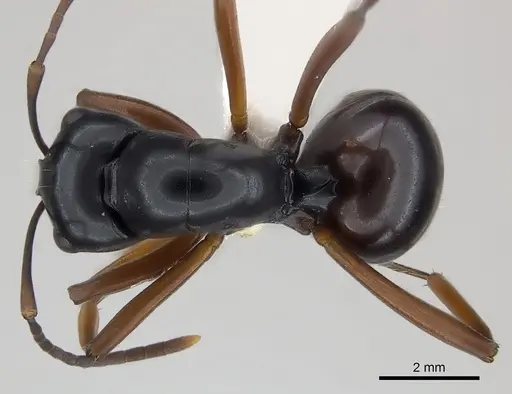
CASENT0903419
View on AntWeb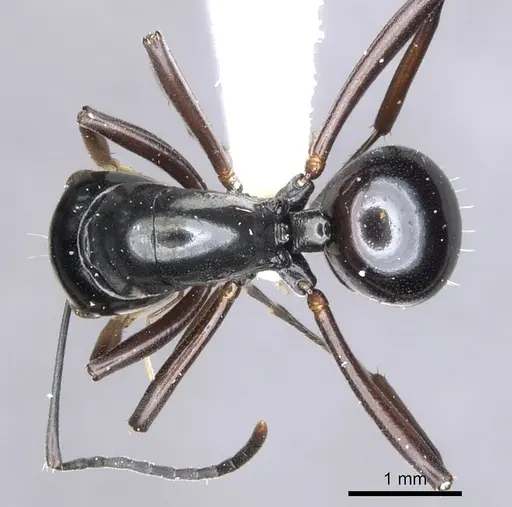
Literature
Loading distribution map...Loading products...