
Polyrhachis bohemia
- Sci. Name
- Polyrhachis bohemia
- Subgenus
- Hagiomyrma
- Tribe
- Camponotini
- Subfamily
- Formicinae
- Author
- Kohout, 2013
- Distribution
- Found in 1 countries
Introduction
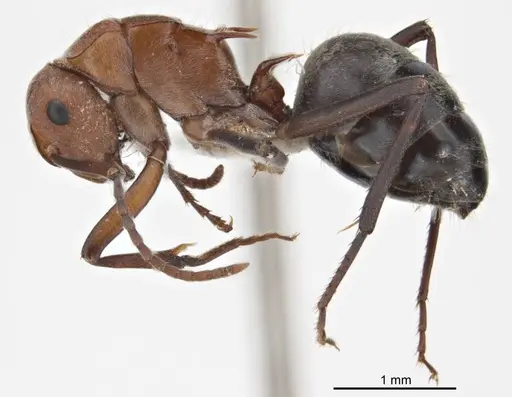
Polyrhachis bohemia is a medium-sized Australian ant from the subgenus Hagiomyrma. Workers measure 6.65-7.56 mm with a bright brick-red head and mesosoma and a darker chocolate-brown gaster . This species belongs to the schenkii species-group and is found in arid and semi-arid regions of northern tropical Australia, including the Kimberley region and Bohemia Downs . They are ground-nesters, creating colonies in soil , and are considered rare, with only small numbers recorded in surveys .
Quick Summary
- Difficulty: Hard
- Origin & Habitat: Arid and semi-arid regions of northern tropical Australia, particularly the Kimberley region in Western Australia, including Bohemia Downs and Mitchell Falls area [1][3].
- Colony Type: Colony structure is unconfirmed. Only worker and queen castes are described, but queen number and social structure are not documented in available research.
- Size & Growth:
- Antkeeping:
- Temperature: Based on their tropical distribution, keep them warm around 24-28°C [3]. Avoid temperatures below 20°C.
- Humidity: Keep nest substrate moderately dry to slightly moist, reflecting their arid to semi-arid natural habitat. Provide a humidity gradient with some dry areas.
- Diapause: Unknown, as a tropical species, they likely do not require hibernation, but this is unconfirmed. Monitor colony activity and adjust care seasonally.
- Nesting: Ground-nesting species [1]. Provide a naturalistic setup with deep soil (at least 5-10 cm) or a Y-tong/plaster nest designed for ground-nesting ants, connected to an outworld for foraging.
- Behavior: Polyrhachis ants are generally less aggressive and are considered subordinate in their ecosystem [3]. They lack a functional sting and spray formic acid for defense, which is typical for Formicinae ants. Escape risk is moderate due to their medium size, use standard barrier methods.
- Common Issues: stress from collection and transport can cause establishment failures in wild-caught colonies., incorrect nest setup (e.g., insufficient depth for ground-nesting) can prevent colony development., low temperatures or incorrect humidity can lead to colony decline.
Appearance and Identification
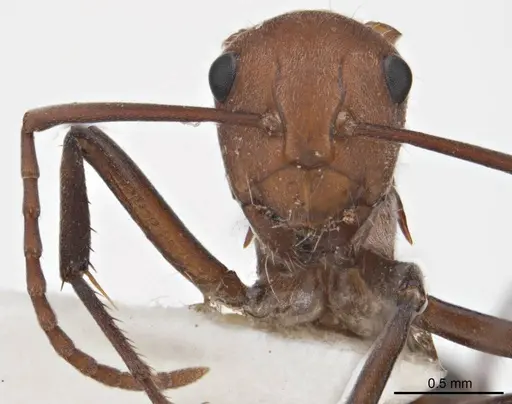
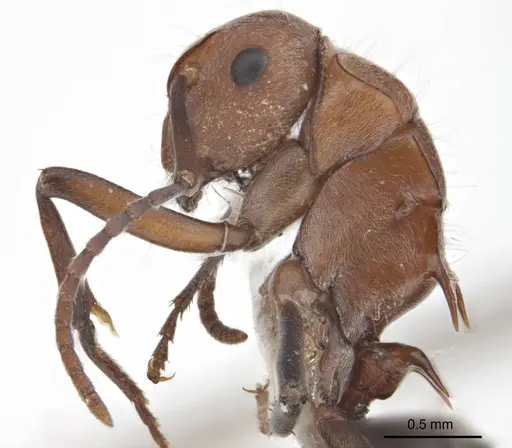
Polyrhachis bohemia is easily recognized by its two-tone coloration: bright brick-red head and mesosoma contrasted with a darker chocolate-brown gaster [1][2]. Workers measure 6.65-7.56 mm, and queens are slightly larger at 7.96 mm [1]. They have characteristic spines on the propodeum and petiole, and convex eyes that break the head outline.
Natural Distribution and Habitat
This species is endemic to northern tropical Australia, specifically arid and semi-arid regions like the Kimberley [1]. It has been recorded at Bohemia Downs and Mitchell Falls, often at laterite or sandstone sites [3]. Despite a wide distribution, it is rare, with only two individuals found in one survey [3].
Nesting Behavior
Like most Hagiomyrma species, Polyrhachis bohemia is a ground-nester, digging colonies in soil [1][4]. In captivity, provide a deep substrate layer or a suitable plaster nest, connected to an outworld for foraging. Given their arid habitat, keep the nest substrate moderately dry with some moist areas.
Feeding and Diet
As Formicinae ants, they are omnivorous. Offer sugar water or honey for energy, and protein sources like small insects (e.g., fruit flies, mealworms). Feed protein 2-3 times per week with constant sugar access. Remove uneaten prey to prevent mold.
Temperature and Seasonal Care
Keep temperatures around 24-28°C based on their tropical distribution [3]. Use a heating mat to create a gradient. Diapause is unconfirmed, reduce activity during cooler periods but avoid cold temperatures below 18-20°C.
Challenges and Considerations
This species is rare in the wild, making colonies hard to acquire [3]. Limited captive breeding data means care is often inferred. Ground-nesting requires specific setup, and wild-caught colonies may be stressed from collection.
Frequently Asked Questions
How long does it take for Polyrhachis bohemia to develop from egg to worker?
The exact timeline is unconfirmed, but based on Polyrhachis genus patterns, it likely takes 6-10 weeks at optimal temperature (around 26°C).
What do Polyrhachis bohemia ants eat?
They are omnivorous. Provide sugar water or honey for energy, and protein like small insects (fruit flies, mealworms) 2-3 times per week.
What temperature is best for Polyrhachis bohemia?
Keep them warm at 24-28°C, based on their tropical distribution [3]. Room temperature is acceptable, but warming increases activity.
What type of nest should I use for Polyrhachis bohemia?
They are ground-nesters, so use a naturalistic setup with deep soil or a Y-tong/plaster nest, connected to an outworld [1].
Are Polyrhachis bohemia good for beginners?
No, this species is not ideal for beginners due to rarity and lack of captive data. Care requires adaptation based on colony behavior.
How big do Polyrhachis bohemia colonies get?
Colony size is unknown. Field surveys recorded only small numbers [3], but related species may reach several hundred workers.
Do Polyrhachis bohemia need hibernation?
As a tropical species, they likely do not require hibernation, but this is unconfirmed. Monitor activity and adjust care seasonally.
Why is my Polyrhachis bohemia colony dying?
Common causes include stress from transport, incorrect humidity (they prefer drier conditions), low temperatures, or poor nutrition. Review your setup and care routine.
Can I keep multiple queens together?
The colony structure is unconfirmed. Without specific data, it is not recommended to combine unrelated queens. House foundresses separately until social structure is understood.
Report an Issue
The current care sheet is based fully on literature. See inconsistencies, or something that's incorrect? Please , it will be resolved after review from an admin. Contributing to the blogs tab also helps providing information, to make us be able to further improve the caresheets. Thank you for your support!
References

This caresheet is licensed under CC BY-SA 4.0 .
Community Blogs
ANTWEB1008702
View on AntWeb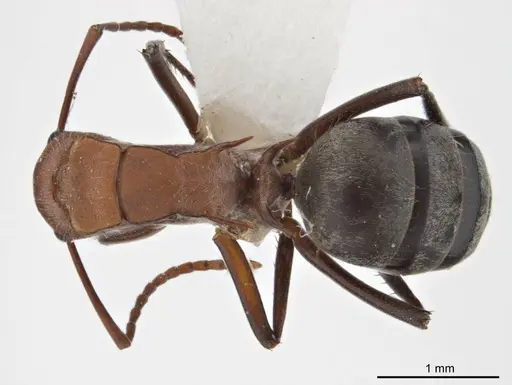
CASENT0887789
View on AntWeb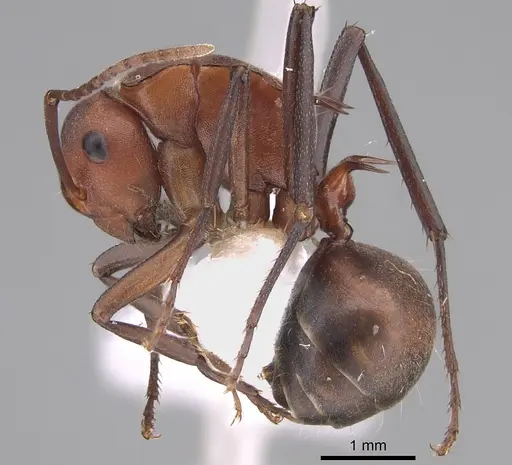
Literature
Loading distribution map...Loading products...