
Polyrhachis bellicosa
- Sci. Name
- Polyrhachis bellicosa
- Tribe
- Camponotini
- Subfamily
- Formicinae
- Author
- Smith, 1859
- Distribution
- Found in 4 countries
Introduction
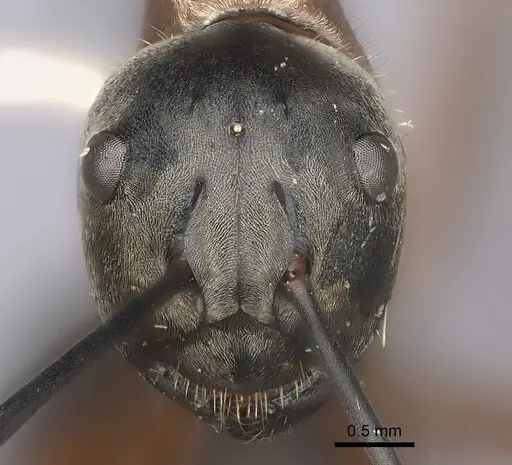
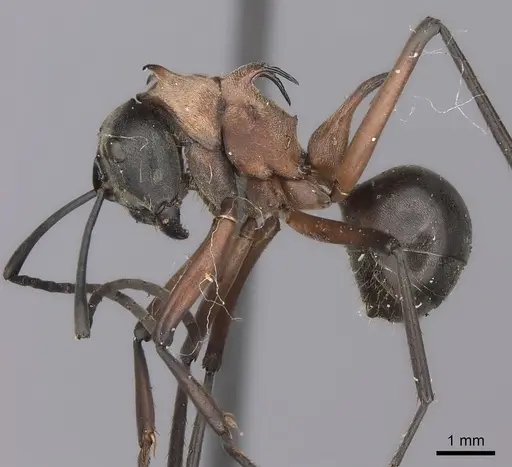
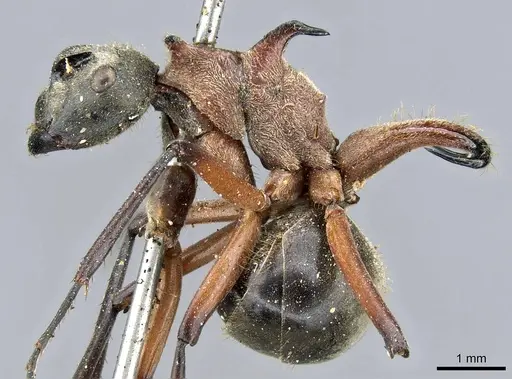
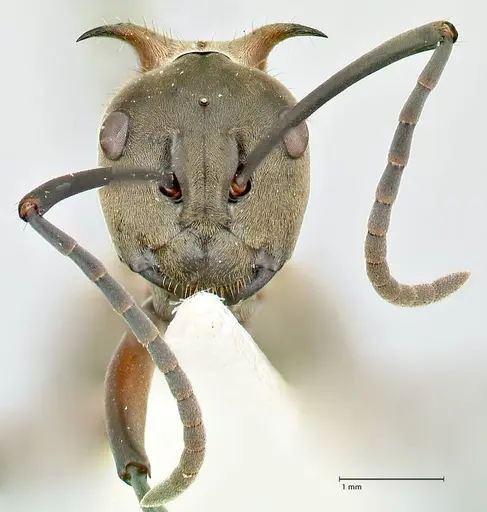
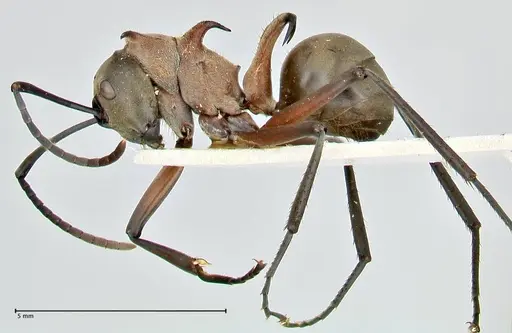
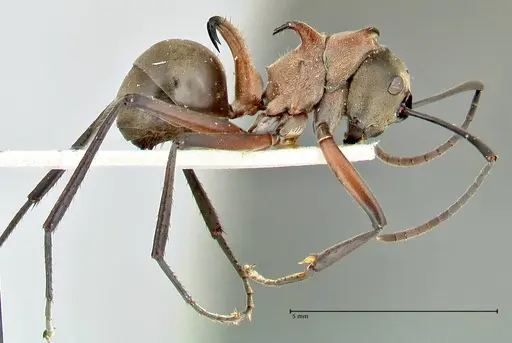
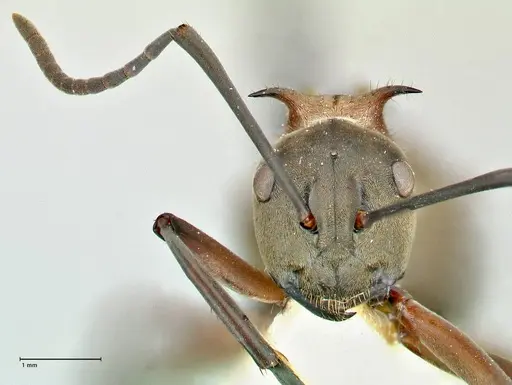
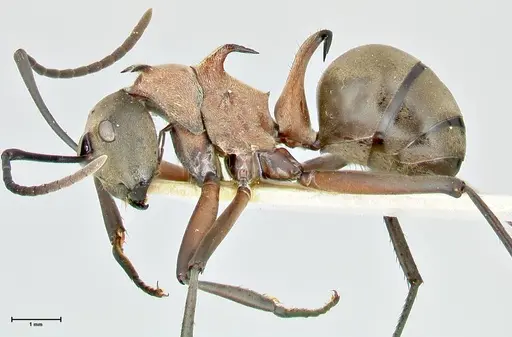
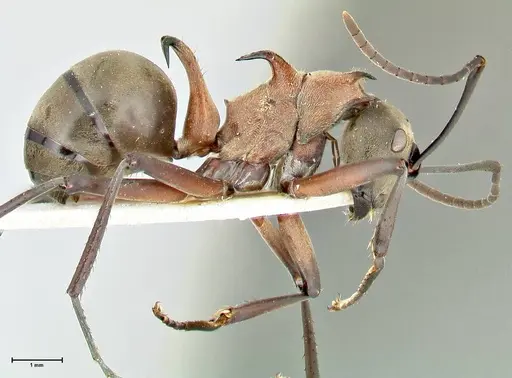
Polyrhachis bellicosa is a large arboreal ant with a spiny mesosoma and dark coloration. Workers are about 7.3-9.0 mm long, and queens are about 9.8-10.1 mm long . This species ranges from Southeast Asia through Indonesia and New Guinea to northern Australia, and it is the only member of the Polyrhachis subgenus in Australia . What makes P. bellicosa unique is its nest-building: they construct silk-bound nests high in vegetation, often 3-5 meters above ground, using larval silk to bind debris .
Quick Summary
- Difficulty: Medium
- Origin & Habitat: Native to Southeast Asia, Indonesia, New Guinea, and northern Australia (Cape York Peninsula). Found in tropical forests where it nests arboreally in vegetation 2-5 meters above ground, attaching nests to tree trunks using lianas and climbing vines [1][2][3].
- Colony Type: Single-queen colonies (monogyne). Each nest contains one queen, and colonies can grow very large with documented nests containing thousands to tens of thousands of workers [3][5][2].
- Size & Growth:
- Antkeeping:
- Temperature: Keep warm, around 25-28°C, based on tropical distribution. Use a heating cable to create a gradient.
- Humidity: Keep nest substrate consistently moist but not waterlogged, based on tropical forest habitat.
- Diapause: No, as a tropical species they do not require hibernation.
- Nesting: Arboreal nesters that use silk and vegetation debris. Provide climbing structures like twigs or cork bark for nest attachment [3][5][2].
- Behavior: Based on genus patterns, typically calm and non-aggressive. Workers are active foragers that maintain trails and use spines for defense. Escape risk is high due to arboreal nature, ensure tight-fitting lids.
- Common Issues: escape prevention is critical, they can squeeze through small gaps., tropical temperature requirements mean they need consistent warmth., large colony size requires progressive housing expansion., silk nest construction may clog equipment if loose materials are accessible., wild-caught colonies may have parasites that harm captive populations.
Housing and Nest Setup
You need arboreal-style housing for Polyrhachis bellicosa. These ants build nests 3-5 meters above ground in the wild, attaching them to trees with vines [1][2]. In captivity, provide cork bark, branches, or climbing structures for them to construct silk-bound nests. Use acrylic or plaster nests with vertical chambers, and include twigs for nest material. Test tubes work for founding colonies but upgrade as the colony grows [3][5][2].
Feeding and Diet
You should offer a varied diet. Workers tend trophobionts for honeydew and hunt small prey [6]. In captivity, provide sugar water or honey constantly, and protein like small insects 2-3 times per week. Remove uneaten food after 24-48 hours to prevent mold.
Temperature and Heating
Keep temperatures around 25-28°C for optimal health, as this is a tropical species. Use a heating cable on one side of the nest to create a gradient. Monitor with a thermometer, and avoid temperatures below 24°C for extended periods.
Colony Development and Growth
Colonies can grow to tens of thousands of workers, with one nest measuring nearly 50cm across [1]. Queens are about 9.8-10.1 mm long [1][2]. Development from egg to worker takes about 6-8 weeks at optimal temperatures. Pupae are in cocoons [3]. Growth is moderate, with first workers appearing in 2-3 months under good conditions [2][3].
Behavior and Temperament
You will find these ants generally calm and non-aggressive. They are active foragers with spines for defense. Workers climb well, so escape prevention is key. They are diurnal to crepuscular foragers.
Unique Nesting Behavior
You can observe sophisticated nest-building: they use larval silk to bind vegetation debris into nests [3][4][2]. In captivity, provide dried leaves or moss for them to weave. Nests are attached to vertical surfaces, so include branches or cork [3][4][2].
Frequently Asked Questions
How long does it take for Polyrhachis bellicosa to produce first workers?
Expect first workers about 6-8 weeks after egg laying at 25-28°C, based on genus patterns.
Can I keep Polyrhachis bellicosa in a test tube setup?
Yes, for founding colonies, but upgrade to larger housing as the colony grows [3].
What temperature do Polyrhachis bellicosa need?
Keep them at 25-28°C consistently, as they are tropical.
How big do Polyrhachis bellicosa colonies get?
Very large, up to tens of thousands of workers, with nests over 50cm across [1].
Are Polyrhachis bellicosa good for beginners?
They are medium difficulty due to temperature needs and escape risk, but calm temperament makes them rewarding with experience.
What do Polyrhachis bellicosa eat?
They are omnivores: offer sugar water and protein like insects [6].
Do Polyrhachis bellicosa need hibernation?
No, they do not require hibernation as a tropical species.
When should I move my colony to a formicarium?
Move when the colony has 50-100 workers or when test tubes are crowded, choosing a setup with vertical space [3].
Why are my Polyrhachis bellicosa dying?
Common causes include low temperature, low humidity, escapes, or parasites. Check conditions first.
What makes Polyrhachis bellicosa different from other ants?
They are arboreal weavers using larval silk for nests, with distinctive spines and large colonies [3][4].
Report an Issue
The current care sheet is based fully on literature. See inconsistencies, or something that's incorrect? Please , it will be resolved after review from an admin. Contributing to the blogs tab also helps providing information, to make us be able to further improve the caresheets. Thank you for your support!
References

This caresheet is licensed under CC BY-SA 4.0 .
Community Blogs
CASENT0217749
View on AntWeb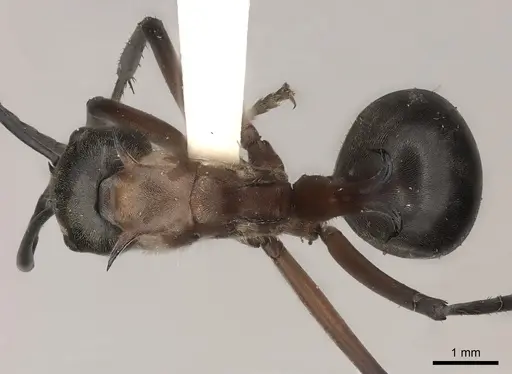
CASENT0901810
View on AntWeb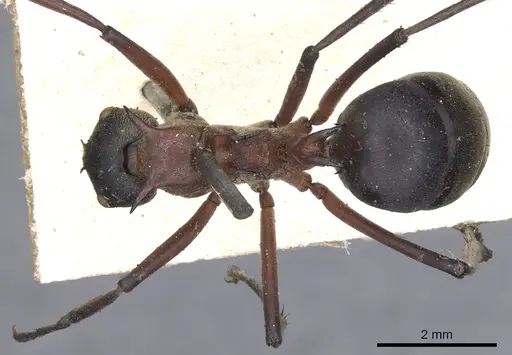
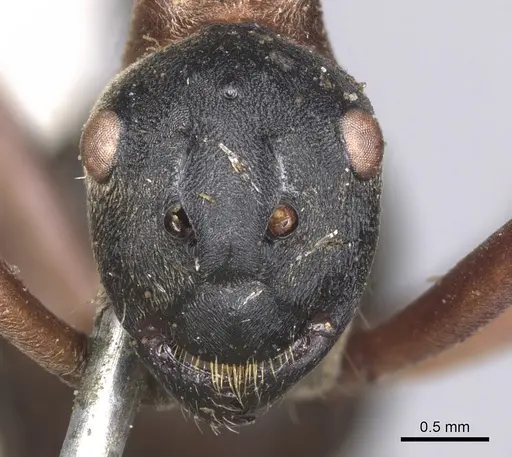
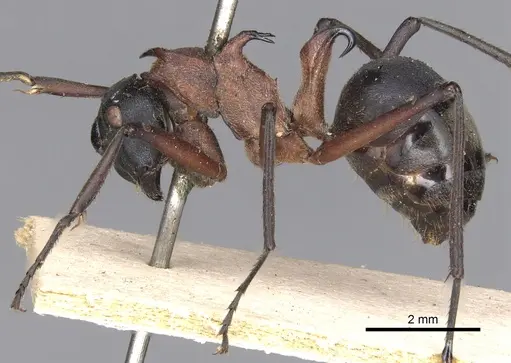
CASENT0905551
View on AntWeb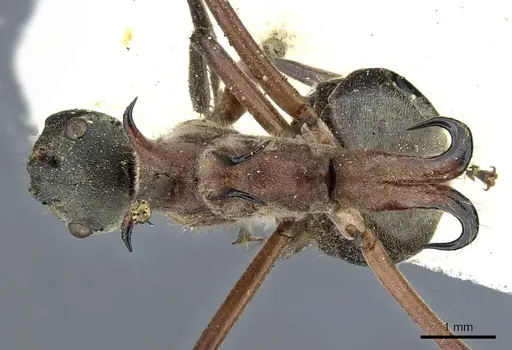
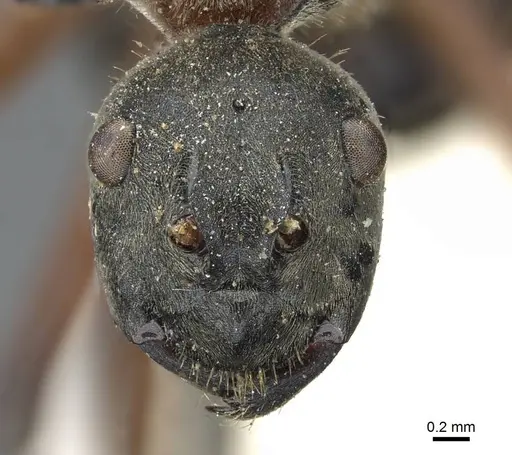
FOCOL2523
View on AntWeb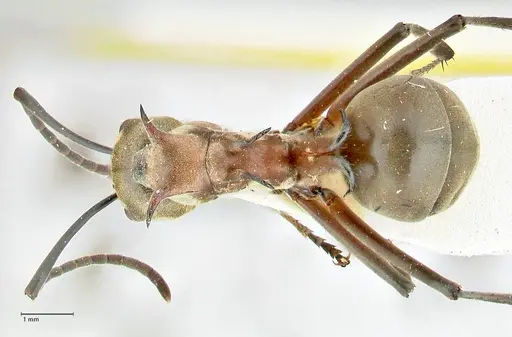
FOCOL2524
View on AntWeb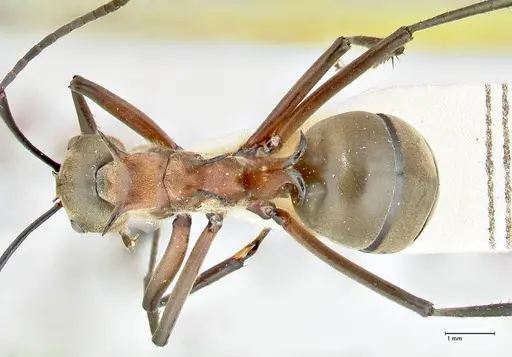
Literature
Loading distribution map...Loading products...