
Polyrhachis bamaga
- Sci. Name
- Polyrhachis bamaga
- Subgenus
- Hirtomyrma
- Tribe
- Camponotini
- Subfamily
- Formicinae
- Author
- Kohout, 1990
- Distribution
- Found in 1 countries
Introduction
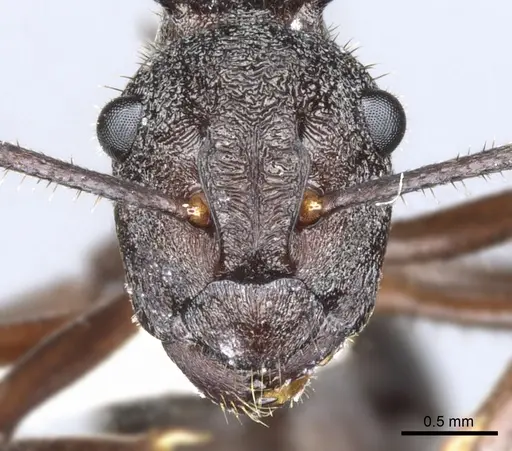
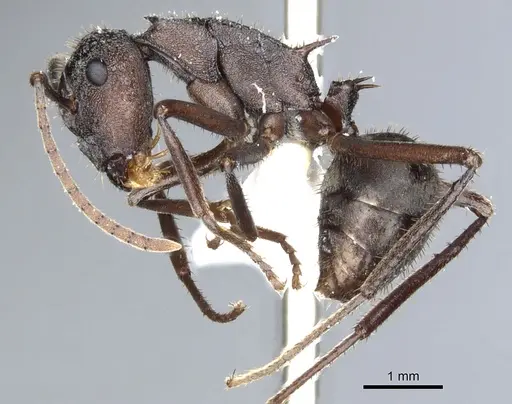
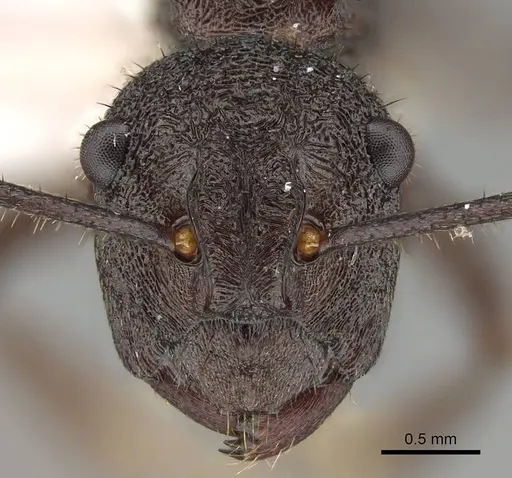
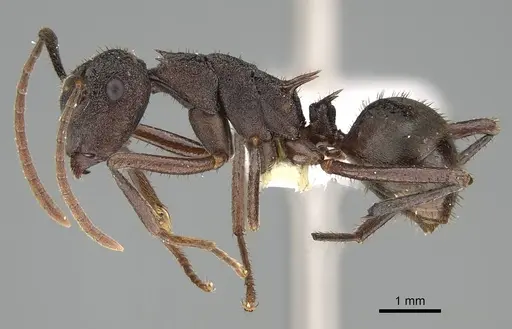
Polyrhachis bamaga is a medium-sized ant native to Cape York Peninsula in northern Queensland, Australia. Workers measure 7.00-8.01 mm in total length, with very dark reddish-brown coloration, prominent spines on the propodeum and petiole, and 5-dentate mandibles. The species inhabits lowland riverine rainforest edges, foraging over low vegetation . This species is only known from the original type specimens collected at Bamaga, and no additional specimens have been found despite searches .
Quick Summary
- Difficulty: Expert
- Origin & Habitat: Cape York Peninsula, Queensland, Australia (Bamaga at 10°53'S,142°23'E). Found along lowland riverine rainforest edges, foraging over low vegetation [1][2][3].
- Colony Type: Unconfirmed, colony structure has not been documented in scientific literature
- Size & Growth:
- Antkeeping:
- Temperature: Based on tropical habitat, maintain warm temperatures around 24-28°C [1].
- Humidity: Keep nest substrate consistently moist but not waterlogged, based on rainforest edge habitat [1].
- Diapause: Likely no diapause required due to tropical origin [1].
- Nesting: Based on Hirtomyrma subgenus, likely nest in dead wood or cavities [2].
- Behavior: No specific behavioral data. Based on genus patterns, likely moderate foragers. Escape risk is moderate due to medium size and climbing ability [1].
- Common Issues: temperature must be carefully maintained due to tropical requirements, escape risk due to climbing ability, use standard barriers, no established husbandry practices, species is extremely rare
Rarity and Availability
Polyrhachis bamaga is one of the rarest ants in the antkeeping hobby. It is only known from a handful of specimens collected at its type locality in Bamaga, Cape York Peninsula, Australia. Despite dedicated field searches, no additional specimens have been found since the original collection [3]. This means the species is essentially unavailable to antkeepers, and no established captive husbandry practices exist. If you encounter this species for sale, verify the source and ensure legal acquisition.
Natural History and Habitat
This species is known only from the edge of lowland riverine rainforest along the Pascoe River near Bamaga. Specimens were collected foraging over low vegetation and flood debris in association with Polyrhachis paxilla [1][3]. The area has tropical climate with high humidity and warm temperatures. Based on the subgenus Hirtomyrma, these ants likely nest in pre-existing cavities in dead wood, under bark, or in vegetation [2].
Temperature and Humidity Requirements
As a tropical species, Polyrhachis bamaga requires warm conditions. Maintain temperatures around 24-28°C, with a slight gradient for ants to select their preferred zone [1]. Humidity should be kept high by keeping the nest substrate consistently moist but not waterlogged, based on rainforest edge habitat [1]. Ensure adequate ventilation to prevent mold.
Feeding and Diet
The specific diet is not documented, but based on foraging observations over low vegetation, they likely feed on honeydew, nectar, and small invertebrates [1]. In captivity, offer sugar water or honey as a constant carbohydrate source and small insects for protein. Start with conservative feeding and observe acceptance.
Housing and Nesting
No specific nesting data exists, but based on Hirtomyrma subgenus, provide a naturalistic setup with multiple small chambers, dead leaves, or bark pieces [2]. For escape prevention, use standard barriers due to moderate climbing ability.
Frequently Asked Questions
Is Polyrhachis bamaga available for antkeepers?
No. This species is extremely rare, it is only known from the original type specimens collected in 1988 at Bamaga, Cape York Peninsula, Australia. Despite dedicated field searches, no additional specimens have been found [3]. There are no established breeding populations in the antkeeping hobby.
How do I care for Polyrhachis bamaga?
Care requirements are not established since this species has never been kept in captivity. Based on its tropical origin, provide warm temperatures (24-28°C), high humidity with moist substrate, and a naturalistic setup [1][2]. This is an expert-only species.
What does Polyrhachis bamaga look like?
Workers are medium-sized at 7.00-8.01 mm total length with very dark reddish-brown coloration. They have prominent spines on the propodeum and petiole,5-toothed mandibles, and long bristle-like hairs on the gaster [1][2].
Where does Polyrhachis bamaga live?
This species is known only from Cape York Peninsula in northern Queensland, Australia, specifically the Bamaga area along lowland riverine rainforest edges [1][3].
How big do Polyrhachis bamaga colonies get?
Unknown. Only a small number of worker specimens have ever been collected, and no colony size data exists [3].
Does Polyrhachis bamaga need hibernation?
Likely no diapause is required due to its tropical origin [1].
What do Polyrhachis bamaga eat?
Specific diet is unknown, but based on foraging observations, they likely feed on honeydew, nectar, and small invertebrates [1]. In captivity, offer sugar water and small insects.
Is Polyrhachis bamaga good for beginners?
No. This species is not recommended for any level of keeper due to extreme rarity and no established husbandry practices [3].
How long does it take for Polyrhachis bamaga to develop from egg to worker?
Unknown, no development data exists for this species.
Report an Issue
The current care sheet is based fully on literature. See inconsistencies, or something that's incorrect? Please , it will be resolved after review from an admin. Contributing to the blogs tab also helps providing information, to make us be able to further improve the caresheets. Thank you for your support!
References

This caresheet is licensed under CC BY-SA 4.0 .
Community Blogs
CASENT0903354
View on AntWeb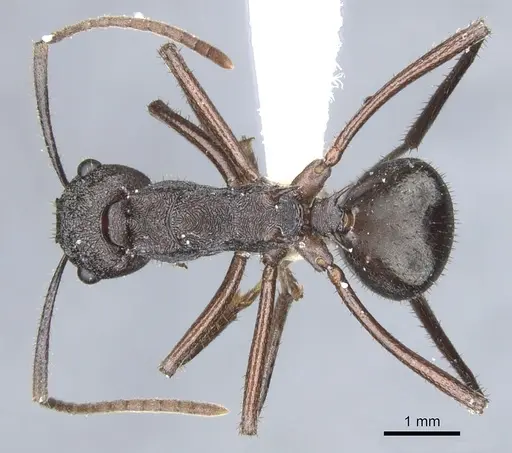
CASENT0919846
View on AntWeb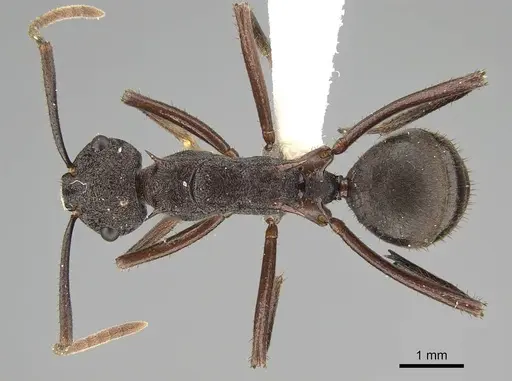
Literature
Loading distribution map...Loading products...