
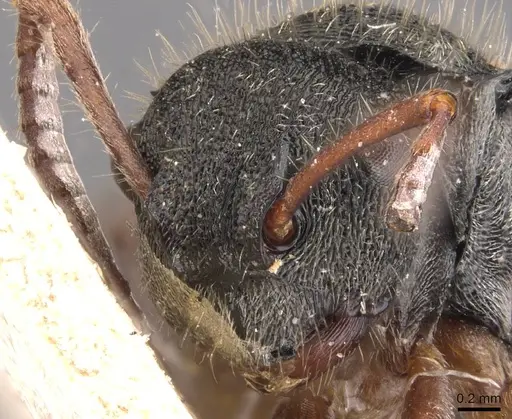
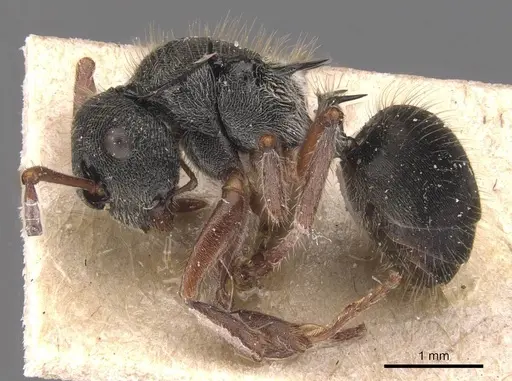
Polyrhachis argenteosignata
- Sci. Name
- Polyrhachis argenteosignata
- Subgenus
- Chariomyrma
- Tribe
- Camponotini
- Subfamily
- Formicinae
- Author
- Emery, 1900
- Distribution
- Found in 2 countries
Introduction
Polyrhachis argenteosignata is a tropical ant species originally described from New Guinea by Emery in 1900 . It belongs to the subgenus Chariomyrma, primarily found in Australia and the Australasian region . The species has been recorded from New Britain and Papua New Guinea, with additional records from northern Australia . The specific biology of P. argenteosignata is poorly documented, making it a species for experienced keepers who enjoy working with less-studied tropical ants.
Quick Summary
- Difficulty: Medium
- Origin & Habitat: Tropical Australasian region, Papua New Guinea, New Britain, and northern Australia. They inhabit rainforest and moist forest habitats in lowland areas [1][2].
- Colony Type: Colony structure is unconfirmed. Based on Polyrhachis genus patterns, likely monogyne, but no specific data for this species.
- Size & Growth:
- Queen: Size data unavailable, no specific measurements in context. Inferred from Polyrhachis genus patterns as approximately 10-12 mm.
- Worker: Size data unavailable, no specific measurements in context. Inferred from Polyrhachis genus patterns as approximately 6-9 mm.
- Colony: Up to several hundred workers, estimated from related Polyrhachis species.
- Growth: Moderate, typical for tropical Formicinae.
- Development: Estimated 6-8 weeks at tropical temperatures. (Development time is inferred from related Polyrhachis and Formicinae species. Actual timing may vary with temperature.)
- Antkeeping:
- Temperature: Keep warm and stable, roughly 24-28°C, based on tropical habitat inference.
- Humidity: Keep nest substrate consistently moist but not waterlogged, based on rainforest habitat.
- Diapause: No, tropical species do not require hibernation.
- Nesting: Arboreal nesting preferences inferred from Polyrhachis genus. Provide wooden or plaster nests with climbing structures.
- Behavior: Generally calm and good climbers, based on Polyrhachis patterns. Workers are active foragers and may attempt escapes, so secure barriers are important.
- Common Issues: tropical species are sensitive to temperature drops, keep warm year-round., arboreal nature means they need vertical space and climbing structures, flat horizontal nests are not ideal., escape prevention is important, they are good climbers and will find gaps in lids., poorly documented species means less guidance is available, experience with related species helps., humidity control is critical, too wet causes mold, too dry causes desiccation.
Housing and Nest Preferences
Polyrhachis argenteosignata is inferred to be arboreal or semi-arboreal, nesting in above-ground locations like hollow twigs or under bark [2]. In captivity, use wooden formicariums or plaster nests that mimic natural sites. Provide climbing structures such as twigs or cork bark in the outworld. Test tubes can work for founding colonies, but transfer to a suitable nest once the colony grows. Avoid pure soil nests, as they do not match arboreal preferences.
Feeding and Diet
Like most Polyrhachis species, these ants are omnivorous, likely foraging for honeydew and small insects [2]. In captivity, offer sugar water or honey constantly, and protein like fruit flies or mealworms 2-3 times per week. Remove uneaten prey after 24 hours to prevent mold.
Temperature and Seasonal Care
As a tropical species, maintain warm conditions year-round, roughly 24-28°C. A temperature gradient can be created with a heat source on one side. They do not require diapause, but activity may decrease if temperatures drop below 22°C.
Behavior and Handling
Workers are generally calm and active foragers, exploring both vertical and horizontal surfaces. They are good climbers, so ensure secure lids with no gaps. While they may have a formic acid spray defense, it is not dangerous to humans.
Frequently Asked Questions
How long does it take for Polyrhachis argenteosignata to produce first workers?
Based on typical Formicinae development, expect first workers approximately 6-8 weeks after queen lays eggs, provided temperatures are maintained.
What is the best nest type for Polyrhachis argenteosignata?
Wooden or plaster nests with climbing structures work best, as these ants are inferred to be arboreal [2].
Can I keep multiple queens together?
This has not been documented for this species. Most Polyrhachis species are monogyne, so combining queens is not recommended.
What do Polyrhachis argenteosignata eat?
They are omnivorous. Offer sugar water or honey constantly, and protein like small insects 2-3 times per week [2].
Are Polyrhachis argenteosignata good for beginners?
This is not an ideal beginner species due to limited documented care and specific arboreal requirements.
Do they need hibernation?
No, as a tropical species, they do not require hibernation.
How big do colonies get?
Colonies likely reach up to several hundred workers, based on related Polyrhachis species.
Why are my ants not moving much?
Check temperatures first, if below 22°C, activity decreases. Also ensure adequate humidity and no other stressors.
When should I move them to a formicarium?
Transfer from a test tube once the colony has several workers or becomes cramped, ensuring the new nest has arboreal features.
Report an Issue
The current care sheet is based fully on literature. See inconsistencies, or something that's incorrect? Please , it will be resolved after review from an admin. Contributing to the blogs tab also helps providing information, to make us be able to further improve the caresheets. Thank you for your support!
References

This caresheet is licensed under CC BY-SA 4.0 .
Community Blogs
CASENT0217746
View on AntWeb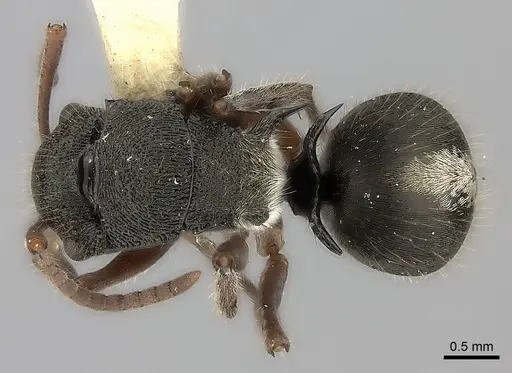
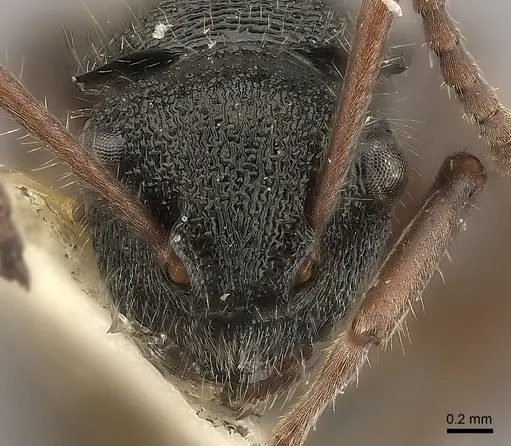
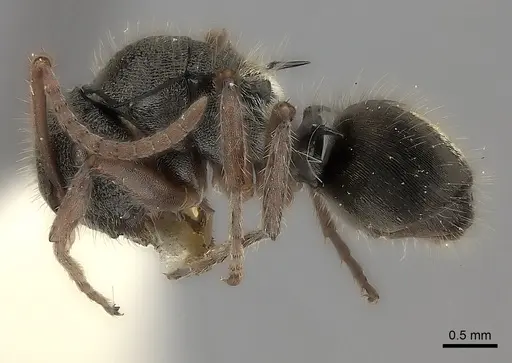
CASENT0905586
View on AntWeb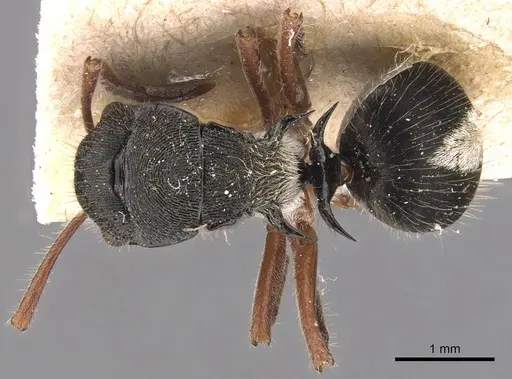
Literature
Loading distribution map...Loading products...