
Polyrhachis arachne
- Sci. Name
- Polyrhachis arachne
- Subgenus
- Myrmhopla
- Tribe
- Camponotini
- Subfamily
- Formicinae
- Author
- Emery, 1896
- Distribution
- Found in 2 countries
Introduction
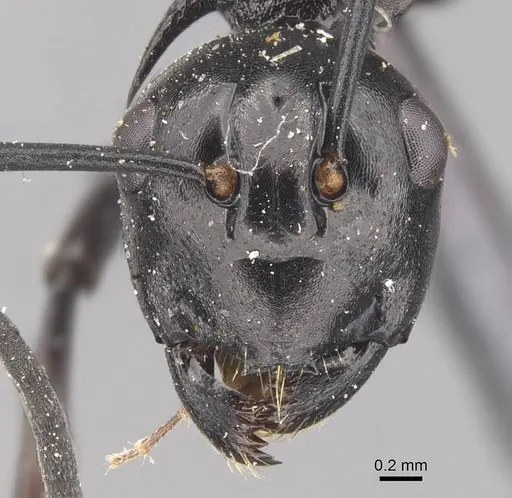
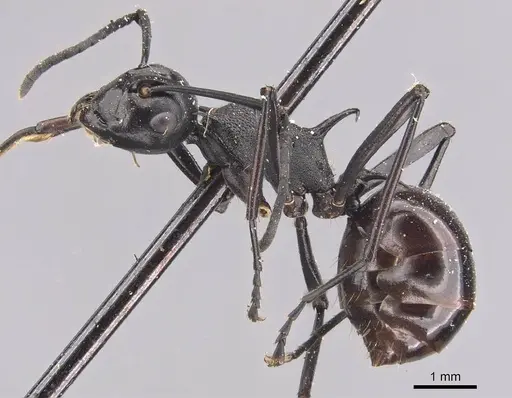
Polyrhachis arachne is an arboreal ant native to Indonesia and Thailand, found in broad-leaved bamboo habitats. Workers are medium-sized with a dark body and spines on the thorax . Colonies nest in dead bamboo internodes and build silk pavilions under leaves to tend hemipterans . This species is polydomous, meaning colonies occupy multiple connected nest sites across bamboo internodes, with up to 1088 workers per colony . They use silk to narrow nest entrances, a behavior distinct from close relatives like Polyrhachis schellerichae .
Quick Summary
- Difficulty: Medium
- Origin & Habitat: Indonesia (Java) and Thailand in broad-leaved bamboo habitats, nesting in dead internodes and building silk pavilions under leaves [1][3][2].
- Colony Type: Monogyne (single queen) and polydomous, with colonies spread across multiple bamboo internodes and leaf pavilions [4][2].
- Size & Growth:
- Antkeeping:
- Temperature: Keep warm, roughly 24-28°C, based on tropical habitat [1].
- Humidity: Keep nest substrate consistently moist but not waterlogged, as bamboo habitats are humid [2][1].
- Diapause: No, tropical species do not require hibernation [1].
- Nesting: Arboreal nests with vertical chambers, using Y-tong, plaster, or bamboo sections. Provide silk surfaces for pavilion building [5][2].
- Behavior: Workers are calm and non-aggressive, using short-term trails for foraging. They tend hemipterans for honeydew and collect dead insects. Escape risk is moderate due to climbing ability [6][7].
- Common Issues: humidity control is critical, too dry and colonies stagnate, too wet and mold becomes a problem., they need vertical nesting spaces scaled to their arboreal lifestyle., polydomous colonies may spread across multiple chambers, making it hard to track the queen., wild-caught colonies may have parasites or be stressed from bamboo collection., their need for hemipteran partners means they may not thrive on sugar alone, protein is important.
Housing and Nest Setup
You should provide arboreal-style housing that mimics bamboo internodes. Use Y-tong, plaster, or bamboo sections with vertical chambers. Cork or cardboard tubes give surfaces for walking and humidity absorption. Because colonies are polydomous, connect multiple nest units with tubing. Outworlds should include vertical structures like branches for climbing. Position a water tube so condensation reaches the nest chambers [5][2].
Feeding and Diet
You should offer sugar water or honey water constantly, and feed dead insects like fruit flies or mealworms 2-3 times weekly. In the wild, they tend hemipterans for honeydew, so protein is important [6][2].
Temperature and Seasonal Care
Keep the nest area warm at roughly 24-28°C with minimal fluctuations. A heating cable on one side can create a gradient. High humidity complements warmth, mist the outworld occasionally and keep water tubes filled, but ensure ventilation to prevent mold [1].
Colony Structure and Polydomy
Colonies are polydomous, meaning they spread across multiple nest sites. This is normal behavior, not a sign of swarming. When setting up connected nests, ensure passages are wide enough for workers, and brood may concentrate in warm, humid chambers [2][6].
Behavior and Foraging
Workers use short-term trails to food sources and are competent climbers. They are generally calm and may flee rather than attack. Escape prevention is important due to their climbing ability. Activity is higher during warmer hours [6][7].
Frequently Asked Questions
Can I keep Polyrhachis arachne in a test tube setup?
Standard horizontal test tubes are not ideal. Use vertical nests like Y-tong or bamboo sections to mimic their natural arboreal habitat [1].
What do Polyrhachis arachne ants eat?
They need sugar sources like honey water and protein from dead insects 2-3 times weekly [6][2].
How long does it take for Polyrhachis arachne to raise first workers?
Based on related species, expect 6-8 weeks from egg to worker at tropical temperatures [5].
Do Polyrhachis arachne ants need hibernation?
No, they are tropical and do not require hibernation [1].
Are Polyrhachis arachne ants aggressive?
No, they are generally calm and prefer to flee when threatened [6].
How big do Polyrhachis arachne colonies get?
Mature colonies can reach up to 1088 workers, distributed across multiple nest sites [2].
Can I keep multiple queens together in one setup?
No, P. arachne is monogyne, colonies have a single queen. Multiple queens will fight [4].
Why is my Polyrhachis arachne colony not growing?
Check temperature (24-28°C), humidity (moist but ventilated), and food (sugar constant + protein weekly). Ensure vertical nesting space. If conditions are correct, the colony may be stressed [1].
When should I move my colony to a formicarium?
Move when the colony reaches 30-50 workers or outgrows the founding setup. Use a formicarium with vertical chambers and secure connections [1].
Report an Issue
The current care sheet is based fully on literature. See inconsistencies, or something that's incorrect? Please , it will be resolved after review from an admin. Contributing to the blogs tab also helps providing information, to make us be able to further improve the caresheets. Thank you for your support!
References

This caresheet is licensed under CC BY-SA 4.0 .
Community Blogs
CASENT0217744
View on AntWeb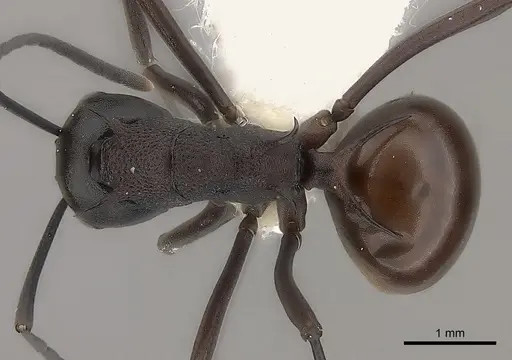
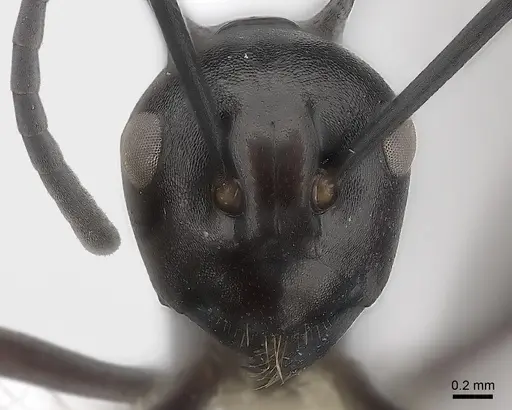
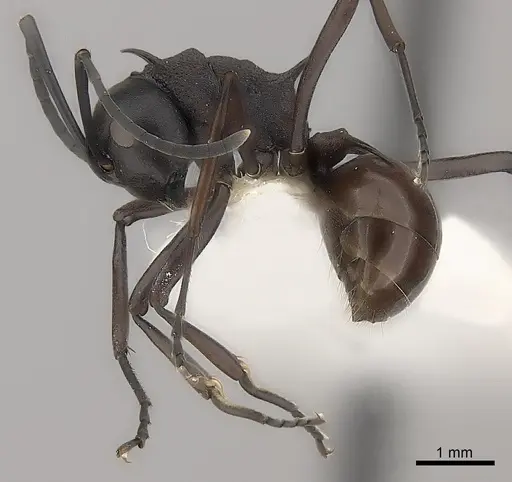
CASENT0905640
View on AntWeb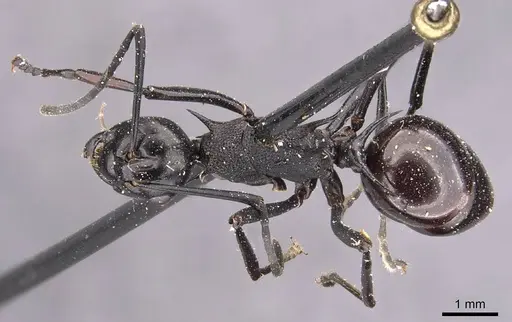
Literature
Loading distribution map...Loading products...