
Polyrhachis andrei
- Sci. Name
- Polyrhachis andrei
- Subgenus
- Myrma
- Tribe
- Camponotini
- Subfamily
- Formicinae
- Author
- Emery, 1921
- Distribution
- Found in 1 countries
Introduction
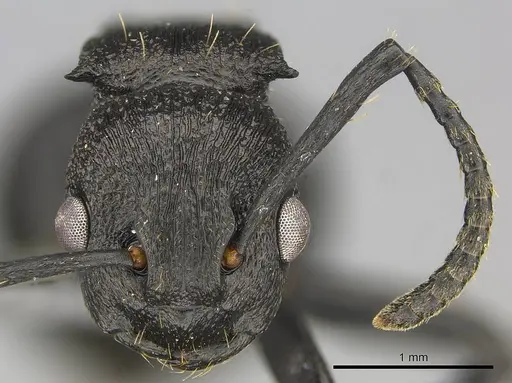
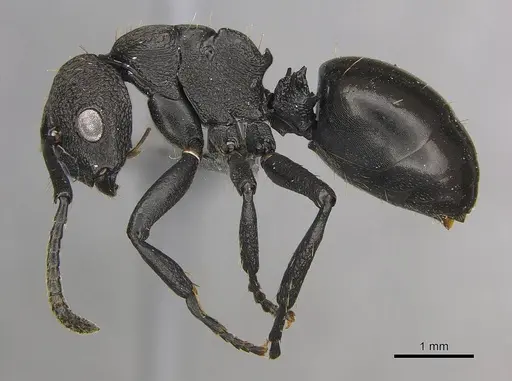
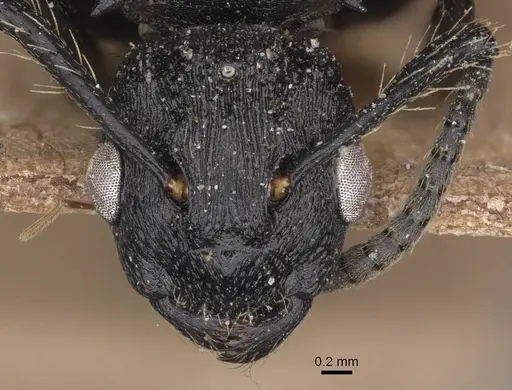
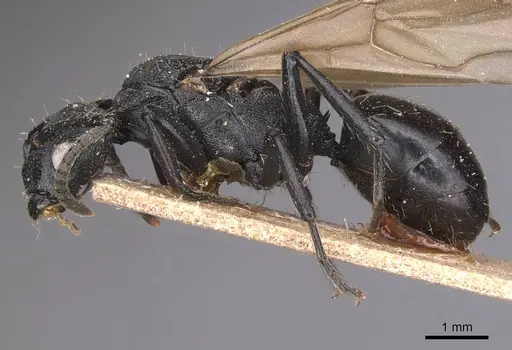
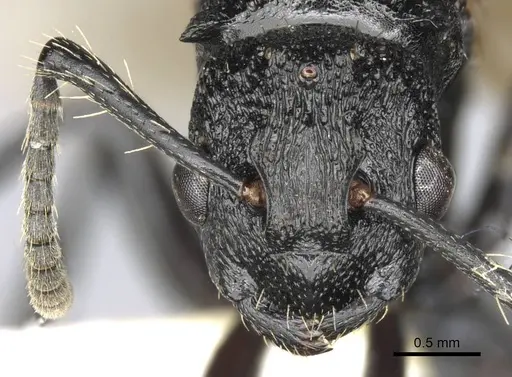
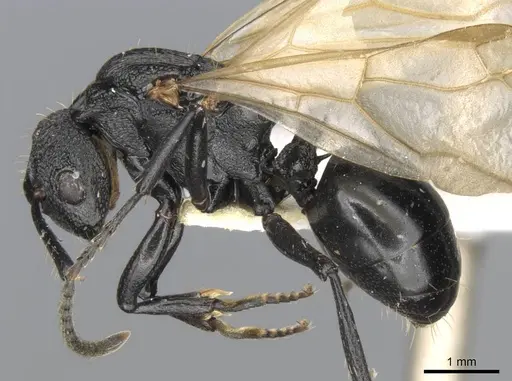
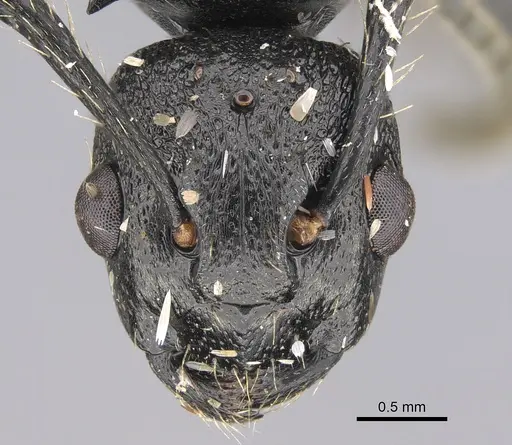
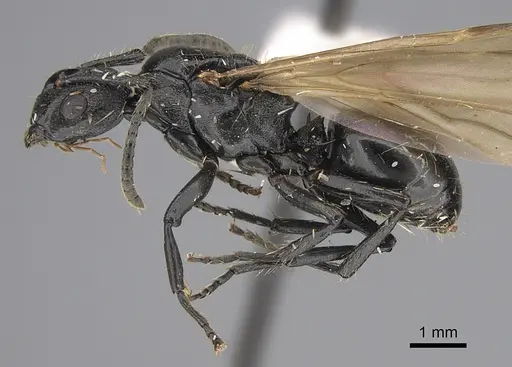
Polyrhachis andrei is a black ant with six prominent spines on the petiole . Eyes sit near the middle of the head sides . Full body size is not recorded, but they likely fall around 4 to 6 mm based on typical Polyrhachis patterns . They range across central and west Africa, including Cameroon, Congo, Ghana, and Tanzania . You will find them in primary forests, usually collected from the ground . The militaris species group stands out for its elaborate spiny projections. Polyrhachis andrei shares the six-petiole spine trait with only one other African species, Polyrhachis decemdentata . You can tell them apart by looking at the hairs: Polyrhachis andrei has sparse, stiff hairs mostly at the tips of the legs and antennae, while Polyrhachis decemdentata has thin hairs spread evenly across the legs and antennae .
Quick Summary
- Difficulty: Medium
- Origin & Habitat: Central to West Africa, including Cameroon, Congo, Ghana, and Tanzania. They live in primary forests [2][1].
- Colony Type: Colony structure is unconfirmed. No captive observations exist [1].
- Size & Growth:
- Queen: size unknown, inferred from Polyrhachis genus (~4-6 mm)
- Worker: size unknown, inferred from Polyrhachis genus (~4-6 mm)
- Colony: Up to several hundred workers [1]
- Growth: Unknown
- Development: Unknown. Based on tropical Polyrhachis patterns, expect roughly 6 to 10 weeks at warm temperatures. (Development timeline has not been directly studied. Tropical species typically develop faster than temperate ones.)
- Antkeeping:
- Temperature: Likely 24 to 28°C based on tropical distribution. Start here and watch how they react.
- Humidity: Keep the nest substrate consistently moist but not waterlogged. Primary forest habitat suggests they prefer stable humidity.
- Diapause: Unknown, but likely not required given their tropical range.
- Nesting: No specific nesting data exists. Most Polyrhachis nest in vegetation, under bark, or in hollow stems. A plaster nest, soil nest, or 3D-printed nest with multiple chambers works well.
- Behavior: Behavior is unstudied in captivity. Based on genus patterns, they are likely docile. Workers are small enough that escape prevention matters, but they are not tiny enough to be extreme risks. They likely forage actively. They lack a sting and will bite while spraying formic acid from an acidopore if threatened.
- Common Issues: limited species-specific data means you must rely on genus patterns for care, no established captive breeding protocols exist, wild-caught colonies may carry unknown parasites or diseases, development rate is unknown, making health monitoring difficult, temperature and humidity preferences are estimates based on habitat
Species Identification and Range
Polyrhachis andrei belongs to the militaris group. The most notable feature is the six petiolar spines or teeth [1]. Only two African Polyrhachis species share this trait [1]. You can separate Polyrhachis andrei from Polyrhachis decemdentata by checking the hairs [1]. Polyrhachis andrei has sparse, stiff standing hairs mostly at the tips of the tibiae and scapes [1]. Polyrhachis decemdentata has abundant, thin hairs spread evenly across the legs and scapes [1]. The species was originally described from a queen collected in Cameroon by Emery in 1921 [1]. The worker caste received its first formal description in 2016 by Rigato [1]. The distribution covers the Afrotropical region, including Cameroon, Congo, Ghana, and Tanzania [2].
Natural Habitat
This species has been collected from primary forest environments in the Naira region of the Democratic Republic of Congo [2]. The primary forest habitat suggests they prefer shaded, humid conditions with stable temperatures [2]. As a tropical African species, they likely experience warm temperatures year-round with high humidity [2]. The militaris group species are typically ground-dwelling to semi-arboreal [2]. Specific nesting habits for Polyrhachis andrei remain unknown [1]. In captivity, providing a naturalistic setup that mimics forest floor conditions works best [2].
Housing and Nesting
Specific nesting data does not exist for Polyrhachis andrei [1]. Most Polyrhachis species nest in vegetation, under loose bark, or in hollow stems [2]. A plaster nest, soil nest, or 3D-printed nest with multiple chambers works well for this genus [2]. Given their tropical origin, they need humidity but also some ventilation to prevent mold [2]. A naturalistic setup with climbing structures and moss can simulate their natural environment [2]. Keep the nest substrate consistently moist but not waterlogged [2].
Feeding and Diet
Polyrhachis species are typically omnivorous [2]. They feed on honeydew, nectar, and small insects [2]. In captivity, you should offer a varied diet [2]. Provide sugar water or honey as a constant energy source [2]. Offer protein sources like small crickets, mealworms, or other insects [2]. Since this species comes from primary forest, they likely forage actively on vegetation and the forest floor [2]. Feed protein two to three times per week [2]. Keep sugar water available at all times [2]. Remove uneaten prey after 24 hours to prevent mold [2].
Temperature and Seasonal Care
As a tropical African species from primary forest, Polyrhachis andrei likely prefers warm, stable temperatures around 24 to 28°C [2]. Avoid temperature drops below 20°C [2]. Unlike temperate species, they probably do not require a true diapause period [2]. If you keep them in a temperate climate, you may see reduced activity during winter months when room temperatures drop [2]. A heating cable on one side of the nest can create a temperature gradient [2]. This allows the colony to self-regulate [2]. Monitor colony activity closely [2]. If workers cluster near the heat source, increase temperature slightly [2].
Frequently Asked Questions
How long does it take for Polyrhachis andrei to produce first workers?
The egg-to-worker timeline is unknown for this species [1]. Based on typical Polyrhachis patterns at tropical temperatures, expect roughly 6 to 10 weeks from egg to first worker [2]. This is an estimate only [2].
What do Polyrhachis andrei ants eat?
They are likely omnivorous like other Polyrhachis species [2]. Offer sugar water or honey as a constant energy source [2]. Provide protein sources like small crickets, mealworms, or other insects [2]. Feed protein two to three times per week [2].
Are Polyrhachis andrei good for beginners?
This species is not recommended for beginners due to the complete lack of captive care data [1]. The worker was only described in 2016,meaning there is no established protocol for keeping this species alive in captivity [1]. Consider starting with more established species like Lasius niger or Camponotus species [2].
What temperature do Polyrhachis andrei need?
Based on their tropical African distribution, aim for 24 to 28°C [2]. Avoid temperatures below 20°C [2]. A heating cable on part of the nest can provide a gradient [2].
How big do Polyrhachis andrei colonies get?
Colony size is unknown [1]. Based on related Polyrhachis species, colonies may reach up to several hundred workers over time [2].
Can I keep multiple queens together?
Colony structure is unconfirmed for this species [1]. No data exists on whether they are single-queen or multi-queen colonies [1]. Do not combine unrelated queens without specific knowledge of their social structure [1].
What type of nest should I use for Polyrhachis andrei?
A plaster nest, soil nest, or 3D-printed nest with multiple chambers works well [2]. Since Polyrhachis are often semi-arboreal, include climbing structures in the outworld [2]. Keep the nest humid but well-ventilated [2].
Do Polyrhachis andrei need hibernation?
Likely no [2]. As a tropical species from central to west Africa, they probably do not require a true diapause [2]. They may show reduced activity in cooler conditions but should be kept warm year-round [2].
Why is so little known about Polyrhachis andrei?
The worker of this species was only formally described in 2016 by Rigato [1]. Previously it was only known from queens described by Emery in 1921 [1]. This is a newly described species with virtually no biological or ecological research [1]. Captive keeping information is essentially nonexistent [1].
Report an Issue
The current care sheet is based fully on literature. See inconsistencies, or something that's incorrect? Please , it will be resolved after review from an admin. Contributing to the blogs tab also helps providing information, to make us be able to further improve the caresheets. Thank you for your support!
References

This caresheet is licensed under CC BY-SA 4.0 .
Community Blogs
CASENT0250043
View on AntWeb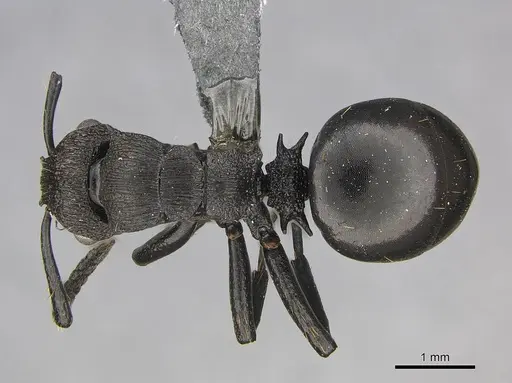
CASENT0905622
View on AntWeb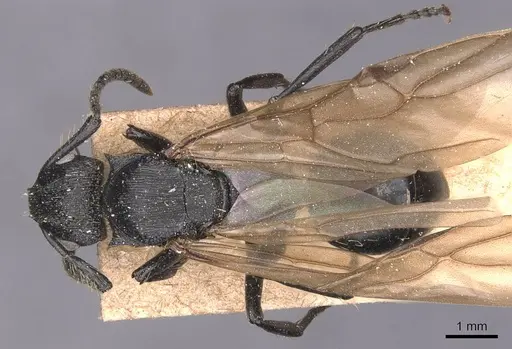
CASENT0906824
View on AntWeb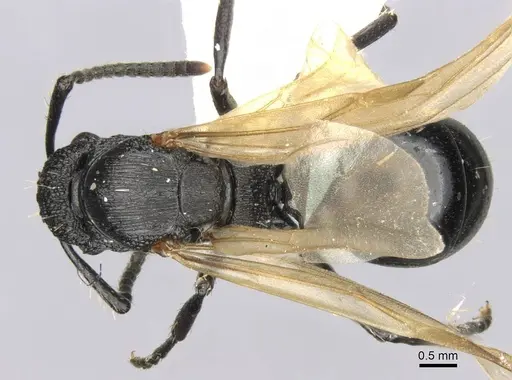
CASENT0923480
View on AntWeb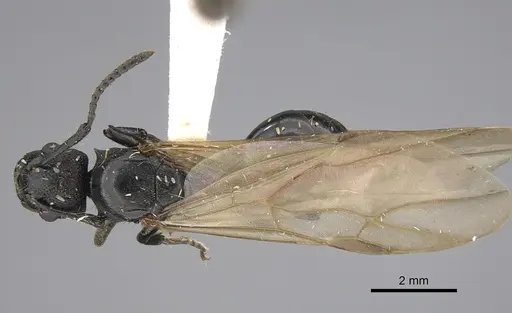
Literature
Loading distribution map...Loading products...