
Polyrhachis aculeata
- Sci. Name
- Polyrhachis aculeata
- Subgenus
- Myrma
- Tribe
- Camponotini
- Subfamily
- Formicinae
- Author
- Mayr, 1879
- Distribution
- Found in 1 countries
Introduction
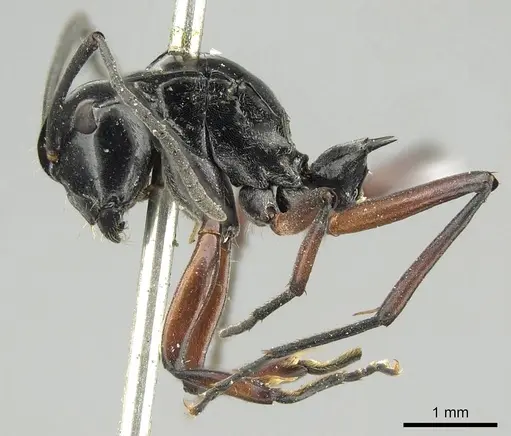
Polyrhachis aculeata is a medium-sized ant with workers measuring 6.4-6.8 mm in total length . They have jet-black bodies with reddish-brown legs and base of the gaster, covered in long erect hairs, and feature distinctive long, slender spines on the pronotum and petiole . This species is found in India, Sri Lanka, and the Philippines, inhabiting tropical to subtropical environments . Nothing is known about the biology of Polyrhachis aculeata in terms of colony structure, founding behavior, or captive care, making it a poorly documented species in the antkeeping hobby.
Quick Summary
- Difficulty: Unknown, no captive husbandry data available
- Origin & Habitat: Native to the Indomalaya region: India, Sri Lanka, and the Philippines, in tropical and subtropical environments [2][3].
- Colony Type: Unknown, colony structure has not been documented in scientific literature
- Size & Growth:
- Queen: Size data unavailable, no total length measurements exist for queens
- Worker: 6.4-6.8 mm [1][2]
- Colony: Unknown, no colony size data available
- Growth: Unknown, no development data available
- Development: Estimated 6-10 weeks based on Polyrhachis genus patterns in tropical conditions (This is an inference from related species, not species-specific research)
- Antkeeping:
- Temperature: As a tropical species, keep warm around 24-28°C, with room temperature (22-25°C) likely suitable. Provide a gentle gradient if possible
- Humidity: Keep nest substrate moderately moist but not waterlogged, as tropical species require higher humidity
- Diapause: Unknown, as a tropical species from low latitudes, they likely do not require true hibernation
- Nesting: Based on genus patterns, they may prefer semi-arboreal setups with plant material, but specific data is lacking
- Behavior: Based on Polyrhachis genus patterns, workers are likely docile and non-aggressive, with moderate escape risk due to their size
- Common Issues: no biological data exists for this species, so care is pioneering, lack of husbandry guides means you must experiment carefully, tropical origin means sensitivity to temperature drops, keep warm, wild-caught colonies may have parasites with no documented treatment, very limited availability in the antkeeping hobby
Species Identification and Appearance
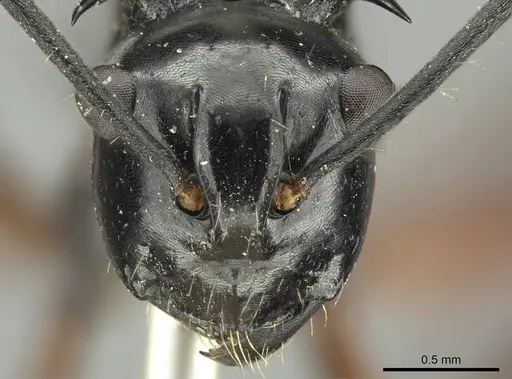
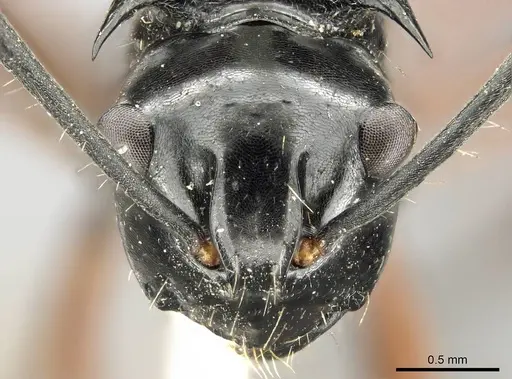
Polyrhachis aculeata is a distinctive species within the aculeata-group. Workers are 6.4-6.8 mm in total length, with long, slender pronotal spines more than twice as long as their basal width and relatively long dorsal petiolar spines [1][2]. The body is covered in numerous erect to semi-erect hairs, and the legs and base of the gaster are reddish-brown while the rest is dark [1][2]. The eyes are strongly truncate, meaning they appear cut off at the posterior edge [1][2].
Natural Distribution and Habitat
Polyrhachis aculeata is documented from India, Sri Lanka, and the Philippines, including Mindanao and Negros islands [2][3]. As a tropical to subtropical species, it inhabits warm, humid environments, though specific habitat details are lacking.
What We Don't Know - Research Gaps
This species has no published data on biology, including colony size, queen behavior, founding process, or diet. Care must be based on inferences from the Polyrhachis genus, such as potential arboreal nesting and claustral founding typical for Formicinae, but these are not confirmed for P. aculeata.
Housing and Nesting Recommendations
Based on genus patterns, a naturalistic setup with plant material may work, but specific data is lacking. Use standard test tubes for founding, and transition to larger nests as the colony grows. Keep temperatures warm and humidity moderate.
Feeding and Diet
Specific diet is unknown, but as an omnivorous Formicinae, they likely accept sugar sources and small insects. Offer sugar water and protein sources like fruit flies, and observe preferences.
Frequently Asked Questions
How difficult is Polyrhachis aculeata to keep?
The difficulty is unknown due to no documented captive history. Based on being a tropical Polyrhachis, it may be intermediate, but expect a learning curve.
What do Polyrhachis aculeata ants eat?
Specific diet is unknown, but they are likely omnivorous. Offer sugar water and small insects like fruit flies [1][2].
What temperature do Polyrhachis aculeata need?
As a tropical species, keep them warm around 24-28°C, with room temperature likely suitable [2][3].
How big do Polyrhachis aculeata colonies get?
Colony size is unknown, no scientific data exists. Based on worker size, they may reach several hundred workers, but this is an estimate.
Can I keep multiple Polyrhachis aculeata queens together?
Colony structure is unknown. Do not combine queens without species-specific research, as many ants fight when colonies merge.
How long does it take for Polyrhachis aculeata to produce first workers?
The egg-to-worker timeline is unstudied. Estimated 6-10 weeks based on Polyrhachis genus patterns in warm conditions [1][2].
Do Polyrhachis aculeata need hibernation?
As a tropical species from low latitudes, they likely do not require true hibernation. Keep temperatures consistent year-round.
What size nest should I use for Polyrhachis aculeata?
For founding, use a test tube setup. Transition to a larger nest as the colony grows, but specific size recommendations are unknown.
Where can I get Polyrhachis aculeata ants?
This species is rare in the hobby. Check with specialty breeders or consider wild collection in native ranges with appropriate permits.
Report an Issue
The current care sheet is based fully on literature. See inconsistencies, or something that's incorrect? Please , it will be resolved after review from an admin. Contributing to the blogs tab also helps providing information, to make us be able to further improve the caresheets. Thank you for your support!
References

This caresheet is licensed under CC BY-SA 4.0 .
Community Blogs
CASENT0915814
View on AntWeb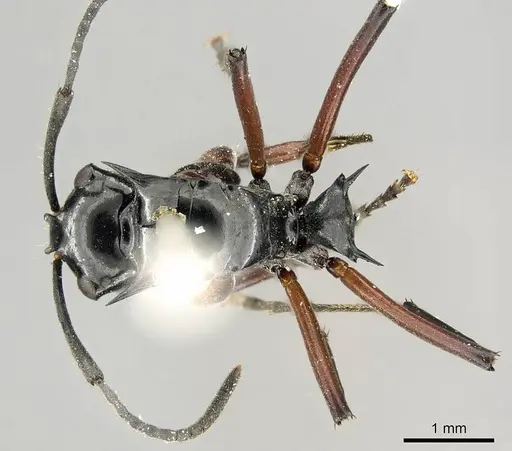
Literature
Loading distribution map...Loading products...