
Ruby Amazon Ant
Polyergus ruber
- Sci. Name
- Polyergus ruber
- Tribe
- Formicini
- Subfamily
- Formicinae
- Author
- Trager, 2013
- Common Name
- Ruby Amazon Ant
- Distribution
- Found in 1 countries
Introduction
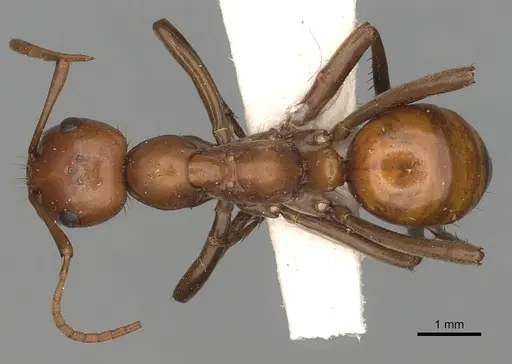
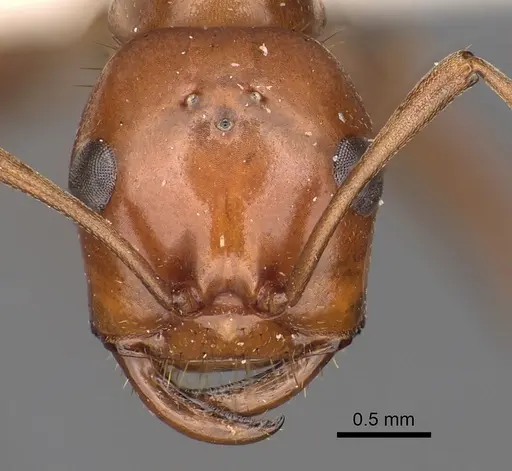
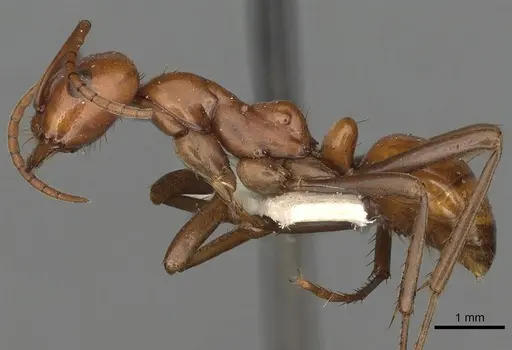
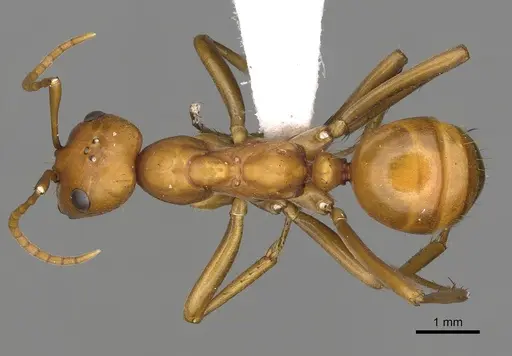
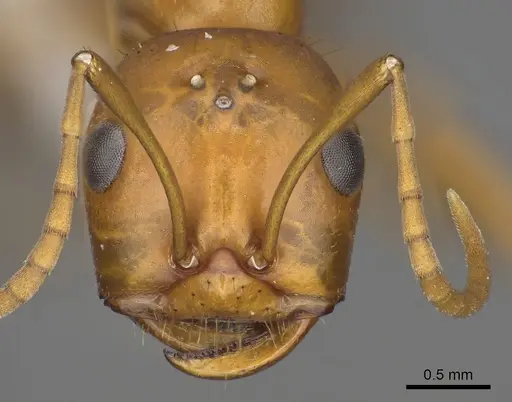
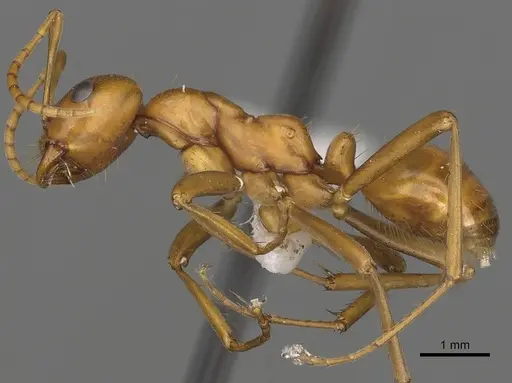
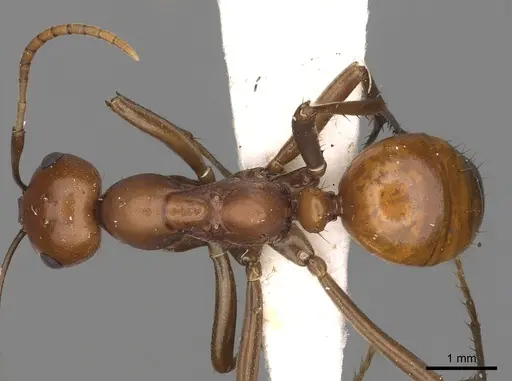
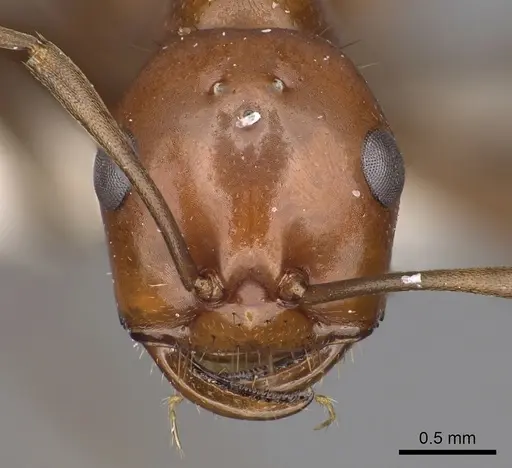
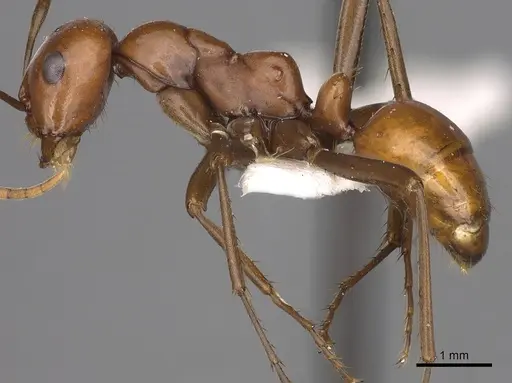
Polyergus ruber is a large ant species found in the southeastern United States. Workers are clear red with slightly darker legs and reach 6.16-7.36 mm in total length . They have a shiny appearance with sparse body hairs, distinguishing them from similar species like Polyergus longicornis . This species is a dulotic slave-maker, dependent on host colonies of Formica biophilica for survival . Queens cannot found colonies independently and must invade host nests to establish their own colony . Polyergus ruber conducts dramatic raids on Formica nests. Raiding parties of 500-1000 workers march out in the evening to steal pupae, which then become enslaved workers . These raids occur from early June to mid-August, with pre-raiding activity starting around 5 pm .
Quick Summary
- Difficulty: Expert
- Origin & Habitat: Southeastern United States, from Maryland to Georgia, west to Louisiana, and north to eastern Missouri. They inhabit upland grassy areas and open woodlands with acidic soils [2][1][3].
- Colony Type: Dulotic (slave-making) species requiring a permanent host colony of Formica biophilica. Colonies contain Polyergus ruber workers and enslaved Formica workers [2][1].
- Size & Growth:
- Queen: Unknown, inferred from worker size and genus patterns (~7-8 mm)
- Worker: 6.16-7.36 mm total length [1]
- Colony: Colonies include multiple hundreds of Polyergus ruber workers plus enslaved Formica workers [1]
- Growth: Slow to moderate, dependent on host colony success
- Development: Unknown, directly tied to host colony brood development (Development is entirely dependent on host Formica workers raising the brood.)
- Antkeeping:
- Temperature: Keep at room temperature, roughly 20-24°C. This species is not particularly temperature-demanding.
- Humidity: Keep nest substrate consistently moist but not waterlogged, similar to their woodland habitat.
- Diapause: Yes, based on genus patterns, likely requires winter diapause for 4-6 weeks at 10-15°C during November to February.
- Nesting: Requires a dual-colony setup with a connected host Formica colony. Use Y-tong, plaster, soil, or 3D-printed nests with tubing to allow raids but prevent escapes. Never use acrylic nests.
- Behavior: Workers are aggressive raiders but docile toward humans. They lack a functional sting and pose no danger to keepers. Escape risk is moderate due to their size, but standard barriers work well. The key concern is that they must have a host colony to survive, without enslaved Formica workers, the colony will die [2][1].
- Common Issues: without a host formica colony, the colony will die, this is the most critical issue., finding and maintaining a healthy formica biophilica host colony is difficult and expensive., raiding behavior can stress or decimate the host colony if not managed properly., colonies may fail if the host queen dies before slave-makers establish their own brood., this species is not suitable for beginners due to complex host requirements.
Understanding Slave-Making Ants
Polyergus ruber is a dulotic ant species that conducts slave raids to steal brood from Formica colonies. The captured pupae emerge as adult Formica workers that integrate into the Polyergus colony and perform all worker tasks, effectively becoming slaves [1]. Polyergus workers themselves are specialized raiders and have lost typical worker behaviors, they cannot forage, care for brood, or maintain the nest without their slaves [2][1]. This makes them challenging to keep, as you must maintain both the slave-maker colony and their host Formica colony.
Housing Requirements
Keep Polyergus ruber in a dual-colony setup with a connected Formica biophilica host colony. Use test tubes, Y-tong, plaster, soil, or 3D-printed nests linked by flexible tubing that allows raids but can be closed to let the host recover. The host colony should be larger and established to survive repeated raids. Escape prevention is important but less critical due to their size, standard barriers work well. Never use acrylic nests [3].
Feeding and Nutrition
Feed the host Formica colony a standard ant diet: protein sources like insects 2-3 times per week and sugar water or honey constantly. The enslaved Formica workers will forage and share food with Polyergus workers through trophallaxis. Polyergus workers do not typically accept food directly from keepers.
The Raid: Behavior in Captivity
In captivity, expect evening raiding behavior during summer months. Polyergus workers march in a column toward the host colony, overwhelm defenders, and capture pupae [1]. To manage this, close the connecting tube after raids to allow the host colony to recover, or use multiple host colonies in rotation.
Acquiring a Colony
Starting a colony is difficult because queens cannot found colonies independently. You need an established mixed colony in the wild or obtain both a newly mated Polyergus ruber queen and a Formica biophilica colony simultaneously. This species is rarely available and requires expert knowledge [2][1][3].
Seasonal Care and Overwintering
Raiding activity occurs from early June to mid-August [1]. During winter (November to February), provide a diapause period at 10-15°C for 4-6 weeks. Reduce feeding during this time. Both slave-maker and host colonies need this dormancy.
Frequently Asked Questions
Can I keep Polyergus ruber in a test tube setup?
No, standard test tube setups are unsuitable because Polyergus ruber requires a host Formica colony to survive. You need a dual-colony setup with connected nests [3].
How do I start a Polyergus ruber colony?
You cannot start from a queen alone. Locate an established mixed colony in the wild or obtain both a Polyergus ruber queen and a Formica biophilica colony simultaneously [2][1].
What do Polyergus ruber eat?
Feed the host Formica colony protein insects 2-3 times per week and sugar water constantly. Polyergus workers receive food through trophallaxis from enslaved workers.
Will Polyergus ruber raid and kill my Formica colony?
Yes, raiding is natural behavior. Manage it by closing connections after raids or using multiple host colonies [1].
Are Polyergus ruber ants dangerous?
No, they lack a functional sting and are not aggressive toward humans.
How long do raids last?
Raids occur from early June to mid-August, with pre-raiding activity around 5 pm [1].
Can I keep multiple queens together?
Polyergus ruber is likely monogyne, but colony structure is unconfirmed. Keeping multiple colonies is not recommended due to complexity [2].
Do Polyergus ruber need hibernation?
Yes, based on genus patterns, provide 4-6 weeks at 10-15°C during winter.
Why are my Polyergus ruber dying?
Most likely due to host colony death. Without enslaved workers, Polyergus cannot survive. Other causes include over-raiding stress or improper care [1].
Is Polyergus ruber good for beginners?
No, this is an expert-level species requiring simultaneous maintenance of two colonies and complex host relationships [2][1].
Report an Issue
The current care sheet is based fully on literature. See inconsistencies, or something that's incorrect? Please , it will be resolved after review from an admin. Contributing to the blogs tab also helps providing information, to make us be able to further improve the caresheets. Thank you for your support!
References

This caresheet is licensed under CC BY-SA 4.0 .
Community Blogs
Literature
Loading distribution map...Loading products...