
Pogonomyrmex snellingi
- Sci. Name
- Pogonomyrmex snellingi
- Tribe
- Pogonomyrmecini
- Subfamily
- Myrmicinae
- Author
- Taber, 1998
- Distribution
- Found in 1 countries
Introduction
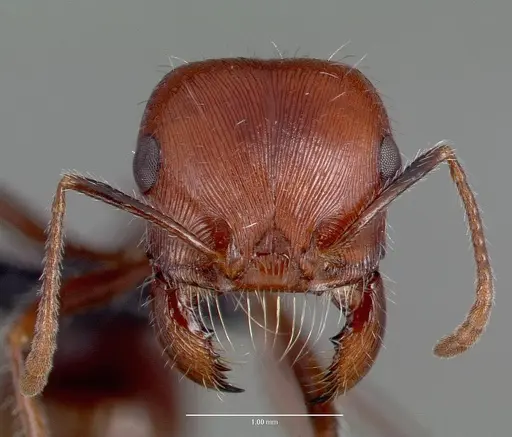
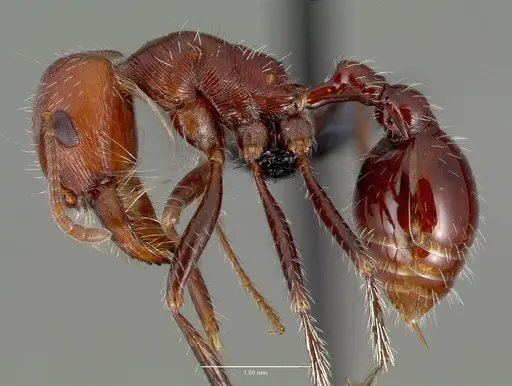
Pogonomyrmex snellingi is a small seed-harvester ant endemic to the Baja California peninsula in Mexico. Workers are small, but exact body size data is unavailable. This species belongs to the Pogonomyrmex californicus species group and can be identified by its unique oblique mandible margin, well-developed psammophore, and circumocular whorls around the eyes . This species has a limited range, found only in sand dune habitats in Baja California and Baja California Sur . Like other seed-harvester ants, it forages solitarily for seeds and establishes trunk trails to food sources .
Quick Summary
- Difficulty: Medium
- Origin & Habitat: Baja California peninsula, Mexico, low elevation sand dunes in the Vizcaino Desert [4][3].
- Colony Type: Colony structure is unconfirmed for this species. Most Pogonomyrmex are single-queen colonies, but specific data for P. snellingi is lacking.
- Size & Growth:
- Queen: Size data unavailable, queens have not been documented in scientific literature.
- Worker: Size data unavailable, no total length measurements published.
- Colony: Unknown, no colony size data published.
- Growth: Unknown
- Development: Unknown, estimates based on genus patterns suggest 6-10 weeks at optimal temperatures. (Development timeline has not been directly studied for this species.)
- Antkeeping:
- Temperature: Unknown, based on desert habitat, start with 22-25°C and observe. Provide a temperature gradient.
- Humidity: Keep substrate dry, as they are desert ants. Provide a small water tube for drinking.
- Diapause: Unknown, likely not required for desert species, but a brief cooling period may be beneficial.
- Nesting: In nature, they nest in sandy soil with tumulus nests [1][4]. In captivity, use sandy substrate in a naturalistic setup or Y-tong nests with sand chambers.
- Behavior: These ants are seed harvesters, foraging solitarily with limited recruitment [4][5]. They are defensive and will sting if threatened. Escape risk is moderate due to their size.
- Common Issues: too much humidity will kill them, keep nesting area dry., stinging risk, they have painful stings and are defensive., seed diet, they need constant supply of seeds., limited distribution, rarely available in hobby., founding difficulty, queens not described, making breeding challenging.
Nest Preferences and Housing
Pogonomyrmex snellingi naturally nests in sandy desert soils, building characteristic tumulus nests with multiple entrances. The type collection came from sand dunes at 0-8m elevation near Guerrero Negro, and populations in the Vizcaino Desert use tumulus nests with 2-3 entrances [1].
For captive care, recreate these conditions with a sandy substrate that allows for good drainage. Use a naturalistic setup with sand-filled containers or Y-tong nests with sand chambers. Keep the nesting area dry to prevent fungal infections.
Feeding and Diet
As a seed-harvester ant, this species primarily collects and stores seeds. In captivity, offer a constant supply of seeds like grass seeds, millet, or cracked corn. They also accept small insects for protein, but seeds should form the bulk of their diet [4][5].
Temperature and Seasonal Care
Temperature needs are unclear, start with 22-25°C and observe. Provide a heating cable on one side of the nest for a gradient. Diapause is likely not required for this desert species, but a brief cooling period may be beneficial if you wish to mimic natural cycles.
Behavior and Defense
These ants are defensive and will sting if threatened. Foraging is solitary with limited recruitment, but they establish trunk trails to food sources [4][5]. Use caution when handling to avoid stings.
Unique Identification Features
Pogonomyrmex snellingi has an oblique mandible margin, unlike other Pogonomyrmex species. It also has a well-developed psammophore and circumocular whorls [1].
Frequently Asked Questions
Is Pogonomyrmex snellingi good for beginners?
This species is rated as Medium difficulty. It requires attention to humidity control and has a painful sting. It is rarely available due to its limited distribution.
What do Pogonomyrmex snellingi ants eat?
They are seed-harvesters, seeds should make up the bulk of their diet. Offer grass seeds, millet, or cracked corn, and occasional small insects for protein [4].
Do Pogonomyrmex snellingi ants sting?
Yes, they can sting and will do so if threatened. Handle with care and avoid disturbing the nest unnecessarily.
How long does it take for eggs to become workers?
The exact timeline is unknown. Based on genus patterns, expect approximately 6-10 weeks at optimal temperatures.
Can I keep multiple Pogonomyrmex snellingi queens together?
Colony structure is unconfirmed. Most Pogonomyrmex are single-queen colonies, so keeping multiple queens together is not recommended until more data is available.
What temperature do they need?
Temperature needs are unclear, start with 22-25°C and observe. Provide a gradient for self-regulation.
Do they need hibernation?
Likely not required for this desert species, but a brief cooling period may be beneficial.
What type of nest should I use?
Use sandy substrate in a naturalistic setup or Y-tong nests with sand chambers. Keep the substrate dry [1][4].
How big do colonies get?
Colony size data is unknown for this species.
Why are my ants dying?
Common causes include too much humidity, keep nesting area dry. Also ensure constant access to seeds.
Report an Issue
The current care sheet is based fully on literature. See inconsistencies, or something that's incorrect? Please , it will be resolved after review from an admin. Contributing to the blogs tab also helps providing information, to make us be able to further improve the caresheets. Thank you for your support!
References

This caresheet is licensed under CC BY-SA 4.0 .
Community Blogs
CASENT0006269
View on AntWeb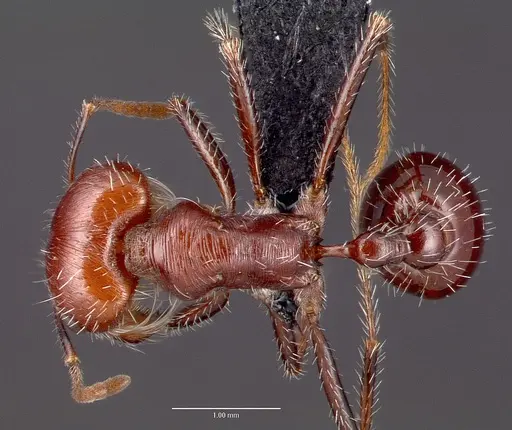
Literature
Loading distribution map...Loading products...