
Owyhee Harvester Ant
Pogonomyrmex salinus
- Sci. Name
- Pogonomyrmex salinus
- Tribe
- Pogonomyrmecini
- Subfamily
- Myrmicinae
- Author
- Olsen, 1934
- Common Name
- Owyhee Harvester Ant
- Distribution
- Found in 1 countries
Introduction
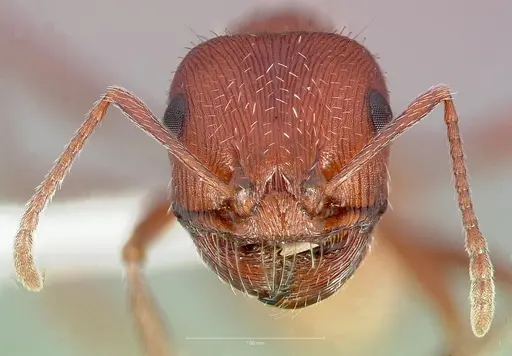
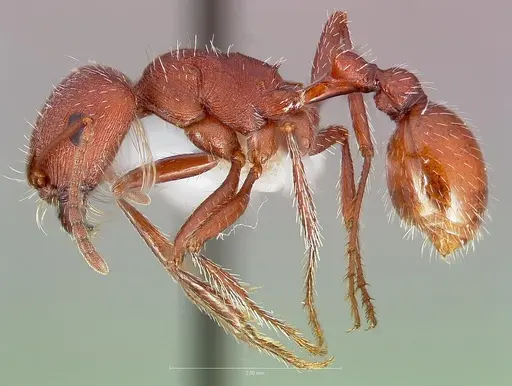
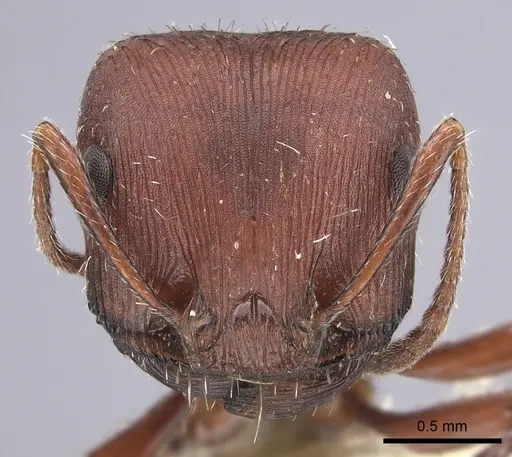
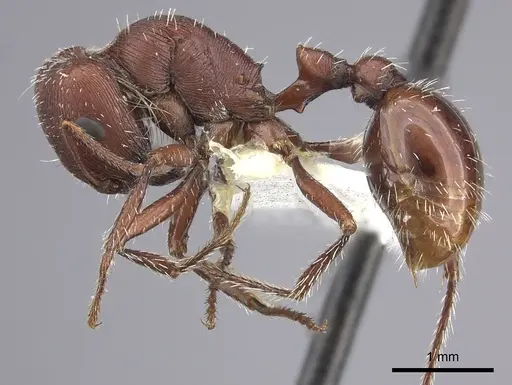
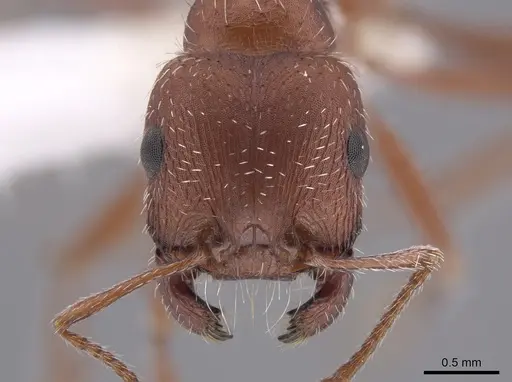
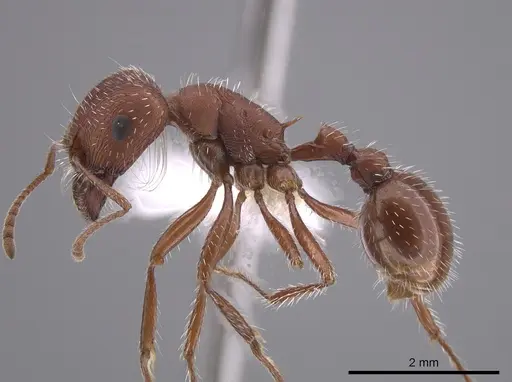
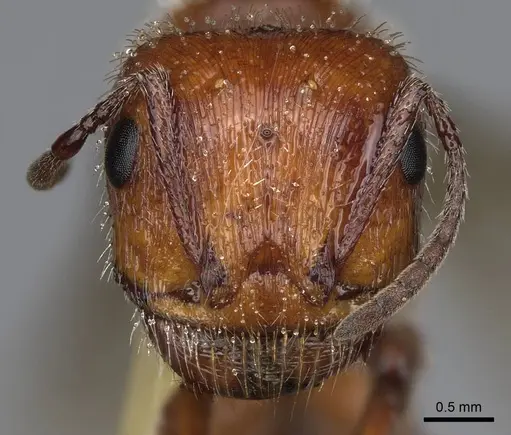
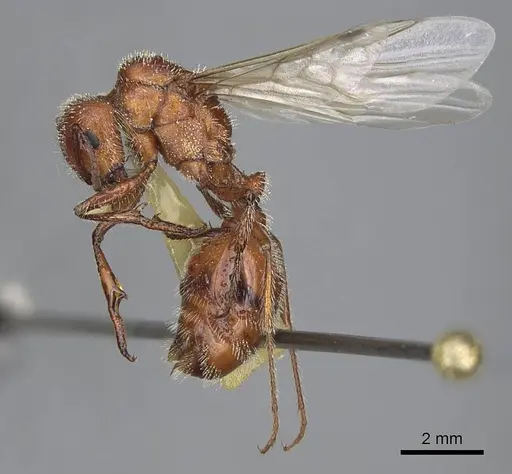
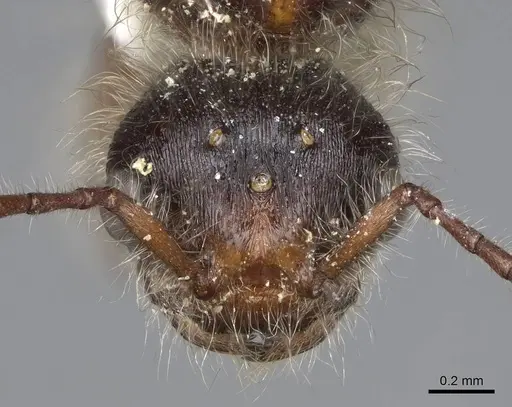
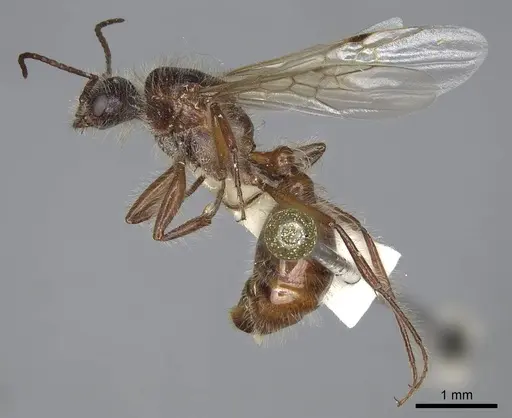
Pogonomyrmex salinus is a harvester ant native to the western United States and southwestern Canada. Workers are small and deep ferrugineous red, while queens are larger with similar coloration . They construct conical pebble mounds with a single entrance at the base, surrounded by a cleared area for seed harvesting . This species occurs across Washington, Oregon, Idaho, Montana, Nevada, extreme southern Utah, northwestern Wyoming, and eastern California in semi-arid rangeland habitats .
Quick Summary
- Difficulty: Medium
- Origin & Habitat: Western United States and southwestern Canada, semi-arid rangeland with sparse vegetation, typically at elevations between 3,000-4,500 feet [2]. They prefer sandy or loamy soils for constructing pebble mound nests [2][4].
- Colony Type: Monogyne, single-queen colonies with documented worker replacement reproductives if the queen dies [5]. Research confirms colonies are uniformly single-queened and hostile to foreign queens [5].
- Size & Growth:
- Queen: size data unavailable
- Worker: size data unavailable
- Colony: Up to approximately 3,700 workers based on winter excavations [2]. Colonies can live 14-30 years with a mean of 17 years [5][6].
- Growth: Moderate, first brood takes 38-55 days, subsequent broods 30-45 days [2].
- Development: 6-8 weeks for first brood,4-6 weeks for subsequent broods [2]. This is based on field observations where egg laying begins around May 15,first larvae appear June 1,and first workers emerge by mid-July [2]. (Development times vary with temperature, warmer conditions accelerate development while cooler temperatures slow it down [2].)
- Antkeeping:
- Temperature: Keep nest area at 20-26°C. Activity begins around 16-20°C, with full foraging at 20-23°C [2]. They aestivate when soil surface reaches 50-53°C, so avoid overheating above 50°C [2]. Provide a temperature gradient for thermoregulation.
- Humidity: Keep nest substrate consistently dry but with a small moist area for water access. These ants are adapted to semi-arid conditions and excess moisture can harm colonies [2].
- Diapause: Yes, colonies enter winter dormancy when soil temperature at 6-inch depth drops below 13.5°C [2]. In captivity, reduce temperature to 5-10°C for 3-4 months (November-February) and do not feed during diapause.
- Nesting: Use Y-tong nests or similar AAC materials. Provide a foraging area with sand or small gravel substrate to mimic natural pebble mounds. Avoid plaster or soil nests that retain too much moisture.
- Behavior: Pogonomyrmex salinus is a seed-harvesting ant with a painful sting. Workers are aggressive toward intruders and defend their nest vigorously [1]. Foraging is primarily solitary with limited recruitment, though temporary trails may form to abundant food sources [7][8]. They are territorial, and encounters between neighboring colonies can be lethal [3]. Foragers have a short lifespan of about 14 days, making them a disposable caste [9][10]. Escape prevention is important as workers can climb smooth surfaces, use fluon on container edges.
- Common Issues: sting pain, these ants have a painful sting that causes swelling and redness lasting 24+ hours in sensitive individuals [2], overheating, colonies stop foraging above 50°C and can die at 58°C [2], founding difficulty, semi-claustral queens must forage during founding, so they need access to small seeds and insects from the start [11], moisture sensitivity, too much humidity kills colonies, keep nesting area dry [2], territorial aggression, if keeping multiple colonies, ensure they cannot interact or fatal fights will occur [3]
Nest Preferences and Setup
In the wild, Pogonomyrmex salinus builds conical pebble mounds with a single entrance at the base, surrounded by a cleared area for seed processing [1][2]. Mounds can reach 72 inches in diameter and 14 inches in height, with cleared areas up to 30 feet [2]. For captivity, use Y-tong nests with a foraging area filled with sand or small gravel to mimic natural substrate. Workers will clear this area similar to wild colonies. Founding colonies do well in test tubes with water reservoir and immediate access to small seeds.
Feeding and Diet
As seed harvesters, Pogonomyrmex salinus collects and stores seeds. In the wild, they harvest 29+ seed species including Bromus tectorum and Sisymbrium altissimum [2][12]. They are not selective and also collect dead insects [2]. In captivity, offer a seed mix like millet, flax, and chia, plus protein sources like small crickets or fruit flies weekly. They do not require sugar water but may accept occasional honey. Rejected materials are placed in kitchen middens at the colony's edge [2].
Temperature and Seasonal Care
Pogonomyrmex salinus is adapted to variable temperatures. Workers begin activity at 16-20°C, with full foraging at 20-23°C [2]. They aestivate when soil surface reaches 50-53°C and resume foraging when temperatures drop [2]. In captivity, maintain nest temperatures between 20-26°C with a gradient. For winter dormancy, reduce temperatures to 5-10°C for 3-4 months (November-February) [2]. Do not feed during diapause but provide water.
Behavior and Defense
These ants are aggressive defenders with a painful sting that causes swelling and redness [1][2]. Foraging is primarily solitary with limited recruitment, though temporary trails may form [7][8]. They are highly territorial, and encounters between neighboring colonies can be lethal, with about 25% of aggressive contests resulting in death [3]. Foragers have short lifespans (~14 days) and are considered a disposable caste [9][10]. Workers clear vegetation around nests, which can be allowed in spacious foraging areas.
Colony Founding
Pogonomyrmex salinus uses a facultative colony founding strategy, queens must forage for food during founding [11]. Foundresses dig deep nests averaging 13.46 cm with extensive branching [13]. Nuptial flights are triggered by rain, with a window of about 30 days during monsoonal rains [11]. For captive founding, provide queens with access to small seeds and insects immediately after claustration. Expect 6-8 weeks until first workers appear.
Frequently Asked Questions
How long does it take for Pogonomyrmex salinus to get their first workers?
First workers typically appear in 6-8 weeks under good conditions [2]. This is slower because queens must forage during founding. Subsequent broods develop faster once workers help [2].
Do Pogonomyrmex salinus ants sting?
Yes, they have a painful sting. These ants are aggressive defenders and will sting if threatened [1][2]. The sting causes pain, swelling, and redness that can last 24+ hours [2]. Handle with caution.
What do I feed Pogonomyrmex salinus?
They are seed harvesters, offer a mix of small seeds like millet and flax [2][12]. Provide protein weekly through small insects like fruit flies or mealworms [2]. Seeds are their primary food.
Do Pogonomyrmex salinus need hibernation?
Yes, they require a winter diapause. In the wild, colonies become dormant when soil temperature drops below 13.5°C [2]. In captivity, reduce temperatures to 5-10°C for 3-4 months during winter.
Can I keep multiple Pogonomyrmex salinus queens together?
No. This species is monogyne, colonies have a single queen and are hostile to foreign queens [5]. Combining unrelated queens will result in fatal fights.
How big do Pogonomyrmex salinus colonies get?
Mature colonies can reach approximately 3,700 workers [2]. Colonies can live 14-30 years with a mean of 17 years [5][6].
What temperature range is best for Pogonomyrmex salinus?
Keep the nest at 20-26°C. Activity begins around 16-20°C and full foraging starts at 20-23°C [2]. They will aestivate above 50°C and can die at 58°C [2].
Are Pogonomyrmex salinus good for beginners?
They are rated as medium difficulty. While hardy once established, semi-claustral founding, painful sting, and specific requirements make them better for experienced keepers [2][11].
Why is my Pogonomyrmex salinus queen dying during founding?
Semi-claustral queens must have access to food during founding, they cannot survive on stored fat alone [11]. Ensure she has small seeds and insects available, and keep conditions dry [2].
Report an Issue
The current care sheet is based fully on literature. See inconsistencies, or something that's incorrect? Please , it will be resolved after review from an admin. Contributing to the blogs tab also helps providing information, to make us be able to further improve the caresheets. Thank you for your support!
References

This caresheet is licensed under CC BY-SA 4.0 .
Community Blogs
CASENT0005719
View on AntWeb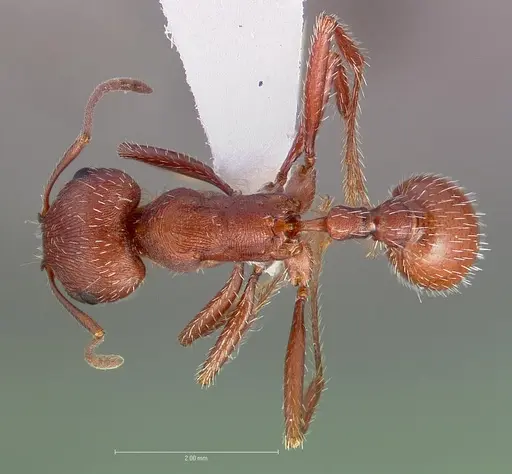
CASENT0217281
View on AntWeb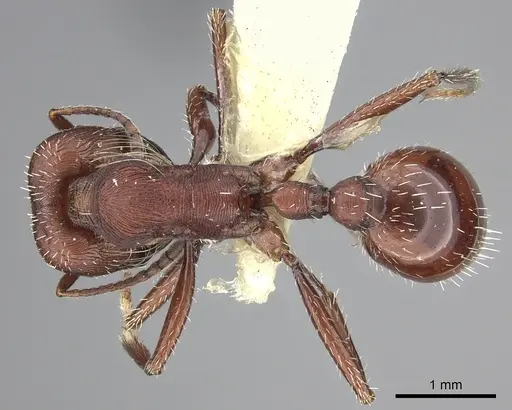
CASENT0652325
View on AntWeb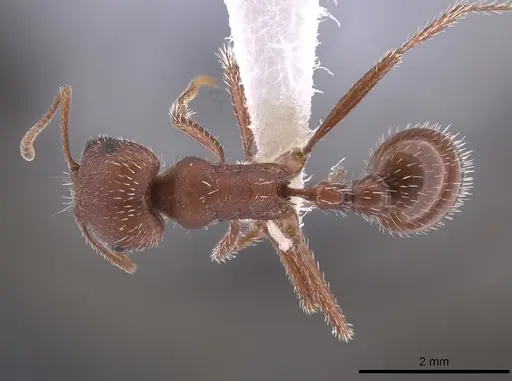
CASENT0914108
View on AntWeb
CASENT0923074
View on AntWeb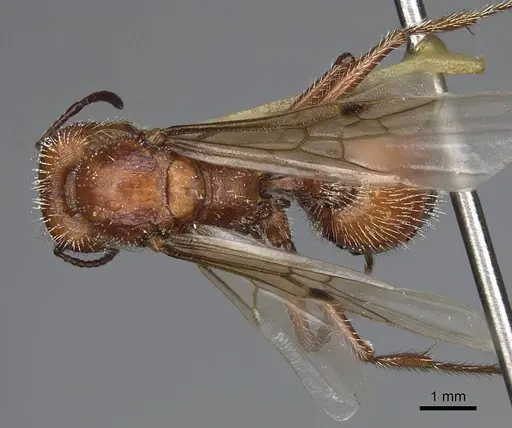
CASENT0923075
View on AntWeb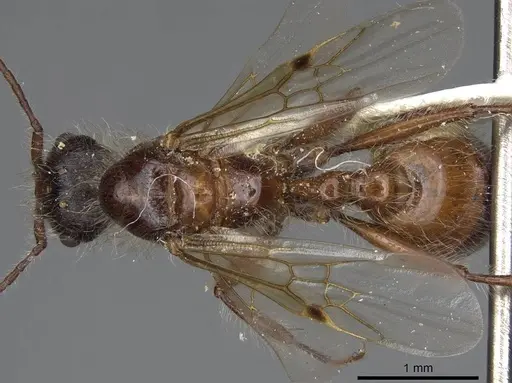
Literature
Loading distribution map...Loading products...