
Pogonomyrmex inermis
- Sci. Name
- Pogonomyrmex inermis
- Tribe
- Pogonomyrmecini
- Subfamily
- Myrmicinae
- Author
- Forel, 1914
- Distribution
- Found in 1 countries
Introduction
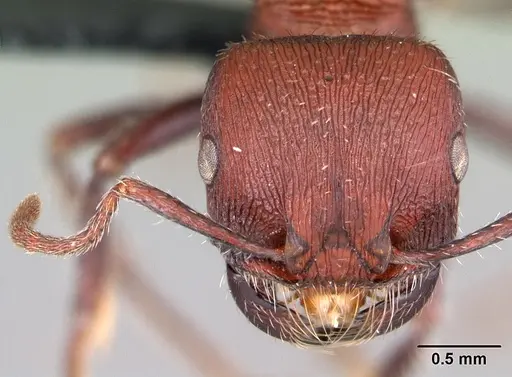
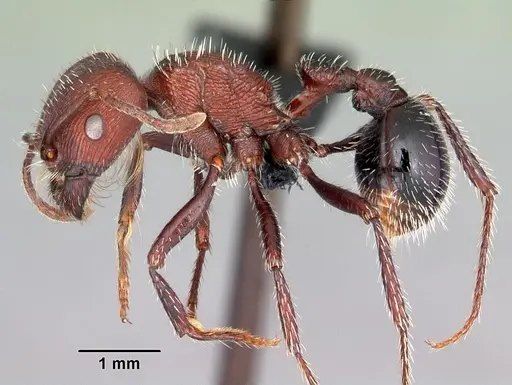
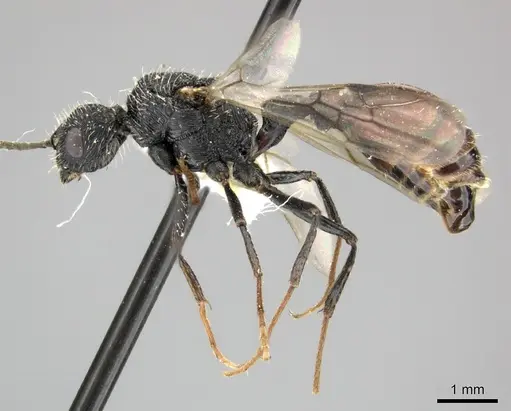
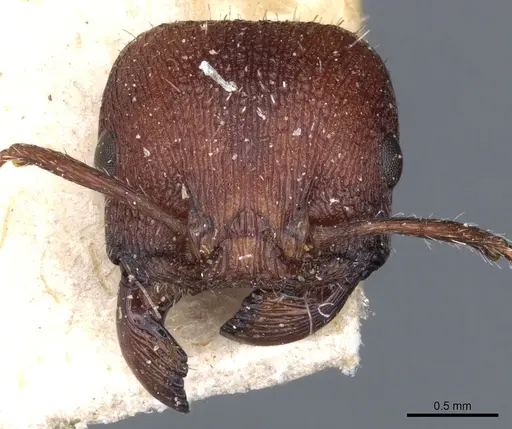
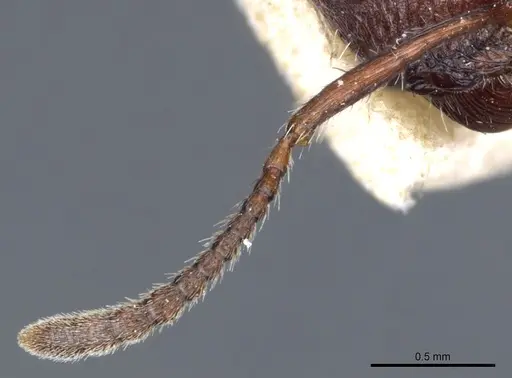
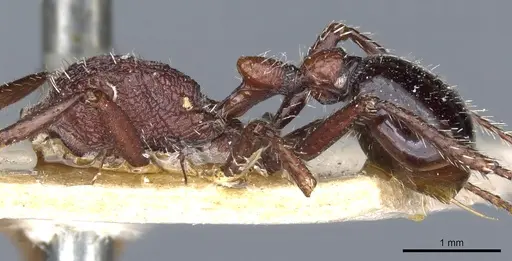
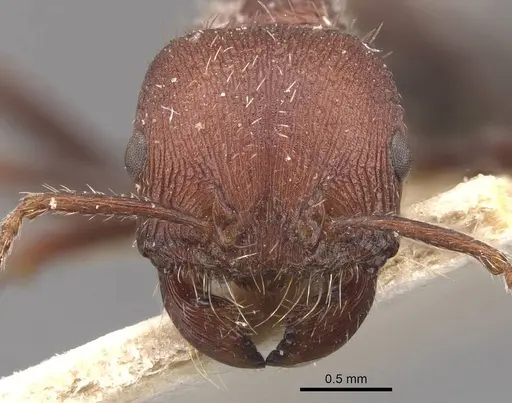
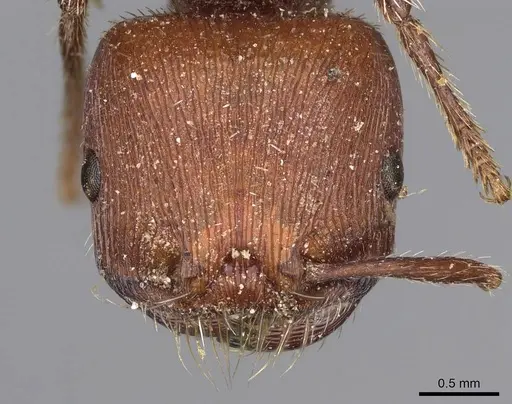
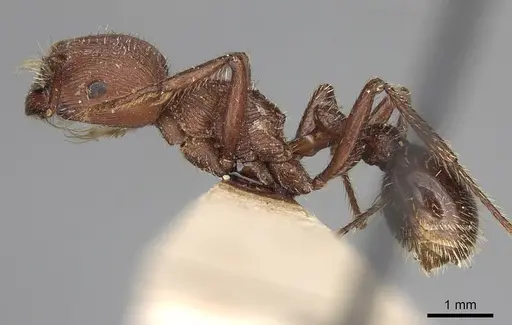
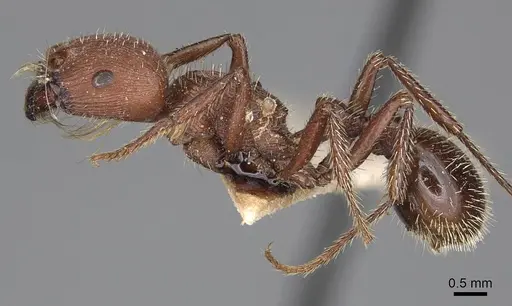
Pogonomyrmex inermis is a small seed-harvesting ant native to Argentina, with workers tannish-brown and a noticeably darker gaster. It has a well-developed psammophore for carrying sand particles . The species name means 'unarmed' in Latin, referring to its lack of prominent propodeal spines, a key feature in the bispinosus group . Colonies are relatively small for the genus, with distinctive large seed chaff middens near nest entrances . This ant is highly specialized on grass seeds, using group foraging with limited recruitment, and is well-studied in the Monte Desert .
Quick Summary
- Difficulty: Medium
- Origin & Habitat: Central Monte Desert, Argentina, at elevations 95-1370 m, in Lower Monte Desert, southern Humid Chaco, southern Espinal, and southwestern Humid Pampas ecoregions [5].
- Colony Type: Haplometrotic (single-queen colonies). Queens are polyandrous, mating with multiple males [5][4].
- Size & Growth:
- Queen: Size data unavailable, no total length measurements provided
- Worker: Size data unavailable, no total length measurements provided
- Colony: Up to 1000 workers [2][4]
- Growth: Moderate
- Development: Estimated 8-12 weeks based on Pogonomyrmex genus patterns (Development time not directly studied, typical for temperate species)
- Antkeeping:
- Temperature: Keep nest around 20-24°C with a gradient. Activity occurs when soil temperatures exceed 20°C in spring/autumn, avoiding extreme heat above 60°C in summer [4].
- Humidity: Low, desert species. Keep substrate dry to moderately moist, with a dry area for seed storage [5].
- Diapause: Yes, seasonal dormancy from May to September, with activity from October to April [4].
- Nesting: Naturalistic setup with dry, sandy substrate. Provide space for external waste piles (seed chaff middens). Y-tong or plaster nests with low humidity are suitable [2].
- Behavior: Workers are diurnal and use group foraging with limited recruitment, concentrating in 2-3 directions without forming conspicuous trails [2]. They are not aggressive but will defend the nest. Foraging range is small, typically 3-4 m from the nest [4]. Escape risk is moderate, use standard barriers.
- Common Issues: overhydration, desert species prone to mold in damp conditions, dietary specialization, may refuse non-grass seeds, requiring specific grass seed offerings, small colony size means slower growth than larger Pogonomyrmex species, external waste piles require space outside the nest area, hibernation timing differs from Northern Hemisphere, adjust to Southern Hemisphere seasons
Housing and Nest Setup
You can use a naturalistic setup with dry, sandy substrate. In the wild, nests have single entrances with shallow chambers at 2-3 cm depth, tunnels within 40 cm of the entrance, and deepest chambers up to 1.3 m [2]. For captivity, Y-tong or plaster nests with low humidity work well. Provide space for external waste piles, these ants create seed chaff middens near the nest entrance [2]. Without this, colonies may become stressed. Start founding colonies in a test tube setup, then transition to a larger nest as they grow.
Feeding and Diet
This species is a specialized granivore, almost exclusively eating grass seeds like Pappophorum spp., Digitaria californica, and Stipa ichu [3]. They prefer grass seeds and show low preference for non-grass seeds [6]. Forage individually or in small groups, close to the nest [4]. In captivity, offer a variety of grass seeds, collect dried grass seed heads or use store-bought millet or canary grass seed. Provide a constant dish of seeds and remove moldy ones promptly.
Temperature and Seasonal Care
Keep the nest at 20-24°C with a gradient. In the wild, activity is from October to April when soil temperatures exceed 20°C [4]. Daily activity changes seasonally: unimodal in spring/autumn, bimodal in summer to avoid extreme heat [4]. During dormancy (May-September), reduce temperature to 15-18°C and stop feeding. Match Southern Hemisphere seasons if possible.
Foraging Behavior
Workers use group foraging with limited recruitment, leaving the nest in 2-3 well-defined directions rather than spreading out [2]. They do not form conspicuous trails, and only about 15% of workers are foragers [4]. Colonies adjust activity based on seed availability, offering preferred seeds increases foraging [4].
Colony Growth and Development
Colonies reach up to 1000 workers, with moderate growth [2][4]. First workers may take 8-12 weeks to emerge after founding. Queens are polyandrous, mating with multiple males, which may aid colony resilience [5]. Nuptial flights occur in December-January [5].
Common Problems
Dietary specialization is a challenge, offer fresh grass seeds to avoid refusal. Overhydration can cause mold, keep the nest dry. Escape risk is moderate, secure connections between nest and outworld. Provide space for waste piles to prevent stress. [3][2]
Frequently Asked Questions
What do Pogonomyrmex inermis eat?
They are specialized seed eaters, almost exclusively grass seeds. Offer varieties like Pappophorum or store-bought grass seeds like millet. They rarely accept protein or insects [3].
How long does it take for first workers to appear?
Exact time is unconfirmed, but based on Pogonomyrmex patterns, expect 8-12 weeks at optimal temperature.
Do Pogonomyrmex inermis need hibernation?
Yes, they enter dormancy from May to September and are active October to April [4]. Reduce temperature and stop feeding during winter.
How big do colonies get?
Colonies reach up to 1000 workers, making them small for Pogonomyrmex [2][4].
Can I keep multiple queens together?
No, this species is haplometrotic with single queens. Multiple queens will fight [5].
What makes Pogonomyrmex inermis different from other Pogonomyrmex?
It lacks prominent propodeal spines, has a restricted grass seed diet, uses group foraging with limited recruitment, and creates external waste piles [1][3][2].
What nest type is best?
A naturalistic setup with dry, sandy substrate works best. Y-tong or plaster nests with low humidity are suitable, and provide space for waste piles [2].
Why are my ants not foraging?
Check if it's their inactive season (May-September). Also, ensure temperature is above 20°C and offer fresh grass seeds, as low seed abundance reduces activity [4][3].
Are they good for beginners?
Moderate difficulty due to dietary specialization and need for waste space, but manageable for intermediate keepers.
Report an Issue
The current care sheet is based fully on literature. See inconsistencies, or something that's incorrect? Please , it will be resolved after review from an admin. Contributing to the blogs tab also helps providing information, to make us be able to further improve the caresheets. Thank you for your support!
References

This caresheet is licensed under CC BY-SA 4.0 .
Community Blogs
CASENT0102694
View on AntWeb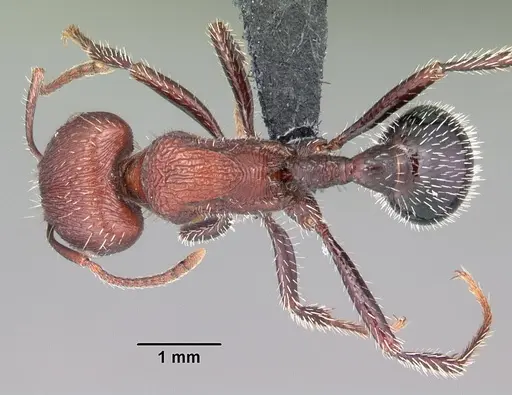
CASENT0217257
View on AntWeb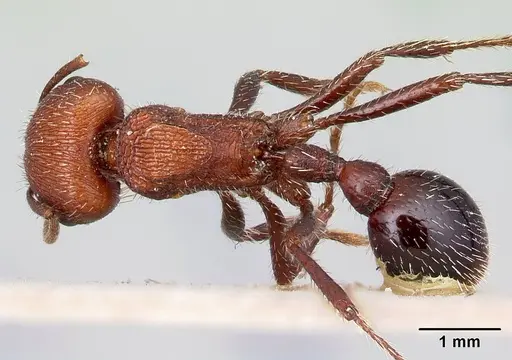
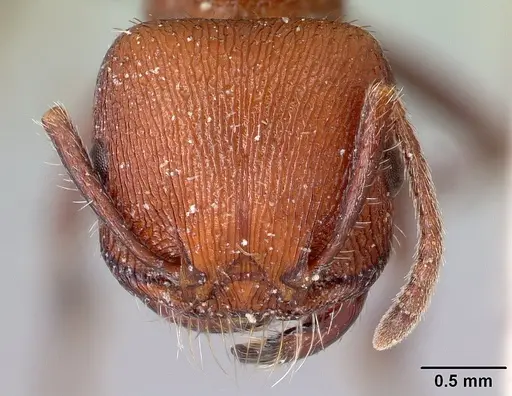
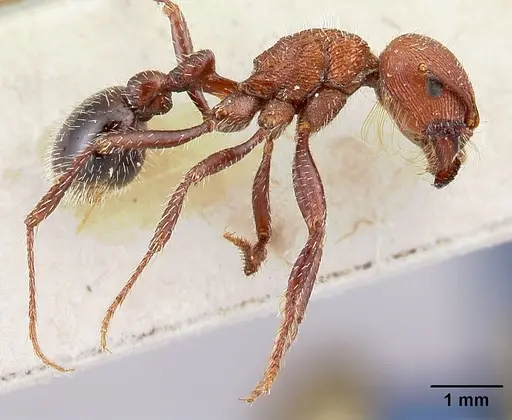
CASENT0235305
View on AntWeb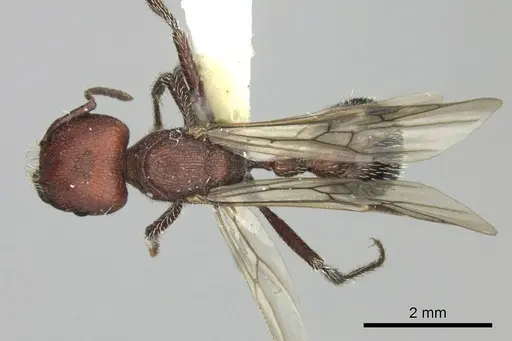
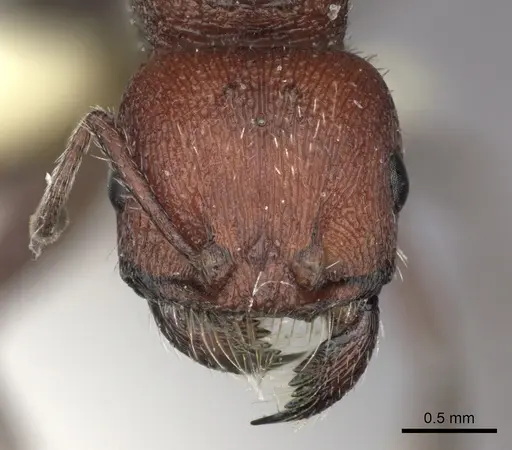
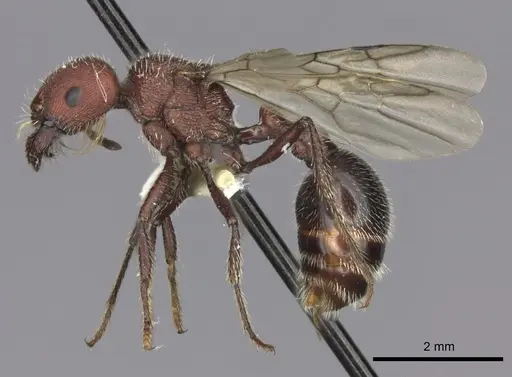
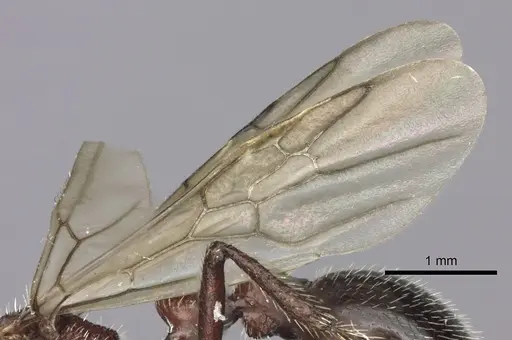
CASENT0235306
View on AntWeb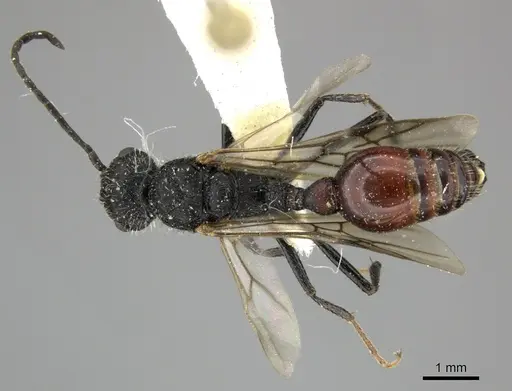
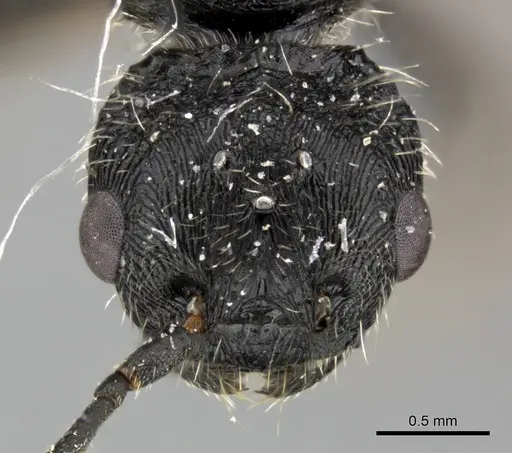
CASENT0904106
View on AntWeb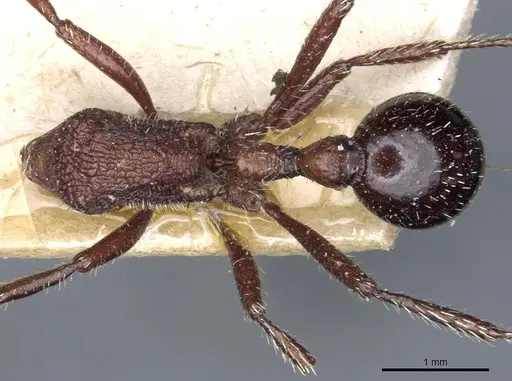
CASENT0907671
View on AntWeb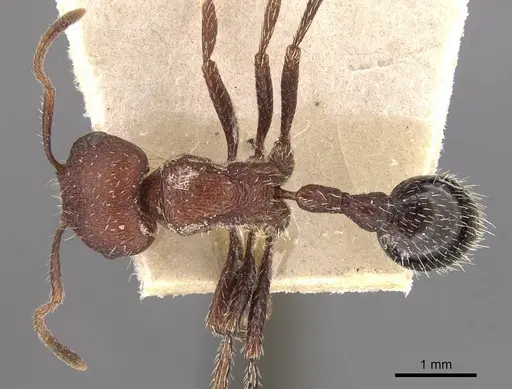
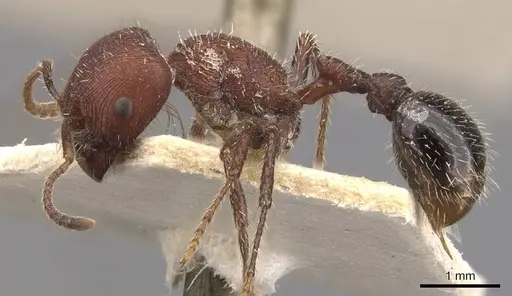
CASENT0914203
View on AntWeb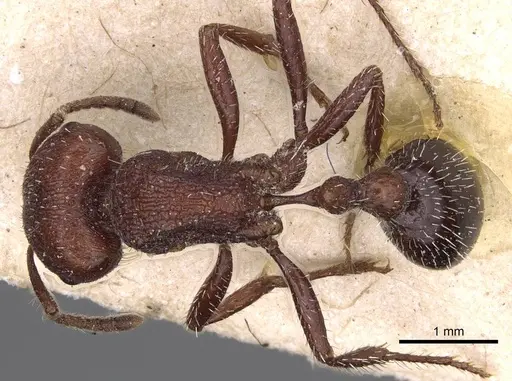
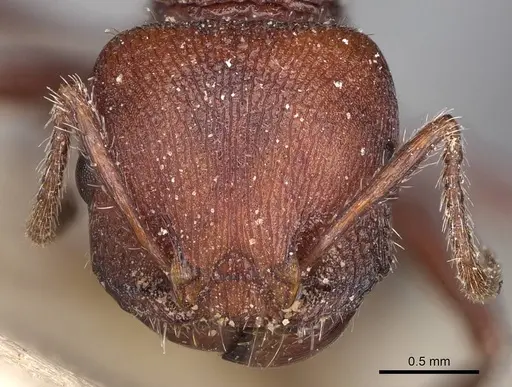
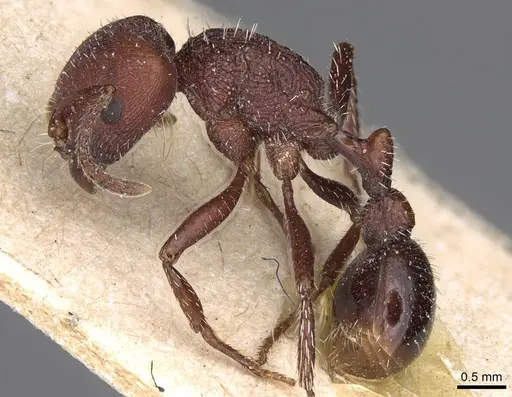
CASENT0914207
View on AntWeb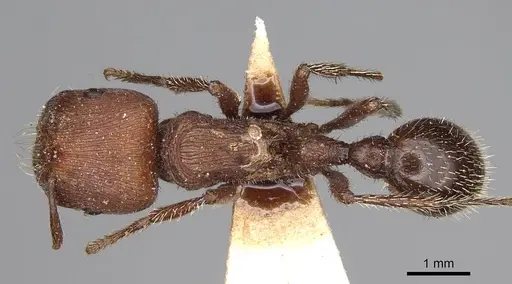
Literature
Loading distribution map...Loading products...