
Big Bend Harvester Ant
Pogonomyrmex bigbendensis
- Sci. Name
- Pogonomyrmex bigbendensis
- Tribe
- Pogonomyrmecini
- Subfamily
- Myrmicinae
- Author
- Francke & Merickel, 1982
- Common Name
- Big Bend Harvester Ant
- Distribution
- Found in 2 countries
Introduction
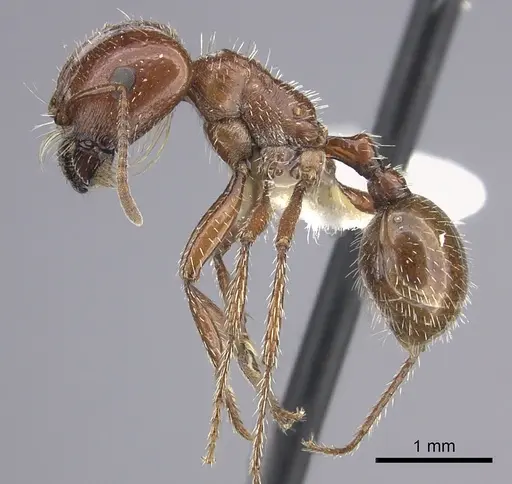
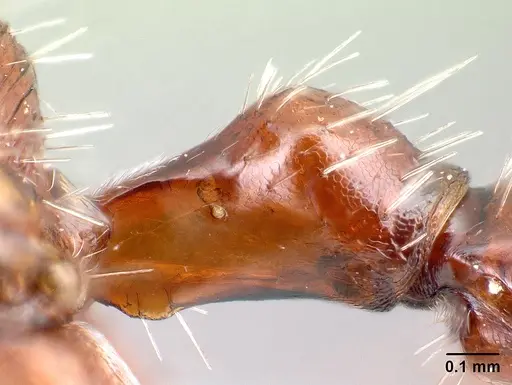
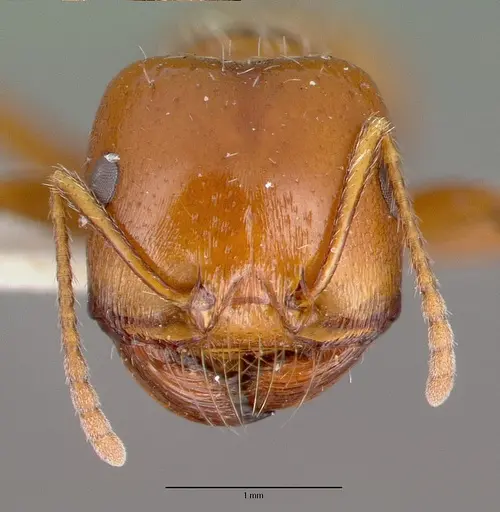
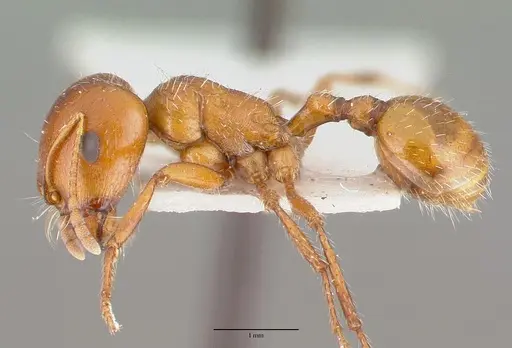
Pogonomyrmex bigbendensis is a harvester ant species native to southern Texas and Chihuahua, Mexico . Workers are medium to dark ferrugineous red with a mostly smooth and shining head . They nest in soil in creosotebush scrub habitat . Body size data is unavailable from current research. This species is known for solitary foraging behavior, where workers search for seeds independently rather than using mass recruitment .
Quick Summary
- Difficulty: Medium
- Origin & Habitat: Southern Texas and Chihuahua, Mexico, in creosotebush scrub desert habitat [3][1][2]
- Colony Type: Based on Pogonomyrmex patterns, likely monogyne (single queen colonies) [3]
- Size & Growth:
- Queen: Size data unavailable, no total length measurements in literature
- Worker: Size data unavailable, head measurements are available but not full body size
- Colony: Unknown, no specific colony size data for this species
- Growth: Moderate, inferred from genus patterns
- Development: Estimated 6-10 weeks at optimal temperature, based on related Pogonomyrmex species (Development time may vary with temperature)
- Antkeeping:
- Temperature: Keep warm, roughly 26-32°C, with a temperature gradient. Based on desert habitat [3]
- Humidity: Keep nest substrate dry to slightly moist. Desert species prefer low humidity [3]
- Diapause: Yes, provide a winter rest period of 8-12 weeks at 10-15°C, based on genus patterns
- Nesting: Soil nests with dry, sandy substrate work well. Y-tong or plaster nests with dry chambers are suitable [3]
- Behavior: Solitary foragers, workers search for seeds independently [4][5]. Defensive and will sting if threatened. Escape risk is moderate due to size, use standard barriers.
- Common Issues: desert species prone to mold in humid conditions, keep nesting area dry., solitary foraging means slower food discovery, place food near active areas., stings are painful, handle with care and use protection., limited distribution makes acquisition difficult., colonies grow slowly, patience required during founding.
Housing and Nest Setup
Use dry, sandy substrate for soil nests. Y-tong or plaster nests with dry chambers work well. Provide a temperature gradient and keep humidity low to mimic their natural desert habitat [3].
Feeding and Diet
Offer seeds such as grass seeds, millet, and cracked sunflower seeds. They are seed-harvesters [4][5]. Occasionally provide small insects for protein.
Temperature and Seasonal Care
Maintain temperatures between 26-32°C during active season. Provide a winter diapause at 10-15°C for 8-12 weeks, based on genus patterns.
Behavior and Observation
Workers forage alone for seeds [4][5]. They are defensive and sting if disturbed. Handle gently to avoid provoking them.
Colony Development
Founding behavior is unconfirmed. Growth is moderate. Be patient during early stages, as colonies develop slowly.
Frequently Asked Questions
What do Pogonomyrmex bigbendensis ants eat?
They are seed-harvesters. Offer a variety of seeds like grass seeds, millet, and cracked sunflower seeds [4][5].
How long does it take for first workers to emerge?
Estimated 6-10 weeks from egg to worker at optimal temperature, based on related Pogonomyrmex species.
What temperature do they need?
Keep them warm at 26-32°C during the active season, with a temperature gradient [3].
Do they need hibernation?
Yes, provide a winter rest period (diapause) of 8-12 weeks at 10-15°C, based on genus patterns.
How big do colonies get?
Colony size is unknown for this species, as no specific data is available.
Can I keep multiple queens together?
Pogonomyrmex bigbendensis is likely monogyne, so colonies have a single queen. Combining unrelated queens is not recommended [3].
Are they good for beginners?
They are rated as medium difficulty. Some experience with antkeeping is helpful due to specific temperature needs and their sting.
Why do they forage alone?
This is their natural behavior. Workers search for food independently with limited recruitment [4][5].
What kind of nest should I use?
Dry to slightly moist setups work well. Y-tong nests, plaster nests with dry chambers, or naturalistic soil setups are suitable [3].
Where is this species found?
Pogonomyrmex bigbendensis is found in southern Texas and Chihuahua, Mexico, in creosotebush scrub desert habitat [1][2].
When will my colony reproduce?
Specific timing for nuptial flights is unknown. A healthy, established colony may produce alates after a few years.
Report an Issue
The current care sheet is based fully on literature. See inconsistencies, or something that's incorrect? Please , it will be resolved after review from an admin. Contributing to the blogs tab also helps providing information, to make us be able to further improve the caresheets. Thank you for your support!
References

This caresheet is licensed under CC BY-SA 4.0 .
Community Blogs
CASENT0217270
View on AntWeb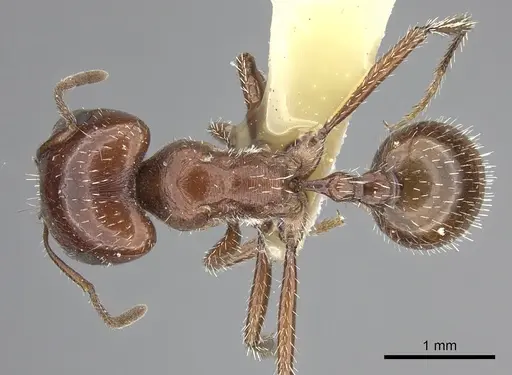
CASTYPE14104
View on AntWeb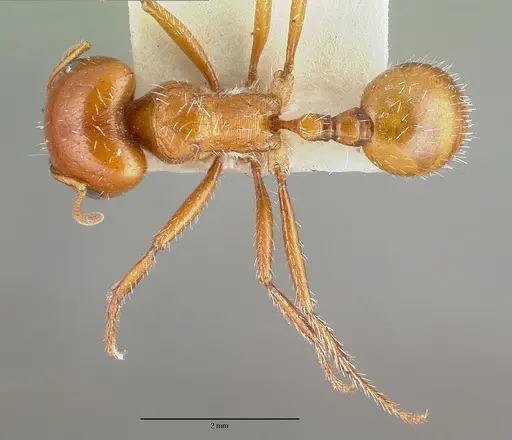
Literature
Loading distribution map...Loading products...