
Podomyrma silvicola
- Sci. Name
- Podomyrma silvicola
- Tribe
- Crematogastrini
- Subfamily
- Myrmicinae
- Author
- Smith, 1860
- Distribution
- Found in 2 countries
Introduction
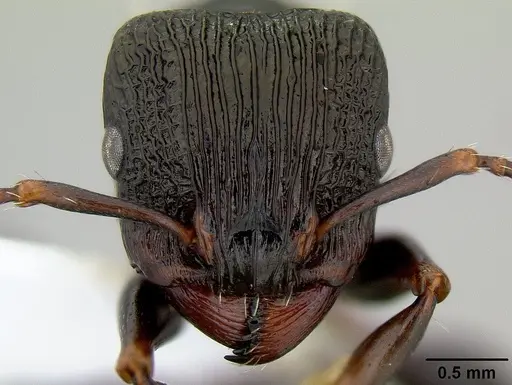
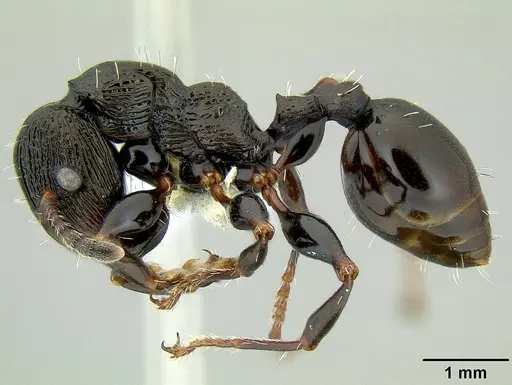
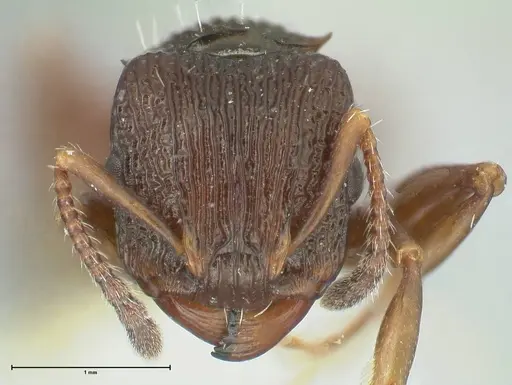
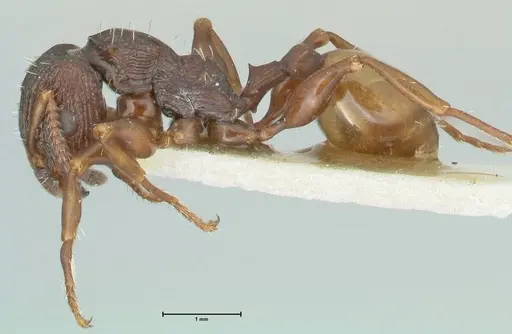
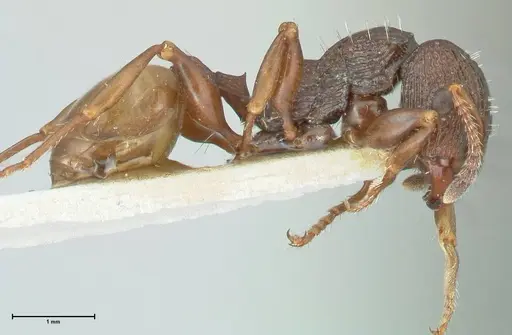
Podomyrma silvicola is a myrmicine ant native to the Australasian region, found in Australia, New Guinea, and Indonesia. Workers measure approximately 4-5 mm and have a rusty reddish-brown (rufo-ferruginous) body with pale ferruginous antennae, mandibles, and leg joints. The head and thorax feature longitudinal grooves, and the abdomen has a silky sheen from fine surface texture. The thorax has a rounded front with short spines at the corners, and the leg femurs are thickened in the middle. These ants are typically seen running along tree trunks in dry forest habitats .
Quick Summary
- Difficulty: Medium
- Origin & Habitat: Australasian region, found in Australia, New Guinea, Indonesia (including Batjan Island and New Britain). They inhabit dry forests where they run along tree trunks [1][2].
- Colony Type: Colony structure is unconfirmed. Based on typical Podomyrma patterns, they likely form single-queen colonies.
- Size & Growth:
- Queen: Unknown, no specific measurements available [3]
- Worker: Approximately 4-5 mm (4 lines in original description) [1]
- Colony: Unknown, no colony size data available
- Growth: Unknown, no development data available
- Development: Unconfirmed, no direct measurements. Based on typical Myrmicinae patterns in tropical regions, estimate 4-8 weeks at optimal temperature. (Development timeline has not been directly studied. Estimate based on related Myrmicinae ants in similar climates.)
- Antkeeping:
- Temperature: Keep at 22-28°C. Given their tropical/subtropical distribution, they prefer warm conditions. Provide a gentle gradient so they can choose their preferred spot.
- Humidity: Moderate humidity, 50-70% is a good target. As dry forest inhabitants, they prefer somewhat drier conditions than rainforest species. Allow the nest to dry out between water additions [1].
- Diapause: Likely minimal or no true diapause given their tropical/subtropical range. A brief cool period during winter may be beneficial if kept in temperate climates, but it is not required.
- Nesting: Based on their natural behavior of running on tree trunks, they likely prefer arboreal or semi-arboreal setups. Y-tong (AAC) nests, plaster nests, or naturalistic setups with vertical surfaces work well. They benefit from climbing structures like cork bark or driftwood. Avoid acrylic nests, they are not recommended [3].
- Behavior: These ants are active foragers that run along surfaces (tree trunks in the wild). They are likely moderately aggressive and will defend their nest. Workers are small but active. Escape prevention is important, their size (4-5 mm) means they can slip through small gaps. They have a functional stinger but it is not considered dangerous to humans.
- Common Issues: limited data on natural history makes it hard to replicate ideal conditions., growth rate unknown, may lead to impatience., overwatering can cause mold due to their dry forest adaptation, allow nest to dry out., escape prevention is critical, their small size lets them slip through tiny gaps., poorly documented colony structure, difficulty determining optimal nesting setup.
Natural History and Distribution
Podomyrma silvicola is found across the Australasian region, including Australia, New Guinea, and various Indonesian islands such as Batjan and New Britain [1][2]. The original description was made from specimens collected on Bachian Island (now Bacan Island) in the Maluku Islands of Indonesia [1]. They are part of the basalis species group within the genus Podomyrma. In their natural habitat, these ants are found running on the trunks of trees in dry forests, suggesting they are arboreal or semi-arboreal foragers. The original collector, Alfred Russel Wallace, noted them moving along tree surfaces in what was described as a dry forest environment [1]. This arboreal foraging behavior distinguishes them from many ground-nesting Myrmicinae and suggests they may hunt or forage on tree bark and foliage.
Identification and Morphology
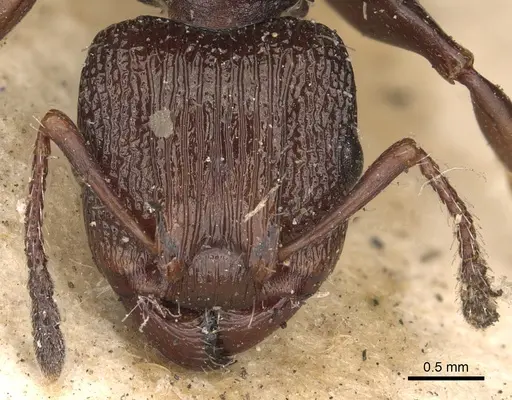
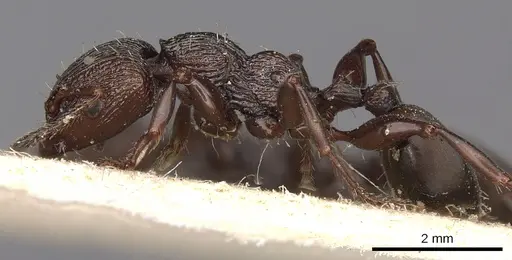
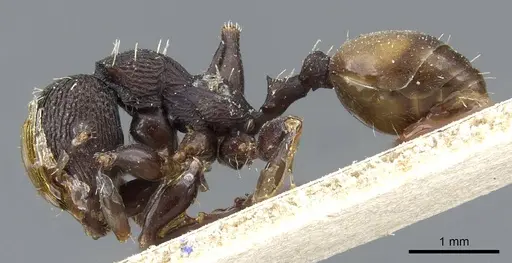
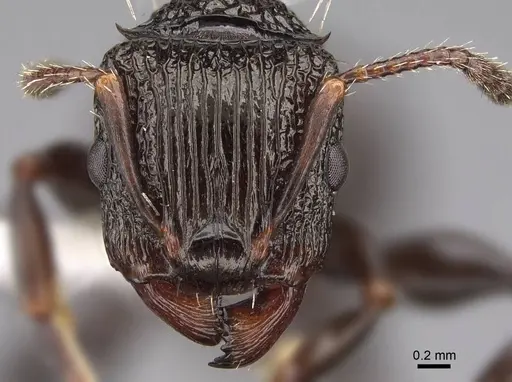
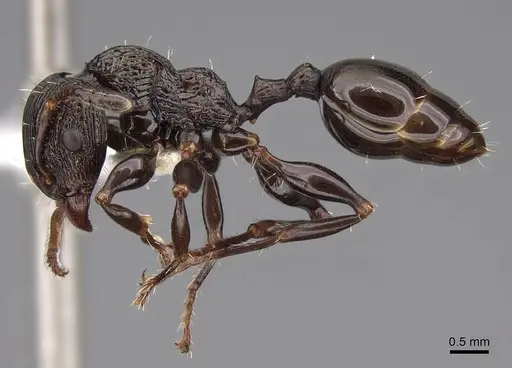
Workers of Podomyrma silvicola measure approximately 4-5 mm in length [1]. They have a distinctive rusty reddish-brown (rufo-ferruginous) coloration, with paler antennae, mandibles, and leg joints. The head and thorax feature characteristic longitudinal grooves or striations, and the sides of the head are distinctly punctured. The anterior margin of the thorax is rounded, with the lateral angles produced into short spines. The femora (thigh segments) are notably thickened in the middle and very slender at the base. The abdomen has a beautiful silky gloss caused by extremely delicate surface texture (aciculation), while the apical segments are smooth and shining. The first node of the peduncle is distinctly petiolated with a small acute tooth above, and the second node is globose (rounded) [1].
Housing and Nest Setup
Based on their natural behavior of running on tree trunks in dry forests [1], Podomyrma silvicola likely prefers arboreal or semi-arboreal setups. Use a Y-tong (AAC) nest with horizontal orientation, or a naturalistic setup with vertical surfaces that mimic tree bark. They benefit from climbing structures such as driftwood or cork bark in the outworld. Test tube setups can work for founding colonies, but be prepared to move them to a more appropriate setup as the colony grows. Ensure the nest has some dry areas, as they come from dry forest environments. Avoid acrylic nests, they are not recommended [3].
Feeding and Diet
The specific diet of Podomyrma silvicola has not been documented. Based on typical Myrmicinae behavior and their arboreal foraging, they likely are omnivorous, feeding on honeydew, small insects, and nectar. Offer sugar water or honey regularly, along with small protein sources such as fruit flies, small crickets, or other tiny arthropods. As they run along tree trunks in the wild, they may be active hunters of small insects they encounter on bark surfaces. Feed small prey items that match their worker size of 4-5 mm.
Temperature and Seasonal Care
Given their distribution across tropical and subtropical Australia, New Guinea, and Indonesia [3], Podomyrma silvicola prefers warm conditions. Maintain temperatures between 22-28°C, with a slight gradient allowing workers to choose their preferred spot. They likely tolerate higher temperatures than many temperate species but should avoid extreme heat. Their origin in dry forests suggests they can handle lower humidity than rainforest species, aim for 50-70% humidity in the nest area [1]. A brief cool period in winter may be beneficial if you live in a temperate region, but a full diapause is likely not required given their tropical distribution.
Frequently Asked Questions
How long does it take for Podomyrma silvicola to raise their first workers?
The exact development timeline is unconfirmed for this species. Based on typical Myrmicinae patterns in tropical regions, expect approximately 4-8 weeks from egg to first worker at optimal temperature (around 25°C).
What do Podomyrma silvicola ants eat?
They likely accept sugar sources (honey, sugar water) and small protein prey. Based on their arboreal foraging behavior, they probably hunt small insects. Offer a varied diet including sweet liquids and small arthropods.
Are Podomyrma silvicola ants good for beginners?
This species is rated as Medium difficulty. While not the most challenging, there is limited information available about their specific care requirements. They are not as commonly kept as other species, so less community knowledge exists to draw from.
Do Podomyrma silvicola ants sting?
As a member of the subfamily Myrmicinae, they have a stinger. Given their small size (4-5 mm), their sting is not considered dangerous to humans. They may use it defensively if threatened.
What temperature should I keep Podomyrma silvicola at?
Keep them warm, between 22-28°C. Their tropical/subtropical distribution suggests they prefer temperatures in the warmer end of this range.
Can I keep multiple Podomyrma silvicola queens together?
The colony structure is unconfirmed for this species. Based on typical Podomyrma patterns, they likely form single-queen colonies. Combining unrelated queens is not recommended without documented evidence of polygyny.
What size colony do Podomyrma silvicola colonies reach?
Colony size is unknown, no specific data is available. Based on related species in the basalis group, colonies likely reach several hundred workers at maturity.
What type of nest should I use for Podomyrma silvicola?
Based on their arboreal foraging behavior (running on tree trunks), they likely prefer horizontal or arboreal-style nests. Y-tong (AAC) nests or naturalistic setups with vertical climbing surfaces work well. Avoid acrylic nests.
Do Podomyrma silvicola ants need hibernation?
Full hibernation is likely not required given their tropical/subtropical distribution. A brief cool period in winter may be beneficial if kept in temperate climates, but they do not require extended cold periods.
Where is Podomyrma silvicola found in the wild?
They are native to the Australasian region, found throughout Australia, New Guinea, and Indonesia. They were originally described from specimens collected on Bachian Island in the Maluku Islands, and are typically found in dry forest environments where they run along tree trunks [1].
Report an Issue
The current care sheet is based fully on literature. See inconsistencies, or something that's incorrect? Please , it will be resolved after review from an admin. Contributing to the blogs tab also helps providing information, to make us be able to further improve the caresheets. Thank you for your support!
References

This caresheet is licensed under CC BY-SA 4.0 .
Community Blogs
CASENT0106143
View on AntWeb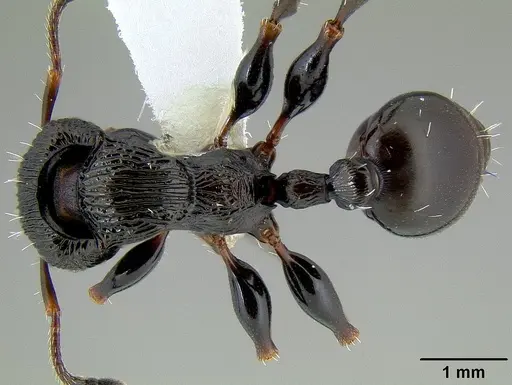
CASENT0901392
View on AntWeb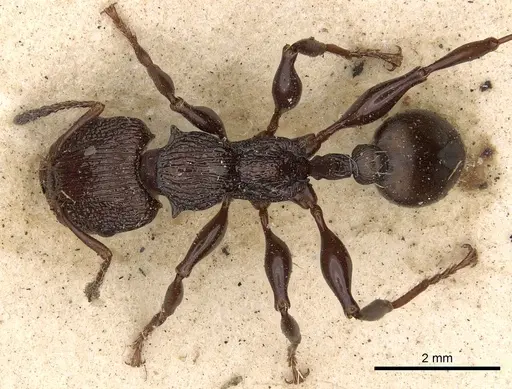
CASENT0905749
View on AntWeb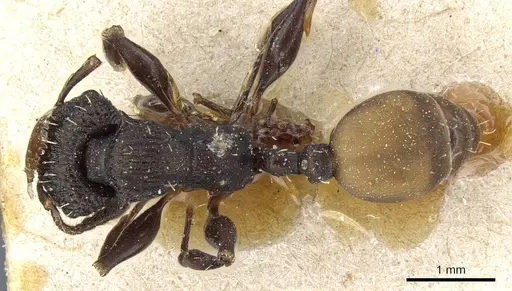
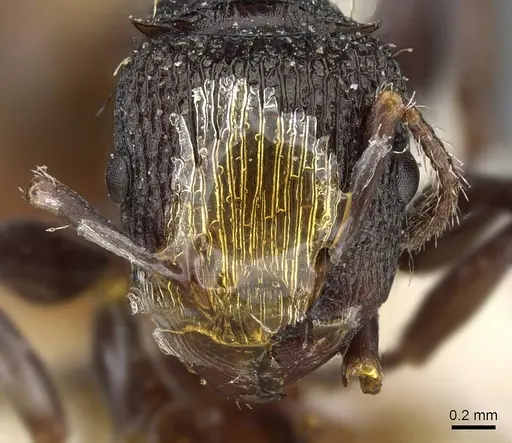
CASENT0922815
View on AntWeb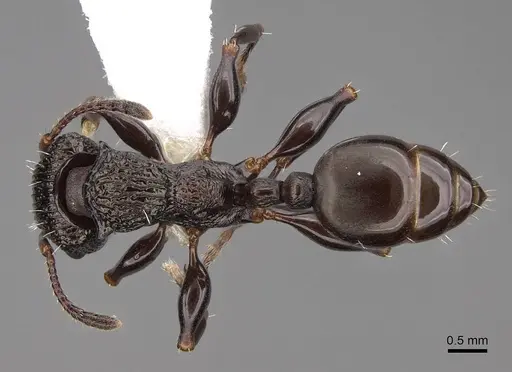
FOCOL1964
View on AntWeb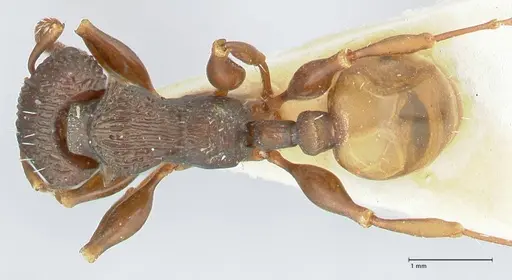
Literature
Loading distribution map...Loading products...