
Podomyrma laevifrons
- Sci. Name
- Podomyrma laevifrons
- Tribe
- Crematogastrini
- Subfamily
- Myrmicinae
- Author
- Smith, 1859
- Distribution
- Found in 2 countries
Introduction
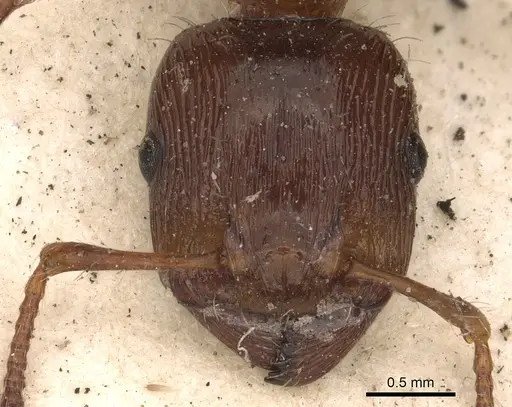
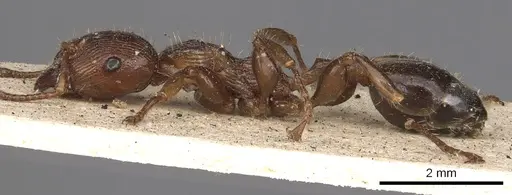
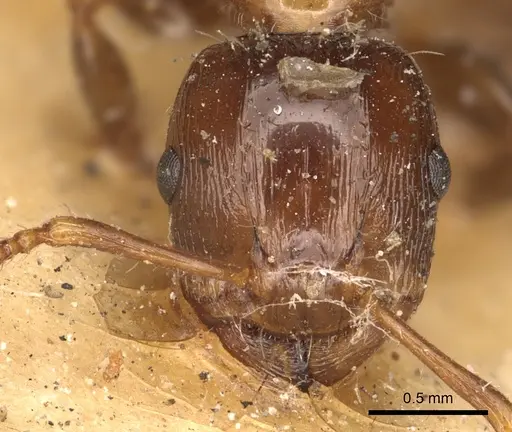
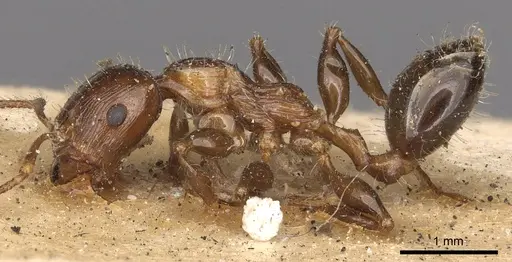
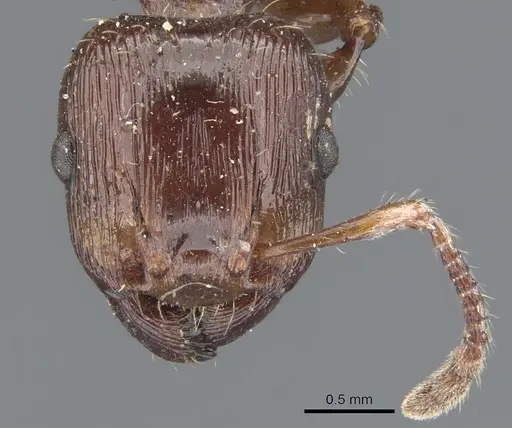
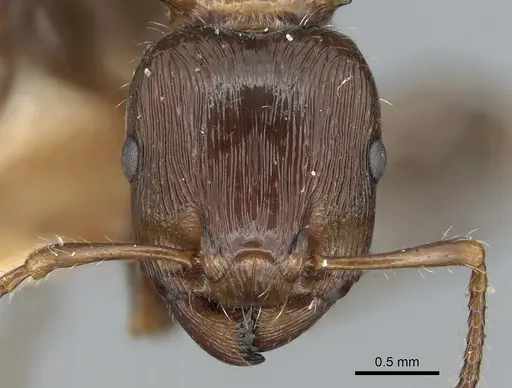
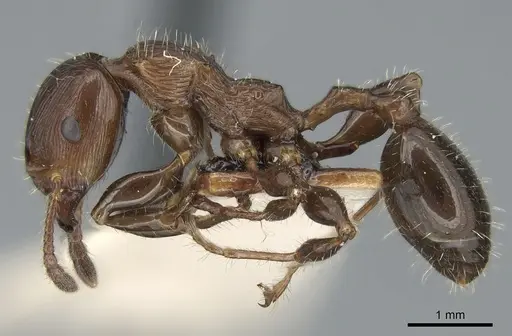
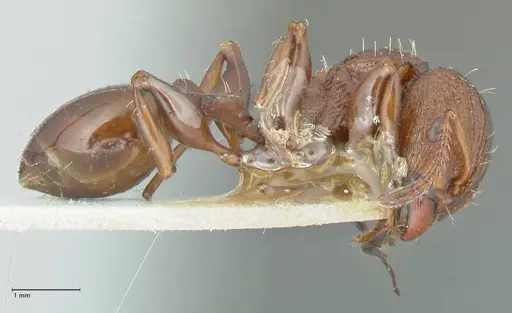
Podomyrma laevifrons is a medium-sized ant native to the Australasian region, including northern Australia, New Guinea, and Indonesia. Workers measure approximately 6.67 mm in total length and have chestnut-brown coloration with a darker abdomen . They inhabit tropical and subtropical forests . This species is known for tending trophobionts like scale insects for honeydew and forming foraging trails .
Quick Summary
- Difficulty: Medium
- Origin & Habitat: Australasian region, found across northern Australia, New Guinea, and Indonesia (Aru Islands). Inhabits tropical and subtropical forest environments [1][2][4].
- Colony Type: Based on typical Podomyrma patterns, likely single-queen colonies (monogyne), but unconfirmed.
- Size & Growth:
- Queen: size data unavailable
- Worker: 6.67 mm [1]
- Colony: Unknown, no colony size data available
- Growth: Unknown, no development data available
- Development: Unconfirmed, no direct measurements available. Based on typical Myrmicinae patterns, estimate 6-10 weeks at optimal temperature. (Development timeline has not been directly studied. Estimates based on genus-level patterns.)
- Antkeeping:
- Temperature: Keep warm, roughly 24-28°C, based on tropical distribution.
- Humidity: Keep nest substrate consistently moist but not waterlogged, based on tropical forest habitat.
- Diapause: Unknown, tropical species may not require formal hibernation.
- Nesting: In nature, likely nest in soil or rotting wood. In captivity, Y-tong or plaster nests work well. Provide secure containment as medium-sized ants can escape.
- Behavior: These ants tend trophobionts like scale insects for honeydew and form foraging trails [3]. They have a stinger used for smearing venom, typical of Myrmicinae. They are not aggressive but will defend their colony. Escape risk is moderate due to medium size.
- Common Issues: lack of development data makes precise care challenging., tropical species may be sensitive to temperature drops., honeydew dependency means sugar sources are essential., foraging trail behavior requires space for nest-to-outworld movement.
Natural History and Distribution
Podomyrma laevifrons is found across the Australasian region, including northern Australia, New Guinea, and the Aru Islands of Indonesia. This species was originally described by Frederick Smith in 1859 and has several junior synonyms, including Podomyrma laevifrons, Podomyrma laevifrons, and Podomyrma laevifrons [1][2]. They inhabit tropical and subtropical forest environments where they access honeydew-producing insects.
Feeding and Diet
Podomyrma laevifrons tends trophobionts like scale insects for honeydew, which is their primary food source in the wild [3]. In captivity, provide sugar sources like honey water constantly and protein prey such as fruit flies or mealworms 2-3 times per week. Their trail-forming behavior indicates active foraging.
Temperature and Housing
As a tropical species, Podomyrma laevifrons prefers warm conditions. Keep the nest area at roughly 24-28°C, based on habitat inference. Use Y-tong or plaster nests to maintain consistent humidity. Keep the substrate moist but not waterlogged, and provide secure containment to prevent escapes.
Foraging Behavior
Podomyrma laevifrons establishes defined foraging trails between the nest and food sources [3]. This behavior requires adequate space in the outworld for trail formation. Ensure the nest and outworld are connected for easy access.
Frequently Asked Questions
How long does it take for Podomyrma laevifrons to produce first workers?
The exact timeline is unconfirmed. Based on typical Myrmicinae patterns, estimate 6-10 weeks from egg to worker at optimal temperature.
What do Podomyrma laevifrons eat?
They primarily tend scale insects for honeydew [3]. In captivity, offer constant sugar sources and protein prey like fruit flies or mealworms.
Do Podomyrma laevifrons ants sting?
They have a stinger used for smearing venom, typical of Myrmicinae, but are not aggressively stinging.
What temperature do Podomyrma laevifrons need?
Keep them warm at 24-28°C, based on tropical habitat inference.
Are Podomyrma laevifrons good for beginners?
They are rated Medium difficulty due to limited husbandry data. Best for antkeepers with Myrmicinae experience.
How big do Podomyrma laevifrons colonies get?
Colony size data is unavailable. Based on worker size, colonies may reach several hundred workers over time.
Do Podomyrma laevifrons need hibernation?
As a tropical species, formal hibernation is likely unnecessary, but activity may reduce in cooler periods.
Can I keep multiple Podomyrma laevifrons queens together?
Colony structure is unconfirmed. It is not recommended to keep multiple queens together due to potential fighting.
What type of nest is best for Podomyrma laevifrons?
Y-tong or plaster nests work well, providing consistent humidity for this tropical species.
Why do my Podomyrma laevifrons form trails?
Trail-forming is natural behavior for efficient foraging [3].
Report an Issue
The current care sheet is based fully on literature. See inconsistencies, or something that's incorrect? Please , it will be resolved after review from an admin. Contributing to the blogs tab also helps providing information, to make us be able to further improve the caresheets. Thank you for your support!
References

This caresheet is licensed under CC BY-SA 4.0 .
Community Blogs
CASENT0901390
View on AntWeb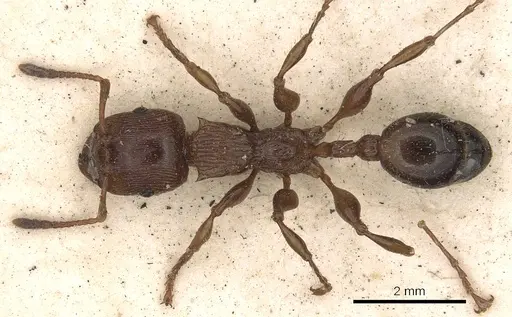
CASENT0901391
View on AntWeb
CASENT0902001
View on AntWeb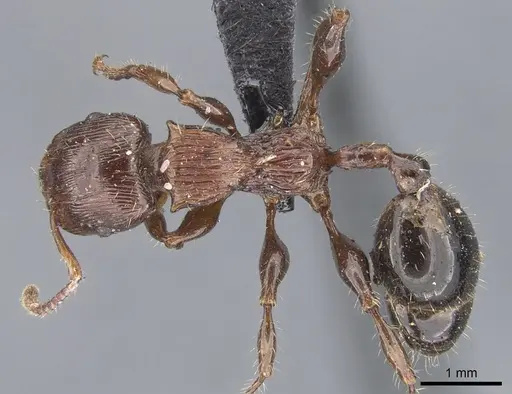
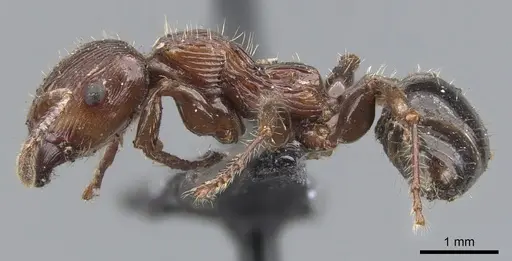
CASENT0904707
View on AntWeb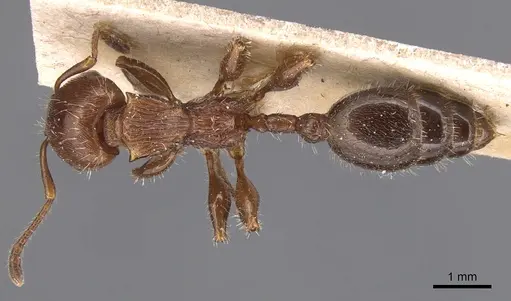
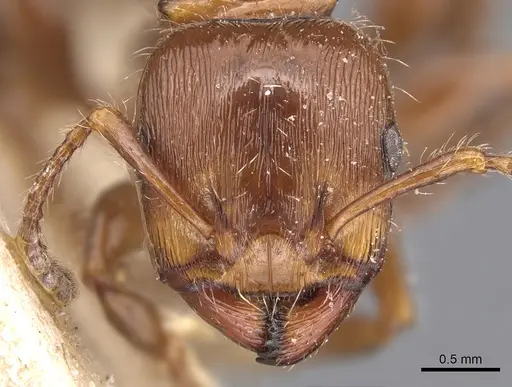
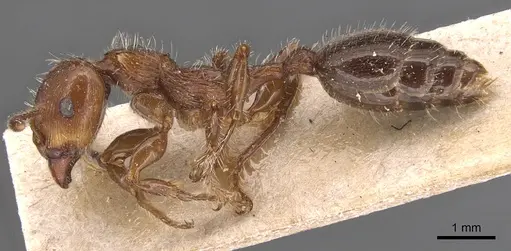
CASENT0906186
View on AntWeb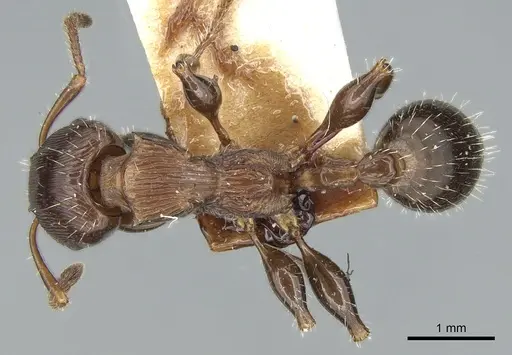
CASENT0908973
View on AntWeb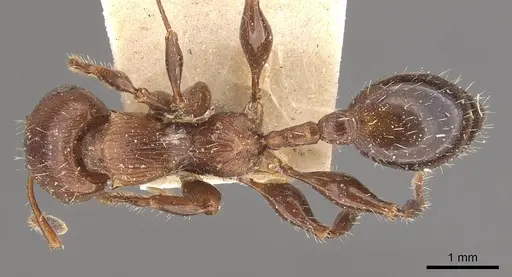
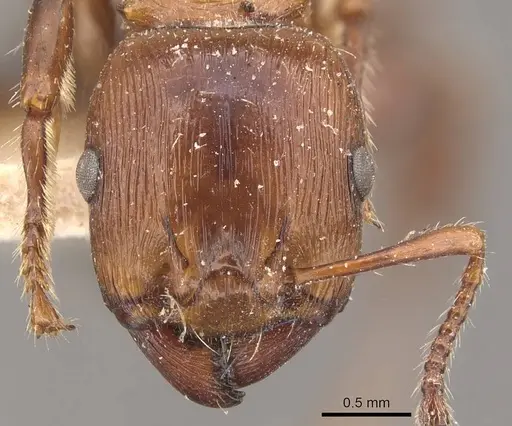
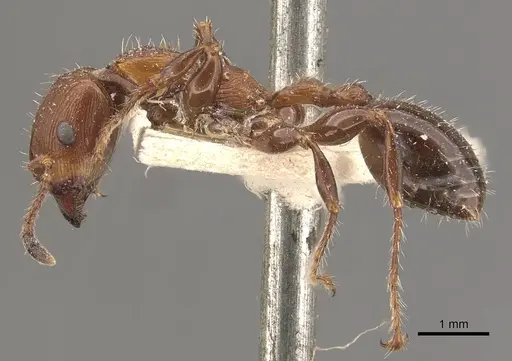
CASENT0922812
View on AntWeb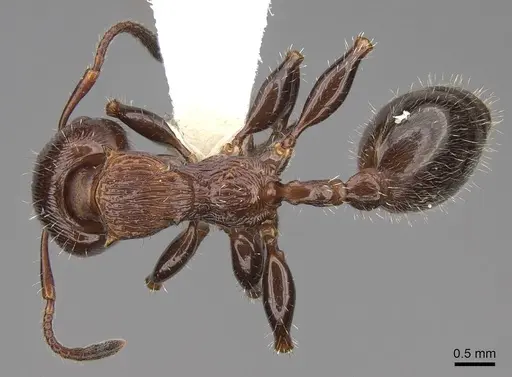
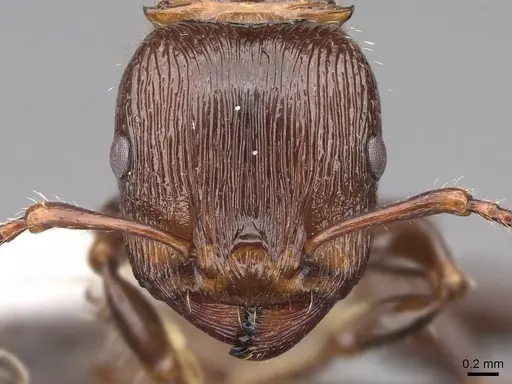
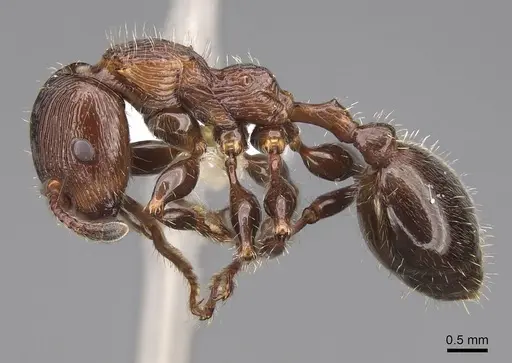
FOCOL1975
View on AntWeb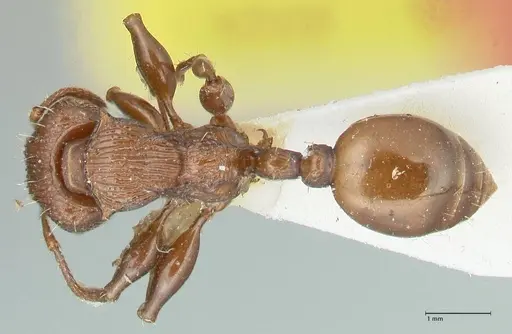
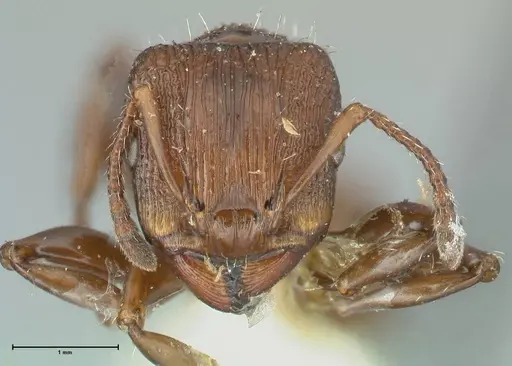
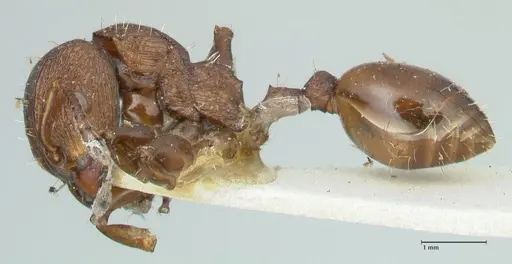
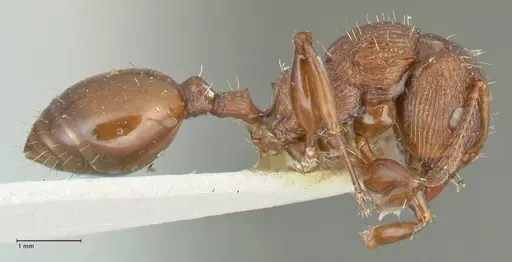
FOCOL1976
View on AntWeb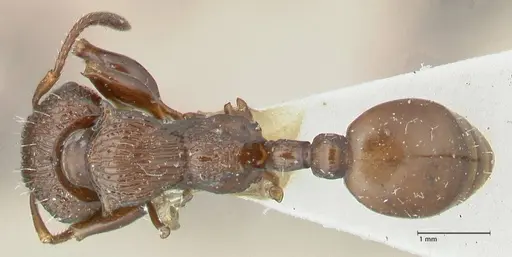
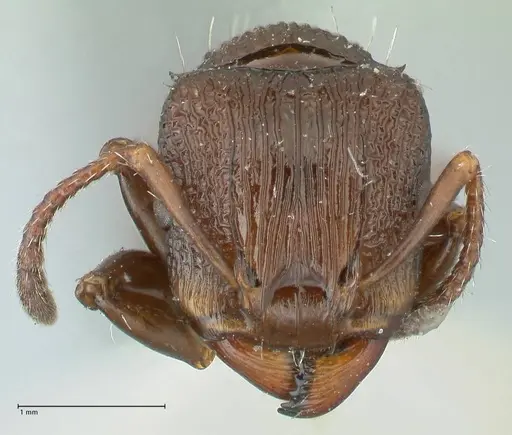
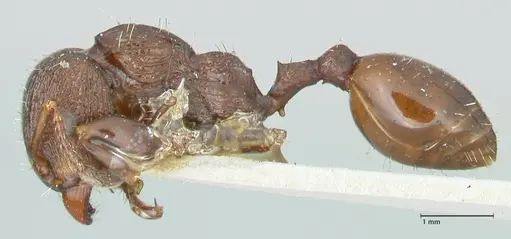
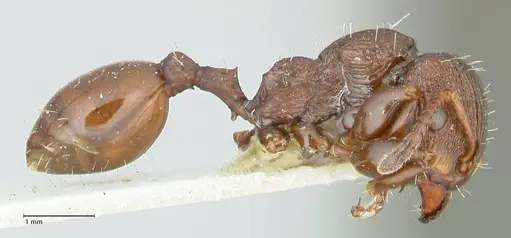
FOCOL1977
View on AntWeb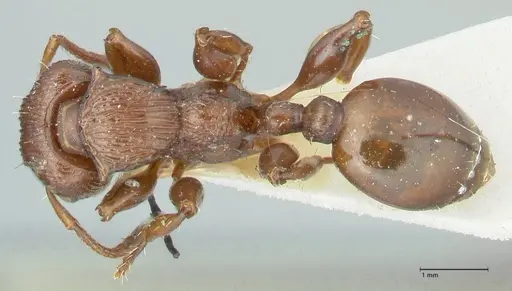
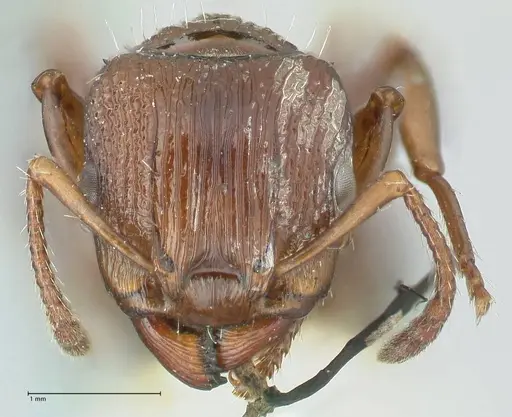
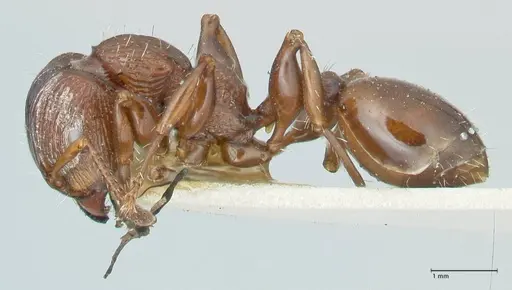
Literature
Loading distribution map...Loading products...