
Platythyrea occidentalis
- Sci. Name
- Platythyrea occidentalis
- Tribe
- Platythyreini
- Subfamily
- Ponerinae
- Author
- André, 1890
- Distribution
- Found in 2 countries
Introduction
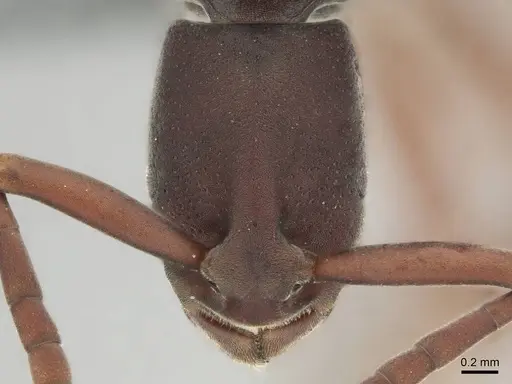
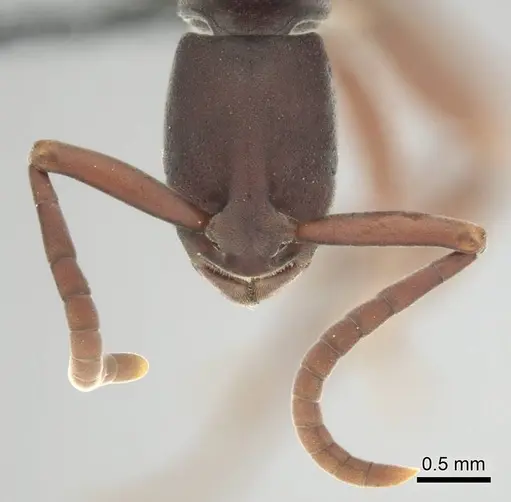
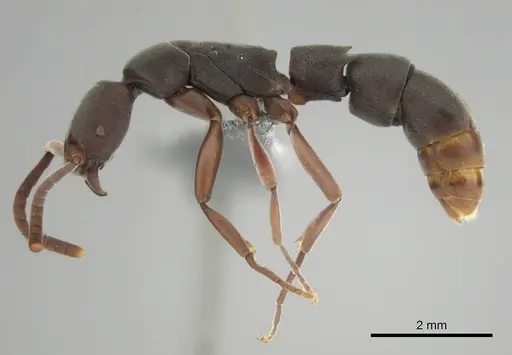
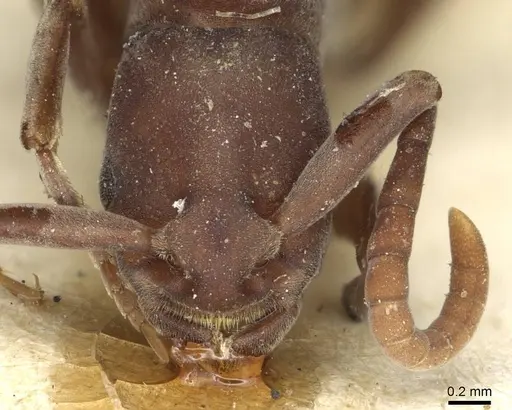
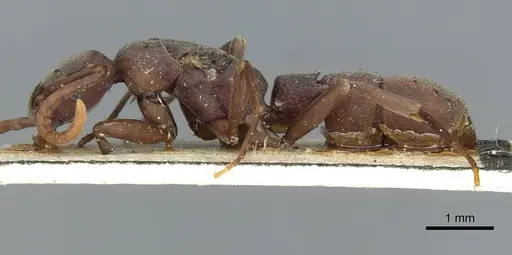
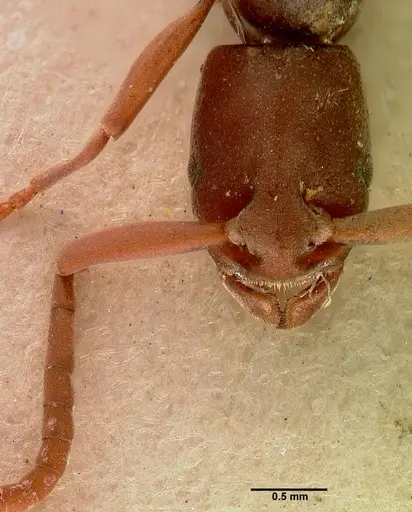
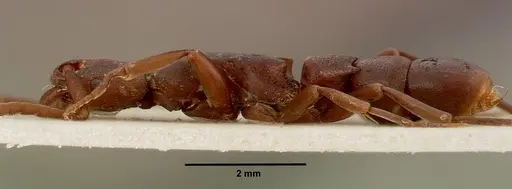
Platythyrea occidentalis is a medium-sized Ponerine ant native to West and Central Africa. Workers are characterized by their distinctly flattened body and relatively long legs. They are dark brown to black in color. Size data is unavailable - inferred from Platythyrea genus (~5-7mm). This species occurs across the Afrotropical region from Sierra Leone east to Uganda, typically found in lowland to mid-elevation forests . The genus Platythyreini is known for some unusual social traits, and this species has documented ergatoid (wingless) males, which is rare among ants .
Quick Summary
- Difficulty: Medium
- Origin & Habitat: West to Central Africa (Sierra Leone, Ghana, Cameroon, Congo, DRC, Uganda). Found in lowland tropical forests, with documented occurrences at 800 to 900 meters elevation in Cameroon [1].
- Colony Type: Colony structure is not well documented. Based on typical Ponerinae patterns, they likely form single-queen colonies. The presence of ergatoid males suggests unique reproductive dynamics, but this remains unconfirmed [3].
- Size & Growth:
- Queen: size data unavailable, inferred from Platythyrea genus (~8-10mm)
- Worker: size data unavailable, inferred from Platythyrea genus (~5-7mm)
- Colony: Unknown
- Growth: Moderate
- Development: Estimated 8 to 12 weeks at 24 to 28°C based on typical Ponerinae development (Direct development data is missing. Ponerine ants typically take longer to mature than many other ant groups.)
- Antkeeping:
- Temperature: Keep at 24 to 28°C. They are tropical ants requiring warm, stable conditions [2].
- Humidity: Provide moderate humidity. Keep the nest substrate damp but not waterlogged. Ponerine ants generally prefer moist forest floor conditions [2].
- Diapause: No. As a tropical species, they do not require a winter rest period [2].
- Nesting: They likely nest in soil, leaf litter, or rotting wood in forest habitats. In captivity, a Y-tong or plaster nest works best. Provide tight chambers with a humidity gradient if possible [2].
- Behavior: Workers are active hunters that chase small invertebrates on the forest floor. They are not aggressive toward humans but will sting if you disturb the nest. Their sting is known to be sharp for their size. They move quickly on long legs and are most active at night or during dusk. Escape risk is moderate due to their size and speed [2].
- Common Issues: slow development can frustrate keepers, colonies take months to establish., humidity control is critical, dry substrate kills brood, wet substrate causes mold., predatory diet requires regular live prey, not suitable for hands-off feeding., wild-caught queens may carry parasites that can wipe out a colony., stings are painful, handle nests carefully during maintenance.
Housing and Nest Setup
Platythyrea occidentalis thrives in a naturalistic setup that mimics forest floor conditions. Use a Y-tong or plaster nest with a damp substrate. They prefer tight chambers over open spaces. Keep the nest area consistently moist but never waterlogged. Provide a separate water source and keep the outworld dry to prevent mold. Since they are tropical, maintain room temperature above 24°C. A heating cable on one side of the nest helps create a gentle temperature gradient. If you use a naturalistic terrarium, add at least 5 centimeters of soil to allow for tunneling [2].
Feeding and Diet
As Ponerine ants, they hunt small invertebrates. Offer live protein prey like fruit flies, pinhead crickets, or small mealworms. They will likely ignore dead food, so live prey stimulates natural hunting behavior. Some Ponerine ants accept sugar water or honey, but others ignore sweets entirely. Offer a drop of sugar water occasionally and watch if they take it. Feed protein prey two to three times per week. Remove uneaten prey within 24 hours to stop mold growth [2].
Temperature and Seasonal Care
These ants need warm, stable conditions year-round. Keep the nest at 24 to 28°C. Temperatures below 22°C slow development, and prolonged cold can kill the colony. They do not need a winter rest period. You can let nighttime temperatures drop a few degrees, but never go below 20°C. Keep the nest away from air conditioning vents or drafty windows. A heating cable placed on top of the nest maintains steady warmth [2].
Behavior and Temperament
Workers hunt small invertebrates on the forest floor. They are not hyper-aggressive but will sting if you disturb the nest. Their sting is sharp for their size. They move quickly on long legs and are most active at night or during dusk. Colonies defend their nest moderately but do not form large supercolonies. They are not invasive anywhere in the world [2]. Researchers recently documented wingless males in this genus, which suggests unique reproductive roles [3].
Colony Establishment and Growth
Starting a colony from a wild queen is challenging because founding behavior is unconfirmed. If you get a founding queen, place her in a small test tube or mini-nest with damp substrate. Ponerine queens often hunt while founding, so offer small live prey even before workers emerge. Once workers appear, the colony grows slowly. Ponerine colonies typically take six to twelve months to reach a few dozen workers, and several years to mature. Do not overfeed or disturb the nest often. Queens likely live for many years [2].
Frequently Asked Questions
How long does it take for Platythyrea occidentalis to produce first workers?
Direct data is missing. Based on typical Ponerinae development, expect eight to twelve weeks from egg to first worker at 24 to 28°C. The first workers will be smaller than normal workers [2].
Can I keep Platythyrea occidentalis in a test tube?
A test tube works for a founding queen, but move the colony to a proper nest once workers emerge. Test tubes dry out quickly and lack humidity control [2].
What do Platythyrea occidentalis eat?
They hunt small invertebrates. Offer live protein prey like fruit flies, pinhead crickets, or small mealworms. They may or may not accept sugar water. Offer it occasionally but do not rely on sweets [2].
Are Platythyrea occidentalis good for beginners?
They are medium difficulty. They need careful humidity and temperature control, and slow development can be frustrating. Not recommended as a first ant unless you understand Ponerine care requirements [2].
Do Platythyrea occidentalis need hibernation?
No. They are tropical ants and do not need a winter rest period. Keep them warm year-round at 24 to 28°C [2].
How big do Platythyrea occidentalis colonies get?
Colony size is not well documented. Based on genus patterns, they likely reach moderate sizes over several years. They do not form supercolonies [2].
Can I keep multiple Platythyrea occidentalis queens together?
This is not documented. Ponerine ants typically form single-queen colonies. Do not combine unrelated queens [2].
What temperature range is ideal for Platythyrea occidentalis?
Keep them at 24 to 28°C. They need consistent warmth. Avoid temperatures below 20°C for long periods [2].
Why is my Platythyrea occidentalis colony dying?
Common causes include dry substrate, temperatures below 20°C, mold from overfeeding, parasites from wild queens, or lack of protein. Check each factor and adjust accordingly [2].
Report an Issue
The current care sheet is based fully on literature. See inconsistencies, or something that's incorrect? Please , it will be resolved after review from an admin. Contributing to the blogs tab also helps providing information, to make us be able to further improve the caresheets. Thank you for your support!
References

This caresheet is licensed under CC BY-SA 4.0 .
Community Blogs
CASENT0250054
View on AntWeb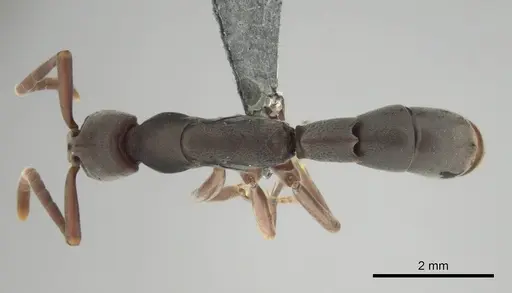
CASENT0250055
View on AntWeb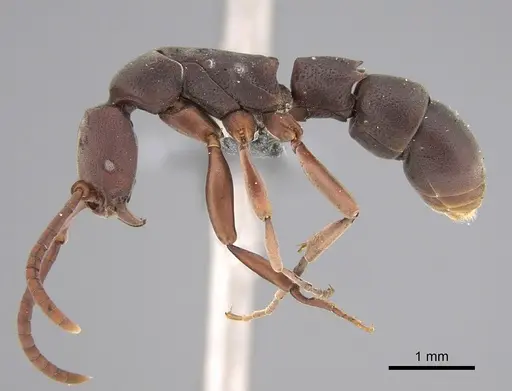
CASENT0913731
View on AntWeb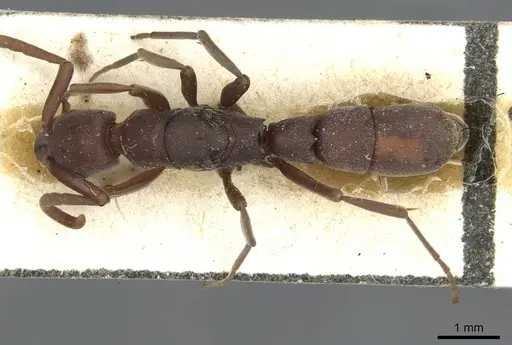
SAM-ENT-0011507
View on AntWeb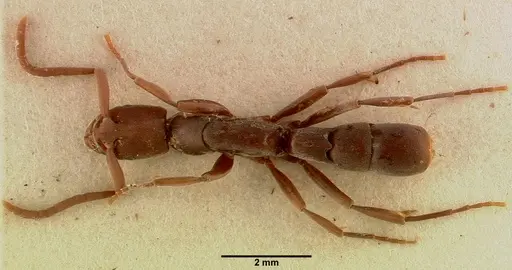
Literature
Loading distribution map...Loading products...