
Plagiolepis pictipes
- Sci. Name
- Plagiolepis pictipes
- Tribe
- Plagiolepidini
- Subfamily
- Formicinae
- Author
- Santschi, 1914
- Distribution
- Found in 1 countries
Introduction
Plagiolepis pictipes is a minute ant species with a total length of 1.4-1.5 mm . Workers are pale to yellowish-brown. This species is found in East Africa, including Kenya, Tanzania, and Rwanda, in savannah environments on trees like Vachellia nilotica . Due to its small size, Plagiolepis pictipes is one of the smallest ants you can keep. They are arboreal, foraging on tree trunks and branches .
Quick Summary
- Difficulty: Medium
- Origin & Habitat: East Africa, Kenya, Tanzania, and Rwanda. Found in savannah environments, specifically on trees including Vachellia nilotica (acacia) and Grewia species [1][2]. This is a warm-climate species from tropical savannah.
- Colony Type: Based on typical Plagiolepis patterns, likely single-queen colonies, but no specific study exists for this species.
- Size & Growth:
- Queen: Size data unavailable, no documented measurements. Inferred from Plagiolepis genus as ~3-4 mm.
- Worker: 1.4-1.5 mm [1]
- Colony: Colony size data unavailable, inferred to be small based on genus patterns.
- Growth: Unknown, likely moderate based on genus patterns.
- Development: Estimated 6-8 weeks based on typical Plagiolepis development at warm temperatures. (Inferred from genus patterns, warmer temperatures may speed development.)
- Antkeeping:
- Temperature: Keep warm around 24-28°C based on East African savannah climate. Provide a temperature gradient.
- Humidity: Keep nest substrate lightly moist, not waterlogged, based on savannah conditions.
- Diapause: No diapause required, species from tropical East Africa.
- Nesting: Nest in small cavities in wood or under bark on trees [1]. Use Y-tong nests or test tubes for housing. Avoid acrylic nests.
- Behavior: Docile and not aggressive. Their tiny size means escape prevention is critical. They are arboreal [1].
- Common Issues: escape prevention is critical due to their 1.5 mm size, small colony size means slow growth, limited care information available, monitor humidity closely to prevent drying out, wild-caught colonies may be hard to establish due to unknown founding
Housing and Nest Setup
Plagiolepis pictipes is extremely small (1.4-1.5 mm), so housing must be appropriately scaled. Y-tong nests with narrow chambers or test tubes for founding colonies work well. Escape prevention is critical, use fine mesh and seal all connections. They naturally nest in small cavities in wood or under bark on trees [1].
Feeding and Diet
Based on typical ant diets, offer sugar water or honey water regularly. For protein, provide small live prey like fruit flies or tiny mealworms. Remove uneaten food to prevent mold.
Temperature and Seasonal Care
Keep the nest area warm around 24-28°C based on their natural habitat. A heating cable on one side can create a gradient. No diapause is needed for this tropical species.
Handling and Temperament
These ants are docile and not aggressive. Handle gently due to their fragility. Focus on escape prevention due to their tiny size.
Frequently Asked Questions
How long does it take for Plagiolepis pictipes to produce first workers?
Estimated 6-8 weeks from egg to worker at optimal temperatures, based on typical Plagiolepis genus development patterns.
What do Plagiolepis pictipes eat?
They likely accept sugar water or honey water as a constant energy source, plus small protein items like fruit flies or tiny mealworms.
How big do Plagiolepis pictipes colonies get?
Colony size data is unavailable, but they are inferred to have small colonies based on genus patterns.
What temperature do Plagiolepis pictipes need?
Keep them warm around 24-28°C based on their East African savannah habitat.
Can I keep multiple Plagiolepis pictipes queens together?
Not recommended, there is no documented evidence for multi-queen colonies. Based on typical genus patterns, they likely form single-queen colonies.
Do Plagiolepis pictipes need hibernation?
No, they come from tropical East Africa and do not require a diapause period.
Why are my Plagiolepis pictipes escaping?
Their tiny 1.5 mm size allows them to squeeze through small gaps. Check all connections, apply fluon to rim edges, and use fine mesh on ventilation [1].
Is Plagiolepis pictipes good for beginners?
Probably not ideal for complete beginners due to their tiny size requiring specialized equipment and excellent escape prevention.
When should I move Plagiolepis pictipes to a formicarium?
Wait until the colony reaches at least 20-30 workers and test tube space becomes crowded. Use a small formicarium or Y-tong setup with appropriately scaled chambers.
Report an Issue
The current care sheet is based fully on literature. See inconsistencies, or something that's incorrect? Please , it will be resolved after review from an admin. Contributing to the blogs tab also helps providing information, to make us be able to further improve the caresheets. Thank you for your support!
References

This caresheet is licensed under CC BY-SA 4.0 .
Community Blogs
CASENT0912411
View on AntWeb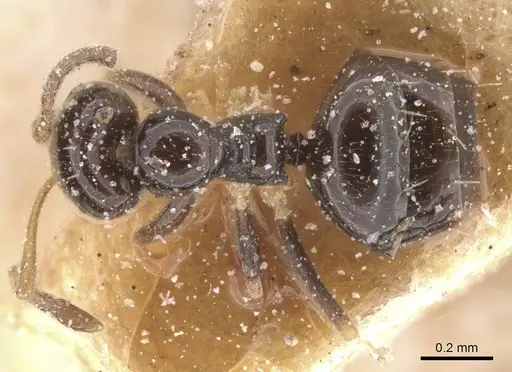
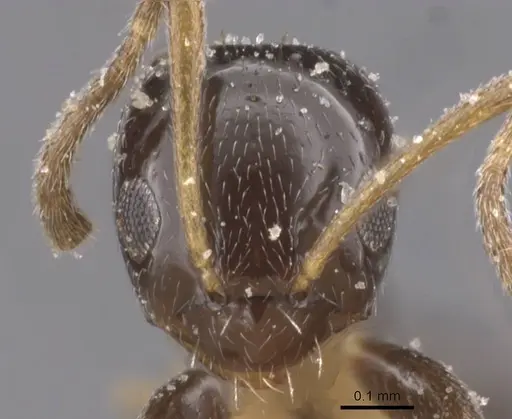
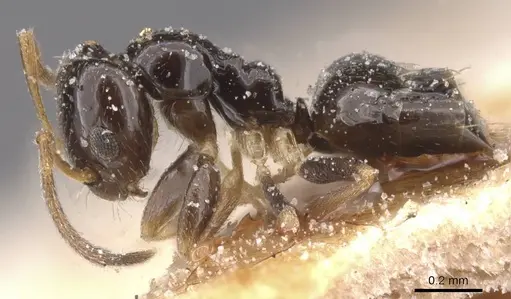
Literature
Loading distribution map...Loading products...