
Plagiolepis juddi
- Sci. Name
- Plagiolepis juddi
- Tribe
- Plagiolepidini
- Subfamily
- Formicinae
- Author
- Sharaf & Aldawood, 2011
- Distribution
- Found in 1 countries
Introduction
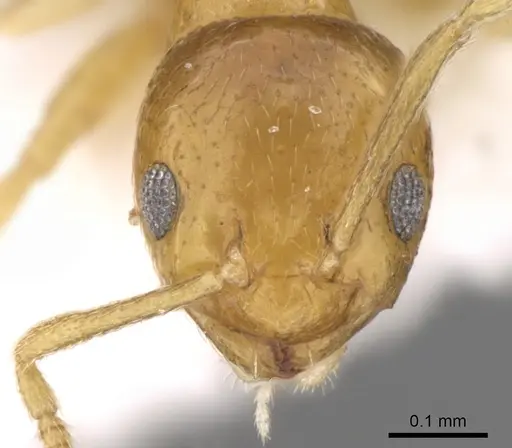
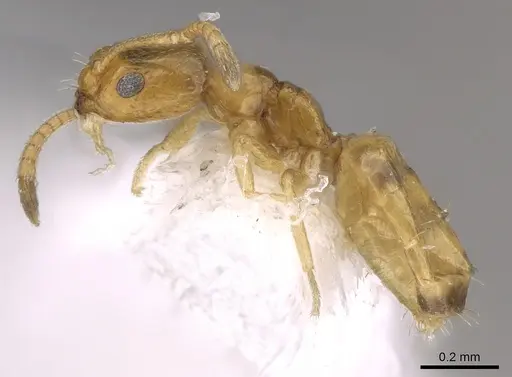
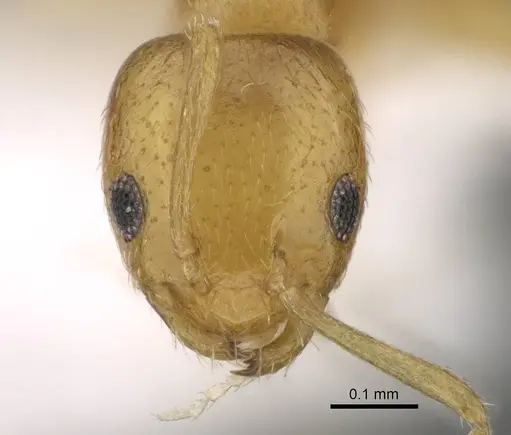
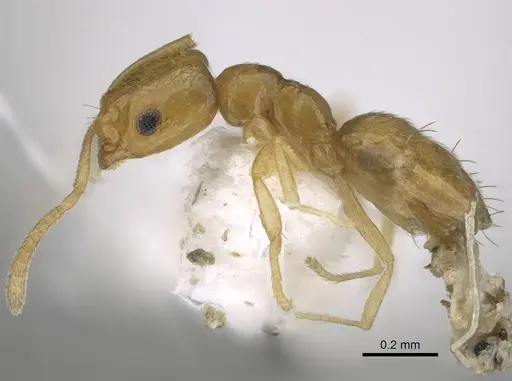
Plagiolepis juddi is a minute yellow ant described from Yemen in 2011. Workers measure 1.02 mm in total length . The species is known only from the holotype worker collected in Lahj, Yemen, and no biological data is available . This ant is among the smallest in its genus, with a bright yellow body and sparse hair coverage . Its extreme rarity and unknown biology make it a challenging species for antkeeping, particularly due to escape risks from its tiny size.
Quick Summary
- Difficulty: Expert
- Origin & Habitat: Yemen, specifically the Lahj region, collected in May 2002 from an unspecified habitat [1][2].
- Colony Type: Unknown, no queens or colony structure has been described [3].
- Size & Growth:
- Queen: Unknown, queens have never been documented [3].
- Worker: 1.02 mm total length [1].
- Colony: Unknown [3].
- Growth: Unknown.
- Development: Unknown, based on typical Formicinae patterns, development might take 4-8 weeks at warm temperatures, but this is unconfirmed for P. juddi [3]. (No breeding data exists, development time is speculative.)
- Antkeeping:
- Temperature: Based on Yemen's climate, temperatures around 25-30°C are likely suitable, but exact needs are unconfirmed [1].
- Humidity: Humidity needs are unknown, start with moderate moisture in the nest substrate and observe colony response.
- Diapause: Unknown, likely unnecessary given Yemen's tropical climate, but unconfirmed [1].
- Nesting: Unknown, extremely small chambers would be needed due to the 1 mm worker size.
- Behavior: Unknown, extreme escape risk due to 1 mm size, temperament and foraging habits are undocumented [3].
- Common Issues: workers can escape through gaps due to their 1 mm size [1]., feeding preferences are unknown, risking starvation if proper diet is not provided [3]., only one specimen has been collected, making wild collection difficult and potentially unsustainable [1][2]., standard prey items are too large, microscopic prey is required [3].
Identification and Size Challenges
Plagiolepis juddi workers measure 1.02 mm in total length, making them exceptionally small [1]. They are bright yellow with slightly darker brown tips on the mandibles and rear abdominal margins [1]. You can distinguish them from similar species like Plagiolepis exigua by their smaller size and sparser hair coverage [1].
Their minute size creates practical problems for captivity. Standard insect mesh may be too large to contain them [1]. You need fine barriers like PTFE-coated surfaces or micron mesh to prevent escapes. Even tiny gaps in cotton plugs or formicarium joints could allow workers to slip through.
Natural History and Distribution
This species is known only from the holotype worker collected in Lahj, Yemen in May 2002 [1]. Yemen features hot, arid climates, but the specific habitat of P. juddi is undocumented [3]. The lack of additional specimens suggests extreme rarity or limited survey effort in the region [2]. Without knowledge of their preferred microhabitat, replicating natural conditions in captivity is difficult.
Housing Requirements
Standard ant-keeping equipment may not work for ants this small. Test tubes with cotton plugs could allow escapes through fiber gaps. Use small containers with secure, fine-mesh lids or PTFE barrier systems. Any ventilation holes must be covered with mesh smaller than 0.5 mm aperture. Avoid tall outworlds where tiny workers could be lost to air currents. [1]
Feeding and Diet
The natural diet of Plagiolepis juddi is unknown. Based on typical Plagiolepis genus patterns, they likely feed on honeydew and microscopic prey [3]. If attempting to feed a colony, use microscopic prey like springtails or mites. Standard prey items like fruit flies are too large. Sugar water or honey solutions in tiny drops might be accepted, but observe carefully.
Temperature and Climate
Without specific thermal data, infer needs from Yemen's hot climate. Maintain warm temperatures around 25-30°C with a gentle gradient [1]. Hibernation is likely unnecessary due to the tropical origin, but this is unconfirmed. Keep humidity moderate, start with nest material lightly damp to the touch and adjust based on colony behavior.
Frequently Asked Questions
Can I keep Plagiolepis juddi in captivity?
You should not attempt to keep Plagiolepis juddi currently. They are known only from a single specimen, their biology is unknown, and their 1 mm size makes escape prevention nearly impossible with standard equipment [1][3].
How big are Plagiolepis juddi workers?
Workers measure 1.02 mm in total length, making them among the tiniest ants [1].
Where are Plagiolepis juddi found?
They are only known from Yemen, specifically the Lahj region [1][2].
What do Plagiolepis juddi eat?
Their diet is unknown. Based on related Plagiolepis species, they likely feed on honeydew and microscopic insects, but this is speculative [3].
Do Plagiolepis juddi need hibernation?
Probably not, given their tropical Yemen origin, but this is unconfirmed. Keep them at stable warm temperatures year-round unless seasonal behaviors are observed [1].
How long until Plagiolepis juddi get their first workers?
The egg-to-worker timeline is unknown. Based on similar small ants, it might take 4-8 weeks at warm temperatures, but this is an estimate [3].
Are Plagiolepis juddi good for beginners?
No. They are unsuitable for beginners due to unknown biology, extreme rarity, and technical challenges of containing 1 mm ants [3].
How do I prevent Plagiolepis juddi from escaping?
Use specialized barriers like PTFE-coated surfaces and mesh smaller than 0.5 mm aperture. Standard mesh is too large, and tiny gaps can allow escapes [1].
Report an Issue
The current care sheet is based fully on literature. See inconsistencies, or something that's incorrect? Please , it will be resolved after review from an admin. Contributing to the blogs tab also helps providing information, to make us be able to further improve the caresheets. Thank you for your support!
References

This caresheet is licensed under CC BY-SA 4.0 .
Community Blogs
CASENT0906471
View on AntWeb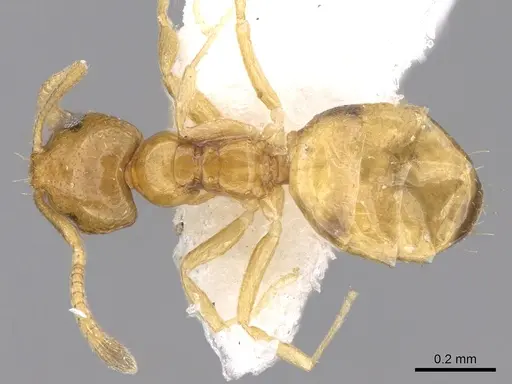
CASENT0919816
View on AntWeb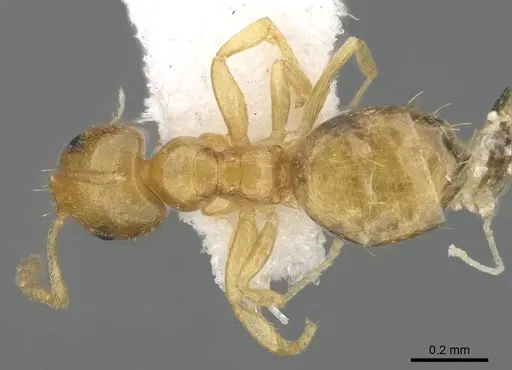
Literature
Loading distribution map...Loading products...