
De Wet's Restless ant
Plagiolepis deweti
- Sci. Name
- Plagiolepis deweti
- Tribe
- Plagiolepidini
- Subfamily
- Formicinae
- Author
- Forel, 1904
- Common Name
- De Wet's Restless ant
- Distribution
- Found in 2 countries
Introduction
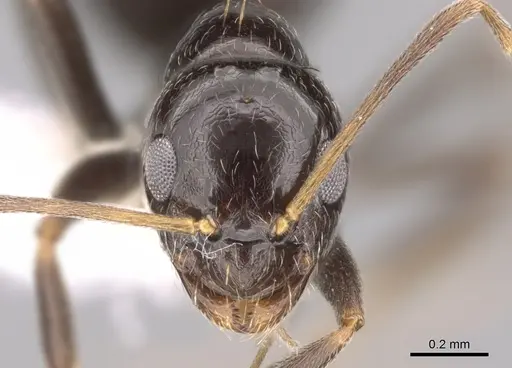
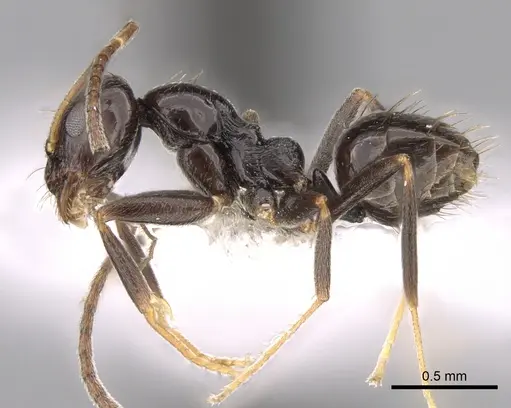
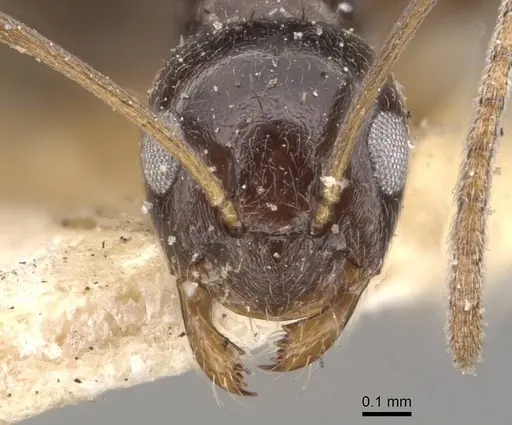
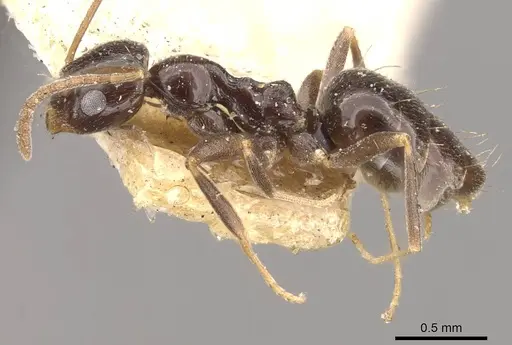
Plagiolepis deweti is a small, cryptic ant native to South Africa. Workers are tiny, roughly 2-3 mm, with a pale to reddish-brown color typical of the genus. This formicine belongs to the tribe Plagiolepidini and was first described by Forel in 1904 . It's only known from the Afrotropical region, mainly South Africa. Research shows it can live in both natural and disturbed areas, and it's been found in sites invaded by the Argentine ant (Linepithema humile) as well as non-invaded ones . Like most Plagiolepis, these ants are inconspicuous, non-aggressive, and nest in hidden spots. Because almost nothing is known about keeping this species in captivity, it's not suitable for antkeeping at this time.
Quick Summary
- Difficulty: Unknown
- Origin & Habitat: South Africa (Afrotropical Region), found in both natural and disturbed areas [2][3]
- Colony Type: Unknown
- Size & Growth:
- Queen: Unknown, no documented measurements [1]
- Worker: ~2-3 mm, inferred from Plagiolepis genus [1]
- Colony: Up to a few hundred workers (estimated from genus patterns)
- Growth: Unknown
- Development: Unconfirmed, no direct data exists (Based on similar small Formicinae, an estimate of 6-10 weeks at 20-24°C is possible, but purely speculative.)
- Antkeeping:
- Temperature: Unconfirmed, start around 20-24°C, typical for South African ants, and watch the colony's response
- Humidity: Unconfirmed, keep the nest substrate moderately moist but not waterlogged, based on general subtropical ant preferences
- Diapause: Unknown, South Africa's mild winters suggest possible dormancy, but not documented
- Nesting: Unconfirmed, likely nests in soil or under stones based on genus patterns [1]
- Behavior: Not studied in captivity. Based on genus patterns, these ants are likely docile, small, and nest in hidden spots. Escape risk is moderate due to their tiny size, use fine mesh barriers. No known aggression or stinging behavior.
- Common Issues: no established care protocols, any attempt would be completely experimental, unknown basic biology (size, diet, temperature) makes reliable care impossible without extensive trial and error, species not available in the ant trade, wild collection in South Africa would be needed, with legal and logistical hurdles, founding behavior, colony structure, and development timeline are entirely undocumented
Species Status and Availability
Plagiolepis deweti is an extremely rare species in the antkeeping hobby. There are no documented captive colonies or care protocols. This ant has only been recorded in scientific literature from South Africa, and it has never been kept or bred in captivity. Research has focused on its ecological role as a native ant in South Africa, particularly its interactions with invasive Argentine ants (Linepithema humile). It has been found in both invaded and non-invaded sites, suggesting some tolerance to disturbance, but basic biology remains unstudied [2][3]. Because of this, the species is not recommended for any antkeeper unless they can collect wild queens from South Africa and are willing to document entirely new care requirements.
Natural History
Plagiolepis deweti was described by Forel in 1904 from South African specimens [1]. It belongs to the tribe Plagiolepidini within the subfamily Formicinae. In the wild, it's part of native ant communities and has been studied for its response to invasion by Argentine ants. Devenish and colleagues (2018,2021) found P. deweti in both invaded sites (1-3 individuals per sample) and non-invaded sites (1-8 individuals) [2][3]. This suggests the species can persist despite environmental changes, though populations seem small. It is not invasive and shows no aggressive behavior.
Why This Species Is Not Recommended for Beginners
You should not try to keep Plagiolepis deweti for several reasons. First, no one has ever successfully kept or bred it in captivity, there is zero care info. Second, its basic biology is completely unknown: we don't know its exact size, diet, founding method, temperature needs, or how fast it grows. Third, you can't buy this ant, you'd have to collect it in South Africa, which is legally difficult and may be unethical. Fourth, even if you got a founding queen, you'd be starting from scratch with no guidance. For these reasons, antkeepers should choose a different species from the same genus that has an established care guide.
Frequently Asked Questions
Can I keep Plagiolepis deweti as a pet ant?
No, this species has never been documented in antkeeping and has no established care protocols. There is no information on temperature, humidity, diet, or colony needs. It's also not available in the trade and would require wild collection in South Africa.
Where does Plagiolepis deweti live in the wild?
This species is native to South Africa in the Afrotropical region. It has been found in both natural and disturbed areas, including sites invaded by Argentine ants [2][3].
How big do Plagiolepis deweti workers get?
The exact size has not been measured. Based on the Plagiolepis genus, workers are roughly 2-3 mm, but this is an estimate [1].
What do Plagiolepis deweti ants eat?
Unconfirmed, no documented diet exists. Like other small Formicinae, they probably eat small insects, honeydew, and nectar, but this is speculative.
How do I start a Plagiolepis deweti colony?
You shouldn't try, no captive colonies are documented, and there are no protocols. The species isn't available commercially and would need to be wild-caught in South Africa, which is not recommended.
What temperature do Plagiolepis deweti ants need?
Unconfirmed, no specific temperature data exists. Based on South Africa's climate, they likely tolerate 18-25°C, but this is an estimate.
Are Plagiolepis deweti colonies monogyne or polygyne?
This is unconfirmed. Colony structure (single vs multiple queens) has not been documented for this species.
How long does it take for Plagiolepis deweti to develop from egg to worker?
Unconfirmed, no development timeline exists. Based on similar small Formicinae, it might take 6-10 weeks, but this is pure speculation.
Is Plagiolepis deweti invasive or dangerous?
No, it's a native South African ant and is not considered invasive. It has no reported harmful effects and is not a pest species [3].
Why is there no care information for Plagiolepis deweti?
The species has received very little scientific attention, most studies focus on its ecology rather than basic biology. It's not a pest or invasive, so there's been no incentive to study captive care [2][3].
Report an Issue
The current care sheet is based fully on literature. See inconsistencies, or something that's incorrect? Please , it will be resolved after review from an admin. Contributing to the blogs tab also helps providing information, to make us be able to further improve the caresheets. Thank you for your support!
References

This caresheet is licensed under CC BY-SA 4.0 .
Community Blogs
CASENT0281161
View on AntWeb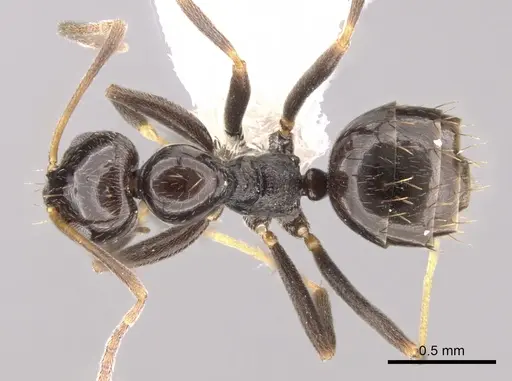
CASENT0909860
View on AntWeb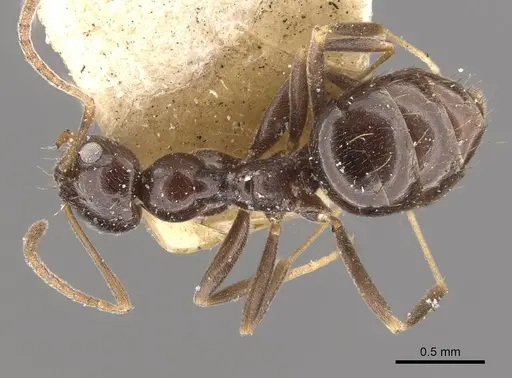
Literature
Loading distribution map...Loading products...