
Plagiolepis boltoni
- Sci. Name
- Plagiolepis boltoni
- Tribe
- Plagiolepidini
- Subfamily
- Formicinae
- Author
- Sharaf & Aldawood, 2011
- Distribution
- Found in 2 countries
Introduction
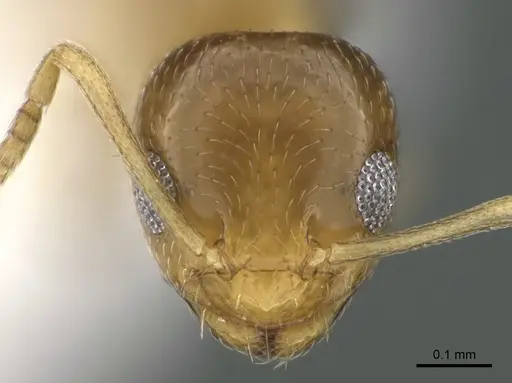
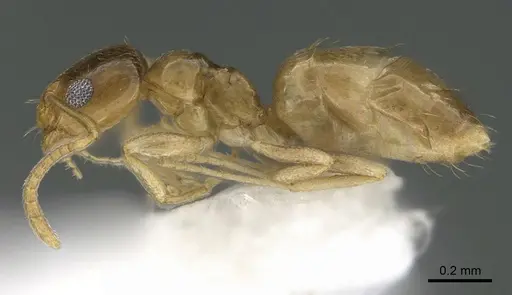
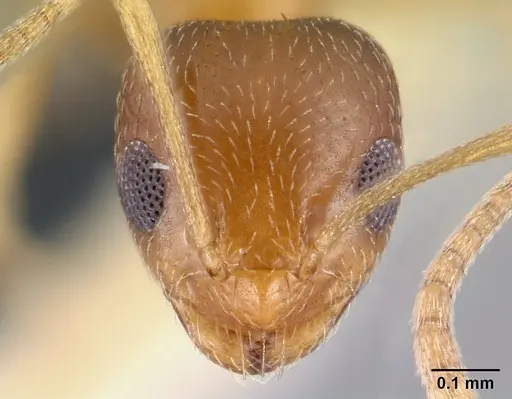
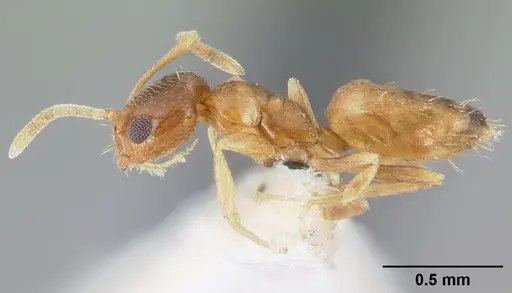
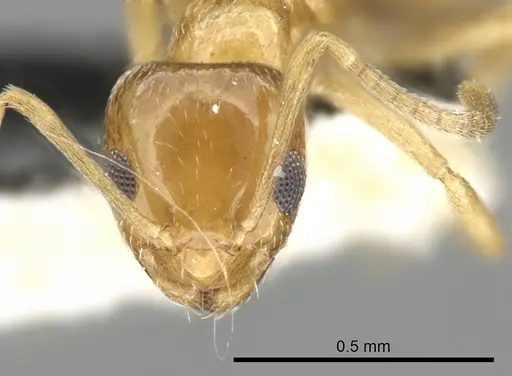
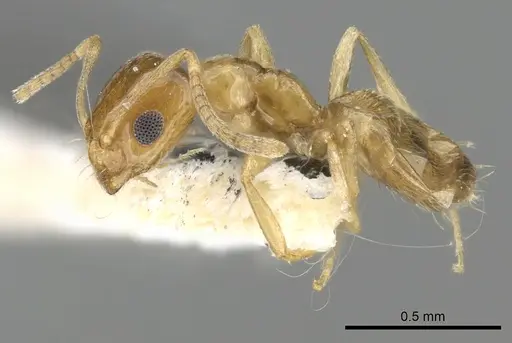
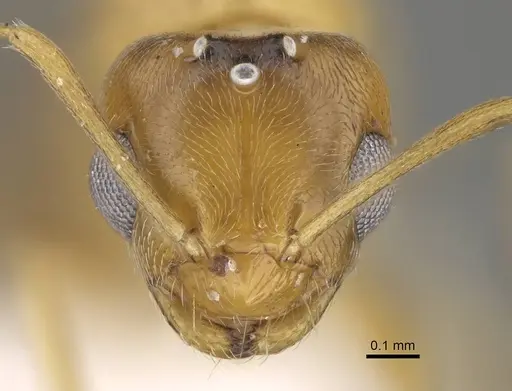
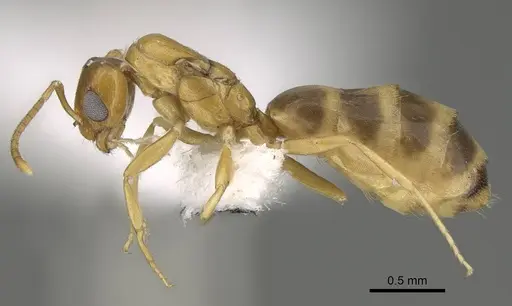
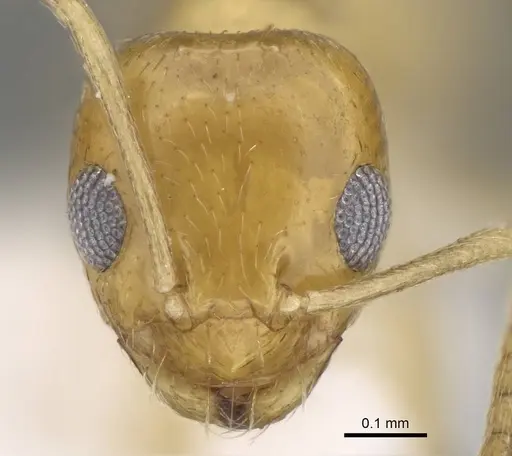
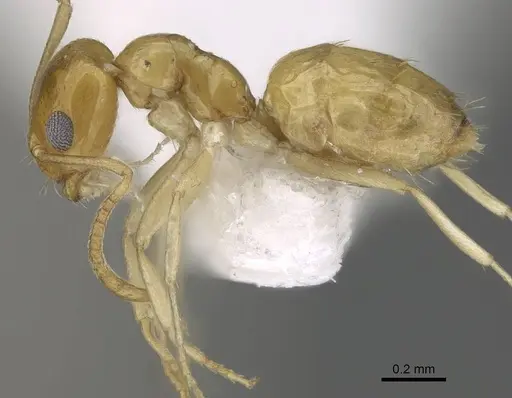
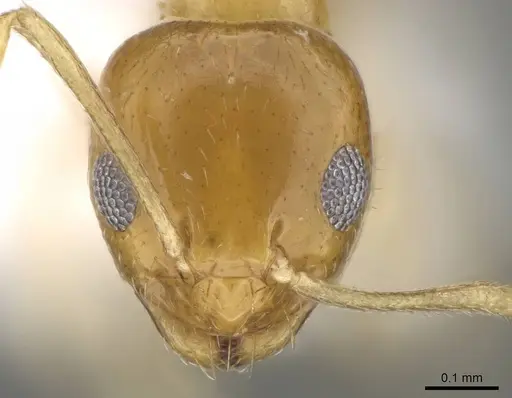
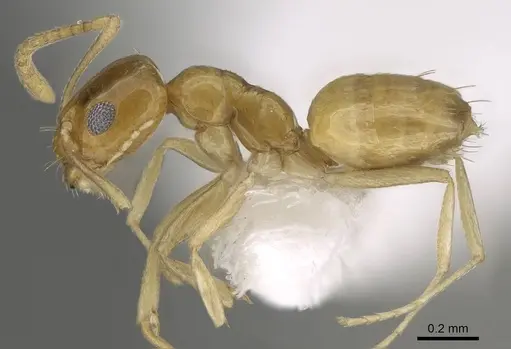
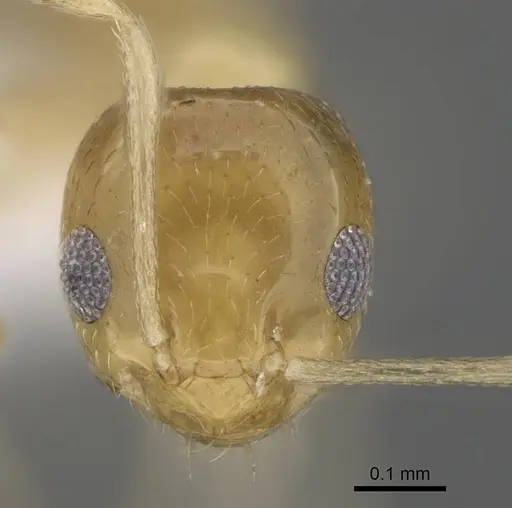
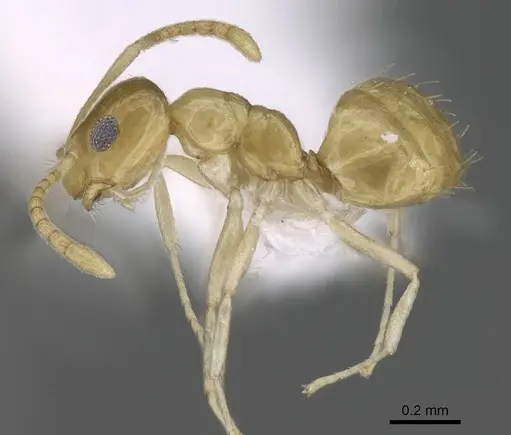
Plagiolepis boltoni is a tiny yellow ant species native to the Arabian Peninsula, specifically found in Saudi Arabia and Oman. Workers measure 1.35-1.60 mm in total length, have a uniform yellow body with black eyes and a black tip on the abdomen, and possess relatively large eyes compared to similar species . This species was described in 2011 and named in honor of Barry Bolton . In the wild, P. boltoni prefers arid areas around date palm trees, nesting in soil near tree bases or under stones. It coexists with other ant species such as Brachyponera sennaarensis, Camponotus sericeus, Cataglyphis abyssinica, and Cardiocondyla emeryi . The biology of this species is poorly studied, so much remains unknown about its care in captivity .
Quick Summary
- Difficulty: Unknown, too little data to assess
- Origin & Habitat: Saudi Arabia and Oman, arid areas with date palm trees, nesting in soil near tree bases or under stones [1][3]
- Colony Type: Unknown, colony structure has not been documented [2]
- Size & Growth:
- Antkeeping:
- Temperature: Estimated 22-26°C based on arid habitat origin [1]
- Humidity: Keep nest substrate lightly moist but not wet, with dry areas provided [1]
- Diapause: Unknown, no data available [2]
- Nesting: Natural nesting in soil under stones or near palm trees [1]. In captivity, use small test tube setups or Y-tong nests with tight chambers scaled to their tiny size.
- Behavior: Non-aggressive, tiny ants with high escape risk due to their small size [1]. They forage near the ground and may tend aphids for honeydew, but specific behaviors are undocumented.
- Common Issues: escape prevention critical due to tiny size (1.35-1.60 mm), use fine mesh and tight barriers [1], humidity balance challenging due to arid origin, avoid waterlogged substrate [1], lack of care data may lead to improper husbandry [2]
Appearance and Identification
Plagiolepis boltoni workers are tiny ants measuring 1.35-1.60 mm in total length [1]. Their body is uniform yellow with black eyes and a black tip on the abdomen [1]. The head is longer than wide with convex sides, and scapes surpass the occiput by about a quarter of their length [1]. Queens have similar coloration but are slightly larger with notably large eyes [1].
Natural Habitat and Distribution
This species is known from Saudi Arabia and Oman in the Arabian Peninsula [3]. In the wild, it inhabits arid areas around date palm trees, nesting in soil under stones or near tree bases [1]. It coexists with other ant species and prefers microhabitats with some moisture [1].
Housing and Nesting
Because P. boltoni is tiny and poorly studied, provide a small, dry nest setup. Test tubes work well for founding colonies, but ensure cotton is packed tightly to prevent escapes. For established colonies, use Y-tong or plaster nests with very small chambers scaled to their size [1]. The nest should have areas of varying humidity, keep part lightly moist but provide dry zones [1]. Avoid large open spaces, these ants do best in compact areas.
Feeding and Diet
The specific diet of P. boltoni is undocumented, but related Plagiolepis species eat honeydew and small insects [2]. In captivity, offer small protein sources like fruit flies or pinhead crickets, and sugar water or honey water [2]. Food items must be appropriately sized for their tiny stature.
Temperature and Seasonal Care
Based on their arid origin, P. boltoni likely tolerates warm temperatures around 22-26°C [1]. Monitor colony activity to adjust as needed. No data on diapause exists, given their geographic range, they may not require hibernation but could reduce activity in cooler months [2].
Challenges and Unknowns
Plagiolepis boltoni is one of the least-studied ant species in antkeeping. Almost nothing is known about colony structure, founding behavior, or specific care requirements [2]. Start with conservative care and adjust based on colony response. Key challenges include escape prevention, humidity balance, and lack of development data.
Frequently Asked Questions
How long does it take for Plagiolepis boltoni to produce first workers?
The development timeline is completely unknown for this species [2]. No scientific studies have documented their egg-to-worker time.
What do Plagiolepis boltoni ants eat?
Their specific diet hasn't been studied, but related species eat honeydew and small insects [2]. Offer small protein sources and sugar water.
Are Plagiolepis boltoni good for beginners?
This species is not recommended for beginners due to lack of care guidelines, rarity, and tiny size that makes escape prevention challenging.
How big do Plagiolepis boltoni colonies get?
Only small colonies have been observed in the wild [1]. Related species typically form colonies of several hundred workers at most.
What temperature do Plagiolepis boltoni need?
No specific data exists, but based on their Arabian origin, try 22-26°C and adjust based on colony activity [1].
Do Plagiolepis boltoni need hibernation?
Unknown, no data on overwintering behavior exists [2]. Given their origin, they may not require true hibernation.
Can I keep multiple Plagiolepis boltoni queens together?
Unknown, colony structure has not been documented [2]. Without data, combining unrelated queens is not recommended.
Why are my Plagiolepis boltoni escaping?
These ants are extremely tiny (1.35-1.60 mm) and can squeeze through small gaps [1]. Use fine mesh (0.5 mm or smaller) and check all barriers.
Where can I get Plagiolepis boltoni?
This is a rarely kept species with limited availability. You may need to find specialized ant sellers or breeders.
Report an Issue
The current care sheet is based fully on literature. See inconsistencies, or something that's incorrect? Please , it will be resolved after review from an admin. Contributing to the blogs tab also helps providing information, to make us be able to further improve the caresheets. Thank you for your support!
References

This caresheet is licensed under CC BY-SA 4.0 .
Community Blogs
ANTWEB1041929
View on AntWeb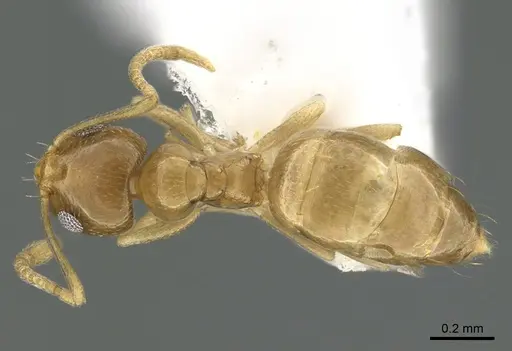
CASENT0217200
View on AntWeb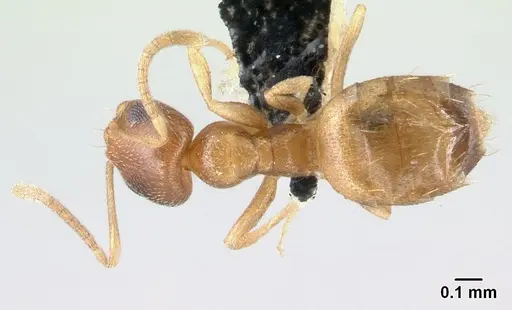
CASENT0249867
View on AntWeb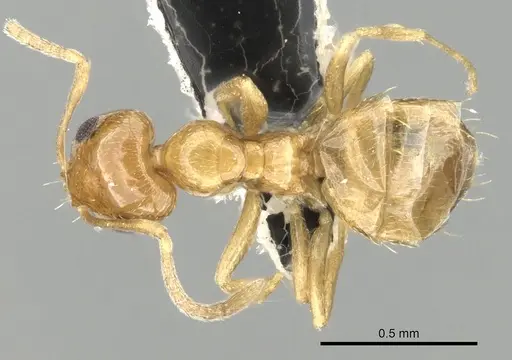
CASENT0919950
View on AntWeb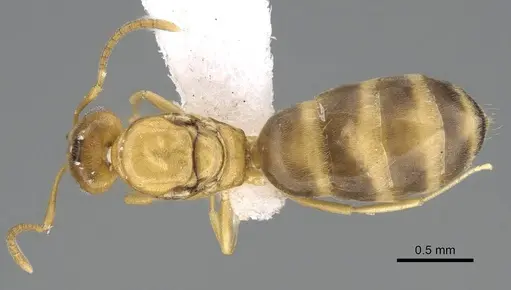
CASENT0919951
View on AntWeb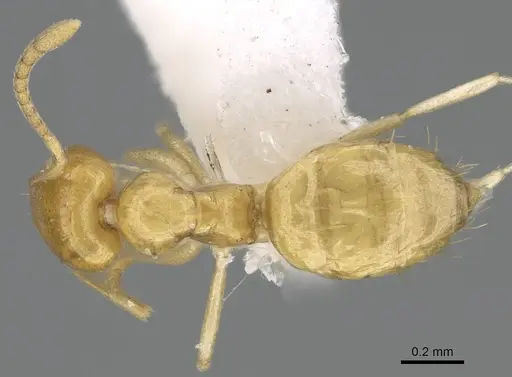
CASENT0919952
View on AntWeb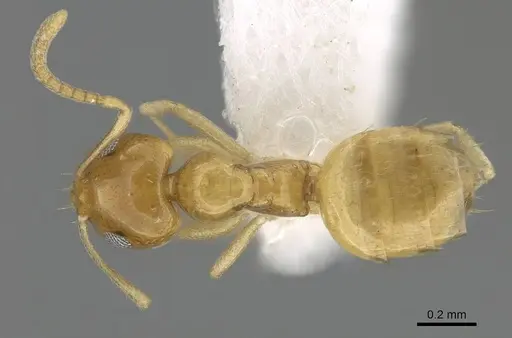
CASENT0922271
View on AntWeb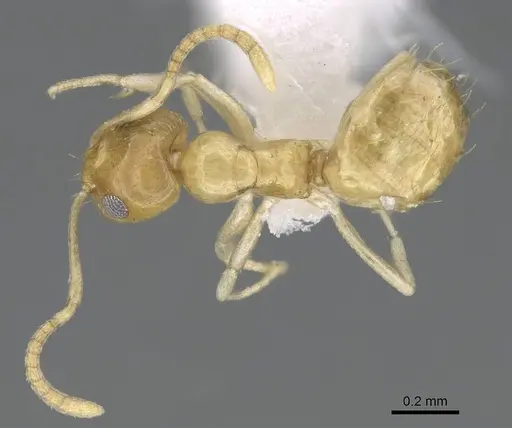
Literature
Loading distribution map...Loading products...