
Plagiolepis barbara
- Sci. Name
- Plagiolepis barbara
- Tribe
- Plagiolepidini
- Subfamily
- Formicinae
- Author
- Santschi, 1911
- Distribution
- Found in 4 countries
Introduction
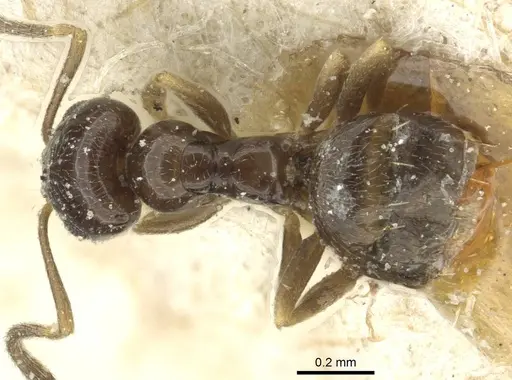
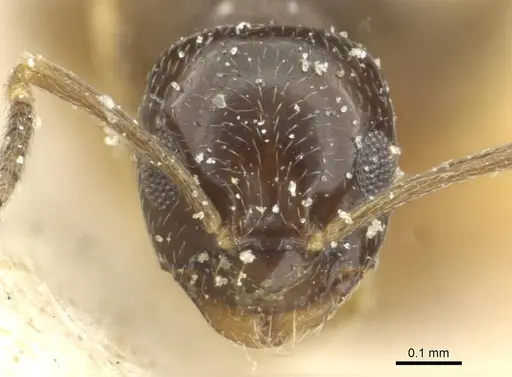
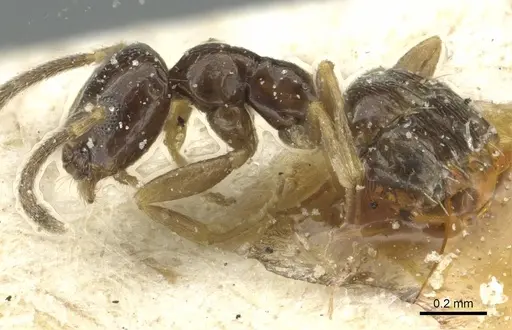
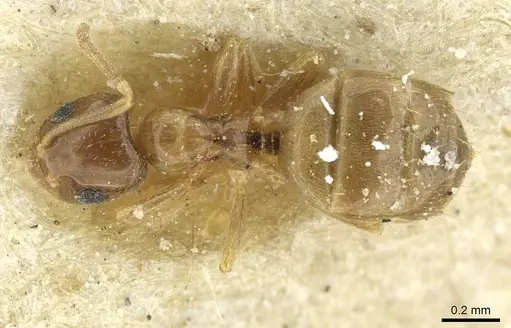
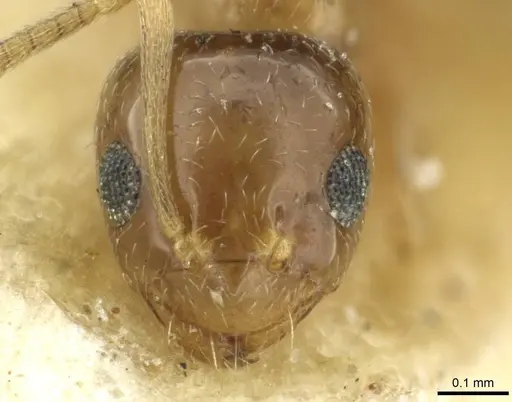
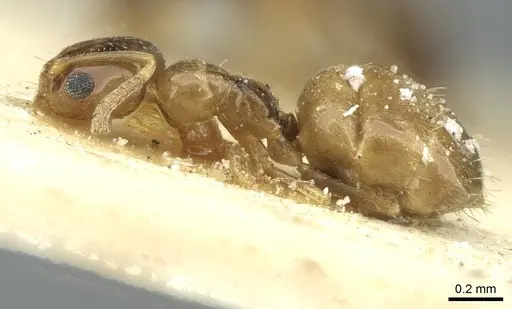
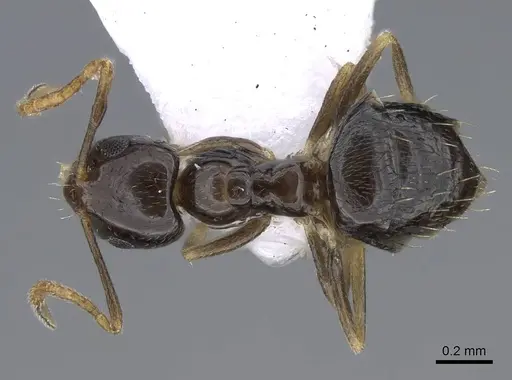
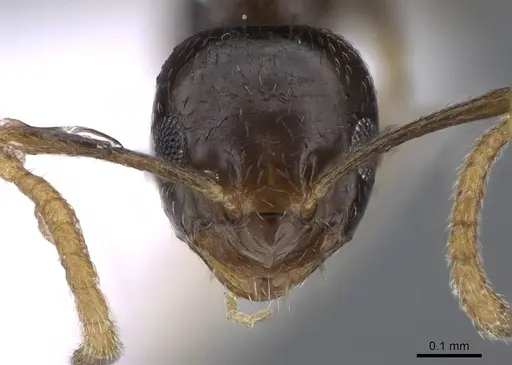
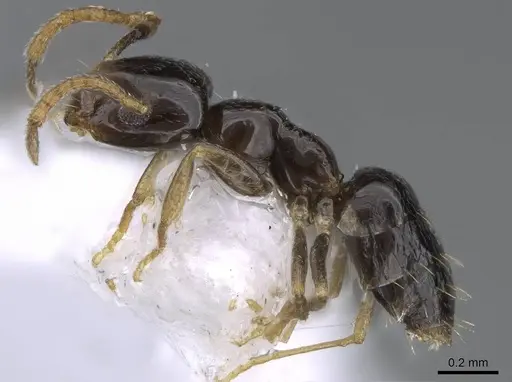
Plagiolepis barbara is a tiny ant native to the West Mediterranean region, including the Canary Islands, Morocco, Algeria, Tunisia, Egypt, Iran, and Oman. Workers have a yellowish gaster that is paler than the rest of their body, with yellow legs and antennae, and a red-brown propodeal dorsum . Nests are in soil under stones or small wood debris, often near vegetation . This species is notable for wing polymorphism: males are often wingless, and queens can be winged or apterous, a trait unique among free-living formicine ants .
Quick Summary
- Difficulty: Medium
- Origin & Habitat: West Mediterranean region, found in the Canary Islands, Morocco, Algeria, Tunisia, Egypt, Iran, and Oman. They nest in soil under stones or small wood debris at low elevations, up to 850m in the Canary Islands [3][4].
- Colony Type: Facultatively polygynous, colonies can have 1 to 10 queens, with a harmonic mean of 1.20 queens per colony [2]. Queens can be winged or apterous depending on location [3].
- Size & Growth:
- Queen: Inferred from Plagiolepis genus (~3-4 mm), direct measurements not available
- Worker: Inferred from Plagiolepis genus (~2-4 mm), direct measurements not available
- Colony: Up to 10 queens per colony [2], worker count unknown
- Growth: Moderate, estimated based on genus patterns
- Development: Estimated 6-8 weeks at optimal temperature (No direct development data available, estimates based on typical Plagiolepis patterns)
- Antkeeping:
- Temperature: Keep warm, around 22-26°C, with a gradient using a heating cable. Avoid temperatures below 18°C or above 30°C.
- Humidity: Keep nest substrate slightly moist but not waterlogged, mimicking natural soil under stones. Provide a water tube for drinking.
- Diapause: Likely a mild winter rest of 2-3 months at 10-15°C based on Mediterranean origin.
- Nesting: Use Y-tong (AAC), plaster nests, or naturalistic setups with stones over moist soil [3][2]. Chambers should be scaled to their small size.
- Behavior: Workers are active foragers and run rapidly, especially wingless males [3]. They are not aggressive and lack a functional stinger that affects humans. Because of their tiny size, escape prevention is critical, they can squeeze through small gaps [3].
- Common Issues: escape prevention is critical due to their small size, use fine mesh and tight barriers [3], colonies may be slow to establish due to small founding size, overfeeding can lead to mold in small nests, remove uneaten food promptly, wing polymorphism in sexuals may cause confusion, wingless males and queens are normal [3]
Housing and Nest Setup
You need to house Plagiolepis barbara carefully due to their small size. Use Y-tong (AAC) nests, plaster nests, or naturalistic setups with flat stones over moist soil to mimic their natural nesting under stones and debris [3][2]. Attach a water tube for drinking, as open water can drown small ants. Keep the nest substrate slightly moist but not waterlogged. Place the nest in a quiet location away from direct sunlight and vibrations.
Feeding and Diet
You should feed these ants a varied diet. They are generalist omnivores that accept sugar sources like honey water and need protein from small live prey such as fruit flies or pinhead crickets. In the wild, they scavenge on carcasses and associated insects [5]. Offer protein 2-3 times per week and keep a constant supply of sugar water. Remove uneaten food promptly to prevent mold in small nests.
Temperature and Seasonal Care
Keep the nest warm, around 22-26°C, with a gradient using a heating cable on one side. Avoid temperatures below 18°C or above 30°C. Based on their Mediterranean origin, a mild winter rest of 2-3 months at 10-15°C is likely beneficial. During winter, reduce feeding and keep them cooler. In summer, ensure access to fresh water and avoid overheating.
Colony Structure and Reproduction
Plagiolepis barbara is facultatively polygynous, meaning colonies can have 1 to 10 queens [2]. Queens can be winged or wingless, and males are often wingless, which is a unique wing polymorphism [3]. You can keep multiple foundress queens together, but monitor for aggression during founding. The species is also facultatively polyandrous, with queens typically mating with one or two males [2].
Behavior and Temperament
Workers are active and fast-moving, especially wingless males [3]. They are not aggressive and do not sting humans. Because of their tiny size, you must use fine mesh on outworld connections and ensure all seams are tightly sealed to prevent escapes [3]. They are peaceful ants that forage generally throughout their territory.
Frequently Asked Questions
How long does it take for Plagiolepis barbara to produce first workers?
Based on typical Plagiolepis development patterns, expect first workers approximately 6-8 weeks after queen lays eggs at optimal temperature. Direct data for this species is not available.
Can I keep multiple Plagiolepis barbara queens together?
Yes, this species is facultatively polygynous, colonies naturally have 1 to 10 queens [2]. You can keep multiple foundress queens together, but monitor for aggression during founding.
What do Plagiolepis barbara eat?
They are omnivores that accept sugar water or honey, and small live prey like fruit flies or pinhead crickets. They also scavenge on carcasses and associated insects [5].
Are Plagiolepis barbara good for beginners?
This species is rated as medium difficulty. Their extremely small size makes escape prevention challenging, and they require careful attention to humidity and temperature. Beginners might find them more challenging than larger species.
How big do Plagiolepis barbara colonies get?
Colony size is not directly documented, but up to 10 queens per colony are recorded [2]. Worker count is unknown.
Why do some Plagiolepis barbara have no wings?
This species has wing polymorphism, males are often wingless, and queens can be winged or apterous depending on location [3]. This is a natural trait, not a defect.
Do Plagiolepis barbara need hibernation?
Based on their Mediterranean origin, a mild winter rest of 2-3 months at 10-15°C is likely beneficial. Reduce feeding during this period.
When should I move Plagiolepis barbara to a formicarium?
Keep them in a test tube setup during founding. Once the colony has 20-30 workers and is actively foraging, move them to a small Y-tong or plaster nest. Transition carefully to prevent escapes.
Why are my Plagiolepis barbara dying?
Common causes include escapes through tiny gaps, mold from overfeeding, temperatures outside 18-30°C, or stress from disturbance. Ensure access to fresh water and proper conditions.
Report an Issue
The current care sheet is based fully on literature. See inconsistencies, or something that's incorrect? Please , it will be resolved after review from an admin. Contributing to the blogs tab also helps providing information, to make us be able to further improve the caresheets. Thank you for your support!
References

This caresheet is licensed under CC BY-SA 4.0 .
Community Blogs
Literature
Loading distribution map...Loading products...