
Plagiolepis arnoldii
- Sci. Name
- Plagiolepis arnoldii
- Tribe
- Plagiolepidini
- Subfamily
- Formicinae
- Author
- Dlussky, 1990
- Distribution
- Found in 1 countries
Introduction
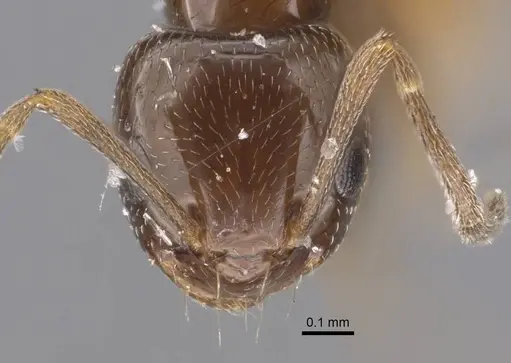
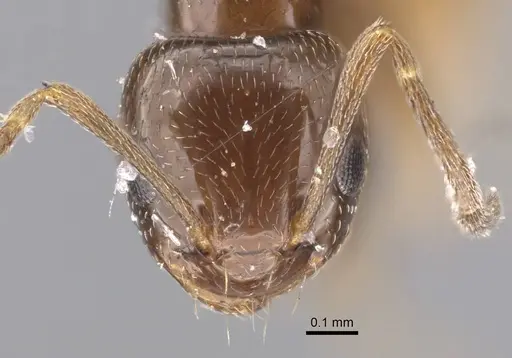
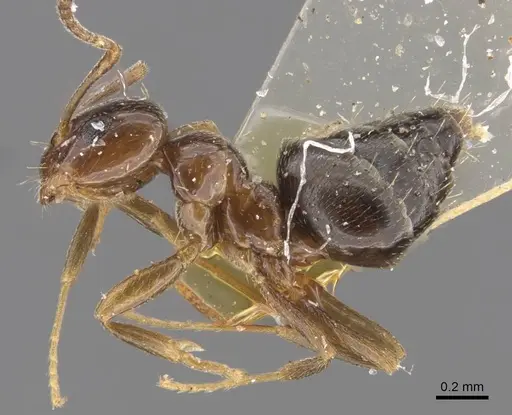
Plagiolepis arnoldii is a tiny ant species native to Azerbaijan and Turkmenistan , typically found in warm, dry areas . Workers are small, approximately 2-3mm, inferred from Plagiolepis genus patterns . The species is pale to yellowish-brown with smooth body surfaces . This species was originally described from Turkmenistan and is a new record for Azerbaijan , representing a less-studied member of the Plagiolepis genus.
Quick Summary
- Difficulty: Medium
- Origin & Habitat: Native to Azerbaijan and Turkmenistan [1]. In Azerbaijan, collected from Khizi, Khachmaz, Ismailly, Oguz, and Sabirabad regions [1]. Based on typical Plagiolepis habitat, likely inhabits warm, dry areas [2].
- Colony Type: Colony structure is unconfirmed for this species. No documented ergatoid replacement systems [1].
- Size & Growth:
- Queen: Approximately 4-5mm, inferred from Plagiolepis genus patterns [2]
- Worker: Approximately 2-3mm, inferred from Plagiolepis genus patterns [2]
- Colony: Up to several hundred workers, estimated from genus patterns [2]
- Growth: Moderate, inferred from genus patterns [2]
- Development: Approximately 6-8 weeks at optimal temperature, inferred from related species [2] (Development time is inferred from genus-level data, species-specific measurements are unavailable)
- Antkeeping:
- Temperature: Keep at 22-26°C, based on typical Plagiolepis preferences [2].
- Humidity: Keep nest substrate consistently moist but not waterlogged, based on genus preferences [2].
- Diapause: Likely requires winter diapause of 2-3 months at 10-15°C, inferred from temperate origin [2].
- Nesting: Small test tubes or narrow-chambered nests work well, scaled to small size [2].
- Behavior: Workers are active foragers, not aggressive, but escape prevention is critical due to small size [2].
- Common Issues: escape prevention is critical due to their very small size, use fine mesh barriers and tight-fitting lids, limited species-specific data means care is based on genus-level inference rather than direct observation, winter diapause is likely required but timing and duration specifics are unconfirmed, slow colony growth compared to larger ant species may frustrate beginners, test tube setups must have properly sized water reservoirs to avoid flooding small colonies
Housing and Nest Setup
Plagiolepis arnoldii requires careful housing due to its very small worker size. Test tube setups work well for founding colonies, use small-diameter tubes with a water reservoir filled with cotton [2]. The small size means you should use fine mesh on any ventilation holes [2]. For established colonies, narrow-chambered nests work better than larger formicarium designs [2]. Avoid setups with large open spaces where tiny workers can get lost [2]. A small outworld area connected to the nest makes feeding easier [2]. Always apply fluon or other barrier solutions to prevent escapes [2].
Feeding and Diet
Plagiolepis arnoldii workers are omnivorous, similar to other members of the genus [2]. They readily accept sugar sources including honey water and ripe fruit [2]. For protein, offer small insects like fruit flies or small mealworms [2]. Feed small amounts every 2-3 days, removing uneaten protein within 24 hours to prevent mold [2]. A constant sugar water supply works well [2]. Because of their tiny size, even very small prey items are appropriate [2].
Temperature and Seasonal Care
Maintain temperatures between 22-26°C for optimal colony health [2]. A heating cable on one side of the nest creates a temperature gradient [2]. During winter, reduce temperature to 10-15°C to provide a diapause period [2]. During diapause, reduce feeding and minimize disturbance [2]. Resume normal feeding and warming in spring [2].
Colony Growth and Development
Plagiolepis arnoldii colonies grow moderately [2]. A newly mated queen will lay eggs within days of sealing into a founding chamber [2]. Eggs develop through larval and pupal stages over approximately 6-8 weeks at optimal temperature [2]. Colony growth accelerates as more workers hatch, but colonies remain smaller than many common hobby species [2]. Patience is key, significant growth takes months to years [2].
Behavior and Observation
Plagiolepis arnoldii workers are active foragers, running in rapid patterns when searching for food [2]. They communicate through chemical pheromones and recruit nestmates to food sources [2]. Workers are not particularly aggressive and rarely attempt to sting [2]. However, their small size makes them easy to lose track of [2]. Observation is best done using a magnifying glass [2].
Frequently Asked Questions
How long does it take for Plagiolepis arnoldii to produce first workers?
Expect first workers approximately 6-8 weeks after the queen lays her eggs, assuming optimal temperatures around 24°C [2]. This timeline is estimated from related Plagiolepis species [2]. The queen will remain sealed in her founding chamber until the first workers emerge [2].
Can I keep multiple Plagiolepis arnoldii queens together?
Not recommended without specific evidence. Colony structure for P. arnoldii is unconfirmed [1]. Starting with a single queen is the safest approach for successful colony founding [1].
What is the best nest type for Plagiolepis arnoldii?
Small test tube setups or narrow-chambered nests work best [2]. The key requirement is appropriately scaled chambers and passages [2]. Avoid large, open formicarium designs meant for bigger ants [2].
How often should I feed Plagiolepis arnoldii?
Feed small amounts of protein every 2-3 days [2]. Keep a constant sugar water supply available [2]. Remove uneaten protein within 24 hours to prevent mold [2]. During winter diapause, reduce feeding to once weekly or stop entirely [2].
Does Plagiolepis arnoldii need hibernation?
Yes, likely requires a winter diapause period of 2-3 months [2]. Given their origin in Turkmenistan and Azerbaijan, they need a rest period at reduced temperatures from approximately October through March [2]. Reduce feeding and minimize disturbance during this period [2].
Why are my Plagiolepis arnoldii escaping?
Their tiny size allows them to squeeze through small gaps [2]. Check all enclosure seams, lid edges, and ventilation holes [2]. Apply fluon or another barrier to all potential escape routes [2].
Are Plagiolepis arnoldii good for beginners?
They are moderate difficulty [2]. The main challenges are their tiny size, slower growth, and the need for winter diapause [2]. Beginners should be prepared for their specific needs before acquiring this species [2].
How big do Plagiolepis arnoldii colonies get?
Colonies likely reach several hundred workers at maturity [2]. This is a moderately sized colony compared to other genera [2]. Expect 1-3 years to reach significant colony size under good care [2].
What temperature range is best for Plagiolepis arnoldii?
Keep the nest area between 22-26°C, with 24°C being ideal [2]. They can tolerate brief periods up to 30°C and down to 18°C, but prolonged exposure outside this range causes stress [2]. A temperature gradient allowing workers to choose their preferred zone is ideal [2].
Report an Issue
The current care sheet is based fully on literature. See inconsistencies, or something that's incorrect? Please , it will be resolved after review from an admin. Contributing to the blogs tab also helps providing information, to make us be able to further improve the caresheets. Thank you for your support!
References

This caresheet is licensed under CC BY-SA 4.0 .
Community Blogs
CASENT0917582
View on AntWeb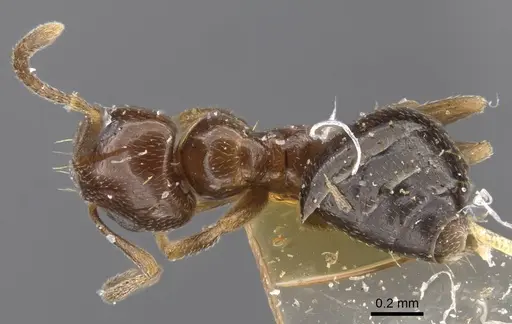
Literature
Loading distribution map...Loading products...