
Phrynoponera sveni
- Sci. Name
- Phrynoponera sveni
- Tribe
- Ponerini
- Subfamily
- Ponerinae
- Author
- Forel, 1916
- Distribution
- Found in 2 countries
Introduction
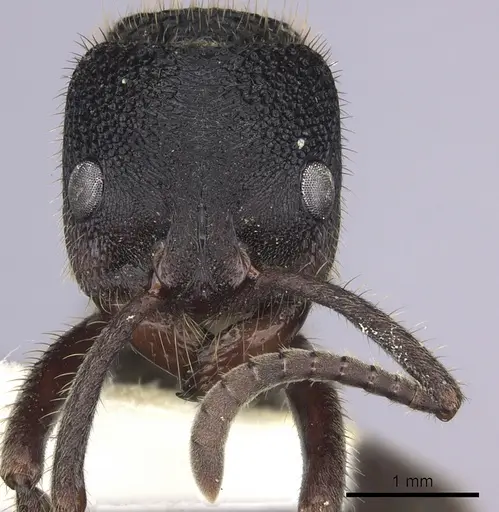
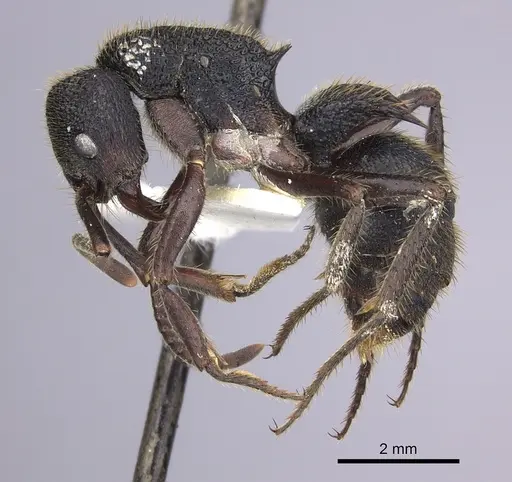
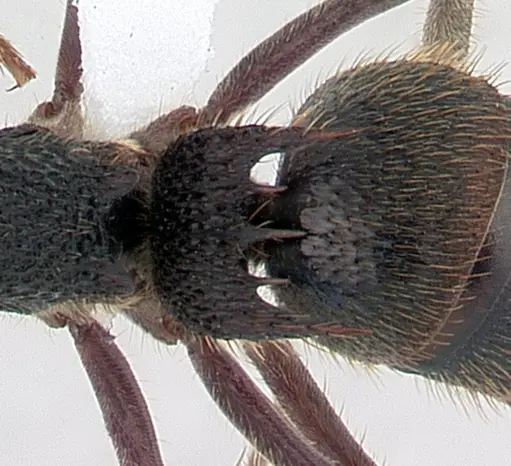
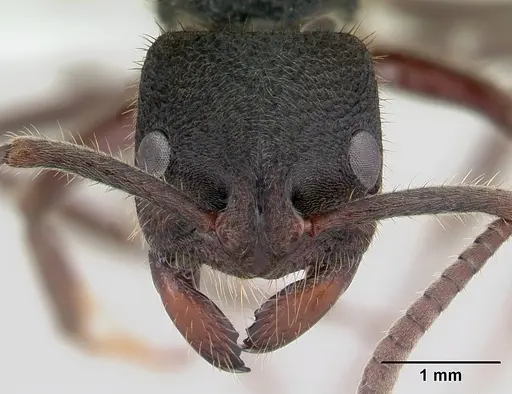
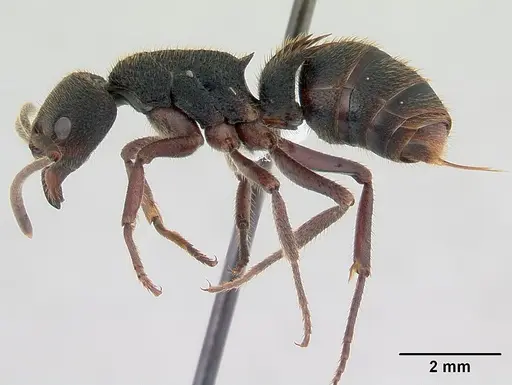
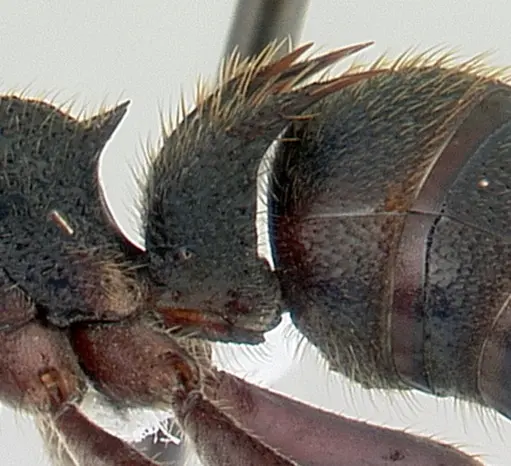
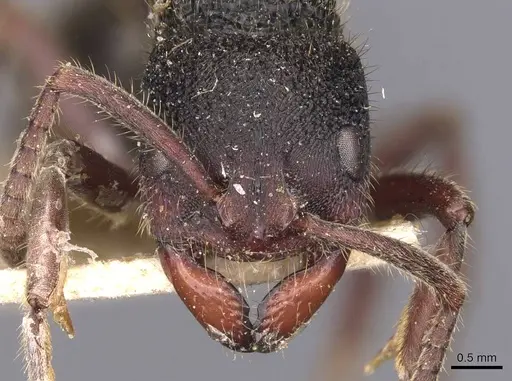
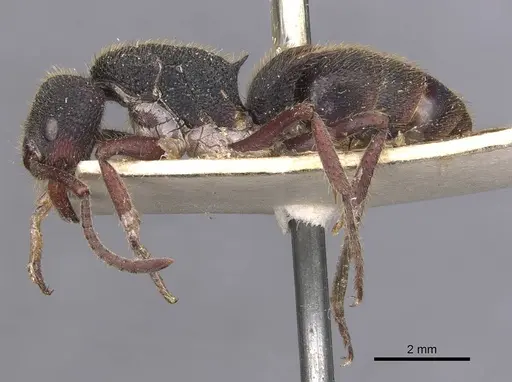
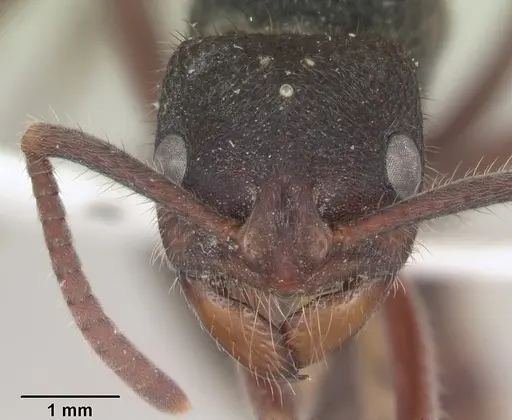
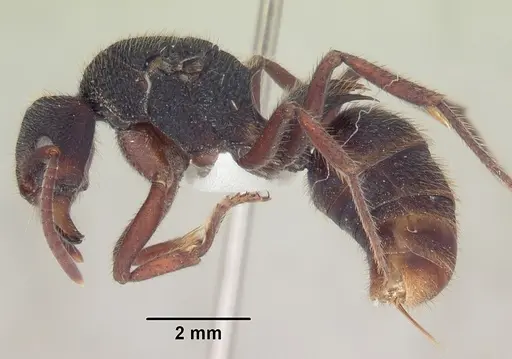
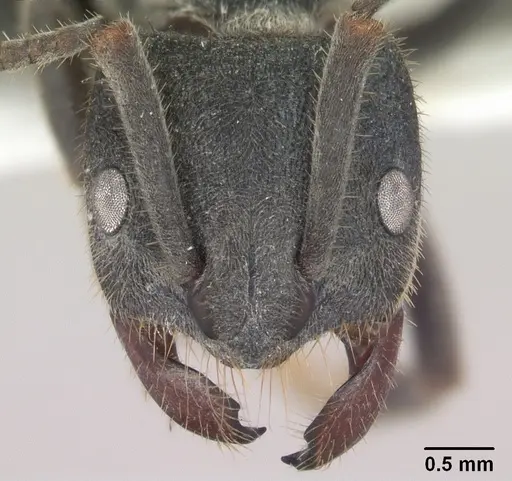
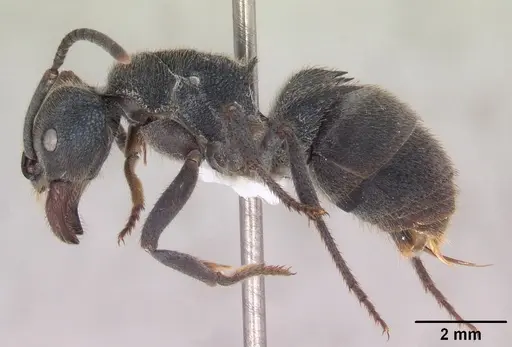
Phrynoponera sveni is a medium-sized ponerine ant native to Central African rainforests. Workers measure 10.5-11.4 mm in total length . They have coarse, chaotic rugose sculpture on the head and four teeth on the mandible . The mesosoma, petiole, and gaster show dull metallic blue reflections . This species is found in Gabon, Cameroon, Democratic Republic of Congo, Central African Republic, and Tanzania, typically at low elevations around 110 m in leaf litter, rotting logs, and termitaries . A notable feature is the petiole with three pairs of spines, where the outer pair is much longer than the median spine .
Quick Summary
- Difficulty: Medium
- Origin & Habitat: Central African rainforests in Gabon, Cameroon, Democratic Republic of Congo, Central African Republic, and Tanzania. Found at low elevations around 110 m, inhabiting leaf litter and decaying wood [1][2].
- Colony Type: Colony structure is unconfirmed. No data available on queen number or colony size in wild colonies.
- Size & Growth:
- Antkeeping:
- Temperature: Temperature needs are unclear, start around 24-28°C and observe. Based on their Central African rainforest origin, they likely require warm conditions [2].
- Humidity: Keep the nest substrate consistently moist but not waterlogged, based on their natural habitat in damp leaf litter and rotting wood [1].
- Diapause: Unknown, no specific data on overwintering requirements. Given their Central African origin, they likely do not require diapause.
- Nesting: Prefer tight, humid chambers. Use Y-tong, plaster, or soil nests with damp substrate and rotting wood pieces, based on their natural nesting habits [1].
- Behavior: Based on Ponerine patterns, they are likely predatory and use their sting for defense. Workers forage individually in leaf litter. Escape risk is moderate due to their size and climbing ability. Handle with caution due to potential sting [3].
- Common Issues: high humidity requirements can lead to mold growth if ventilation is poor, no available data on their exact dietary needs makes feeding challenging, slow development may cause keepers to lose patience and overfeed, escape prevention is needed despite their larger size, they can climb glass, lack of available care information means keepers are essentially pioneering captive husbandry
Housing and Nest Setup
Phrynoponera sveni requires a setup that mimics their natural rainforest floor habitat. Use a deep layer of moist substrate composed of soil, sand, and rotting wood fragments. Include pieces of rotting wood or cork as nesting material, as they naturally nest in decaying wood [1]. A Y-tong or plaster nest with a water reservoir can work if paired with a humid outworld. Avoid dry setups or excessive ventilation that dries out the substrate.
Feeding and Diet
Based on Ponerine patterns, they are likely predatory and accept small live prey such as fruit flies, crickets, or mealworms. They may also scavenge on dead insects. Sugar sources like honey water can be offered occasionally. Feed protein-rich prey 2-3 times per week, removing uneaten items after 24-48 hours to prevent mold. Since no specific dietary data exists, experiment with various small invertebrates [3].
Temperature and Humidity
Maintain warm conditions around 24-28°C, as inferred from their Central African rainforest origin [2]. Humidity is critical, keep the substrate consistently moist based on their natural habitat in damp leaf litter [1]. Use a water reservoir or occasional misting to maintain high humidity levels.
Behavior and Handling
Ponerine ants are generally primitive with functional stings. P. sveni likely has a potent sting, so handle with caution using gentle coaxing. Workers forage individually in leaf litter and are active during warm, humid periods. Provide cover and hiding spots to reduce stress [3].
Colony Establishment
Establishing a colony requires patience due to lack of captive breeding data. If obtaining a wild-caught colony, collect from leaf litter or rotting wood in their range. Founding behavior is unconfirmed, but Ponerines are often semi-claustral, meaning queens may need to hunt during founding. Expect slow growth and smaller nanitics [3].
Frequently Asked Questions
How long does it take for Phrynoponera sveni to produce first workers?
The exact timeline is unknown. No captive breeding studies exist, so development time is unconfirmed [3].
What do Phrynoponera sveni ants eat?
They are likely predatory, feeding on small live insects like fruit flies or crickets. They may also scavenge dead insects. Sugar water can be offered occasionally [3].
Do Phrynoponera sveni ants sting?
Yes, as Ponerine ants, they have functional stings and likely possess a potent sting. Handle with caution [3].
What temperature do Phrynoponera sveni ants need?
Temperature needs are unclear, but start around 24-28°C based on their Central African origin [2].
Are Phrynoponera sveni good for beginners?
No, they are not recommended for beginners due to limited care information, high humidity needs, and potential sting. Best for experienced keepers [3].
How big do Phrynoponera sveni colonies get?
The maximum colony size is unknown. No data exists on wild colony sizes [3].
Can I keep multiple Phrynoponera sveni queens together?
Unknown. No data on colony structure or queen behavior. Combining unrelated queens is not recommended [3].
What type of nest is best for Phrynoponera sveni?
A naturalistic setup with moist substrate and rotting wood pieces works best, mimicking their natural habitat [1]. Y-tong or plaster nests with humid outworlds are suitable.
Do Phrynoponera sveni ants need hibernation?
No, hibernation is not required. Their Central African origin means year-round warm conditions are needed [2].
Why are my Phrynoponera sveni dying?
Common causes include too dry conditions, temperatures below 24°C, mold from overwatering, or stress from disturbance. Review humidity and temperature levels [3].
Report an Issue
The current care sheet is based fully on literature. See inconsistencies, or something that's incorrect? Please , it will be resolved after review from an admin. Contributing to the blogs tab also helps providing information, to make us be able to further improve the caresheets. Thank you for your support!
References

This caresheet is licensed under CC BY-SA 4.0 .
Community Blogs
CASENT0081254
View on AntWeb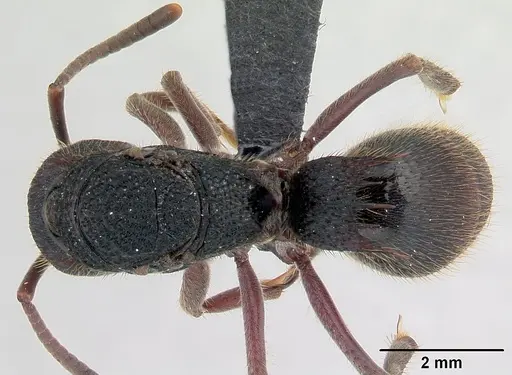
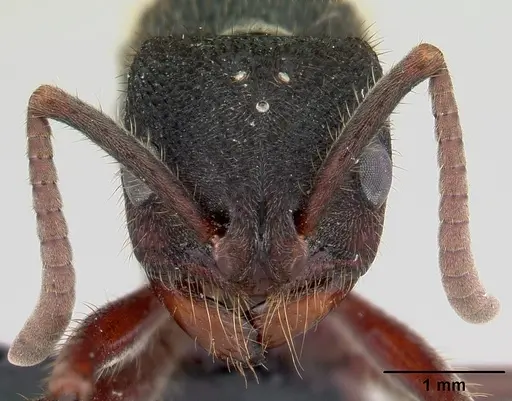
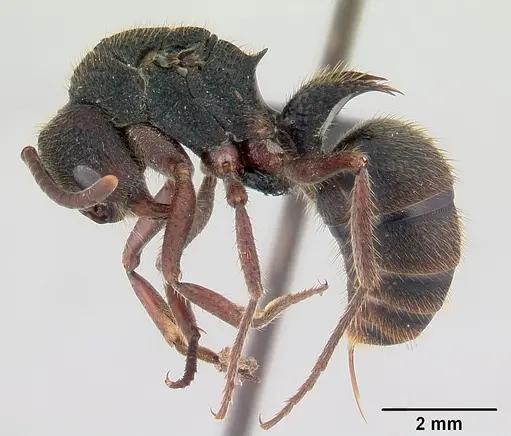
CASENT0249213
View on AntWeb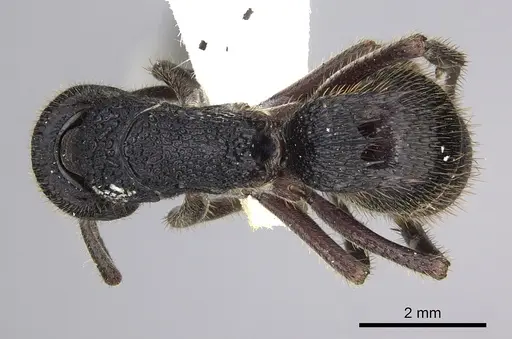
CASENT0417555
View on AntWeb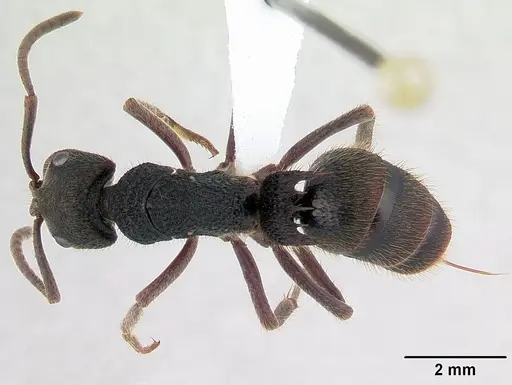
CASENT0907267
View on AntWeb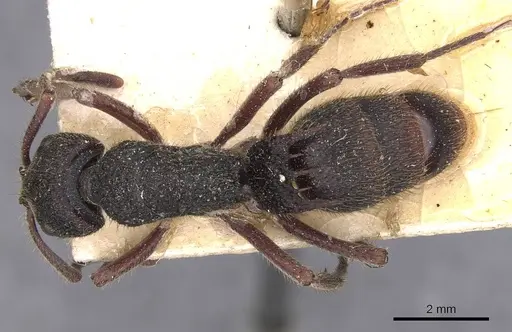
SAM-HYM-C007465
View on AntWeb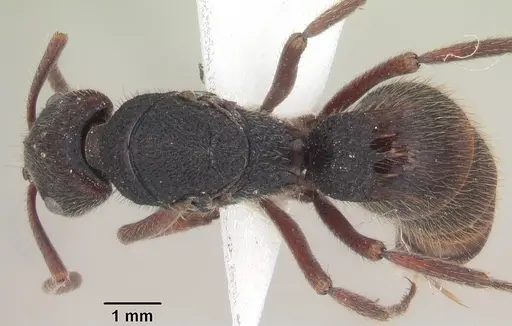
SAM-HYM-C010477
View on AntWeb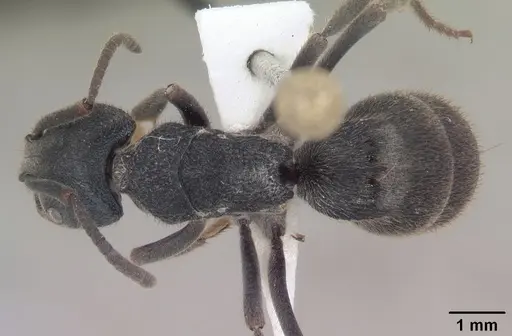
Literature
Loading distribution map...Loading products...