
Pheidole wolfringi
- Sci. Name
- Pheidole wolfringi
- Tribe
- Attini
- Subfamily
- Myrmicinae
- Author
- Forel, 1908
- Distribution
- Found in 1 countries
Introduction
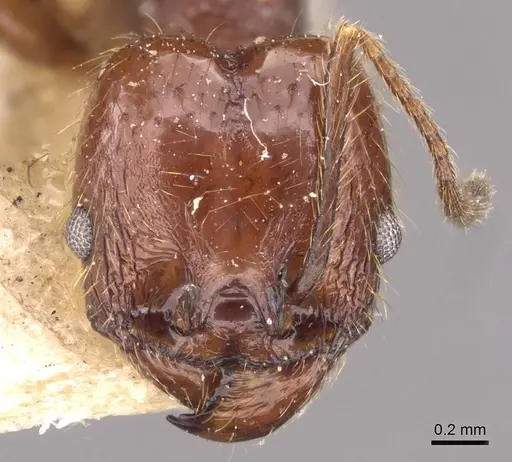
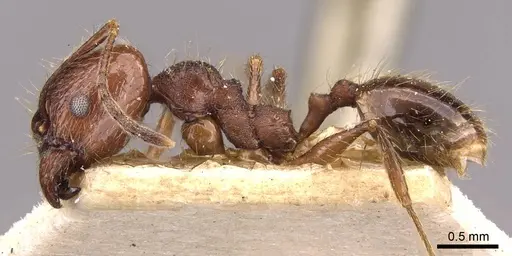
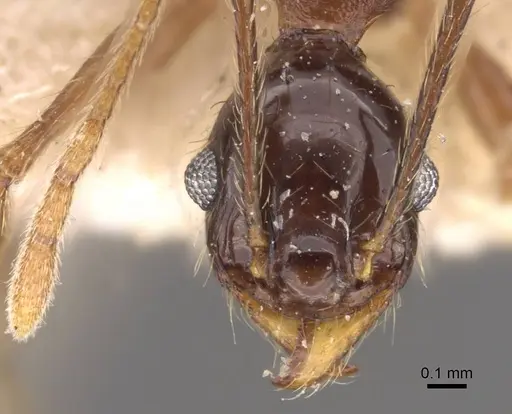
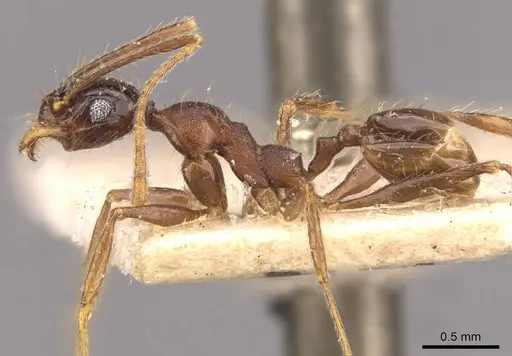
Pheidole wolfringi is a small ant species from southeastern Brazil, recorded in Rio de Janeiro and São Paulo states . It belongs to the 'jujuyensis complex' within the fallax group. The species was described by Forel in 1908,with major and minor workers having distinct features, but almost nothing is known about its biology . Major workers are light brown with a smooth and shiny head, while minors are paler with constricted necks . Due to the complete lack of biological data, all care advice is inferred from related Pheidole species and must be treated as experimental.
Quick Summary
- Difficulty: Unknown, care is speculative due to no species-specific data
- Origin & Habitat: Southeastern Brazil (Rio de Janeiro and São Paulo) [1]. Habitat details unknown, but likely forested areas typical of the Neotropical region [1].
- Colony Type: Unconfirmed, colony structure is unknown. Most Pheidole are monogyne (single queen), but this is not confirmed for wolfringi.
- Size & Growth:
- Queen: Size data unavailable, no measurements have been recorded for queens.
- Worker: Size data unavailable, only head width measurements exist, which are not body size. Major worker head width about 1.2 mm, minor about 0.54 mm [1].
- Colony: Unknown, no data exists for this species.
- Growth: Unknown
- Development: Unknown, no data available. (Development timeline is entirely speculative. If you attempt to keep this species, watch the colony closely and take notes.)
- Antkeeping:
- Temperature: Unknown, inferred from Neotropical origin: keep at room temperature around 22-26°C. Provide a gradient using a heat cable on one side if needed. Avoid extremes below 18°C.
- Humidity: Unknown, provide moderate humidity with a water tube or moistened substrate in one area of the nest. Typical Pheidole from similar regions prefer around 60-70% relative humidity, but this is a guess.
- Diapause: Unknown, southeastern Brazil has mild winters, some tropical species do not require diapause. Observe the colony in winter: if activity slows, reduce temperature slightly (by 3-5°C) but do not force cold hibernation.
- Nesting: Use a test tube setup for founding. For larger colonies, Y-tong (AAC) or soil nests work well. Provide a moist and dry zone. Do NOT use acrylic nests, they don't hold humidity well for these ants.
- Behavior: Pheidole species are generally docile but will defend their nest using their sting (subfamily Myrmicinae). The sting is not medically significant to humans. Escape risk is moderate as workers are small (~2-3 mm body length), so use a tight-fitting lid and apply fluon or talc barrier to the outworld.
- Common Issues: complete lack of species-specific biological data, all care is experimental., unknown founding type, queens may fail without special conditions., unknown diapause needs, may cause colony decline if wrongly assumed., very rare in the hobby, wild colonies are difficult to obtain and may not adapt to captivity.
Nest Preferences and Housing
Since nothing is known about the nesting biology of Pheidole wolfringi, follow general Pheidole husbandry [1]. Start queens in a standard test tube setup with a water reservoir and cotton plug. Once the colony outgrows the tube (at least 30-50 workers), transfer to a Y-tong (AAC) or soil nest with narrow chambers. Provide a connected outworld with a dry foraging area. Keep part of the nest substrate slightly moist to create a humidity gradient. Avoid acrylic nests as they tend to dry out and don't suit Pheidole preferences.
Feeding and Diet
No specific dietary data exists for Pheidole wolfringi [1]. Most Pheidole are generalist omnivores, so offer a varied diet: protein (small insects such as fruit flies, pinhead crickets, or mealworms) and carbohydrates (sugar water, honey, or honeydew). Feed protein two to three times per week and provide constant access to sugar water. Remove uneaten food after 24 hours to prevent mold. Major workers may process seeds, so offering fine seeds (like sesame or crushed millet) can provide enrichment. Observe what the colony accepts and adjust accordingly.
Temperature and Seasonal Care
Temperature needs are unconfirmed. Based on the Neotropical origin (southeastern Brazil), maintain a warm environment around 22-26°C [1]. Provide a gradient by placing a heating cable on one side of the nest. During the cooler season (Southern Hemisphere winter), you may slightly reduce the temperature by 3-5°C if the colony shows decreased activity, but do not allow prolonged exposure below 18°C. Monitor the colony closely, some tropical species do not require a diapause period.
Behavior and Colony Dynamics
Pheidole wolfringi has a dimorphic caste system with major and minor workers [1]. Majors have enlarged heads and powerful mandibles, likely used for defense or processing food. Minors handle foraging and brood care. The species belongs to Myrmicinae, which possess a functional sting, but it is not considered medically significant [1]. Colonies are probably not aggressive but will defend their nest. Since no behavioral studies exist, treat them as typical Pheidole: observe undisturbed and avoid excessive vibration.
Acquiring and Legal Considerations
Pheidole wolfringi is rarely available in the antkeeping trade. It is endemic to Brazil, and wild collection may be restricted. If you obtain a colony, ensure it came from a legal source. Do not release this species outside its native range, it could become invasive. In North America, Europe, or Asia, Neotropical species must be kept under strict containment to prevent escape. [1]
Frequently Asked Questions
How long does it take for Pheidole wolfringi to produce first workers?
Unknown. No data exists for this species [1]. Based on other tropical Pheidole, it may take 6-8 weeks at warm temperatures, but this is purely speculative.
What do Pheidole wolfringi ants eat?
No specific diet is known. Follow general Pheidole feeding: offer protein (small insects) and carbohydrates (sugar water). They are likely generalist omnivores [1].
How big do Pheidole wolfringi colonies get?
Unknown. No colony size data exists. Most Pheidole species reach hundreds to a few thousand workers, but this is not confirmed for wolfringi [1].
What temperature is best for Pheidole wolfringi?
Unknown. Based on their origin in southeastern Brazil, keep them at 22-26°C. Provide a warm gradient and avoid cold drafts [1].
Do Pheidole wolfringi need hibernation?
Unknown. Southeastern Brazil has mild winters, they may not require a diapause. Monitor the colony in winter, if activity slows, reduce temperature slightly but do not force a cold period [1].
Can I keep multiple Pheidole wolfringi queens together?
Unknown. Colony structure is unconfirmed for this species. Most Pheidole are monogyne (single queen), but some are polygyne. Unless you see multiple queens accepted in a colony, keep only one queen per setup [1].
Is Pheidole wolfringi good for beginners?
No. The complete lack of species-specific biological data makes this a risky choice. Only experienced keepers who are willing to experiment should attempt this species [1].
When should I move Pheidole wolfringi to a formicarium?
Unknown, but follow general rules: keep in test tube until the colony has at least 20-30 workers and the tube shows signs of degradation (mold, condensation issues). Then transfer to a Y-tong or soil nest [1].
Where is Pheidole wolfringi found in the wild?
This species is recorded from Rio de Janeiro and São Paulo states in southeastern Brazil [1]. Habitat specifics are unknown.
Report an Issue
The current care sheet is based fully on literature. See inconsistencies, or something that's incorrect? Please , it will be resolved after review from an admin. Contributing to the blogs tab also helps providing information, to make us be able to further improve the caresheets. Thank you for your support!
References

This caresheet is licensed under CC BY-SA 4.0 .
Community Blogs
CASENT0908212
View on AntWeb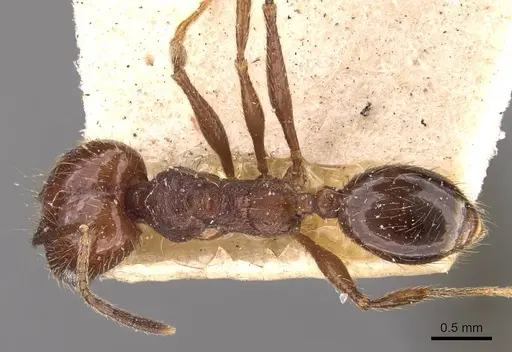
CASENT0908213
View on AntWeb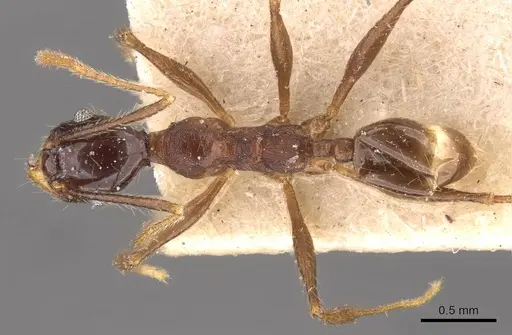
Literature
Loading distribution map...Loading products...