
Pheidole violacea
- Sci. Name
- Pheidole violacea
- Tribe
- Attini
- Subfamily
- Myrmicinae
- Author
- Wilson, 2003
- Distribution
- Found in 1 countries
Introduction
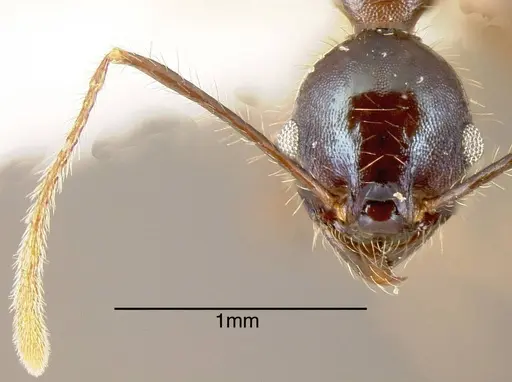
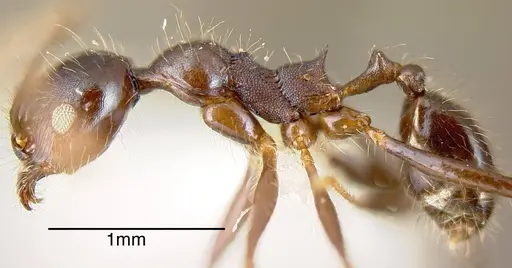
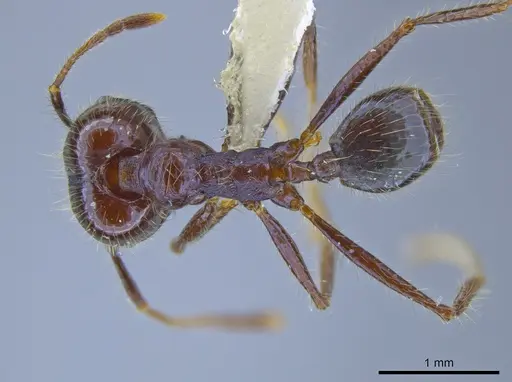
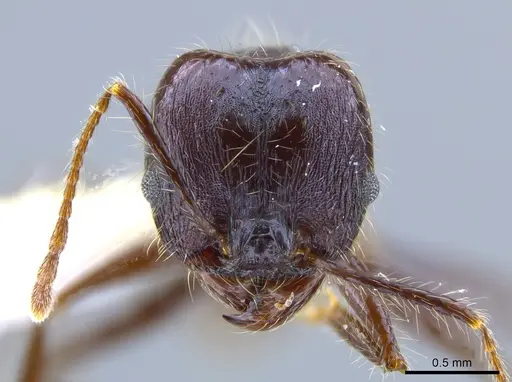
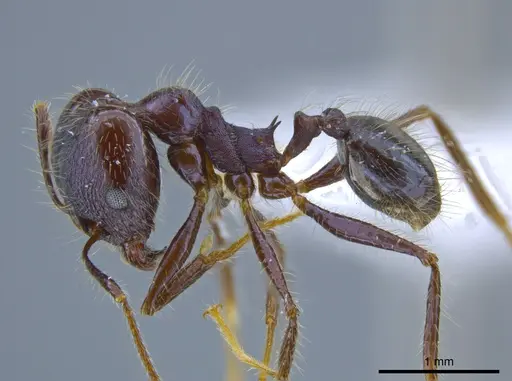
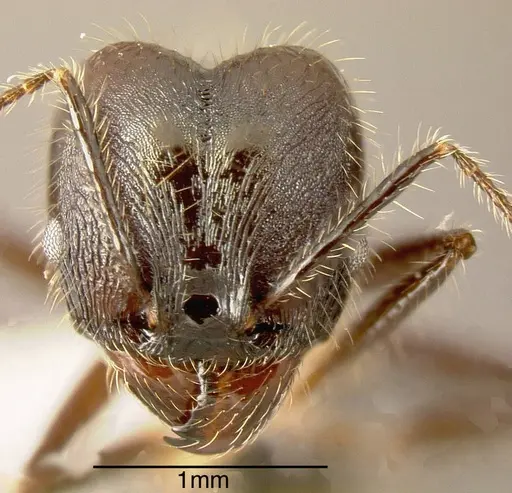
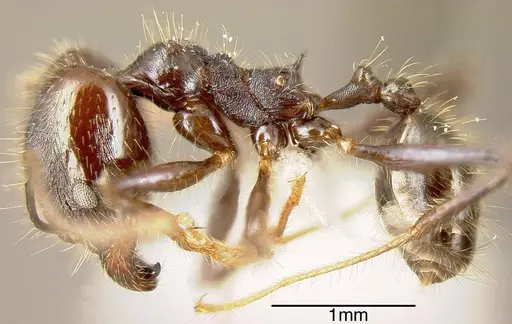
Pheidole violacea is a small ant species native to the wet forests of Costa Rica, specifically the Peñas Blancas Valley at 950m elevation . Majors have a medium brown body with a bicolorous head, while minors are light brown with distinctive bluish to violet reflections in certain lighting . This species is known for building spherical ant gardens made of carton material that support growing plants . What makes Pheidole violacea special is its polydomous nesting behavior in ant gardens. Colonies occupy multiple connected nests wrapped around vegetation in forest clearings, creating mini-ecosystems with plants and ants benefiting each other .
Quick Summary
- Difficulty: Medium
- Origin & Habitat: Upper elevation Cordillera de Tilaran, Atlantic slope of Costa Rica, in wet forest clearings at 950m elevation [1].
- Colony Type: Polydomous colonies, the species nests in multiple connected locations. Colony structure (single queen vs multiple queens) is unconfirmed for this species [1].
- Size & Growth:
- Queen: Size data unavailable, inferred from Pheidole genus (~8mm)
- Worker: Size data unavailable, inferred from Pheidole genus (~3-5mm for workers)
- Colony: Unknown, no specific data on colony size
- Growth: Moderate, inferred from genus patterns
- Development: 6-10 weeks, inferred from typical Pheidole development (Development time is not directly studied, estimates based on related species at optimal temperatures.)
- Antkeeping:
- Temperature: Keep at 22-26°C, based on habitat at 950m elevation in Costa Rica [1].
- Humidity: Keep nest substrate consistently moist but not waterlogged, they inhabit wet forest clearings [1].
- Diapause: No, tropical species from Costa Rica does not require hibernation [1].
- Nesting: Naturalistic setup with ant gardens on vegetation works best, Y-tong or plaster nests with high humidity are alternatives [1][2].
- Behavior: Calm species with majors for seed processing and minors that are small and active. Escape risk is high due to small minor workers, use fine mesh barriers [1].
- Common Issues: high humidity can cause mold if ventilation is poor, small minor workers may escape through standard barriers, use fine mesh, polydomous nesting may be difficult to replicate in captivity, tropical species requires consistent warmth, cold temperatures can be fatal
Natural History and Nesting Behavior
Pheidole violacea builds true ant gardens in the wild, spherical nests made from carton material that envelop shrub stems and low vegetation [1]. These nests can grow large and are polydomous, with colonies occupying multiple connected sites [1]. Ant gardens form mutualistic relationships with plants, benefiting both organisms [2].
Housing and Enclosure Setup
Replicate their arboreal nesting with a naturalistic setup including live plants in the outworld. Y-tong or plaster nests with high humidity chambers are suitable alternatives. Ensure vertical space and fine mesh barriers to prevent escapes due to small minor workers [1].
Feeding and Diet
Offer a varied diet: protein sources like small insects twice weekly, and sugar water or honey for energy. Remove uneaten prey to prevent mold. Fresh water should always be available.
Temperature and Seasonal Care
Maintain warm, stable temperatures at 22-26°C year-round, as they come from a tropical environment [1]. Do not hibernate this species. Avoid temperatures below 20°C or above 30°C.
Colony Development and Growth
Winged queens were observed in nests in June, suggesting nuptial flights during the wet season [1]. Colonies are polydomous and growth is moderate. First workers appear 6-10 weeks after eggs at optimal temperatures.
Frequently Asked Questions
How long does it take for Pheidole violacea to have first workers?
Based on typical Pheidole development, expect 6-10 weeks from egg to first worker at optimal temperatures (22-26°C). This is an estimate since development time has not been directly studied for this species.
What do Pheidole violacea ants eat?
They are omnivores. Offer small insects like crickets or mealworms as protein twice weekly, along with sugar water or honey for energy.
Do Pheidole violacea ants need hibernation?
No. As a tropical species from Costa Rica, they do not require hibernation. Keep them warm year-round at 22-26°C [1].
What is the best nest type for Pheidole violacea?
A naturalistic setup with live plants works best since they build ant gardens on vegetation in the wild. A Y-tong or plaster nest with high humidity chambers is a good alternative [1][2].
How big do Pheidole violacea colonies get?
Colony size is unknown, no specific data is available from research.
Are Pheidole violacea good for beginners?
This species is rated as Medium difficulty. Their high humidity requirements and unusual nesting behavior make them better suited for keepers with some experience.
Can I keep multiple queens together?
Colony structure (single queen vs multiple queens) is unconfirmed for this species. It is not recommended to combine unrelated foundresses.
Why are my Pheidole violacea dying?
Common causes include temperatures below 20°C, low humidity, poor escape prevention for minor workers, or mold from excessive moisture. Check that all parameters are within range.
What makes Pheidole violacea special?
They build true ant gardens, spherical nests made of carton material wrapped around vegetation. They are also polydomous, with colonies living in multiple connected nests [1][2].
Report an Issue
The current care sheet is based fully on literature. See inconsistencies, or something that's incorrect? Please , it will be resolved after review from an admin. Contributing to the blogs tab also helps providing information, to make us be able to further improve the caresheets. Thank you for your support!
References

This caresheet is licensed under CC BY-SA 4.0 .
Community Blogs
Literature
Loading distribution map...Loading products...