
Pheidole trachyderma
- Sci. Name
- Pheidole trachyderma
- Tribe
- Attini
- Subfamily
- Myrmicinae
- Author
- Emery, 1906
- Distribution
- Found in 1 countries
Introduction
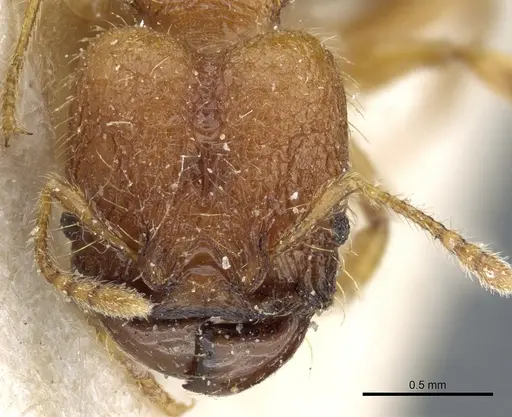
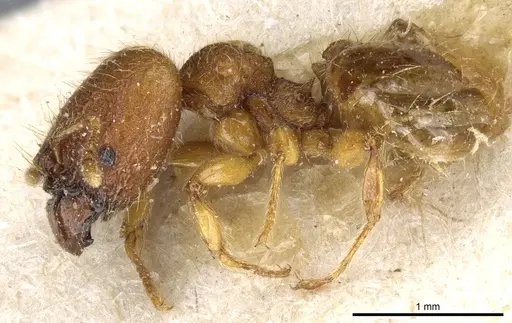
Pheidole trachyderma is a small ant species native to the Neotropical region, specifically known only from San Pedro, Misiones province, Argentina . Major workers are reddish-yellow, and minor workers are lighter in coloration . Size data for total length is unavailable, but it is inferred to be similar to other Pheidole species. The species was described by Emery in 1906 and raised to full species status by Wilson in 2003 .
Quick Summary
- Difficulty: Hard
- Origin & Habitat: Only recorded from San Pedro, Misiones province, Argentina, in the Neotropical region [1][2]. The functional group is Generalized Myrmicinae [1].
- Colony Type: Unconfirmed, based on Pheidole patterns, likely monogyne (single-queen colonies), but no specific data exists.
- Size & Growth:
- Queen: Size data unavailable, inferred from Pheidole genus patterns
- Worker: Size data unavailable, inferred from Pheidole genus patterns
- Colony: Unknown, no data on colony size for this species
- Growth: Unknown, estimated moderate based on genus patterns
- Development: Unknown, no species-specific data. Based on Pheidole genus, estimated 6-10 weeks at warm temperatures (This is an estimate based on genus-level data since species-specific development has not been studied)
- Antkeeping:
- Temperature: Based on habitat in Misiones province, keep warm around 22-26°C. Provide a temperature gradient
- Humidity: Keep nest substrate moderately moist but not waterlogged, as Misiones has a humid climate
- Diapause: Unknown, subtropical species may not require diapause
- Nesting: Natural nesting behavior unconfirmed. Use standard Myrmicinae setups like test tubes or Y-tong nests
- Behavior: Pheidole species are generally non-aggressive. Major workers may defend the colony, but the sting is not medically significant. Escape risk is low due to small size.
- Common Issues: lack of species-specific care data makes keeping challenging., wild colonies are hard to find due to limited distribution., sensitivity to temperature drops due to subtropical origin.
Species Background
Pheidole trachyderma is one of the least studied ant species in the hobby, with virtually no published biological research. It was originally described by Carlo Emery in 1906 as a subspecies of Pheidole risii, then elevated to full species status by E.O. Wilson in 2003 based on morphological differences [2]. The species is known only from a handful of specimens collected in San Pedro, Misiones, Argentina, a region in the far northeast of the country bordering Brazil and Paraguay [2].
Identification and Morphology
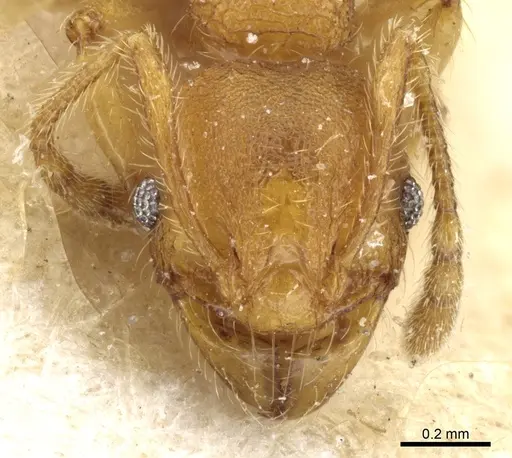
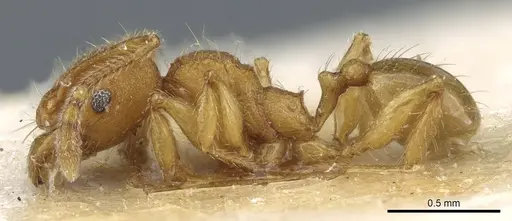
This species shows the classic Pheidole dimorphism with distinct major and minor workers. Major workers have a distinctive rugoreticulate pattern on most of the dorsal head surface, while the minor workers are entirely foveolate and opaque [2]. Both castes are reddish-yellow in color, with majors being slightly darker [2].
Housing and Nesting
Since natural nesting behavior is undocumented, use standard Myrmicinae husbandry. Test tubes work well for founding colonies, provide a water reservoir and keep the cotton moist. Once the colony reaches a reasonable size, you can transition to a Y-tong or plaster nest. These ants are small, so ensure chambers are appropriately scaled. Provide a foraging area with access to protein foods and sugar water.
Feeding
Pheidole species are generalist omnivores. In captivity, offer protein sources such as small insects (fruit flies, pinhead crickets, mealworms), and provide sugar water or honey as an energy source. Many Pheidole also collect seeds, so you might offer tiny seeds as enrichment. Feed small amounts 2-3 times per week and remove uneaten food to prevent mold.
Temperature and Seasonal Care
This species originates from subtropical northern Argentina where temperatures are warm year-round. Aim for temperatures in the low-to-mid 20s Celsius (around 22-26°C). A heating cable on one side of the nest can create a temperature gradient, allowing ants to self-regulate. During cooler months, you may see reduced activity but true hibernation is unlikely.
Frequently Asked Questions
How long does it take for Pheidole trachyderma to produce first workers?
This has not been scientifically documented for this species. Based on typical Pheidole development, expect 6-10 weeks from egg to first worker at warm temperatures (around 24-26°C).
What do Pheidole trachyderma ants eat?
Like most Pheidole species, they are omnivorous. Offer small insects (fruit flies, small crickets, mealworms) for protein and sugar water or honey for carbohydrates.
Can I keep multiple queens together?
This has not been studied for this species. Most Pheidole are monogyne (single-queen), but some can be polygyne. Without specific data, it is not recommended to house unrelated queens together as aggression may occur.
What temperature do they need?
Based on their subtropical origin in Argentina's Misiones province, aim for warm conditions around 22-26°C. Provide a temperature gradient so the colony can choose its preferred zone.
Are Pheidole trachyderma good for beginners?
This is not recommended for beginners due to the complete lack of species-specific care information. The difficulty level is hard. If you're interested in Pheidole, consider more commonly kept species where care guides are well-established.
How big do colonies get?
Colony size has not been documented for this species. No data is available on maximum colony size.
Do they need hibernation?
True diapause is unlikely for this subtropical species. You may see reduced activity during cooler months, but a full hibernation period is not recommended.
When should I move them to a formicarium?
Keep them in a test tube setup for the founding stage. Once the colony reaches a reasonable size and you see the queen spending time in the foraging area, you can offer a transition to a Y-tong or plaster nest.
Where does Pheidole trachyderma come from?
This species is only known from San Pedro in Misiones province, Argentina [1][2].
Report an Issue
The current care sheet is based fully on literature. See inconsistencies, or something that's incorrect? Please , it will be resolved after review from an admin. Contributing to the blogs tab also helps providing information, to make us be able to further improve the caresheets. Thank you for your support!
References

This caresheet is licensed under CC BY-SA 4.0 .
Community Blogs
CASENT0904374
View on AntWeb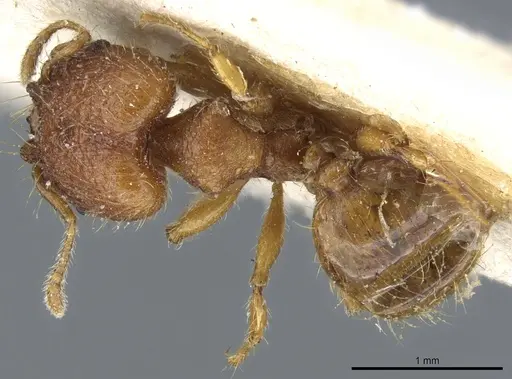
CASENT0904375
View on AntWeb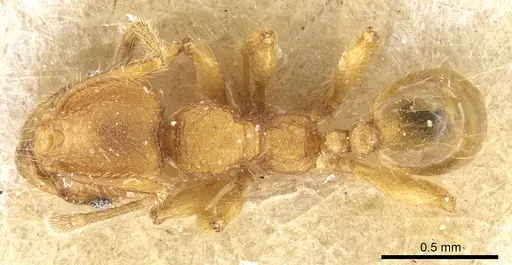
Literature
Loading distribution map...Loading products...