
Pheidole tetra
- Sci. Name
- Pheidole tetra
- Tribe
- Attini
- Subfamily
- Myrmicinae
- Author
- Creighton, 1950
- Distribution
- Found in 2 countries
Introduction
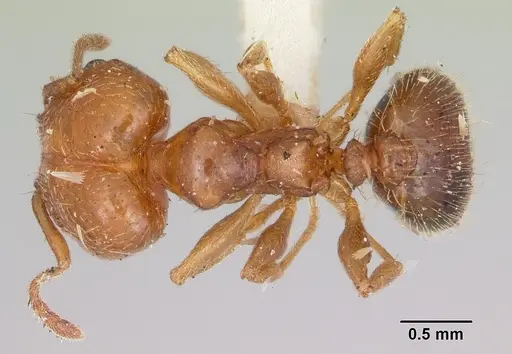
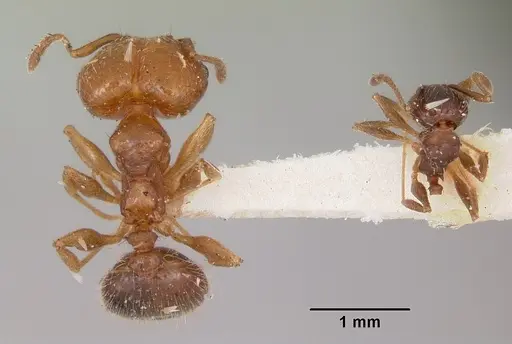
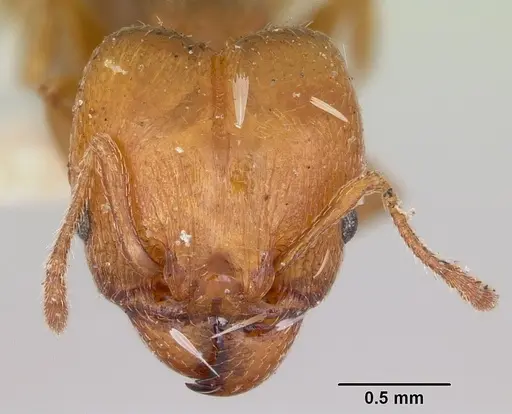
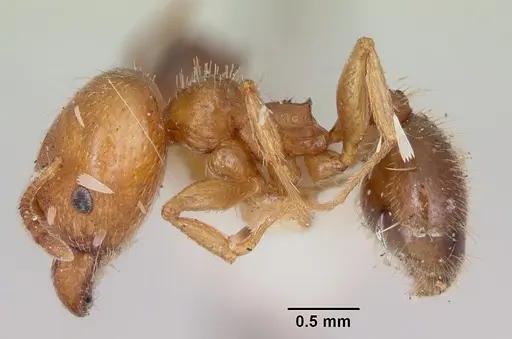
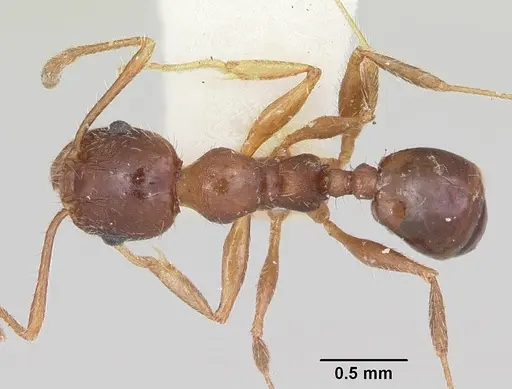
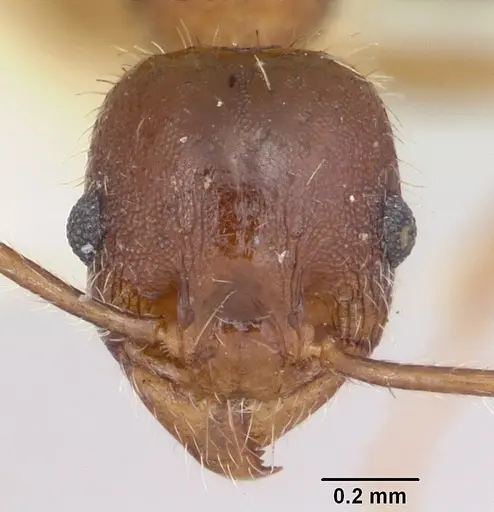
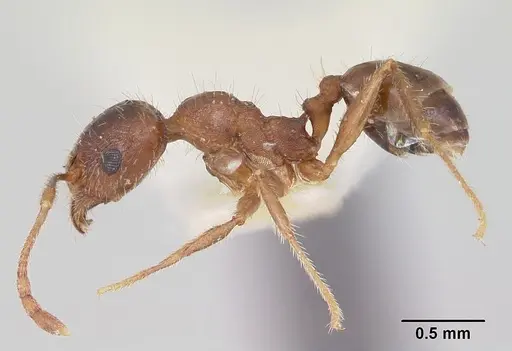
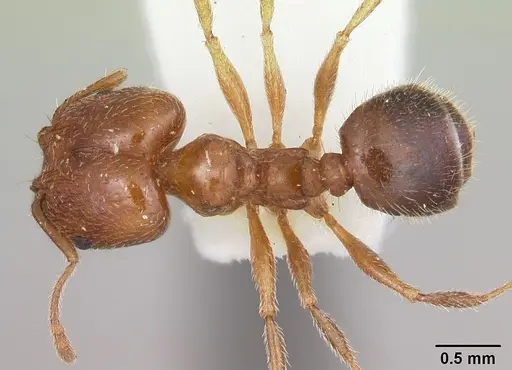
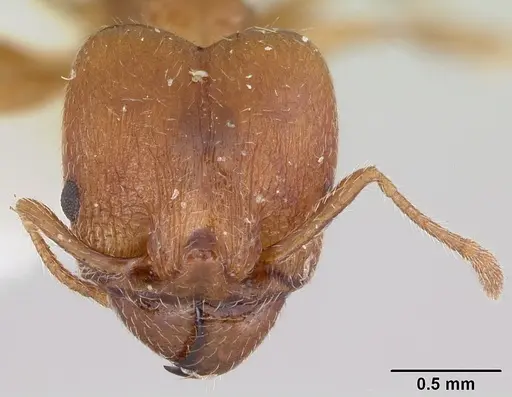
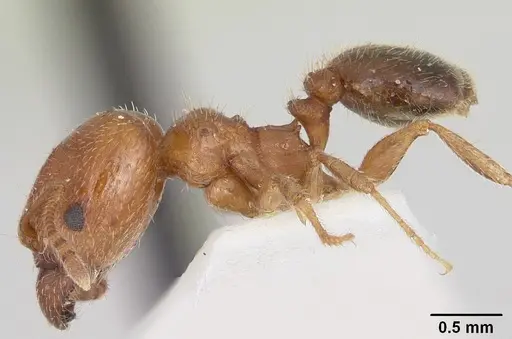
Pheidole tetra is a small ant species native to the south-central United States and northern Mexico . Workers are light to dark reddish brown and nest in soil, often under rocks in open areas . This species is granivorous, primarily eating seeds, and is relatively rare throughout its range .
Quick Summary
- Difficulty: Medium
- Origin & Habitat: Native to the south-central United States (Missouri, Arkansas, Texas, Arizona) and northern Mexico, found in open areas of mixed forest, grassy clearings, and floodplain soils, often under rocks [1][2][3].
- Colony Type: Based on Pheidole genus patterns, likely monogyne (single queen colony) [1].
- Size & Growth:
- Queen: Size data unavailable, inferred from Pheidole genus (~6-8mm)
- Worker: Size data unavailable, inferred from Pheidole genus (~2-4mm)
- Colony: Up to several hundred workers, inferred from Pheidole genus patterns
- Growth: Moderate
- Development: Estimated 6-8 weeks, inferred from Pheidole genus patterns (Development time may vary with temperature and feeding.)
- Antkeeping:
- Temperature: Keep at room temperature, around 20-24°C, with a slight gradient if possible [1].
- Humidity: Keep nest substrate lightly moist but allow drying between waterings, based on natural nesting in sandy soil [1].
- Diapause: Yes, likely benefit from winter rest at 5-10°C for 2-3 months, inferred from temperate range [1].
- Nesting: Use soil or plaster nests with a moisture gradient, as they naturally nest in soil under rocks [1].
- Behavior: Workers are group foragers and granivorous [4]. They are not aggressive toward keepers, but minor workers are very small, so escape prevention is crucial [1].
- Common Issues: small minor workers require excellent escape prevention with fine mesh and tight seals., rare in the hobby, so wild-caught colonies may be difficult to find., sensitive to competition from invasive fire ants in their range [4]., slow colony growth may test keeper patience., granivorous diet needs seeds as a primary food source.
Housing and Nest Setup
Use a test tube setup for founding colonies, then move to a formicarium with soil or plaster nesting medium. Provide a moisture gradient since they nest in sandy soil [1]. Ensure escape prevention with fine mesh, as minor workers are very small [1].
Feeding and Diet
This species is granivorous, so offer seeds like grass or dandelion as a primary food source [4]. Supplement with small insects and sugar water. Remove uneaten food to prevent mold.
Temperature and Seasonal Care
Keep at room temperature around 20-24°C [1]. During winter, provide a hibernation period at 5-10°C for 2-3 months, inferred from their temperate range [1].
Colony Development
Colonies grow slowly, with workers developing from eggs in about 6-8 weeks under optimal conditions [1]. Majors (soldiers) appear as the colony matures, specialized for seed processing.
Behavior and Foraging
Workers forage in groups to collect seeds [4]. They are peaceful but require careful escape prevention due to small size [1]. Defense involves a sting from the subfamily Myrmicinae, but it is not medically significant to humans.
Frequently Asked Questions
How long does it take for Pheidole tetra to produce first workers?
Expect first workers around 6-8 weeks after queen lays eggs, assuming temperatures around 22-24°C [1].
What do Pheidole tetra ants eat?
They are granivorous, so seeds are a primary food source [4]. Offer grass seeds, dandelion seeds, or commercial mixes, plus small insects and sugar water.
Can I keep multiple Pheidole tetra queens together?
Not recommended, as Pheidole species typically form single-queen colonies [1]. Combining queens may lead to fighting.
What temperature range is best for Pheidole tetra?
Keep them at room temperature, ideally 20-24°C [1]. A slight gradient is beneficial but not required.
Do Pheidole tetra need hibernation?
Yes, they likely benefit from a winter rest period at 5-10°C for 2-3 months, inferred from their temperate range [1].
Why are my Pheidole tetra escaping?
Minor workers are very small and can squeeze through tiny gaps. Use fine mesh and check all seals [1].
Are Pheidole tetra good for beginners?
They are moderate difficulty due to escape prevention challenges, but their dietary needs are straightforward [1].
How big do Pheidole tetra colonies get?
Colonies likely reach up to several hundred workers, inferred from Pheidole genus patterns [1].
When should I move my colony to a formicarium?
Move when the colony has 20-30 workers and the test tube is drying out or becoming moldy [1].
Report an Issue
The current care sheet is based fully on literature. See inconsistencies, or something that's incorrect? Please , it will be resolved after review from an admin. Contributing to the blogs tab also helps providing information, to make us be able to further improve the caresheets. Thank you for your support!
References

This caresheet is licensed under CC BY-SA 4.0 .
Community Blogs
Literature
Loading distribution map...Loading products...