
Pheidole tasmaniensis
- Sci. Name
- Pheidole tasmaniensis
- Tribe
- Attini
- Subfamily
- Myrmicinae
- Author
- Mayr, 1866
- Distribution
- Found in 1 countries
Introduction
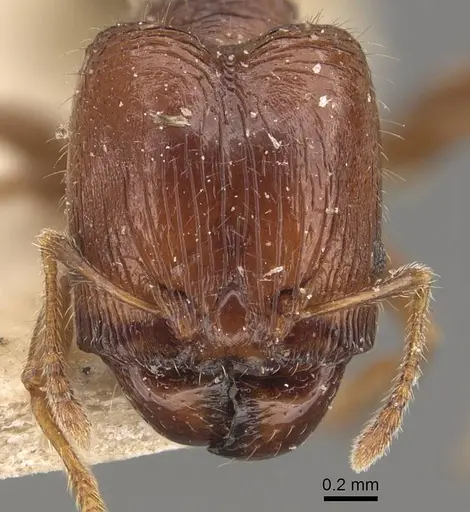
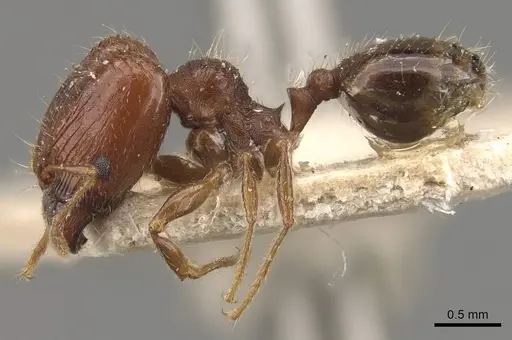
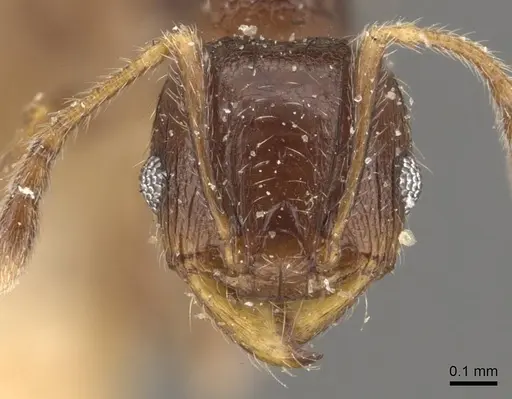
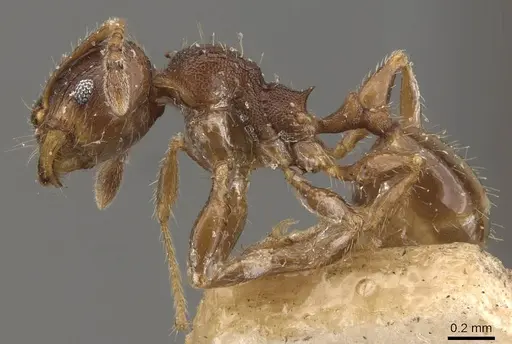
Pheidole tasmaniensis is a small to medium-sized ant native to Tasmania and mainland Australia . Soldiers measure 3.4-4.4mm in length, with a reddish-yellow to reddish body and darker abdomen . Minor workers are smaller, though their exact size is unconfirmed. This species is part of the Attini tribe and has been documented as a host for the parasitic beetle Pheidoliphila minuta . A notable aspect of this species is its role as a host for specialized parasitic beetles, which highlights its ecological interactions in the wild.
Quick Summary
- Difficulty: Easy
- Origin & Habitat: Tasmania and mainland Australia, inhabiting temperate to subtropical environments [1].
- Colony Type: Unconfirmed, no specific data on queen number or social structure.
- Size & Growth:
- Queen: Size data unavailable, no total length measurements in research context.
- Worker: Major workers: 3.4-4.4mm [2], minor worker size data unavailable.
- Colony: Colony size data unavailable, no maximum worker counts documented.
- Growth: Moderate, inferred from Pheidole genus patterns.
- Development: Estimated 6-8 weeks, inferred from Myrmicinae development patterns. (Development time is species-specific data unavailable, expect first workers to be smaller than normal.)
- Antkeeping:
- Temperature: Keep at room temperature, roughly 20-26°C, inferred from temperate habitat [1].
- Humidity: Keep nest substrate consistently moist but not waterlogged, inferred from typical ant care.
- Diapause: Yes, based on Tasmanian habitat, likely requires winter diapause [1].
- Nesting: Test tubes for founding colonies, for established colonies, use Y-tong, plaster, or soil nests [1].
- Behavior: Active foragers with a generalist diet. Not particularly aggressive toward keepers. Escape risk is moderate due to small minor workers, ensure enclosures are secure.
- Common Issues: colonies may fail if kept too cold during winter, ensure proper diapause conditions., overfeeding can lead to mold in nest chambers, remove uneaten food promptly., minor workers are small and can escape through gaps if enclosures are not secure., founding colonies are vulnerable to disturbance, minimize vibrations and light exposure., parasitic beetles have been documented in wild colonies, quarantine new additions.
Housing and Nest Setup
For founding colonies, use a standard test tube setup, fill one-third with water, plug with cotton, and place the queen inside. Cover with a dark cloth for the first few days to reduce stress. Once workers emerge, transition to a small formicarium. For established colonies, Y-tong nests work well, as do plaster or soil-based nests. Ensure the nest has a humidity gradient with one moist chamber and one drier area so ants can self-regulate. A simple outworld for foraging completes the setup [1].
Feeding and Diet
Pheidole tasmaniensis is a generalist feeder. Offer protein sources like small insects (fruit flies, mealworms) 2-3 times per week, and provide constant access to sugar water or honey. Major workers are adapted for seed processing, so seeds can be offered occasionally. Remove uneaten prey after 24 hours to prevent mold [2].
Temperature and Seasonal Care
Keep the colony at room temperature, roughly 20-26°C during active seasons. During winter, reduce temperatures to 10-15°C for 2-3 months to simulate diapause, as inferred from their Tasmanian habitat. Do not feed during deep hibernation, but ensure a small water source remains available [1].
Colony Growth and Development
Major workers (soldiers) appear as the colony grows, with enlarged heads for seed processing and defense. First workers (nanitics) may be smaller than normal. Growth is moderate, but colony size data is unavailable. Expect major workers once the colony reaches a moderate size, though specific thresholds are unconfirmed [2].
Behavior and Observation
Minor workers handle daily tasks like foraging and brood care, while major workers focus on defense and seed processing. These ants are active foragers and not overly aggressive. Escape risk is moderate due to small minor workers, minimize gaps in enclosures. They do not form supercolonies and maintain a single nest site [1].
Frequently Asked Questions
How long does it take for Pheidole tasmaniensis to have first workers?
Expect first workers to emerge 6-8 weeks after queen lays eggs, estimated from Myrmicinae patterns. Species-specific timing is unconfirmed.
Do Pheidole tasmaniensis ants need hibernation?
Yes, based on their Tasmanian habitat, they likely require a winter diapause period of 2-3 months at reduced temperatures [1].
What do I feed Pheidole tasmaniensis?
They are generalist feeders. Offer small insects as protein 2-3 times weekly and constant access to sugar water or honey. Major workers can process seeds [2].
Are Pheidole tasmaniensis good for beginners?
Yes, this species is considered easy to keep, with moderate escape risk and adaptable care needs.
How big do Pheidole tasmaniensis colonies get?
Colony size data is unavailable, no maximum worker counts documented in research.
Can I keep multiple queens together?
Colony type is unconfirmed, but combining unrelated queens is not recommended as they may fight.
When should I move my colony to a formicarium?
Move from test tube once the colony is active and crowded, using nests like Y-tong or plaster with humidity control [1].
What makes Pheidole tasmaniensis different from other ants?
It has a distinct caste system with major workers for seed processing and is documented as a host for parasitic beetles [3].
Why are my Pheidole tasmaniensis dying?
Common causes include improper diapause temperatures, excessive humidity leading to mold, disturbance during founding, or inadequate protein. Check conditions match their moderate needs.
Report an Issue
The current care sheet is based fully on literature. See inconsistencies, or something that's incorrect? Please , it will be resolved after review from an admin. Contributing to the blogs tab also helps providing information, to make us be able to further improve the caresheets. Thank you for your support!
References

This caresheet is licensed under CC BY-SA 4.0 .
Community Blogs
CASENT0908058
View on AntWeb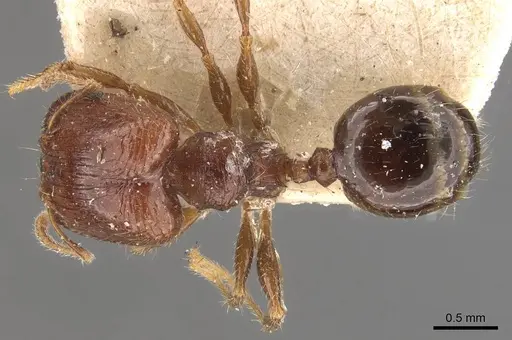
CASENT0908059
View on AntWeb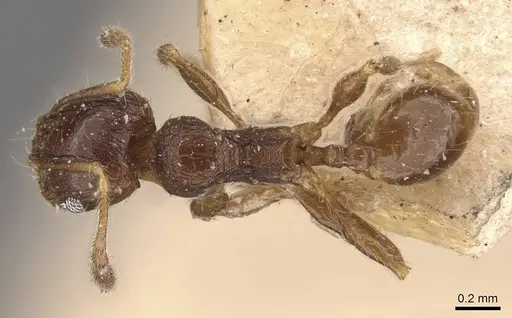
Literature
Loading distribution map...Loading products...