
Pheidole synarmata
- Sci. Name
- Pheidole synarmata
- Tribe
- Attini
- Subfamily
- Myrmicinae
- Author
- Wilson, 2003
- Distribution
- Found in 5 countries
Introduction
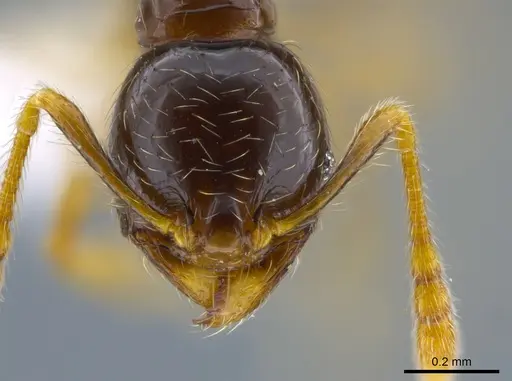
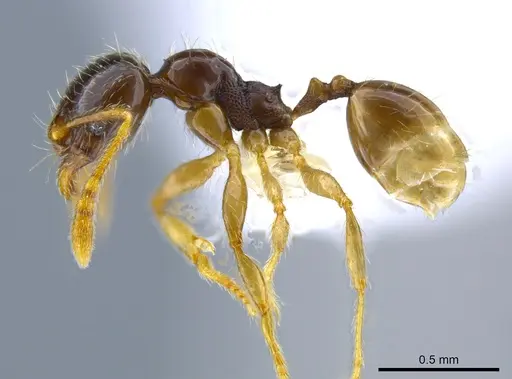
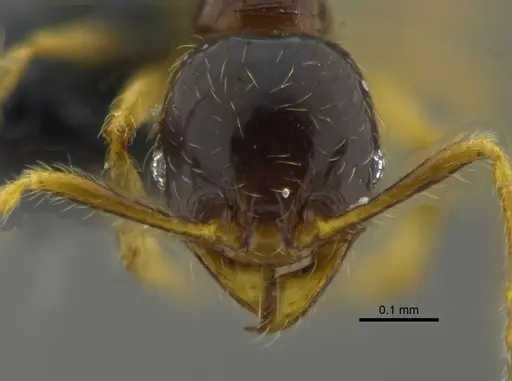
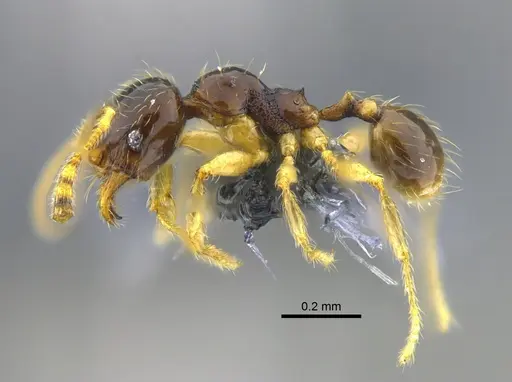
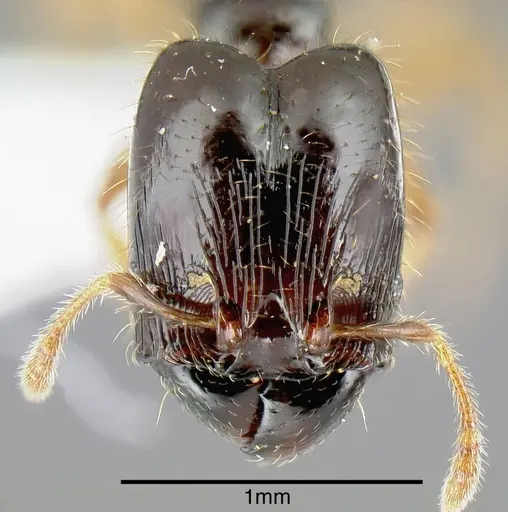
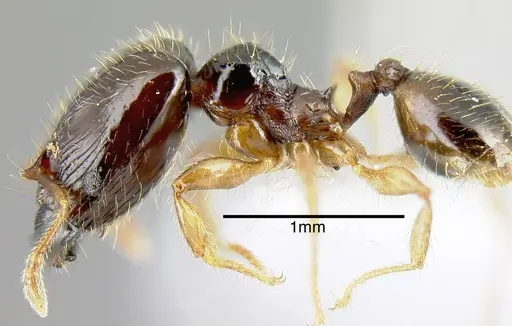
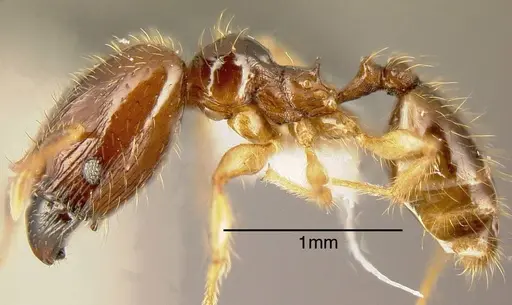
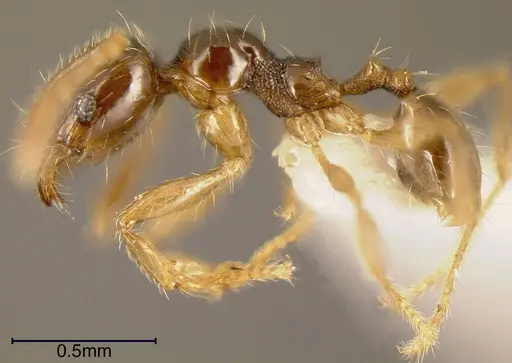
Pheidole synarmata is a Neotropical big-headed ant species described from Guyana in 2003 . It belongs to the tristis group and has distinctive morphology: majors have an elongated head with a spine-like projection from the frontal lobe, while both castes have smooth, glossy bodies in uniform yellow coloration . Full body size measurements are not available in the literature. The species is found across Central and South America, including Honduras, El Salvador, Nicaragua, Costa Rica, Colombia, Venezuela, Guyana, French Guiana, and Brazil .
Quick Summary
- Difficulty: Medium
- Origin & Habitat: Neotropical distribution spanning Central America to northern South America, found in leaf-litter of tropical rainforests and forest edges, collected using Winkler extractors and pitfall traps [3][1][4][5].
- Colony Type: Based on typical Pheidole patterns, likely monogyne (single queen colony), but unconfirmed.
- Size & Growth:
- Queen: Size data unavailable, no total length measurements exist.
- Worker: Size data unavailable, no total length measurements exist.
- Colony: Unknown, no colony size data exists.
- Growth: Unknown
- Development: Unconfirmed, no species-specific data. Based on tropical Pheidole patterns, estimate 4-8 weeks at optimal temperature [1]. (Estimate based on genus-level data, observe colony activity for adjustments.)
- Antkeeping:
- Temperature: No specific data. As a tropical species, likely prefers 24-28°C. Start in this range and adjust based on colony behavior [1].
- Humidity: No specific data. Based on leaf-litter habitat, likely requires moderate humidity. Keep substrate moist but not waterlogged, with drier areas available [1].
- Diapause: Unknown, no research on seasonal behavior. As a tropical species, true diapause may not be required.
- Nesting: No specific data. Based on genus ecology, likely nests in soil or rotting wood. Use test tube for founding, then Y-tong or plaster nest with moisture retention [1].
- Behavior: No specific behavioral studies. Based on genus patterns, Pheidole ants are non-aggressive but defend nests vigorously. Majors may block entrances, but this is unconfirmed. Escape risk is moderate for small ants, use fluon barriers [1].
- Common Issues: no species-specific biological data exists, care recommendations are estimates, founding colonies may be difficult due to unknown founding behavior, wild-caught colonies may carry parasites from leaf-litter habitats, humidity control can be challenging for tropical species, growth may be slow, requiring patience
Species Identification and Morphology
Pheidole synarmata is in the tristis group. Majors have an elongated head with a spine-like projection from the frontal lobe, a bulbous promesonotum, and smooth, glossy bodies in medium yellow [1]. Minors have a broad concave occiput and smooth bodies in light yellow [1]. This distinguishes it from similar species in the subarmata complex [1].
Distribution and Habitat
This species is found in Honduras, El Salvador, Nicaragua, Costa Rica, Colombia, Venezuela, Guyana, French Guiana, and Brazil [3][1]. In Brazil, it occurs in Pará, Maranhão, Bahia, Piauí, and Paraná [4][6][7][8][9]. In Colombia, it is in Caldas, Risaralda, Valle del Cauca, Cauca, Huila, and Meta [3][1]. It inhabits leaf-litter in tropical forests, collected via Winkler extractors and pitfall traps [5].
Nest Preferences and Housing
No specific nesting data exists. Based on genus patterns, likely nests in soil or rotting wood. For captivity, use a test tube for founding colonies, then transition to a Y-tong or plaster nest with moisture retention. Provide an outworld connected with tubing, and include substrate for foraging. Apply fluon barriers to prevent escapes [1].
Feeding and Diet
No species-specific dietary data. Based on genus patterns, offer varied diet: protein sources like small insects, seeds, and sugar sources like honey water. Remove uneaten food after 24 hours to prevent mold [1].
Temperature and Seasonal Care
No specific temperature data. As a tropical species, start at 24-28°C and adjust based on colony behavior. If workers cluster near heat, increase temperature, if they avoid it, reduce. Diapause is unknown, do not force hibernation unless activity slows [1].
Behavior and Colony Dynamics
No specific behavioral studies. Based on genus patterns, colonies have minor workers for foraging and brood care, and majors for defense. Pheidole synarmata majors have a spine-like projection, but its function is unconfirmed. Colonies grow gradually over time [1].
Challenges and Limitations
This species lacks species-specific data, so care is based on genus estimates. Founding may be challenging, and wild-caught colonies may carry parasites. Growth is likely slow, requiring patience and experimentation [1].
Frequently Asked Questions
How long does it take for Pheidole synarmata to produce first workers?
Unconfirmed, no species-specific data. Based on tropical Pheidole patterns, estimate 4-8 weeks at 24-28°C [1].
What do Pheidole synarmata ants eat?
No species-specific data. Based on genus patterns, offer small insects, seeds, and sugar sources [1].
What temperature should I keep Pheidole synarmata at?
No specific data. Start at 24-28°C and adjust based on colony behavior [1].
Do Pheidole synarmata ants need hibernation?
Unknown, no research on seasonal behavior. As a tropical species, diapause may not be required [1].
What size colony does Pheidole synarmata reach?
Unknown, no colony size data exists [1].
Can I keep multiple Pheidole synarmata queens together?
No data on founding behavior. Based on typical Pheidole patterns, single-queen colonies are common [1].
Are Pheidole synarmata good for beginners?
Not recommended due to lack of species-specific data. Suitable for experienced keepers comfortable with experimentation [1].
What nest type is best for Pheidole synarmata?
No specific data. Based on genus ecology, use test tube for founding, then Y-tong or plaster nest [1].
Why is my Pheidole synarmata colony dying?
Without species-specific data, common issues include incorrect humidity, temperature stress, or parasites from wild-caught colonies. Review care parameters and adjust gradually [1].
Report an Issue
The current care sheet is based fully on literature. See inconsistencies, or something that's incorrect? Please , it will be resolved after review from an admin. Contributing to the blogs tab also helps providing information, to make us be able to further improve the caresheets. Thank you for your support!
References

This caresheet is licensed under CC BY-SA 4.0 .
Community Blogs
CASENT0619706
View on AntWeb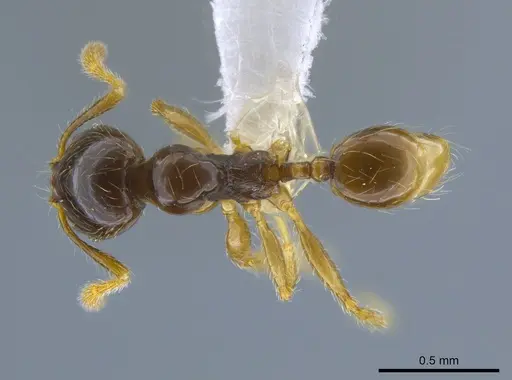
CBUMAGENT42010
View on AntWeb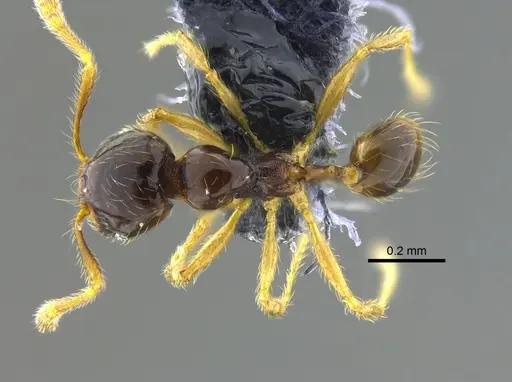
INB0003687547
View on AntWeb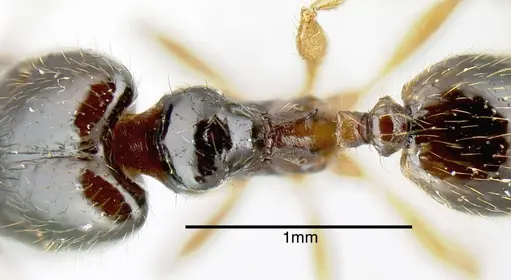
INBIOCRI002728510
View on AntWeb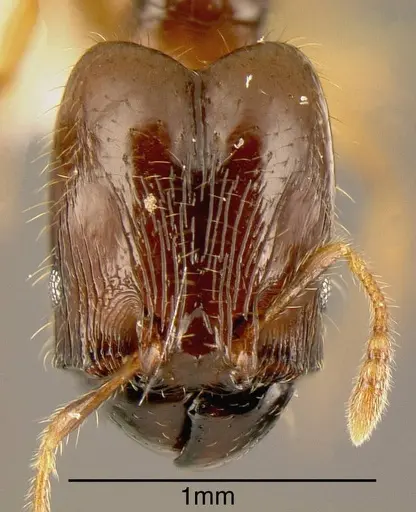
INBIOCRI002728547
View on AntWeb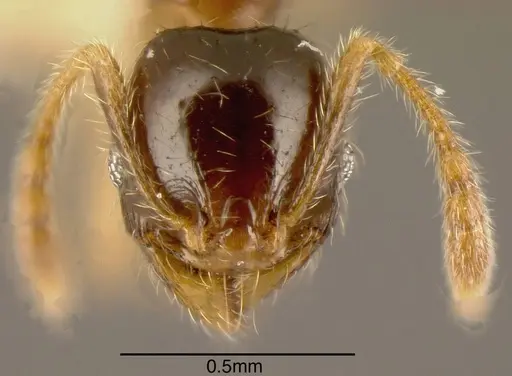
Literature
Loading distribution map...Loading products...