
Pheidole sulcaticeps
- Sci. Name
- Pheidole sulcaticeps
- Tribe
- Attini
- Subfamily
- Myrmicinae
- Author
- Roger, 1863
- Distribution
- Found in 1 countries
Introduction
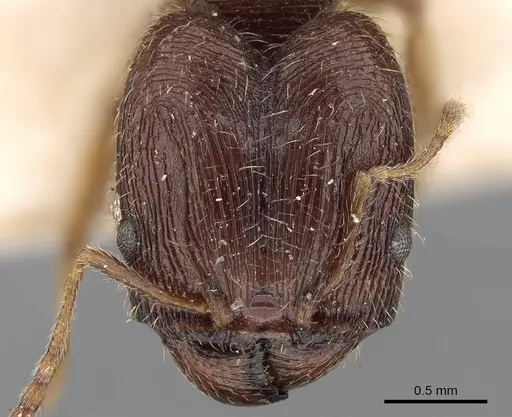
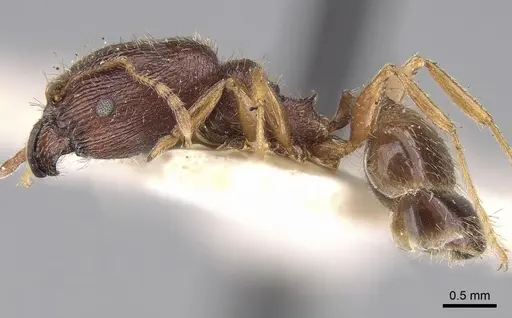
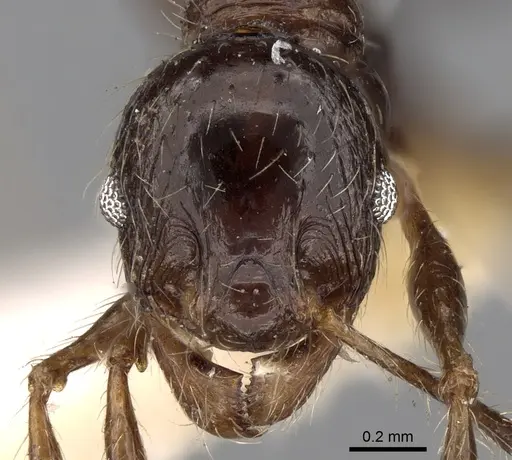
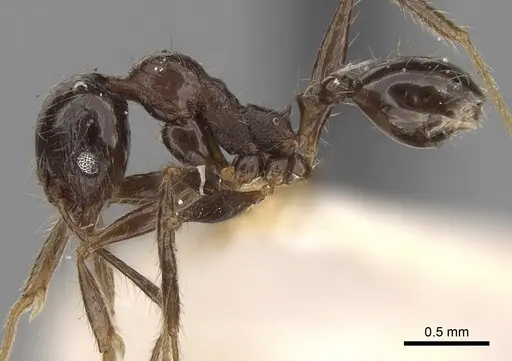
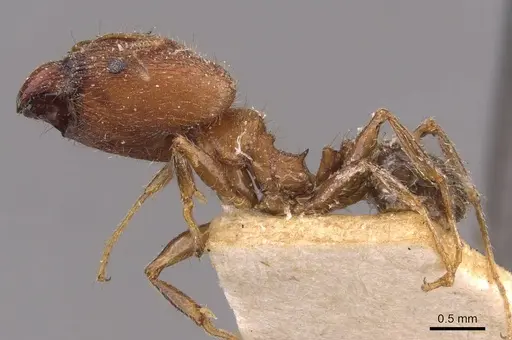
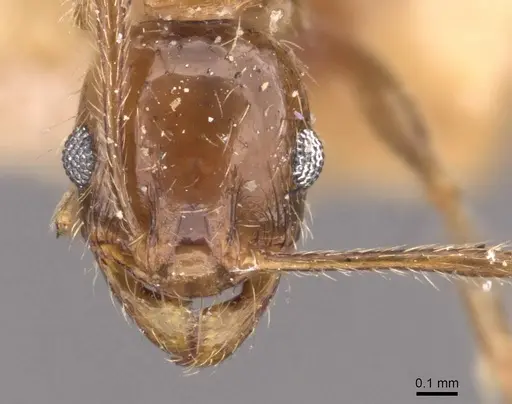
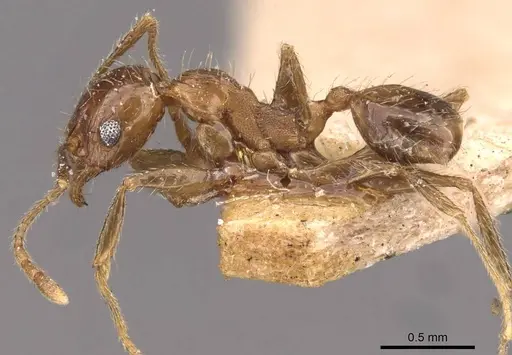
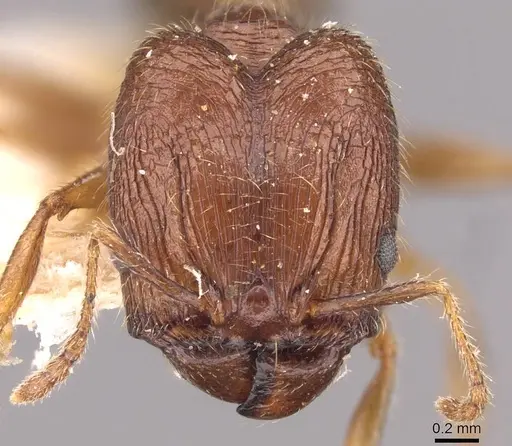
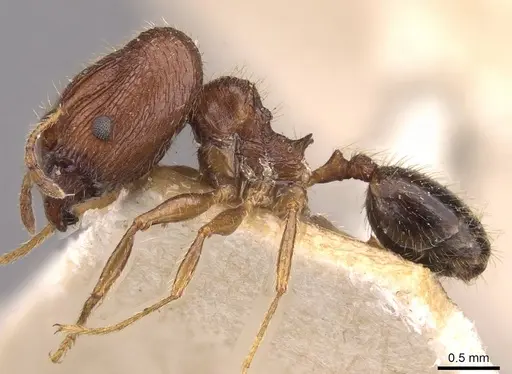
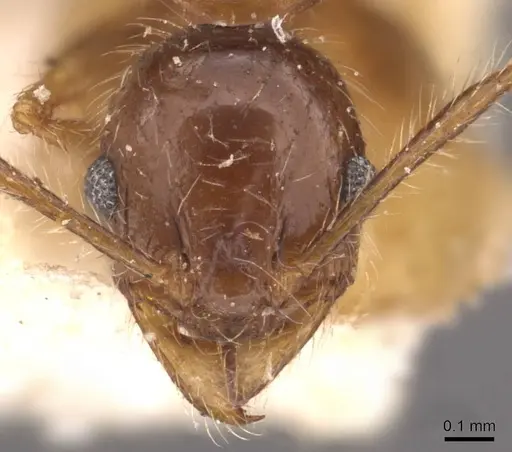
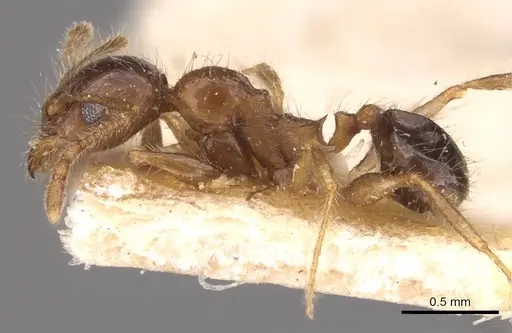
Pheidole sulcaticeps is a dimorphic ant species with major workers measuring 4.0-5.0 mm and minor workers at 2.5-2.9 mm . Major workers have reddish-brown bodies with fine yellowish hairs, rectangular heads with longitudinal striations, and smooth first gastral tergites . This species is native to South Asia, found in India, Pakistan, Sri Lanka, Bangladesh, and southern China, typically nesting in bare ground in tropical and subtropical regions . This ant was first recorded in Pakistan in 2014,collected from bare ground areas . It hosts the myrmecophile beetle Pheidoliphila minuta, which lives within its colonies .
Quick Summary
- Difficulty: Easy
- Origin & Habitat: Tropical and subtropical Asia, including India (Gujarat, Maharashtra, Orissa, Rajasthan, Tamil Nadu, West Bengal), Pakistan, Sri Lanka, Bangladesh, and southern China. Specimens are often collected from bare ground [4][5][3].
- Colony Type: Based on Pheidole genus patterns, likely monogyne colonies with a single queen.
- Size & Growth:
- Queen: size data unavailable, no total length measurements in context
- Worker: Major workers: 4.0-5.0 mm, minor workers: 2.5-2.9 mm [1]
- Colony: size data unavailable, no maximum colony size observed in context
- Growth: Moderate, inferred from tropical Pheidole species
- Development: Estimated 6-8 weeks at optimal temperature (Development time depends on temperature and feeding, no specific data in context)
- Antkeeping:
- Temperature: Keep warm, roughly 24-28°C, as they are from tropical regions [4]. Provide a temperature gradient for regulation.
- Humidity: Keep nest substrate consistently moist but not waterlogged, based on ground-nesting behavior [5].
- Diapause: No, as a tropical species, they do not require hibernation.
- Nesting: Ground-nesting species that prefers soil or sandy substrates. Use Y-tong nests, test tubes, or naturalistic setups with moist soil [5][1].
- Behavior: Generally calm and not aggressive toward keepers. Major workers use large heads for defense, but stingers are small and pose minimal danger. Escape risk is moderate due to small worker size (2.5-5.0 mm) [1].
- Common Issues: colonies may decline if kept too cold, maintain warm temperatures year-round, escape prevention is important for minor workers due to their small size, overfeeding can lead to mold in nest setups, remove uneaten food promptly, wild-caught colonies may carry parasites that can cause colony failure
Housing and Nest Setup
Pheidole sulcaticeps is a ground-nesting species. For founding colonies, use a test tube setup with water and cotton. For established colonies, a Y-tong nest with a dirt chamber or naturalistic soil setup works well [5][1]. Keep the nest area humid but ensure ventilation to prevent mold.
Feeding and Diet
This species is omnivorous. Offer protein sources like small crickets or mealworms twice weekly, and sugar sources like honey water constantly. Seeds are important, provide small seeds like millet, which major workers process [1]. Remove uneaten food after 24-48 hours to prevent mold.
Temperature and Seasonal Care
Keep temperatures at 24-28°C for optimal brood development [4]. Use a heating mat to create a gradient. They do not require diapause as a tropical species. Avoid temperatures below 20°C for extended periods.
Colony Structure and Castes
Colonies are dimorphic with major and minor workers. Major workers (4.0-5.0 mm) have large heads for seed processing and defense, while minor workers (2.5-2.9 mm) handle foraging and brood care [1]. Based on Pheidole patterns, colonies are likely monogyne with a single queen.
Behavior and Handling
This species is generally calm. Major workers may appear threatening but are not aggressive stingers. Minor workers can escape through small gaps, so use Fluon barriers [1]. Defense is via stinging, as typical for Myrmicinae.
Growth and Development
Colony growth is moderate. The queen lays eggs after founding, and first workers emerge in 6-8 weeks at optimal temperature. After workers eclose, the colony grows steadily under good conditions.
Frequently Asked Questions
How long does it take for Pheidole sulcaticeps to produce first workers?
Expect first workers in 6-8 weeks at 24-28°C.
What do Pheidole sulcaticeps ants eat?
They are omnivorous. Offer protein (insects) twice weekly, sugar sources constantly, and seeds [1].
Can I keep multiple queens together?
No, this species is likely monogyne based on Pheidole patterns. Combining queens may cause fighting.
What temperature do they need?
Keep them at 24-28°C, as they are from tropical regions [4].
Do they need hibernation?
No, as a tropical species, they do not require diapause.
What size colony do they reach?
Colony size data is unavailable from current research.
What nest type is best?
Ground-nesting species do well with Y-tong nests, test tubes, or naturalistic soil setups [5][1].
Are they good for beginners?
Yes, they are considered easy to keep, tolerant of basic care mistakes and not aggressive.
Why are my ants dying?
Common causes include temperatures below 20°C, improper humidity, mold from uneaten food, or parasites from wild-caught colonies.
When should I move them to a formicarium?
Move from test tube to a larger nest once the colony is crowded, typically around 30-50 workers.
How big are the workers?
Major workers are 4.0-5.0 mm, minor workers are 2.5-2.9 mm [1].
Report an Issue
The current care sheet is based fully on literature. See inconsistencies, or something that's incorrect? Please , it will be resolved after review from an admin. Contributing to the blogs tab also helps providing information, to make us be able to further improve the caresheets. Thank you for your support!
References

This caresheet is licensed under CC BY-SA 4.0 .
Community Blogs
CASENT0281654
View on AntWeb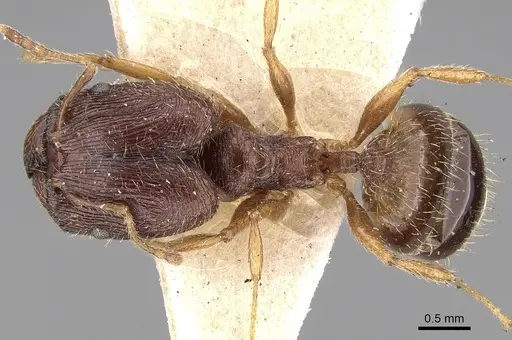
CASENT0281655
View on AntWeb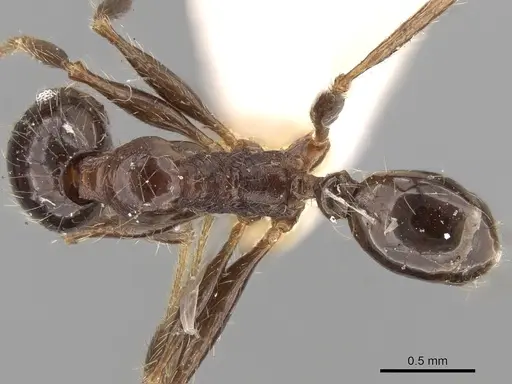
CASENT0907961
View on AntWeb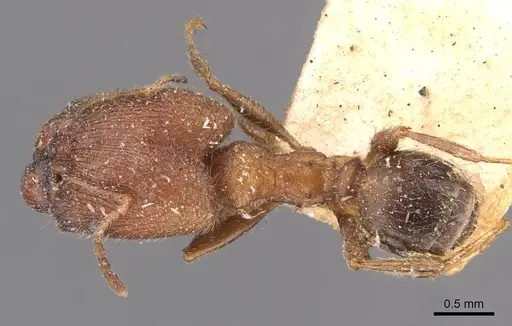
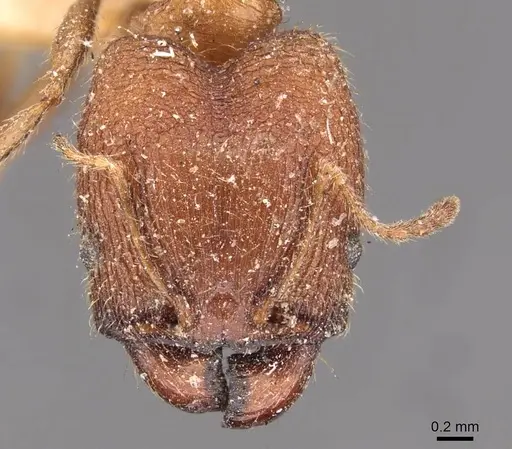
CASENT0907962
View on AntWeb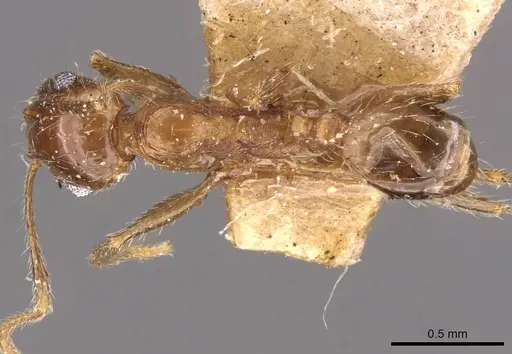
CASENT0907963
View on AntWeb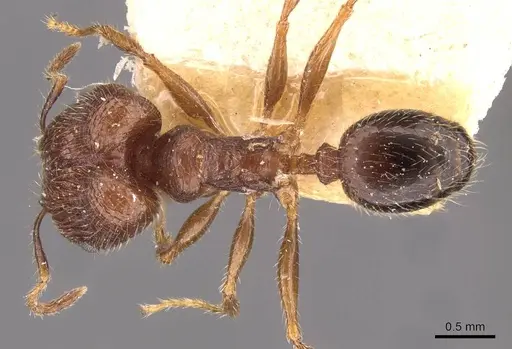
CASENT0907964
View on AntWeb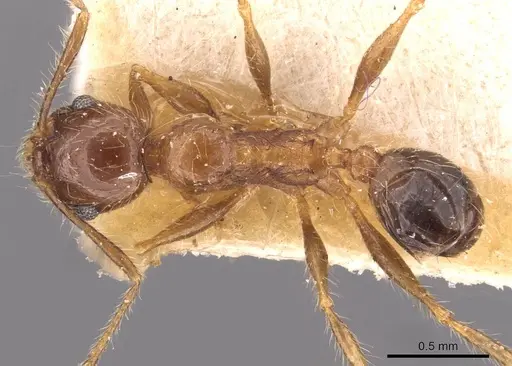
Literature
Loading distribution map...Loading products...