
Pheidole rufipilis
- Sci. Name
- Pheidole rufipilis
- Tribe
- Attini
- Subfamily
- Myrmicinae
- Author
- Forel, 1908
- Distribution
- Found in 1 countries
Introduction
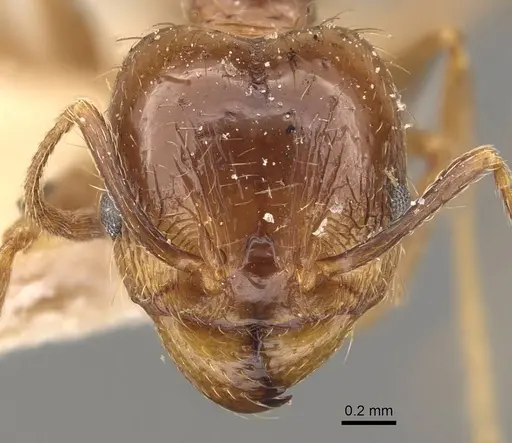
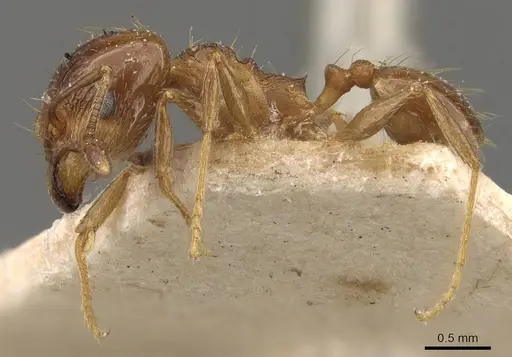
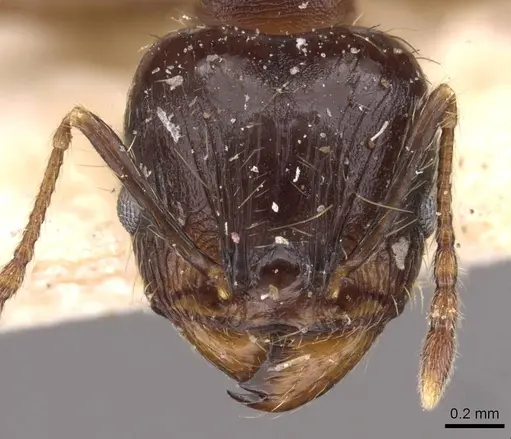
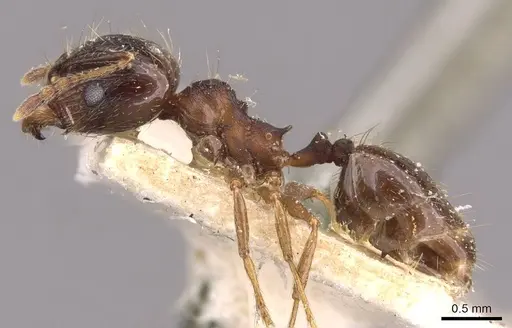
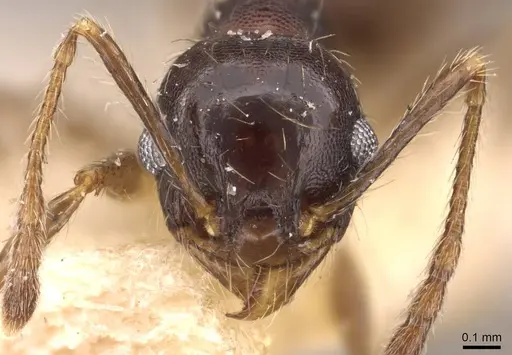
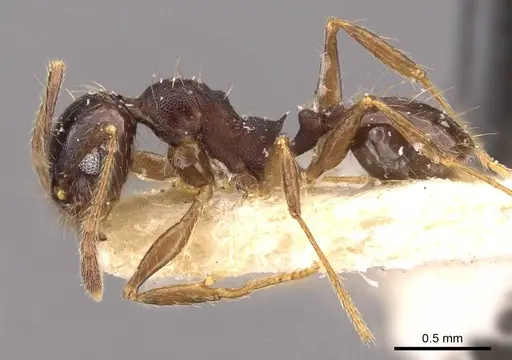
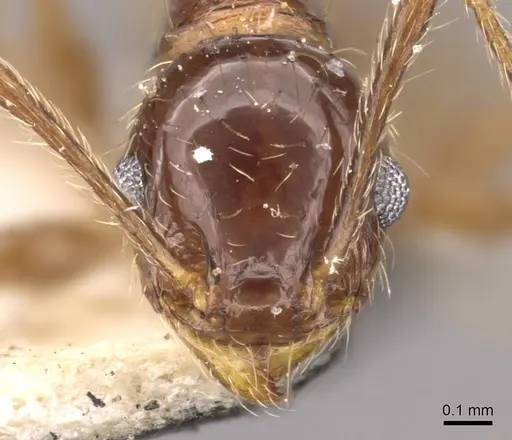
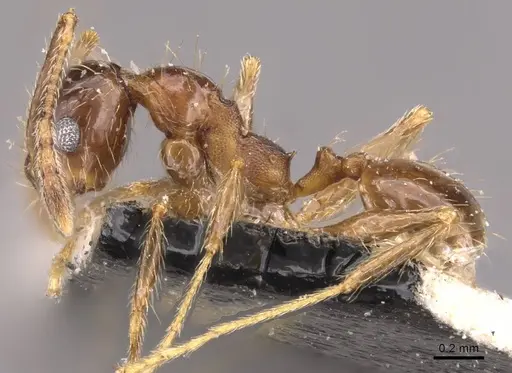
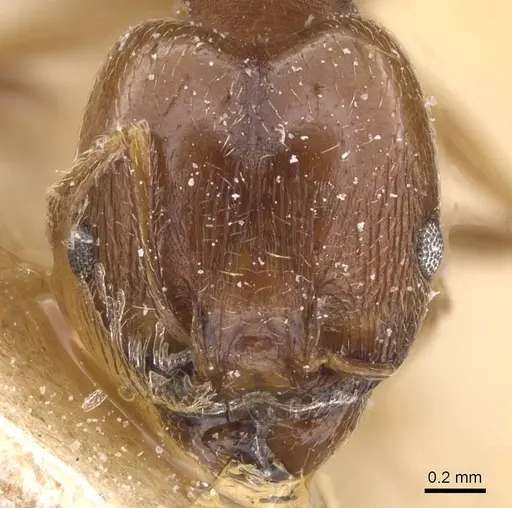
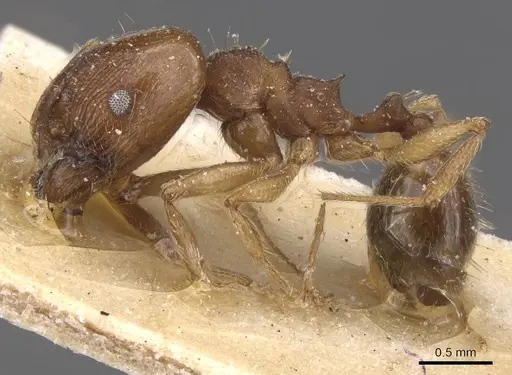
Pheidole rufipilis is a dimorphic ant species with major and minor workers, native to southeastern South America. Majors have a distinctive patch of ridged texture near the antennal socket, while minors are uniformly brown with pale yellow hairs . The species is found in Brazil, Uruguay, Paraguay, and Colombia, often in Cerrado and seasonally dry tropical forests . Nothing is known about its biology in the wild .
Quick Summary
- Difficulty: Hard
- Origin & Habitat: Southeastern Brazil (São Paulo, Minas Gerais, Rio de Janeiro), also Uruguay and Paraguay. Found in Cerrado habitat and seasonally dry tropical forests [2][4].
- Colony Type: Unconfirmed, no specific data for this species
- Size & Growth:
- Queen: size data unavailable
- Worker: size data unavailable, majors and minors described morphologically [1]
- Colony: Unknown, based on Pheidole genus patterns, colonies can reach hundreds to low thousands [4]
- Growth: Unknown
- Development: Unknown, estimated 4-8 weeks based on tropical Pheidole patterns [4] (No direct data exists for this species. Estimates based on genus-level patterns.)
- Antkeeping:
- Temperature: Keep warm and stable, roughly low-to-mid 20s°C, based on tropical Brazilian origin [4].
- Humidity: Keep the nest substrate consistently moist but not waterlogged, based on general Pheidole preferences [4].
- Diapause: Unknown, as a tropical species, they likely do not require hibernation [4].
- Nesting: Preferred nest types are unconfirmed, but standard test tubes or Y-tong nests may work based on genus patterns [4].
- Behavior: Based on Pheidole genus patterns, species are generally non-aggressive and focused on foraging. Escape risk is high due to small size, so use fine mesh barriers [4].
- Common Issues: this species has never been kept in captivity, no established care protocols exist, the complete lack of biological data means any care advice is speculative, wild-caught colonies may carry parasites or diseases with no documented treatment, their small size increases escape risk through standard barrier systems, colony founding success rate is completely unknown
Species Identification and Morphology
Pheidole rufipilis has major and minor workers. Major workers feature a patch of ridged texture near the middle of the antennal fossa, a trapezoidal postpetiole with angled sides, and a rounded humerus [1]. Minor workers have a uniformly dimpled promesonotum and pale yellow hairs [1]. The species name means 'red hair' in Latin, referring to the body hairs [1].
Distribution and Habitat
This species is native to southeastern South America, including Brazil, Uruguay, Paraguay, and Colombia [3][1]. It has been collected in Cerrado habitat and seasonally dry tropical forests [2]. The type locality was corrected to Campo Itatiaya, Rio de Janeiro [5].
What We Don't Know
AntWiki states that nothing is known about the biology of Pheidole rufipilis [4]. This includes colony founding, nuptial flights, development timelines, temperature preferences, diet, and health issues. All care advice is speculative based on genus patterns.
General Pheidole Care (Applied Speculatively)
Based on Pheidole genus patterns, queens may found colonies claustrally, sealing themselves in with stored fat [4]. Colonies grow to hundreds of workers, with majors appearing at moderate sizes [4]. They are generalist feeders, accepting seeds, insects, and sugar sources [4]. Nests should maintain moderate humidity to avoid mold or desiccation [4].
Recommended Starting Approach
Treat this species as experimental due to lack of data. Start with a test tube setup for founding, then transition to small formicaria. Keep temperatures in the low-to-mid 20s°C, maintain moderate nest moisture, and offer varied diet [4]. Document observations to contribute to knowledge.
Frequently Asked Questions
Is Pheidole rufipilis a good species for beginners?
No, due to lack of data, it is not recommended for beginners. Stick to well-established species [4].
How long does it take for Pheidole rufipilis to produce first workers?
Unknown, estimated 4-8 weeks based on tropical Pheidole patterns [4].
What do Pheidole rufipilis eat?
No species-specific data, but based on genus patterns, they likely eat small insects and seeds [4].
What temperature should I keep Pheidole rufipilis at?
No specific data, but aim for 22-26°C based on tropical origin [4].
Can I keep multiple queens together?
No data exists, but most Pheidole are single-queen, so multiple queens may fight [4].
Do Pheidole rufipilis need hibernation?
Unlikely, as a tropical species, they probably do not require diapause [4].
How big do Pheidole rufipilis colonies get?
Unknown, but based on genus, colonies can reach hundreds to low thousands [4].
What type of nest should I use?
No species-specific data, but standard test tubes or Y-tong nests may work based on genus patterns [4].
Where can I find Pheidole rufipilis to keep?
This species is rare in the hobby and found in southeastern Brazil. Collection is unlikely and may be regulated [4].
Report an Issue
The current care sheet is based fully on literature. See inconsistencies, or something that's incorrect? Please , it will be resolved after review from an admin. Contributing to the blogs tab also helps providing information, to make us be able to further improve the caresheets. Thank you for your support!
References

This caresheet is licensed under CC BY-SA 4.0 .
Community Blogs
CASENT0908118
View on AntWeb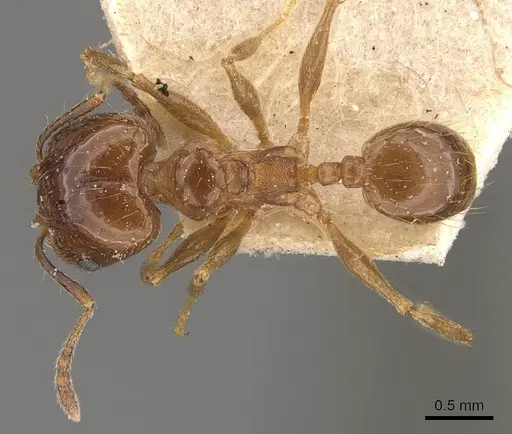
CASENT0908200
View on AntWeb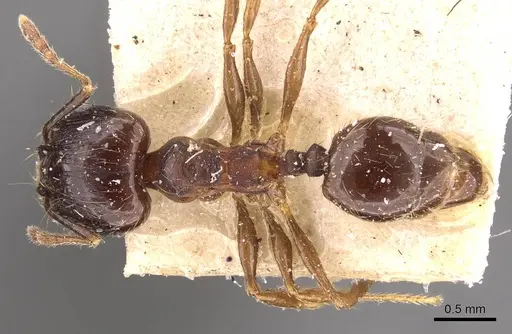
CASENT0908201
View on AntWeb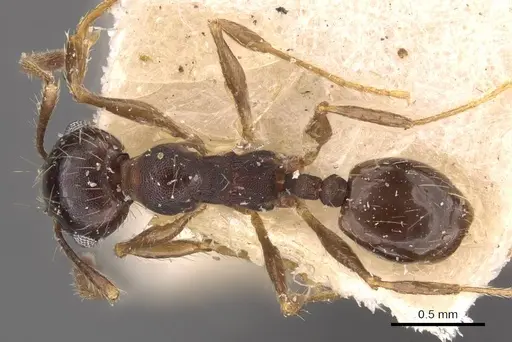
CASENT0908203
View on AntWeb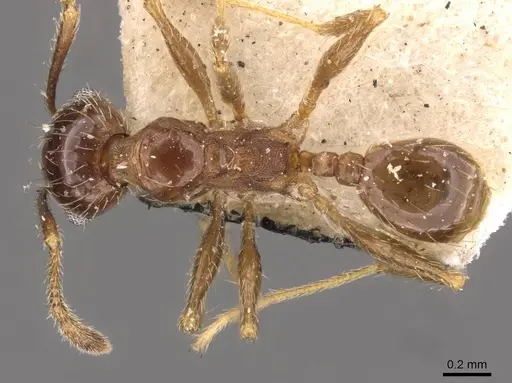
CASENT0913401
View on AntWeb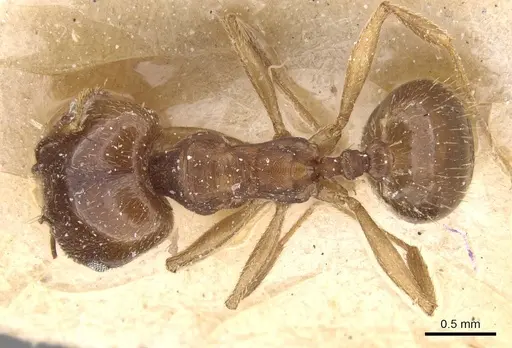
Literature
Loading distribution map...Loading products...