
Pheidole roushae
- Sci. Name
- Pheidole roushae
- Tribe
- Attini
- Subfamily
- Myrmicinae
- Author
- Wilson, 2003
- Distribution
- Found in 4 countries
Introduction
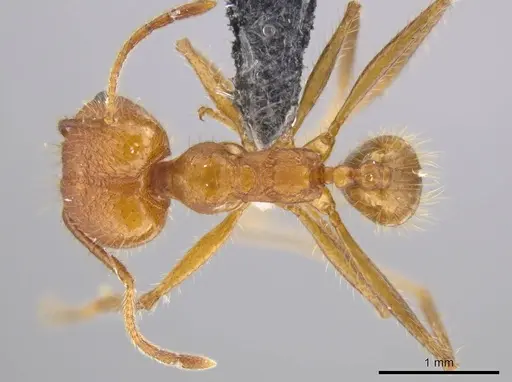
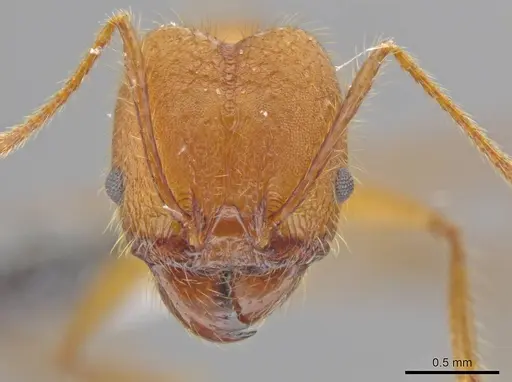
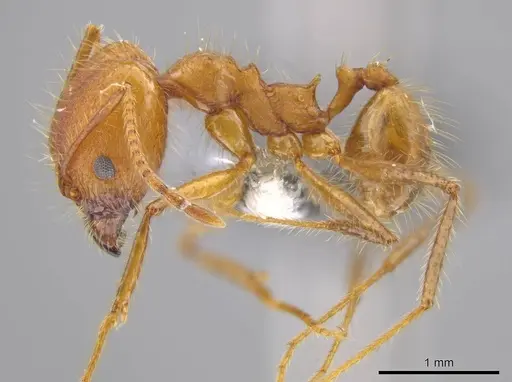
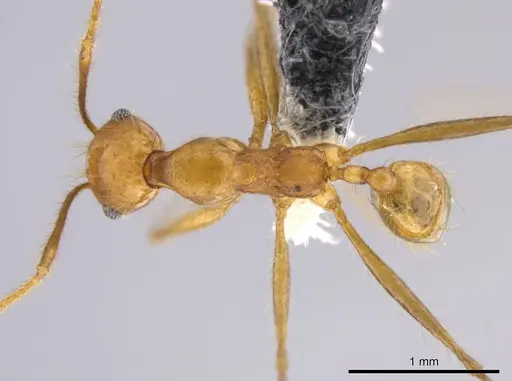
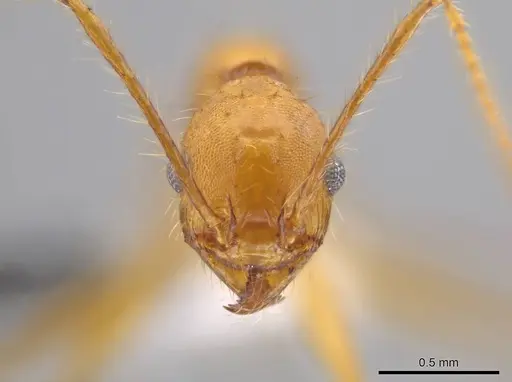
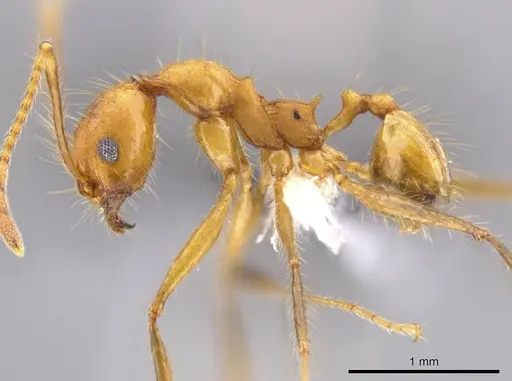
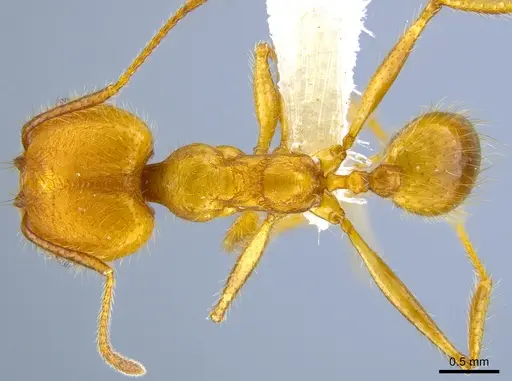
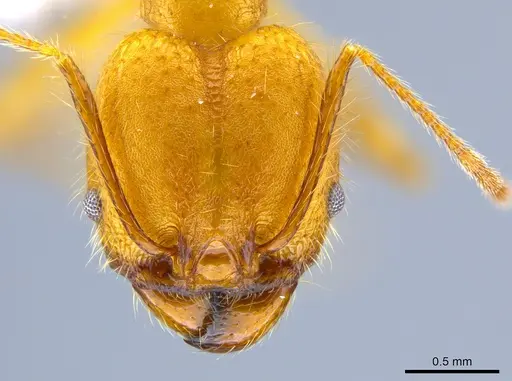
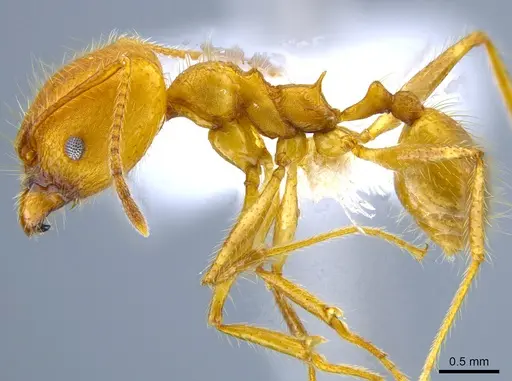
Pheidole roushae is a dimorphic ant species from the Neotropical region, found in Mexico, Guatemala, Belize, and Honduras . It was described by E.O. Wilson in 2003 and belongs to the fallax group. Major workers are reddish‑yellow with a large, square head, while minor workers are medium yellow. Both castes have thick petiolar nodes with rounded tops. The type series was collected in a shaded coffee plantation (cafetal) in Veracruz, Mexico at about 1600 m . It has also been recorded in urban areas between 980 and 1570 m .
Quick Summary
- Difficulty: Easy
- Origin & Habitat: Native to the Neotropical region: Mexico, Guatemala, Belize, and Honduras. Found in shaded coffee plantations and tropical forest edges at elevations of 980-1600 m [2][3].
- Colony Type: Unknown based on available literature. Most Pheidole species are monogyne (single‑queen colonies), but this is unconfirmed for P. roushae.
- Size & Growth:
- Queen: Approximately 8-10 mm, inferred from typical Pheidole queen sizes
- Worker: Major workers: approximately 4-5 mm, minor workers: approximately 2-3 mm, inferred from related Pheidole species
- Colony: Unknown based on available literature, typical Pheidole colonies can reach several hundred to a few thousand workers.
- Growth: Moderate (estimated based on genus patterns)
- Development: Estimated 6-8 weeks at warm temperatures, based on typical Pheidole development (Development speed depends on temperature. Keep within 22-26°C for steady growth.)
- Antkeeping:
- Temperature: 22-26°C, this matches their subtropical highland origin. Avoid temperatures above 30°C. A gentle gradient with a heating cable is optional if room temperature is below this range [2].
- Humidity: Keep the nest substrate moderately moist but not waterlogged. Their shaded coffee plantation habitat suggests damp conditions with good drainage [2].
- Diapause: Unknown if strict diapause is required. Based on the subtropical origin, a brief cool period in winter (15-18°C) may be safe but is likely not mandatory.
- Nesting: Y‑tong (AAC) or plaster nests with small chambers work well. Use fine mesh (≤0.5 mm) on all connections, the tiny minor workers can slip through standard barriers. Avoid acrylic nests.
- Behavior: A peaceful species focused on foraging and brood care. Major workers have large mandibles for seed processing and defense, but they rarely bite keepers. Minor workers are very small and can escape through tiny gaps, so escape‑proof setups are critical. Temperament is typical of Pheidole: generally calm and non‑aggressive.
- Common Issues: escape prevention is critical, minor workers are very small (body length ~2 mm) and can squeeze through standard mesh, colonies may be slow to establish initially, patience is needed during the founding phase, test tube setups must have tight‑fitting barriers to prevent escape through capillary gaps, overheating can be fatal, avoid temperatures above 30°C, wild‑caught colonies may carry parasites, quarantine new colonies before introducing to your setup
Nest Preferences
In the wild, Pheidole roushae nests in soil in shaded, humid habitats like coffee plantations and tropical forest edges [2]. In captivity, they do well in Y‑tong (AAC) or plaster nests with small chambers. Because minor workers are very small (body ~2 mm), all connections between nest and outworld must have fine mesh (≤0.5 mm) or fluon barriers. Test tube setups work for founding, but monitor for escape. They prefer some vertical space as the colony grows.
Feeding and Diet
Pheidole roushae is an omnivore. Offer small insects (fruit flies, pinhead crickets, mealworms) for protein, and provide sugar water or honey water. They likely tend aphids for honeydew in the wild, so sugar sources are readily accepted [2]. Feed protein 2-3 times per week and keep sugar water constantly available. Remove uneaten prey after 24 hours to prevent mold.
Temperature and Care
Keep your colony at 22-26°C, matching their subtropical highland origin [3]. They can tolerate cooler temps (down to ~18°C) but become less active. Never exceed 30°C. If room temperature is below 22°C, use a heating cable on one side to create a gradient. Development speeds up within the optimal range.
Behavior and Temperament
This species is calm and generally non‑aggressive, typical of many Pheidole. Major workers have large heads with powerful mandibles for seed processing and defense, but they rarely bite keepers. Minor workers handle most foraging and brood care. Activity is moderate, they become more active when food is offered. The main concern is their tiny size: minor workers can escape through gaps that other ants cannot. Always use fine mesh and fluon on potential escape points [2].
Colony Founding
Founding behavior is unconfirmed for this species. Based on typical Pheidole patterns, the queen likely seals herself in a chamber and raises the first workers without feeding, but this is an inference. If claustral, do not disturb the queen during the first weeks. The first workers (nanitics) may take 6-8 weeks to emerge at optimal temperatures. After that, gradually introduce food and a regular schedule.
Frequently Asked Questions
How long does it take for Pheidole roushae to produce first workers?
Based on typical Pheidole development, first workers (nanitics) likely emerge in 6-8 weeks after the queen lays eggs, assuming temperatures stay between 22-26°C. Cooler conditions slow development.
Can I keep multiple Pheidole roushae queens together?
Unknown. Most Pheidole species are monogyne, so it is safest to keep a single queen. There is no literature confirming polygyny for P. roushae.
What do Pheidole roushae eat?
They are omnivores that accept small insects (fruit flies, pinhead crickets, mealworms) and sugar sources (honey water, sugar water). Feed protein 2-3 times per week and keep sugar water always available [2].
Are Pheidole roushae good for beginners?
Yes, they are considered easy. They are peaceful, do not require strict hibernation, and accept a wide variety of foods. The main challenge is preventing escape due to their very small minor workers.
Do Pheidole roushae need hibernation?
Not necessarily. As a subtropical species, they can tolerate cooler winter temperatures (15-18°C) but do not require a strict diapause period [3]. A brief cool period may be safe but is probably not needed.
When should I move my colony to a formicarium?
It is generally safe to move when the colony has around 50-100 workers, but for this species, ensure the nest has escape‑proof connections. Wait until the colony is established enough to handle the move.
Why are my Pheidole roushae escaping?
Minor workers are very small (body length ~2 mm) and can squeeze through standard mesh barriers. Use fine mesh (≤0.5 mm), apply fluon, and check all connections for gaps [2].
How big do Pheidole roushae colonies get?
Exact colony size is unknown. Typical Pheidole colonies reach several hundred to a few thousand workers at maturity. The dimorphic caste system (majors and minors) helps with organization.
Report an Issue
The current care sheet is based fully on literature. See inconsistencies, or something that's incorrect? Please , it will be resolved after review from an admin. Contributing to the blogs tab also helps providing information, to make us be able to further improve the caresheets. Thank you for your support!
References

This caresheet is licensed under CC BY-SA 4.0 .
Community Blogs
Literature
Loading distribution map...Loading products...