
Pheidole roberti
- Sci. Name
- Pheidole roberti
- Tribe
- Attini
- Subfamily
- Myrmicinae
- Author
- Forel, 1902
- Distribution
- Found in 2 countries
Introduction
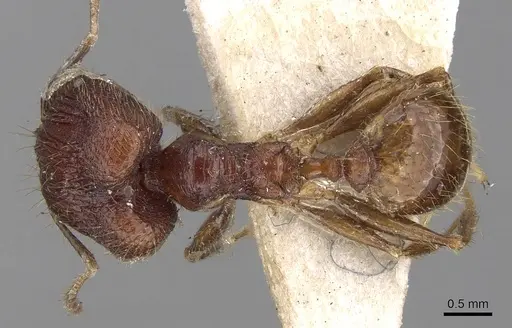
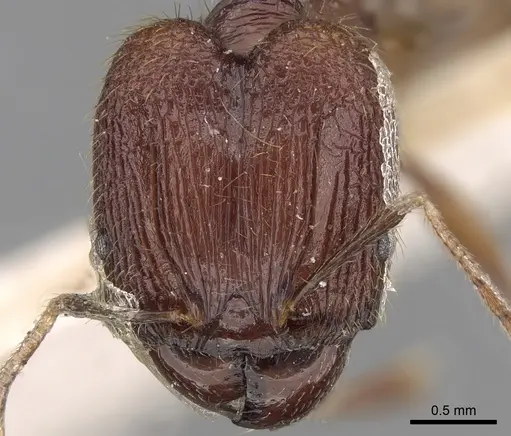
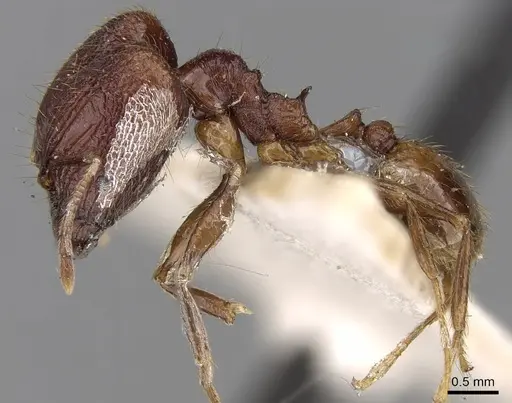
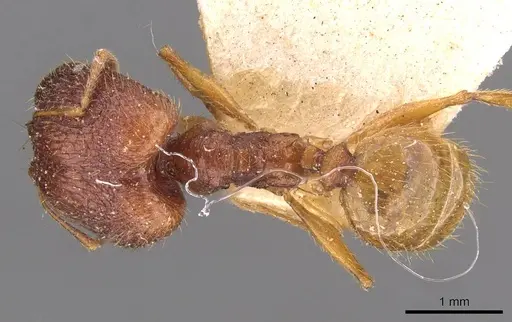
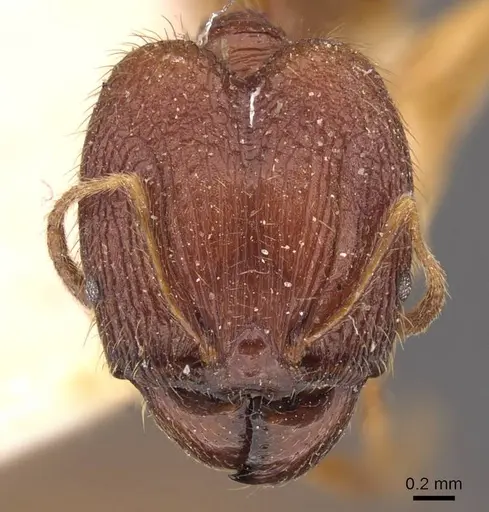
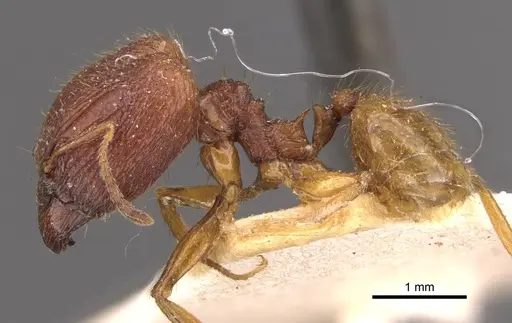
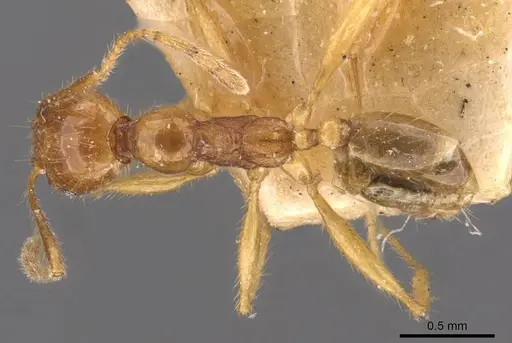
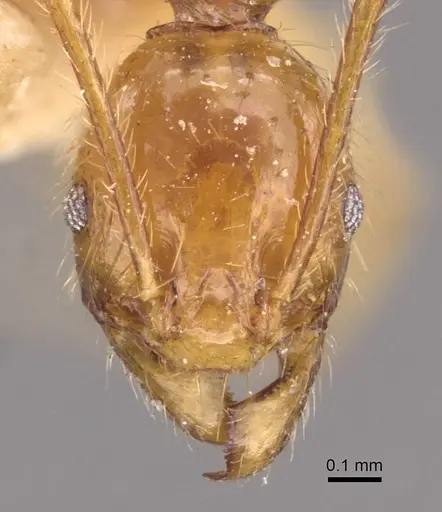
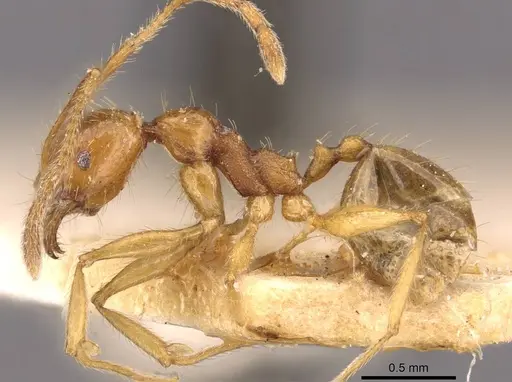
Pheidole roberti is a small ant species with soldiers measuring 4.5-5mm and bright light red coloration . It has two worker castes: minor workers and major soldiers . This species is abundant in India and southern China, comprising up to 66% of ant specimens in some areas . It nests in the ground and is found in natural vegetation at elevations around 1400-1500 meters . Pheidole roberti uses four food-carrying strategies: lifting, pulling, pushing, and group transport, and can lift objects 50 times their body weight .
Quick Summary
- Difficulty: Easy
- Origin & Habitat: Native to Indomalaya and Palaearctic regions, found across India (Gujarat, Karnataka, Kerala, Maharashtra, Meghalaya, Sikkim, Tamil Nadu, West Bengal), Pakistan (Gilgit-Baltistan), and southern China (Yunnan). They live in ground nests in natural vegetation areas at elevations of 1400-1500 meters [6][7][8][2].
- Colony Type: Based on Pheidole genus patterns, likely single-queen colonies with two worker castes, minor workers and major soldiers.
- Size & Growth:
- Queen: Estimated ~7-9mm, inferred from Pheidole genus patterns
- Worker: Major soldiers: 4.5-5mm [1], minor worker size data unavailable
- Colony: Up to several hundred workers, inferred from typical Pheidole colonies
- Growth: Moderate
- Development: Estimated 6-8 weeks at optimal temperature, inferred from genus patterns (First workers (nanitics) are smaller than normal workers.)
- Antkeeping:
- Temperature: Keep at 22-26°C, inferred from high-elevation habitat [3][2]
- Humidity: Keep substrate consistently moist but not waterlogged, inferred from ground-nesting behavior
- Diapause: Yes, based on seasonal activity patterns showing reduced abundance in winter [2]
- Nesting: Ground-nesting species. Use Y-tong, plaster, or soil nests with appropriate chambers scaled to colony size.
- Behavior: Pheidole roberti foragers operate individually and use four food-carrying strategies [5][9]. They are not aggressive toward keepers but majors defend the colony. Escape risk is moderate due to small minor workers, ensure fine-mesh barriers.
- Common Issues: colonies may decline in winter if not given proper cool period, they show sharp population drop in winter in the wild [2], minor workers are small enough to escape through standard barriers, use fine mesh and tight-fitting lids, overheating can be fatal, avoid temperatures above 30°C, founding colonies are slow to establish, patience is needed during the founding period, major soldiers may get stuck in narrow passages, ensure nest passages are at least 5mm wide
Housing and Nest Setup
Pheidole roberti is a ground-nesting species that does well in Y-tong, plaster, or soil nests [4]. For a founding queen, a small test tube setup works. As the colony grows, upgrade to a proper nest with passages at least 5mm wide for major soldiers [1]. The outworld should connect via a short foraging tube with water and feeding areas. Use fine-mesh barriers to prevent escape of small minor workers.
Feeding and Diet
Offer a varied diet: protein from small insects, carbohydrates from sugar water or honey, and seeds for major soldiers to crush [5]. Foraging is individual, ants discover food through chance encounters rather than recruitment [9]. Feed every 2-3 days and remove uneaten protein after 24 hours.
Temperature and Seasonal Care
Keep at 22-26°C during active seasons. Provide a winter diapause at 15-18°C for 2-3 months, reducing feeding and disturbance [2]. Avoid temperatures above 30°C.
Colony Development and Castes
Colonies have two worker castes: minor workers and major soldiers [1]. Major soldiers specialize in seed crushing and defense. First workers (nanitics) are smaller, and majors appear once the colony reaches 50-100 workers.
Behavior and Observation
Foragers use four food-carrying strategies: lifting, pulling, pushing, and group transport [5]. They forage individually, with food discovered by chance [9]. Majors defend the nest but are not aggressive toward keepers.
Frequently Asked Questions
How long does it take for Pheidole roberti to raise first workers?
Expect first workers in 6-8 weeks at optimal temperature, inferred from Pheidole genus patterns.
What do Pheidole roberti eat?
They accept protein (small insects), carbohydrates (sugar water, honey), and seeds [5].
Can I keep multiple Pheidole roberti queens together?
No, this species is likely monogyne. Combining queens typically results in fighting.
Do Pheidole roberti need hibernation?
Yes, based on seasonal activity data showing reduced abundance in winter [2].
What size colony do Pheidole roberti reach?
Up to several hundred workers, inferred from typical Pheidole colonies.
Are Pheidole roberti good for beginners?
Yes, they are considered easy to keep with moderate temperature needs and straightforward diet.
When should I move my colony to a formicarium?
Move once the colony reaches 30-50 workers, ensuring passages are wide enough for major soldiers.
Why is my Pheidole roberti colony declining?
Common causes include lack of winter diapause, overheating, poor escape prevention, or insufficient protein [2].
How do Pheidole roberti carry food?
They use lifting, pulling, pushing, and group transport strategies [5].
Report an Issue
The current care sheet is based fully on literature. See inconsistencies, or something that's incorrect? Please , it will be resolved after review from an admin. Contributing to the blogs tab also helps providing information, to make us be able to further improve the caresheets. Thank you for your support!
References

This caresheet is licensed under CC BY-SA 4.0 .
Community Blogs
Literature
Loading distribution map...Loading products...