
Pheidole quadriceps
- Sci. Name
- Pheidole quadriceps
- Tribe
- Attini
- Subfamily
- Myrmicinae
- Author
- Wilson, 2003
- Distribution
- Found in 1 countries
Introduction
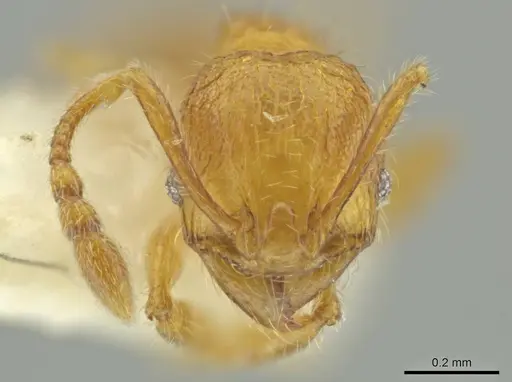
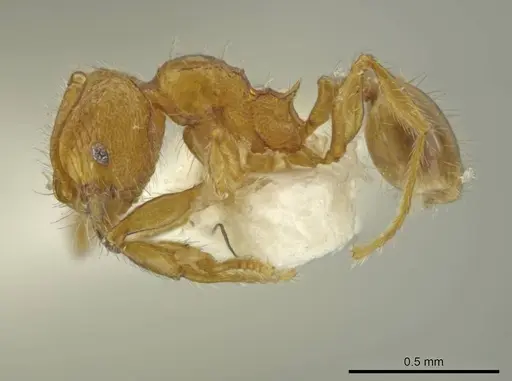
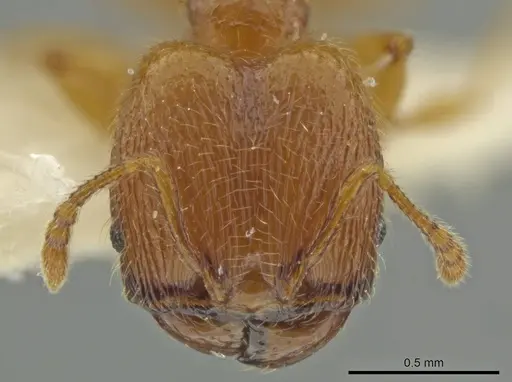
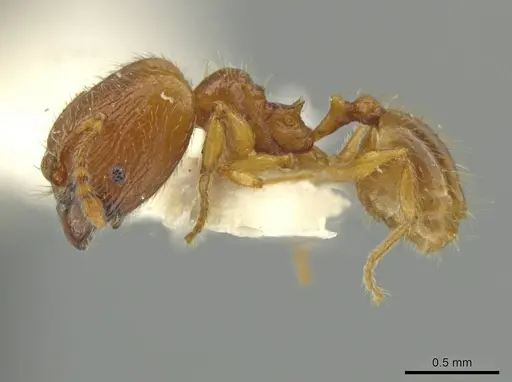
Pheidole quadriceps is a yellow ant species native to Colombia, belonging to the flavens group. Major workers have a distinctive square-shaped head when viewed front-on, while both majors and minors are yellow in color. Exact body sizes are unknown, but based on Pheidole genus patterns, workers are small with majors larger than minors. The species is known only from the Antioquia region, inhabiting second-growth forests at elevations between 600-980 meters . This species is notable for its limited distribution and the unique square head shape of major workers, which was described in 2003 .
Quick Summary
- Difficulty: Hard
- Origin & Habitat: Colombia (Antioquia region) in second-growth forest at 600-980m elevation [1][2][3]
- Colony Type: Unconfirmed, likely monogyne based on typical Pheidole patterns
- Size & Growth:
- Queen: size data unavailable
- Worker: ~1-3 mm, inferred from Pheidole genus
- Colony: Unknown, no data available
- Growth: Unknown
- Development: Based on typical Pheidole patterns, approximately 6-8 weeks at optimal temperature (Development timeline unconfirmed, estimate based on genus patterns)
- Antkeeping:
- Temperature: Keep warm and stable, roughly 22-27°C, based on Colombian lowland forest origin [1]
- Humidity: Keep the nest substrate consistently moist but not waterlogged, as this species inhabits forest habitats [1]
- Diapause: No diapause required, as this is a tropical species
- Nesting: Ground-nesting species, recommend naturalistic setup with soil or Y-tong nest with fine chambers
- Behavior: Behavior is unstudied. Based on genus patterns, majors may guard the nest while minors forage. Likely not aggressive but will defend the nest. Escape prevention is critical due to very small size, use fine mesh barriers.
- Common Issues: very small size makes escape likely without proper barriers, temperature sensitivity is unknown due to lack of species-specific data, wild-caught colonies may carry parasites or diseases
Species Background and Identification
Pheidole quadriceps was described by E.O. Wilson in 2003 from specimens collected in Antioquia, Colombia [4]. The species is distinguished by its square-headed major workers with angulated mesonotal convexity and large propodeal spines [3]. It is known only from second-growth forests in Antioquia at 600-980m elevation [1][2].
Housing and Nest Setup
Since this species is ground-nesting from Colombian forests, a naturalistic setup with moist soil or Y-tong nest is recommended [1]. Minor workers are very small, so nests must have fine tunnels. Escape prevention is critical, use fluon and fine mesh barriers.
Feeding and Diet
Pheidole species are typically granivorous and omnivorous. Offer small seeds, protein sources like fruit flies, and sugar water.
Temperature and Seasonal Care
As a species from Colombian forests at 600-980m, keep temperature around 22-27°C [1]. No diapause needed due to tropical origin.
Colony Development and Growth
No specific data on development. Based on Pheidole genus, first workers may emerge in 6-8 weeks at optimal temperature. Colony size is unknown.
Frequently Asked Questions
How long does it take for Pheidole quadriceps to produce first workers?
The egg-to-worker timeline is unconfirmed. Based on typical Pheidole genus development, expect approximately 6-8 weeks at optimal temperature.
What do Pheidole quadriceps ants eat?
Pheidole species are typically granivorous and omnivorous. Offer small seeds, protein sources like fruit flies, and sugar water.
Can I keep multiple queens of Pheidole quadriceps together?
The colony structure is unconfirmed. Combining unrelated queens is not recommended since it has not been documented for this species. Most Pheidole are single-queen colonies.
What temperature should I keep Pheidole quadriceps at?
Start around 22-27°C based on their Colombian origin [1]. Adjust based on colony behavior.
Are Pheidole quadriceps good for beginners?
This species cannot be recommended for beginners due to the complete lack of species-specific care data and small size, which increases escape risk.
How big do Pheidole quadriceps colonies get?
Maximum colony size is unknown, no colony size data exists for this species.
Do Pheidole quadriceps need hibernation?
Diapause requirements are unconfirmed. As a tropical Colombian species, they likely do not require true hibernation.
Why are my Pheidole quadriceps escaping?
Their extremely small size makes escape likely without excellent barriers. Use fluon on all edges, fine mesh on ventilation, and check for any gaps in your setup.
When should I move my colony to a formicarium?
Move to a formicarium when the test tube setup becomes crowded, typically when the colony reaches several dozen workers. For this poorly-studied species, err on the side of keeping them in the founding setup longer.
Report an Issue
The current care sheet is based fully on literature. See inconsistencies, or something that's incorrect? Please , it will be resolved after review from an admin. Contributing to the blogs tab also helps providing information, to make us be able to further improve the caresheets. Thank you for your support!
References

This caresheet is licensed under CC BY-SA 4.0 .
Community Blogs
JTLC000016504
View on AntWeb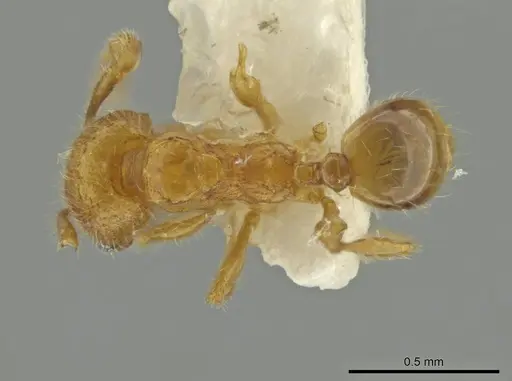
JTLC000016505
View on AntWeb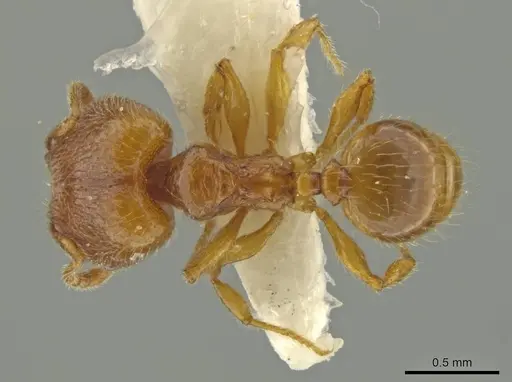
Literature
Loading distribution map...Loading products...