
Pheidole pygmaea
- Sci. Name
- Pheidole pygmaea
- Tribe
- Attini
- Subfamily
- Myrmicinae
- Author
- Wilson, 2003
- Distribution
- Found in 1 countries
Introduction
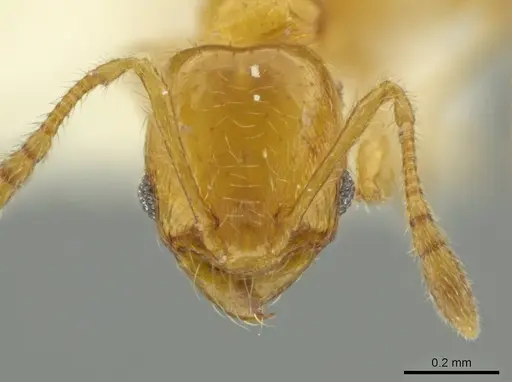
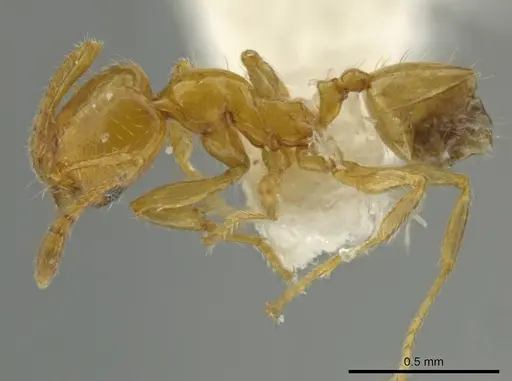
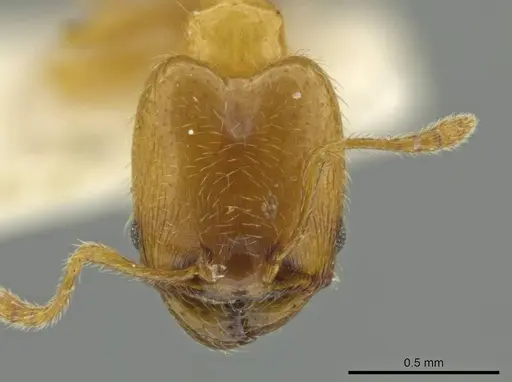
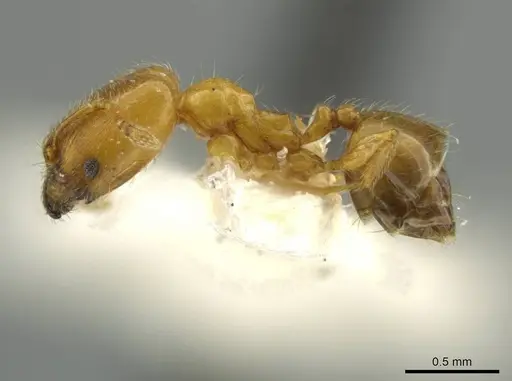
Pheidole pygmaea is an extremely tiny ant species from Colombia, first described by Wilson in 2003. It is known only from a handful of museum specimens, so there is almost no data on its biology. Both major and minor workers have smooth, glossy bodies in shades of medium to dark yellow, with unusually large eyes set far forward on the head . The major worker has an elongated head with a deep occipital notch, while the minor worker has a partially sculptured anterior head. The species is recorded from the Andean highlands of Valle del Cauca, Chocó, and Cundinamarca at 1900-2100 m elevation , and also from lowland Amazonian forests . This is one of the least studied Pheidole species in existence - the only specimens ever collected were taken in the early 1970s, and absolutely no biological, behavioral, or colony data exists in the scientific literature. Keeping P. pygmaea is essentially an experimental project where you will be learning alongside the scientific community.
Quick Summary
- Difficulty: Expert
- Origin & Habitat: Colombia (Valle del Cauca, Chocó, Cundinamarca) at 1900-2100 m elevation, and also recorded from Amazonian tierra firme forest [2][1][3].
- Colony Type: Unconfirmed, no colony structure data exists for this species. Based on typical Pheidole genus patterns, likely single-queen colonies, but this is an estimate.
- Size & Growth:
- Queen: Unknown, no queen specimens have been described [4]
- Worker: Size data unavailable, only head measurements exist (major head width 0.74 mm, minor head width 0.44 mm). These are extremely tiny ants [1].
- Colony: Unknown, no colony size data exists
- Growth: Unknown
- Development: Unknown, no development data exists for this species (No data available, this is one of the least studied ant species in existence)
- Antkeeping:
- Temperature: Based on the species' occurrence in both highland (1900-2100 m) and lowland Amazon forests, temperature preferences are unclear. Start around 20-24 °C and adjust based on colony activity [2][3].
- Humidity: No specific data. Given the range of habitats (highland cloud forest to Amazon lowland), moderate to high humidity (substrate consistently moist but not waterlogged) is a reasonable starting point.
- Diapause: Unknown, no seasonal data exists. Geographic range suggests no strong seasonal cue, but if sourced from highlands, a mild winter cooling may be beneficial.
- Nesting: No nesting data exists. Likely prefers soil-based nests like other Pheidole. Test tubes and standard formicariums likely work, but monitor for preferences.
- Behavior: No behavioral observations have been documented in scientific literature. Based on genus typical: likely seed-harvesting with some protein predation, moderate foraging activity, and standard Pheidole colony structure. Major workers have characteristic large heads for seed processing. Escape prevention should be excellent given their tiny size, these ants can likely squeeze through very small gaps.
- Common Issues: No biological data exists, everything about this species care is unknown, Tiny size makes escape prevention critical, use fine mesh and tight-fitting barriers, Cannot confirm any specific temperature or humidity requirements, No data on founding behavior or colony development timeline, Potential for mixed habitat preferences (highland vs lowland) makes temperature guesswork
Why Keep Pheidole pygmaea?
This is not a species for beginners. P. pygmaea is arguably the most poorly known Pheidole in the world, it exists only as a handful of museum specimens, and absolutely no research has been published on its biology, colony structure, or captive care. If you acquire this species, you will be doing original research just by keeping it alive. This makes it both exciting and challenging, you'll be contributing to our understanding of this species. The species was described from specimens collected in the 1970s, and no additional biological studies have been published since [1][4].
Housing and Setup
Since nothing is known about nesting preferences, start with standard Pheidole setups and observe. A test tube setup works well for founding colonies, queen sealed in a dark chamber with a water reservoir. Once workers emerge, transition to a small formicarium. Given their extremely tiny size (head widths: majors ~0.74 mm, minors ~0.44 mm), ensure your setup has no gaps or cracks that could allow escapes. Fine mesh barriers are essential. The species occurs in both highland (1900-2100 m) and lowland Amazon forests, so temperature preferences may vary. Start with moderate humidity (substrate moist) and temperatures in the low 20s °C, then adjust based on colony behavior [2][1][3].
Feeding
No dietary data exists for this species. As a Pheidole, it likely follows the genus pattern of seed-harvesting combined with protein consumption. Start with standard Pheidole foods: seeds (grass seeds work well), protein sources like small insects or mealworm pieces, and sugar water or honey. Given the tiny size of workers, ensure food pieces are appropriately small. The major workers have large heads (the genus characteristic for seed processing), so they likely can handle harder seeds than their tiny size would suggest. Offer a variety and observe what gets consumed [4].
What We Don't Know
It bears repeating: virtually nothing is known about this species. We have no data on: colony type (monogyne vs polygyne), founding behavior (claustral vs semi-claustral), development timeline (egg to worker), temperature preferences (beyond elevation inference), humidity needs, nuptial flight timing, queen size, colony size limits, or any behavioral observations. Every aspect of keeping this species will involve educated guesses based on related species, followed by observation of your specific colony. This is both the challenge and the potential contribution to science that keeping this species represents. Document your observations carefully, they may be the first biological data ever recorded for this ant [4].
Frequently Asked Questions
How hard is Pheidole pygmaea to keep?
Expert level, this is one of the least studied ant species in existence. There is no captive care data whatsoever. You'll be learning alongside the scientific community [4].
What do Pheidole pygmaea eat?
Unknown specifically, but likely follows typical Pheidole diet: seeds and protein. Start with small seeds, protein insects, and sugar sources. Adjust based on what your colony accepts [4].
What temperature do they need?
Not confirmed. The species occurs in both highland (1900-2100 m) and lowland Amazon forests, so preferences may vary. Start around 20-24 °C and observe colony activity [2][3].
How big do colonies get?
Unknown, no colony size data exists for this species. Related Pheidole species typically reach hundreds to a few thousand workers [4].
Is this species monogyne or polygyne?
Unconfirmed, no colony structure data exists. Most Pheidole species are monogyne (single queen), but this hasn't been documented for P. pygmaea [4].
Do they need hibernation?
Unknown, no seasonal data exists. The geographic range (both highland and lowland) suggests no strong seasonal cue, but if sourced from highlands, a mild winter cooling may be beneficial [4].
How long does development take?
Unknown, no development timeline has been documented. Based on related species, expect several months from egg to first worker [4].
Can I keep multiple queens together?
Not recommended, this hasn't been studied and combining unrelated queens of an unknown species is risky. Start with an isolated founding queen [4].
Where does Pheidole pygmaea live?
Known from Colombia: Andean highlands (Valle del Cauca, Chocó, Cundinamarca) at 1900-2100 m, and also from Amazonian tierra firme forests. The type locality is near Cali [2][1][3].
Report an Issue
The current care sheet is based fully on literature. See inconsistencies, or something that's incorrect? Please , it will be resolved after review from an admin. Contributing to the blogs tab also helps providing information, to make us be able to further improve the caresheets. Thank you for your support!
References

This caresheet is licensed under CC BY-SA 4.0 .
Community Blogs
CASENT0645857
View on AntWeb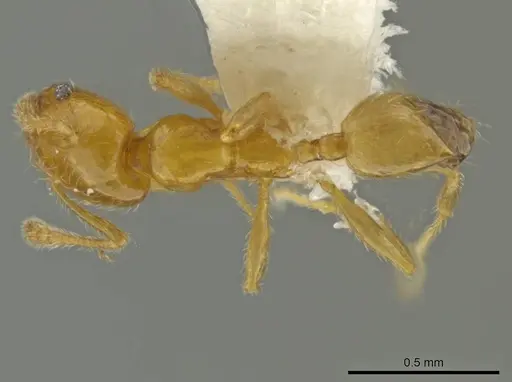
JTLC000016503
View on AntWeb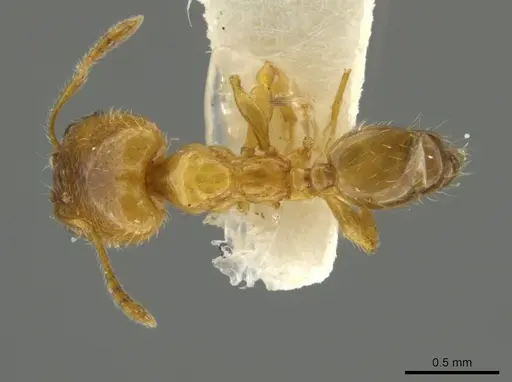
Literature
Loading distribution map...Loading products...