
Pheidole psilogaster
- Sci. Name
- Pheidole psilogaster
- Tribe
- Attini
- Subfamily
- Myrmicinae
- Author
- Wilson, 2003
- Distribution
- Found in 4 countries
Introduction
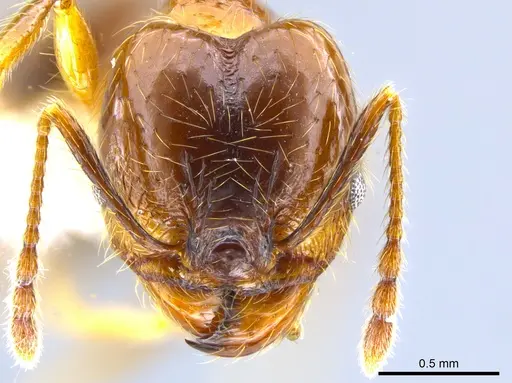
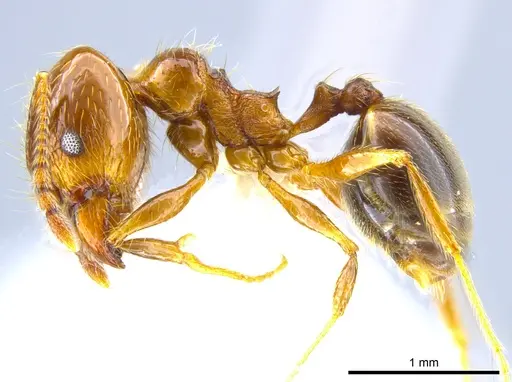
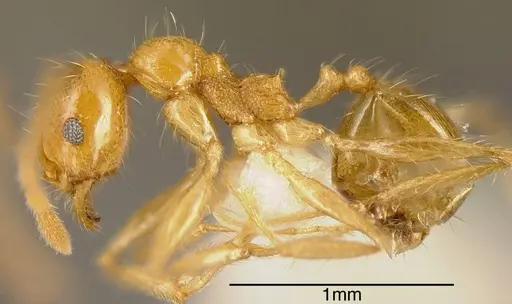
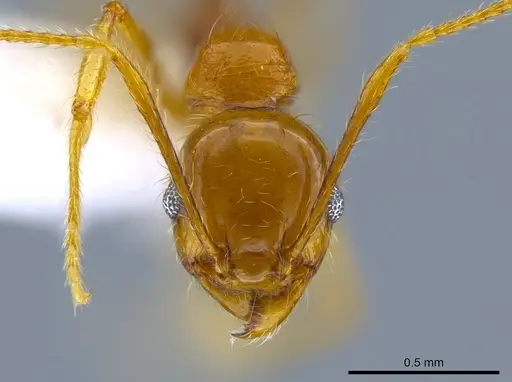
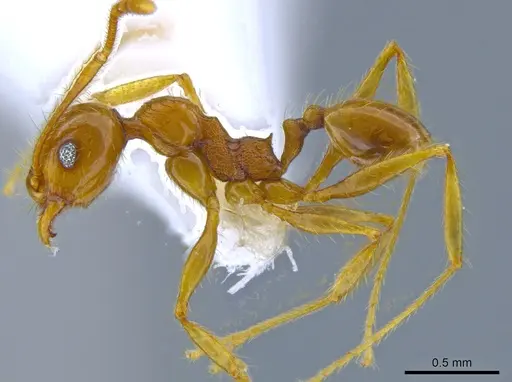
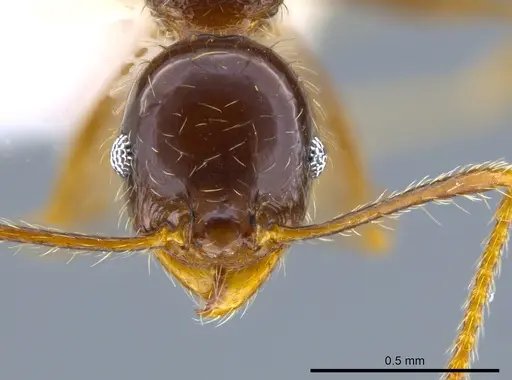
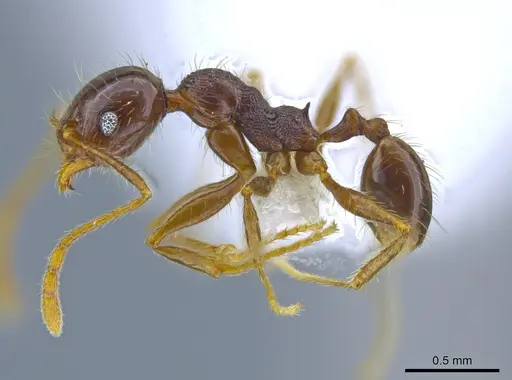
Pheidole psilogaster is a dimorphic ant (two distinct worker sizes) native to wet forests of Central America, from southern Mexico to Costa Rica. The species name 'psilogaster' means 'bare stomach', referring to the unique velvet-like covering of short hairs on the gaster (abdomen) of major workers, which contrasts with longer upright hairs elsewhere on their body . Workers are small: major workers are about 1mm in head length and minor workers about 0.7mm . This species nests in standing dead wood and leaf litter on the forest floor . Major and minor workers often forage together at baits .
Quick Summary
- Difficulty: Medium
- Origin & Habitat: Wet forests of Central America from southern Mexico to Costa Rica, including Guatemala, Honduras, and Nicaragua, at elevations from sea level to 1400m [1][2][3].
- Colony Type: Unknown. Pheidole are typically single-queen (monogyne) but this is unconfirmed for P. psilogaster.
- Size & Growth:
- Queen: Unknown, inferred from Pheidole genus, queens likely around 5-8mm total length.
- Worker: Exact total length not recorded, inferred from Pheidole genus, minor workers about 2-3mm, major workers about 3-5mm total length.
- Colony: Unknown.
- Growth: Unknown.
- Development: Estimated 6-8 weeks based on related Pheidole species, actual data unknown. (Assumes warm temperatures around 24-26°C.)
- Antkeeping:
- Temperature: Warm and stable,22-26°C recommended due to wet forest habitat [1][2].
- Humidity: High humidity essential, keep substrate consistently moist but not waterlogged, matching their wet forest environment [1][2].
- Diapause: No true hibernation needed. Being a tropical low-elevation species, they do not require cold dormancy.
- Nesting: In the wild, nests in standing dead wood and leaf litter [1]. In captivity, use Y-tong (AAC) or plaster nests that retain high humidity, or naturalistic setups with rotting wood pieces.
- Behavior: Pheidole psilogaster is a dimorphic species with minor and major workers. Workers are active on the forest floor and readily recruit to food sources. They are not aggressive toward keepers and their sting is mild. Their small size (under 3mm) makes escape prevention critical – use fine mesh and tight seals. Major workers are slightly larger but still small.
- Common Issues: high humidity needs can lead to mold if ventilation is poor – balance moisture with airflow., very small size means even tiny gaps in the enclosure can lead to escapes – use escape-proof barriers., wild-caught colonies may carry parasites, quarantine new colonies carefully., founding biology is unconfirmed, so starting a colony from a queen may be challenging.
Housing and Nest Setup
Pheidole psilogaster works well in Y-tong (AAC) or plaster nests that retain high humidity, matching their wet forest habitat. In the wild, they nest in standing dead wood and leaf litter [1]. You can also provide pieces of rotting wood or cork bark inside a naturalistic outworld. The nest chambers should be small and tight, scaled to their tiny size. Maintain a humidity gradient: the nest stays damp, while the outworld can be drier. Good ventilation is key to prevent mold but avoid creating drafts that dry out the nest. Use a water reservoir or misting to keep substrate moist but not flooded.
Feeding and Diet
In the wild, workers are commonly found at baits on the forest floor, suggesting they are opportunistic foragers [1][2]. Offer a varied diet: protein sources (small insects like fruit flies, wingless flies, or small crickets) twice weekly, and a constant supply of sugar (honey water, sugar water, or maple syrup). They likely also take small seeds, as many Pheidole do. Remove uneaten prey after 24-48 hours to prevent mold. Major workers may help process larger food items or seeds.
Temperature and Seasonal Care
Being a wet forest species from Central America, Pheidole psilogaster prefers warm, stable temperatures in the 22-26°C range [1][2]. If your room is cooler, use a heating cable on top of the nest (not underneath, to avoid drying it out). Monitor the colony: if they avoid the heat, reduce it, if they cluster on it, increase slightly. Since they are tropical, no true hibernation is needed. A slight drop in temperature during winter months is harmless but not necessary.
Understanding Major and Minor Workers
Pheidole psilogaster has two distinct worker castes: minor workers (smaller, handle most foraging and brood care) and major workers (larger, with a larger head and a gaster covered in dense short hairs – the 'psilogaster' trait) [1]. The upper side of the major worker's gaster is covered with a plush layer of short, subdecumbent hairs, and longer erect hairs are absent or very few. Minor workers have a smooth and shiny pronotum [1]. Head measurements: major workers have a head width of 0.94mm, minor workers 0.58mm [1]. In a colony, minors are much more numerous than majors. This is normal.
Colony Founding and Growth
The founding method for Pheidole psilogaster is unconfirmed. Most Pheidole are claustral (queen raises first brood without leaving the nest, using stored reserves), but this has not been directly observed for this species. If claustral, first workers (nanitics) would likely emerge after about 6-8 weeks at warm temperatures (inferred from genus). Exact colony growth rate and maximum size are unknown. Provide stable warmth and high humidity throughout founding. A founding queen can be kept in a small test tube setup with a water reservoir at one end.
Frequently Asked Questions
How long does it take for Pheidole psilogaster to have first workers?
This is not documented for this species. If founding is claustral (as in most Pheidole), first workers might emerge after about 6-8 weeks at warm temperatures around 24-26°C. This is an estimate based on related species.
What do Pheidole psilogaster ants eat?
They accept a variety of foods. Offer small insects (fruit flies, small crickets) twice weekly as protein, and constant access to sugar water or honey water. They may also take small seeds. This is based on their foraging at baits in the wild [1].
What temperature do Pheidole psilogaster ants need?
Keep them warm at 22-26°C. This matches their natural wet forest habitat in Central America [1][2]. Room temperature in most homes is fine, use a heating cable if needed.
Are Pheidole psilogaster good for beginners?
This species is rated medium difficulty. The main challenges are maintaining high humidity without mold and preventing escape due to their small size. They are not aggressive and have mild sting. If you can provide stable warm, humid conditions, they can be a rewarding species to keep.
How big do Pheidole psilogaster colonies get?
The maximum colony size for this species is unknown. Related Pheidole can reach several thousand workers, but this has not been documented for P. psilogaster.
Do Pheidole psilogaster need hibernation?
No. As a tropical species from low-elevation wet forests, they do not require a cold dormancy period. Keep warm year-round.
What size nest do Pheidole psilogaster need?
Use a nest with small, tight chambers. Y-tong (AAC) or plaster nests with narrow passages work well. The nest should retain high humidity and be dark. Avoid tall, open spaces – they feel insecure in large cavities.
Can I keep multiple Pheidole psilogaster queens together?
No data exists. Many Pheidole are monogyne (single queen). It is not recommended to combine unrelated queens as they will likely fight. If you try, provide plenty of space and monitor closely.
Why are my Pheidole psilogaster dying?
Common causes include: low humidity (substrate too dry), insufficient warmth (below 20°C), mold from stagnant conditions, or parasites from wild-caught colonies. Ensure humidity is high but with some airflow, temperature stable 22-26°C, and clean equipment.
Report an Issue
The current care sheet is based fully on literature. See inconsistencies, or something that's incorrect? Please , it will be resolved after review from an admin. Contributing to the blogs tab also helps providing information, to make us be able to further improve the caresheets. Thank you for your support!
References

This caresheet is licensed under CC BY-SA 4.0 .
Community Blogs
CASENT0283238
View on AntWeb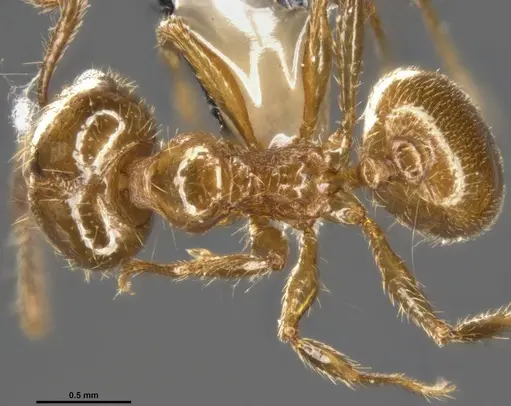
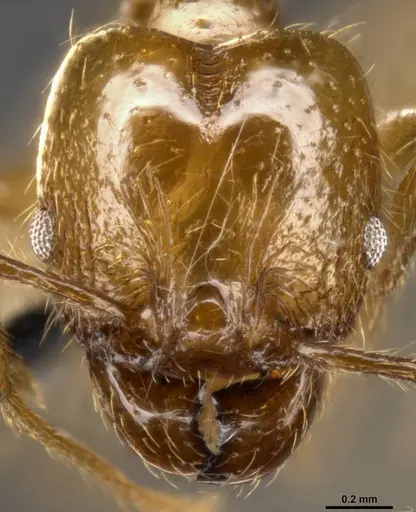
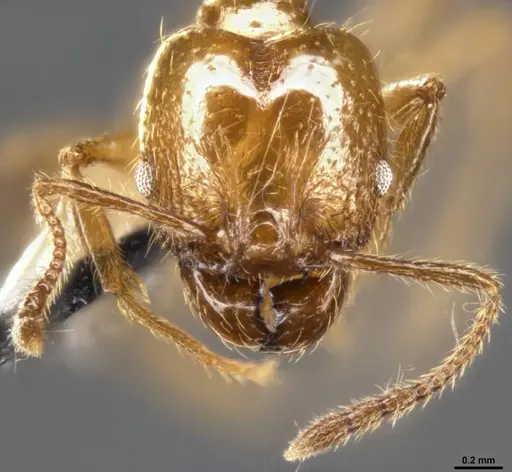
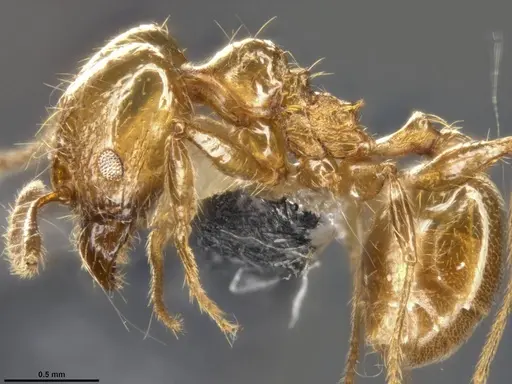
CASENT0628081
View on AntWeb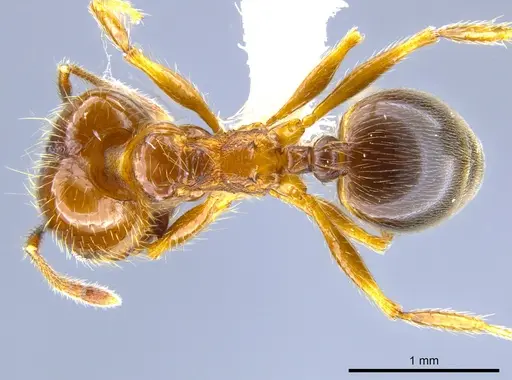
CASENT0635508
View on AntWeb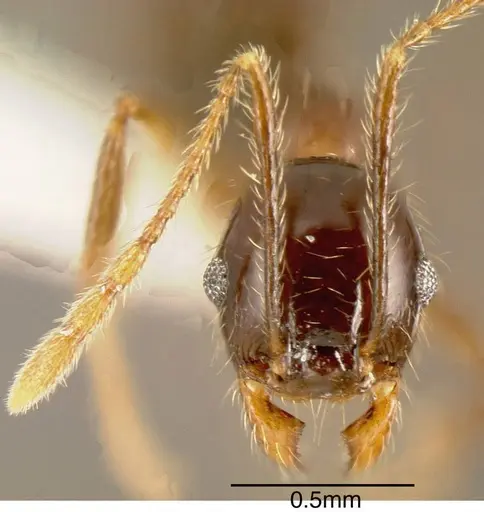
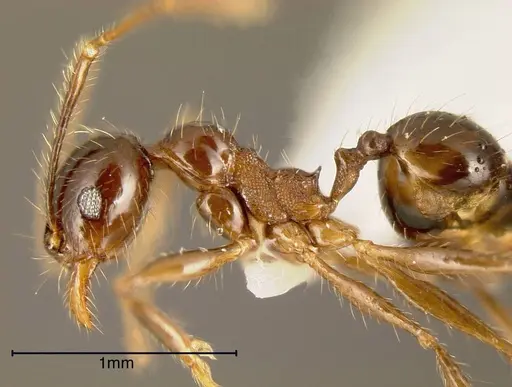
INBIOCRI001243032
View on AntWeb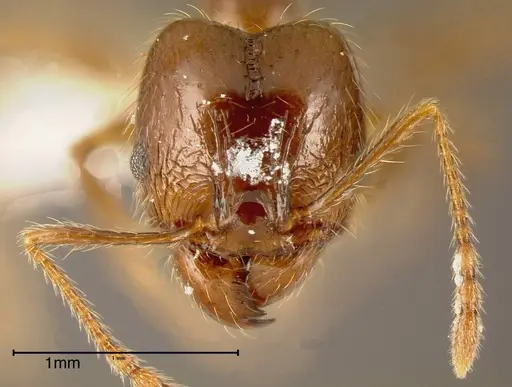
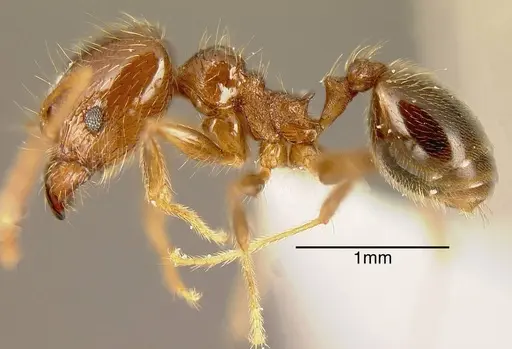
INBIOCRI002272046
View on AntWeb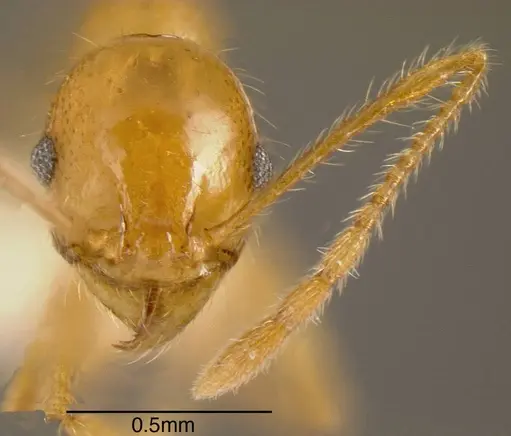
JTLC000014013
View on AntWeb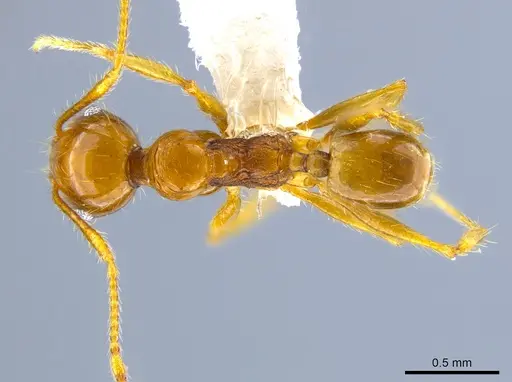
JTLC000014037
View on AntWeb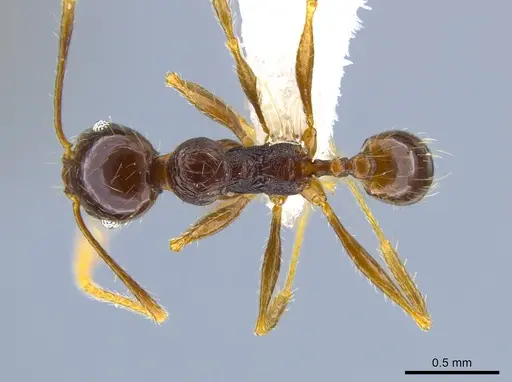
Literature
Loading distribution map...Loading products...