
Sand-loving Big-headed Ant
Pheidole psammophila
- Sci. Name
- Pheidole psammophila
- Tribe
- Attini
- Subfamily
- Myrmicinae
- Author
- Creighton & Gregg, 1955
- Common Name
- Sand-loving Big-headed Ant
- Distribution
- Found in 2 countries
Introduction
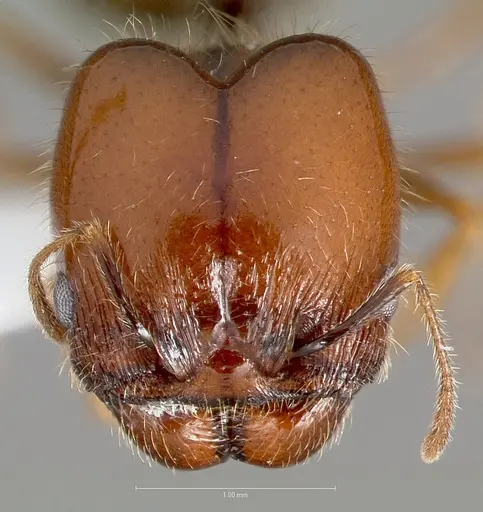
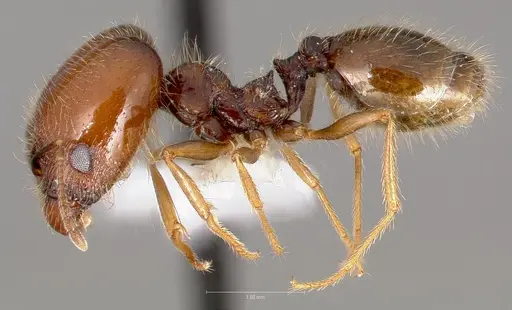
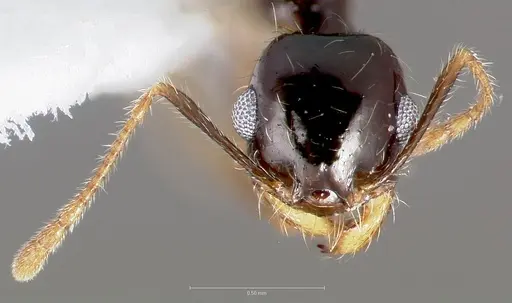
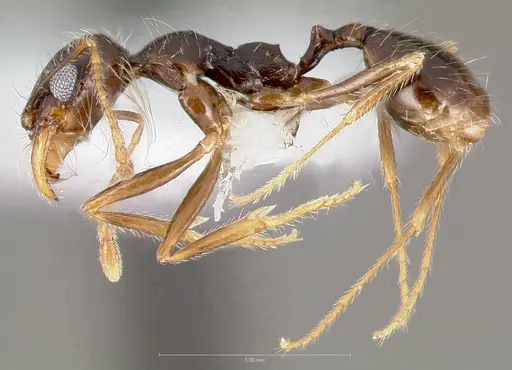
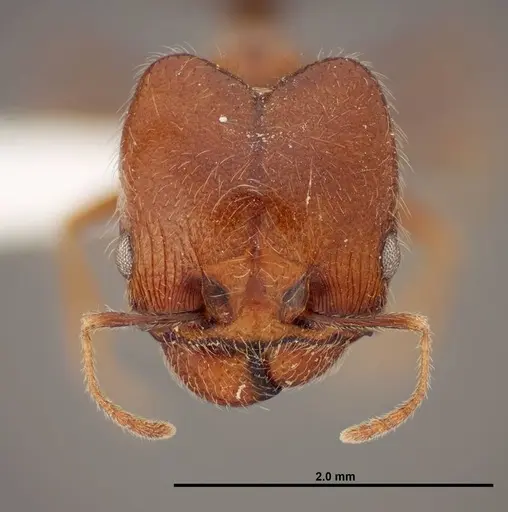
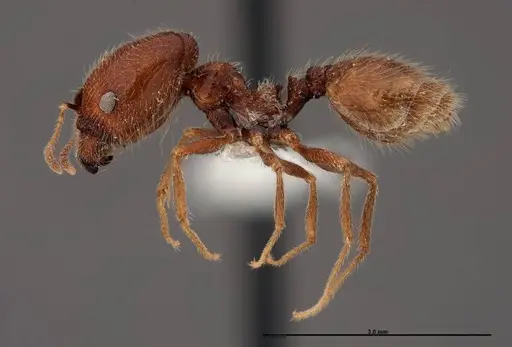
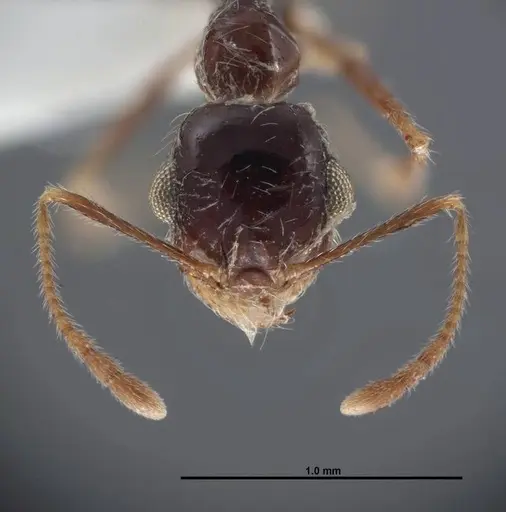
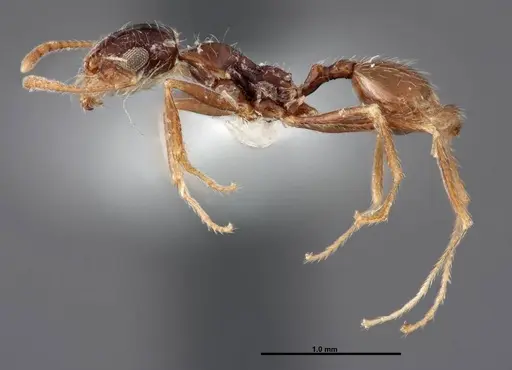
Pheidole psammophila is a seed-harvesting ant found in the sandy deserts of southern California, western Arizona, and Sonora, northern Mexico . They nest specifically in shifting sand dunes, an extreme environment that most other ants avoid because the sand constantly covers nest openings . The name 'psammophila' means 'sand-lover' in Greek, reflecting this strict habitat preference . Workers come in two castes. Minors are medium brown with contrasting yellow mandibles and possess a specialized psammophore, a basket of long, curved hairs on the underside of their head used to carry sand particles . Majors have a clear reddish-yellow head and mandibles, with a medium reddish-brown body and light reddish-brown gaster and appendages . Both castes have large, forward-set eyes . What makes this species unique is its extreme specialization to shifting sand dunes and its seed-harvesting lifestyle. You will often find chaff piles around their nest entrances, which proves they collect and store seeds . Unlike many ants that use mass recruitment, Pheidole psammophila forages solitarily with limited recruitment . They are active primarily during the summer months .
Quick Summary
- Difficulty: Medium
- Origin & Habitat: Sandy deserts of southern California, western Arizona, and Sonora, northern Mexico, from sea level to 75m elevation [1][2][3]. They nest exclusively in sand dunes and very sandy areas, particularly shifting sand [1][4].
- Colony Type: Colony structure is unconfirmed.
- Size & Growth:
- Queen: size data unavailable
- Worker: size data unavailable
- Colony: Unknown
- Growth: Unknown
- Development: Unknown (Development speed depends on temperature and food availability.)
- Antkeeping:
- Temperature: Keep warm and stable, roughly low-to-mid 20s°C. They tolerate desert heat well.
- Humidity: Keep the nest substrate dry. They nest in shifting sand dunes, which are extremely dry environments. Do not keep the nest wet.
- Diapause: Yes, likely requires winter diapause based on their geographic range and summer activity records [4].
- Nesting: Nests in exposed, shifting sand dunes [1][3][4]. Provide a loose, sandy substrate that mimics their natural dune habitat. Avoid compact clay or dense soil.
- Behavior: Temperament is generally docile, but majors can sting if threatened. They forage solitarily with limited recruitment rather than mass recruiting [3]. Escape risk is moderate, use standard barriers.
- Common Issues: shifting sand can collapse setups, provide stable sandy substrate that holds tunnels, overwatering kills this desert species, keep substrate dry, not wet, colonies may be slow to establish because they forage solitarily rather than recruiting heavily to food, major workers are large and may struggle in narrow setups, provide appropriately sized housing, winter dormancy can be mistaken for colony death, expect reduced activity in cooler months
Housing and Nest Setup
Pheidole psammophila requires housing that mimics its natural sandy dune habitat. The most important element is the substrate. Use coarse, grainy sand that drains well and holds tunnel structures. A naturalistic setup with a deep sand layer works best, allowing workers to create and maintain tunnels like they would in shifting sand dunes. Avoid compact or clay-heavy substrates that do not drain. Test tubes can work if filled with sandy soil mix rather than just cotton and water, but watch for collapse. Foraging areas should connect to the nest via tubes wide enough for the major workers to pass through comfortably. Because they nest in exposed sandy areas in the wild, they do not need dark nesting chambers and can tolerate some light in the nest area [1][4].
Feeding and Diet
As seed harvesters, these ants primarily collect and store seeds. Offer a variety of seeds like millets, chia, and flax. They also need protein for brood development. Offer small insects like fruit flies, small crickets, or mealworm pieces. Sugar water or honey can be offered occasionally but is not a primary food source for this species. Feed seeds continuously and protein two to three times per week. Remove uneaten seeds if they show signs of mold. Since they forage solitarily with limited recruitment, place food in the foraging area and expect workers to discover it individually rather than swarming in mass [3][1].
Temperature and Seasonal Care
Keep colonies at a warm, stable temperature, roughly low-to-mid 20s°C. As desert dwellers from southern California and Arizona, they tolerate warm conditions well. A heating cable on one side of the nest can create a temperature gradient. Activity records show them foraging from July to September, indicating they are most active during summer months [4]. During winter, expect reduced activity and a dormancy period. If your room temperature drops below 15°C in winter, the colony may slow down significantly. This is normal and not a sign of problems. Do not overheat during dormancy periods. A cool room around 10-15°C is appropriate if the colony shows signs of resting [4].
The Psammophore: A Unique Adaptation
The psammophore is this species' most notable physical adaptation. It is a basket-like arrangement of very long, curved hairs on the underside of the minor worker's head. This sand basket allows workers to carry loose particles efficiently, which is essential when living in constantly shifting sand dunes [1]. In captivity, you might observe this behavior if you provide loose sandy substrate. Workers may move sand particles while maintaining their tunnels. This specialization also means they prefer grainy, loose substrates over compact ones. The large forward-set eyes of both castes are also notable. These eyes likely help them navigate and spot predators in open, exposed sandy environments where cover is minimal [1].
Colony Growth and Development
The founding behavior of Pheidole psammophila is unconfirmed. We do not know if queens found colonies claustrally or semi-claustrally. Once the colony establishes, growth is likely moderate. Seed harvesters do not have the explosive growth of some predatory species. Major workers appear as the colony matures. The colony will continue growing as long as resources are available and space permits. Colony size and development timelines are unknown for this specific species [1][3].
Frequently Asked Questions
Can I keep Pheidole psammophila in a test tube?
Test tubes can work but require modification. Use a sandy soil mix rather than just cotton and water, as this species needs loose substrate for tunneling. However, standard test tubes may be too narrow for major workers. Consider a larger setup like a Y-tong or naturalistic sandbox. The key is providing grainy, drainable substrate they can move [1].
How long until first workers appear?
Development timelines are unknown for this species. Expect several weeks to a few months for the first workers to emerge, depending on temperature and food availability. The queen will remain in her founding chamber until the first workers emerge.
What do Pheidole psammophila eat?
They are seed harvesters. Offer various small seeds like millet, chia, and flax. They also need protein from small insects like fruit flies, small crickets, or mealworm pieces. Sugar water or honey can be offered occasionally [3][1].
Do they need hibernation?
Yes, they likely require a winter rest period. Based on their origin in southern California and Arizona deserts and activity records showing summer foraging from July to September, they probably experience reduced activity during cooler months [4].
Are Pheidole psammophila good for beginners?
Medium difficulty. They are not the easiest species but not impossible for beginners. The main challenges are providing appropriate sandy housing and not overwatering. Their unique sand-dwelling habit requires more specific setup than typical soil-nesting ants.
How big do colonies get?
Colony size is not precisely documented for this species. We do not know the maximum number of workers.
When should I move them to a formicarium?
Wait until the colony has established a stable worker force and the founding setup shows signs of stress. For this sandy-nesting species, a naturalistic setup with deep sand works better than typical formicariums.
Why are workers not recruiting to food?
This is normal behavior. Pheidole psammophila forages solitarily with limited recruitment, unlike many ant species that use mass recruitment. Workers find food individually rather than leading others to food sources. Be patient, and food will be discovered [3].
Can I keep multiple queens together?
Colony structure is unconfirmed, so we do not know if they accept multiple queens. Assume they are single-queen colonies and never combine unrelated queens. Combining queens will likely result in fighting.
Report an Issue
The current care sheet is based fully on literature. See inconsistencies, or something that's incorrect? Please , it will be resolved after review from an admin. Contributing to the blogs tab also helps providing information, to make us be able to further improve the caresheets. Thank you for your support!
References

This caresheet is licensed under CC BY-SA 4.0 .
Community Blogs
CASENT0005767
View on AntWeb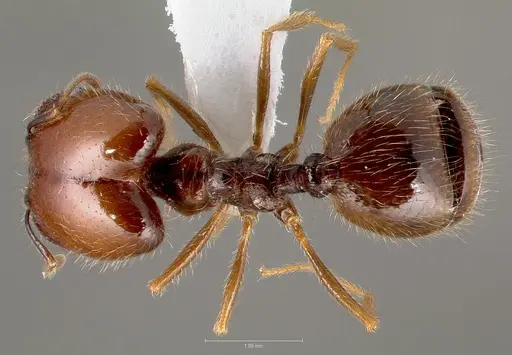
CASENT0005768
View on AntWeb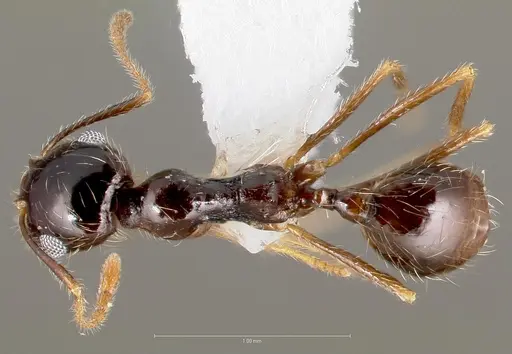
FMNHINS0000062690
View on AntWeb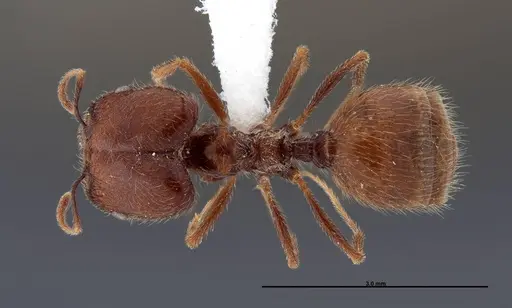
FMNHINS0000062774
View on AntWeb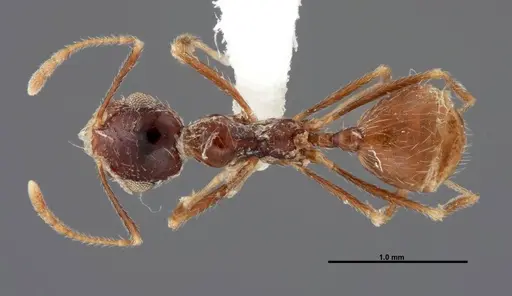
Literature
Loading distribution map...Loading products...