
Pheidole planifrons
- Sci. Name
- Pheidole planifrons
- Tribe
- Attini
- Subfamily
- Myrmicinae
- Author
- Santschi, 1920
- Distribution
- Found in 3 countries
Introduction
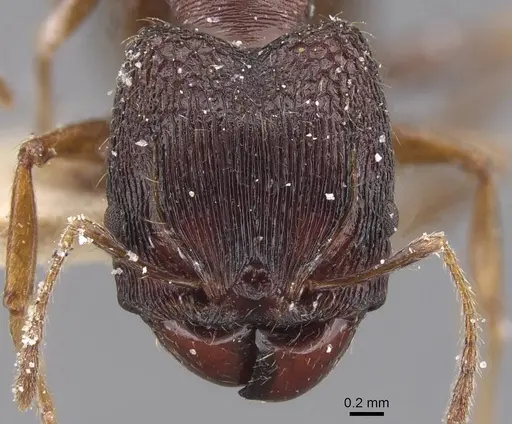
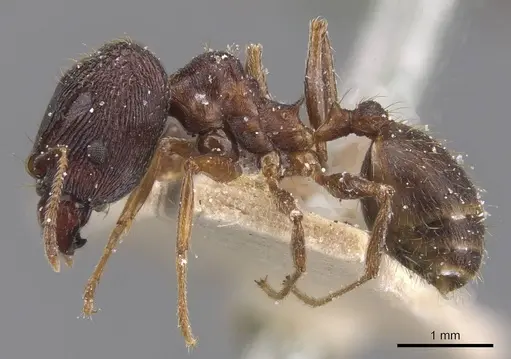
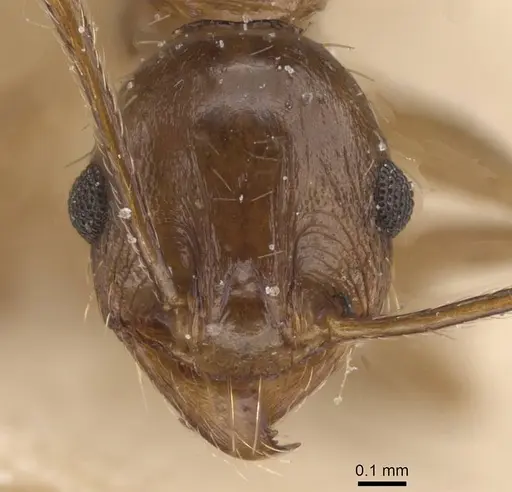
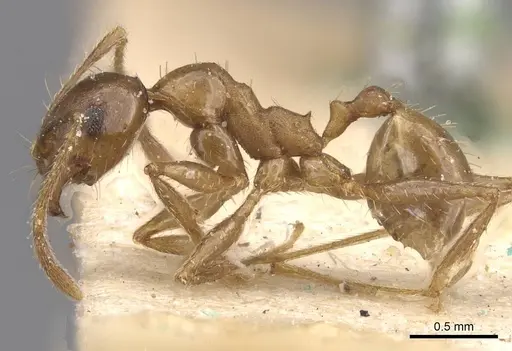
Pheidole planifrons is an ant species native to Southeast Asia, found in northern Vietnam, southern Vietnam, Thailand, Java, and Yunnan, China . It inhabits forest edges, woody areas, and leaf litter, often nesting in soil or rarely in termite mounds . This species has a caste system with major and minor workers, but specific body size data is unavailable . This ant is a forest specialist that avoids disturbed habitats like rubber plantations, with zero abundance in such areas while thriving in natural forests . Its preference for intact forest environments makes it challenging for keepers to replicate in captivity.
Quick Summary
- Difficulty: Medium
- Origin & Habitat: Southeast Asia, northern Vietnam, southern Vietnam, Thailand, Java, and Yunnan province (China). Found in forest edges, woody habitats, leaf litter in rainforests and limestone forests at 552-840m elevation [1][2][4].
- Colony Type: Based on Pheidole patterns, likely single-queen (monogyne) colonies with major and minor workers.
- Size & Growth:
- Queen: Size data unavailable, inferred from Pheidole genus (~5-7mm)
- Worker: Size data unavailable for workers, major and minor castes exist
- Colony: Unknown maximum, typical Pheidole colonies reach several hundred workers
- Growth: Moderate, estimated based on related species
- Development: 6-8 weeks (estimated based on typical Pheidole development at 24-26°C) (Development time estimated from genus-level data, direct measurements not available for this species)
- Antkeeping:
- Temperature: Keep warm, roughly 24-28°C, based on tropical habitat [1][2].
- Humidity: Keep substrate consistently moist but not waterlogged, based on forest floor habitat [1][3].
- Diapause: No, tropical species, does not require hibernation [1][2].
- Nesting: Soil-nesting species, provide moist substrate for burrowing [1][3].
- Behavior: This species is generally peaceful and not aggressive toward keepers. As a leaf litter specialist, they are active foragers. Escape risk is moderate due to small minor workers, use fine mesh barriers.
- Common Issues: escape prevention is critical due to small minor workers, use fine mesh and tight-fitting lids [1], colonies may struggle in dry conditions, this forest species needs consistent humidity [1][3], not suitable for beginners due to specific forest habitat requirements, avoid keeping in completely artificial setups, they need access to soil/substrate for nesting [1][3], rubber plantation data shows they cannot survive in disturbed habitats, do not keep in bare plastic containers [4]
Housing and Nest Setup
Pheidole planifrons requires a setup that mimics its natural forest floor habitat. Use a naturalistic terrarium with moist soil substrate (at least 5-8cm deep) or a Y-tong nest with soil-filled chambers. This species does not do well in bare plastic test tube setups long-term, they need actual soil or substrate to thrive. Include leaf litter in the outworld for foraging enrichment. Ensure the nest area stays humid while the outworld can be slightly drier. [1][3]
Feeding and Diet
Specific diet data is unavailable for this species. Based on general Pheidole behavior, they may accept small insects and sugar sources, but this is not confirmed. Ensure food items are appropriately sized for minor workers.
Temperature and Humidity Management
Maintain temperatures between 24-28°C year-round. This tropical species does not tolerate cool conditions. Humidity should remain moderate to high, with consistently moist substrate but not waterlogged. [1][2][3]
Colony Development and Growth
Colonies start with a founding queen, but founding type is unconfirmed. Growth rate is moderate, and development timeline is estimated based on genus patterns. First workers appear approximately 6-8 weeks after founding at optimal temperature.
Behavior and Foraging
This species is a ground-nesting forager active in leaf litter. Behavior is generally peaceful, but specific temperament data is unavailable. Workers search for food in the outworld and establish foraging trails. [1][3][6]
Seasonal Care
As a tropical species, no diapause is needed. Seasonal abundance patterns exist in the wild, but stable conditions are recommended in captivity [6].
Escape Prevention
Minor workers are small, so use fine mesh barriers and tight-fitting lids to prevent escapes. Check connections regularly and apply barriers to potential escape routes. [1]
Frequently Asked Questions
Can I keep Pheidole planifrons in a test tube setup?
Test tube setups are not ideal long-term due to soil-nesting needs. Use a naturalistic setup with moist soil or a Y-tong nest [1][3].
How long until first workers appear in Pheidole planifrons?
Expect first workers approximately 6-8 weeks after founding at optimal temperature, based on genus-level estimates [1].
What do Pheidole planifrons eat?
Specific diet data is unavailable. Pheidole species are typically omnivorous, but this is not confirmed for this species.
Are Pheidole planifrons good for beginners?
This species is not ideal for complete beginners due to specific humidity and habitat requirements [4][5].
Do Pheidole planifrons need hibernation?
No, this is a tropical species and does not require hibernation [1][2].
How big do Pheidole planifrons colonies get?
Maximum colony size is not documented, but typical Pheidole colonies reach several hundred workers.
When should I move Pheidole planifrons to a formicarium?
Move the colony when it outgrows its founding setup or when workers are actively tunneling. Provide a naturalistic setup with deep moist substrate [1][3].
Why are my Pheidole planifrons dying?
Common causes include dry conditions, temperatures below 20°C, poor escape prevention, or artificial setups without soil. Ensure habitat mimics forest floor with moist substrate [1][3][4].
Can I keep multiple Pheidole planifrons queens together?
Pheidole planifrons is typically monogyne, but specific data is unavailable. Combining unrelated queens is not recommended.
Report an Issue
The current care sheet is based fully on literature. See inconsistencies, or something that's incorrect? Please , it will be resolved after review from an admin. Contributing to the blogs tab also helps providing information, to make us be able to further improve the caresheets. Thank you for your support!
References

This caresheet is licensed under CC BY-SA 4.0 .
Community Blogs
CASENT0913394
View on AntWeb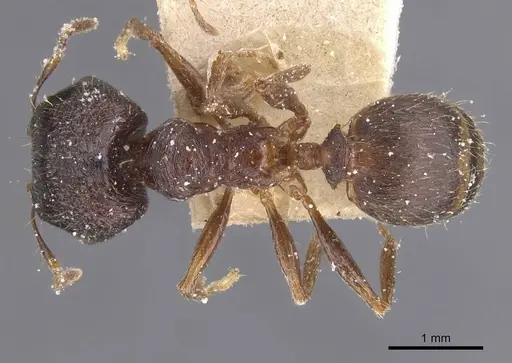
CASENT0913395
View on AntWeb
Literature
Loading distribution map...Loading products...