
Pheidole pepo
- Sci. Name
- Pheidole pepo
- Tribe
- Attini
- Subfamily
- Myrmicinae
- Author
- Wilson, 2003
- Distribution
- Found in 2 countries
Introduction
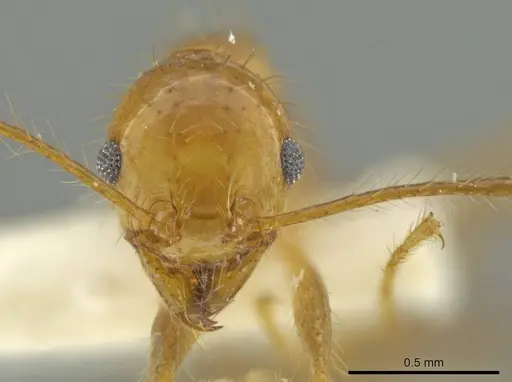
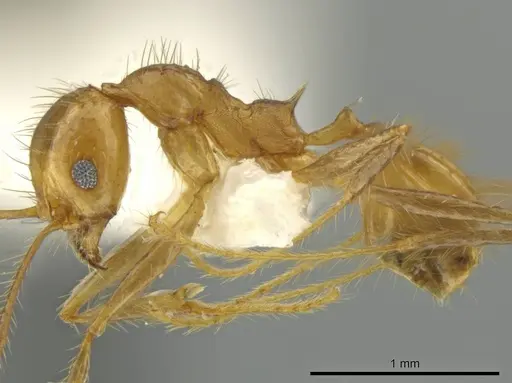
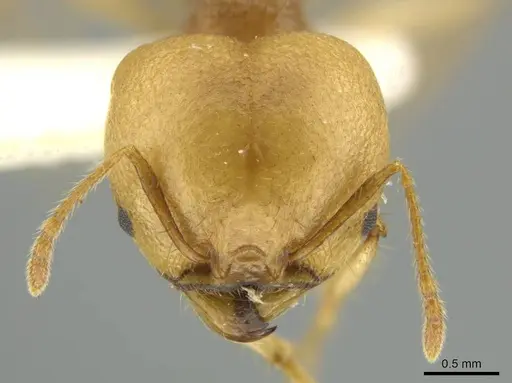
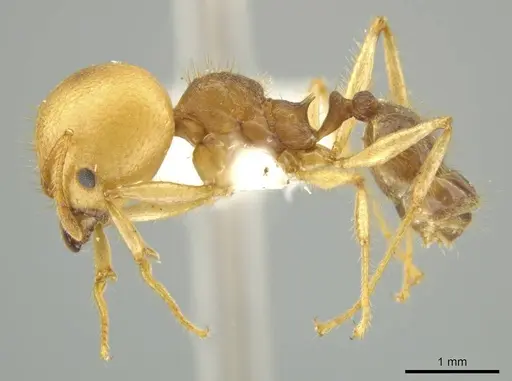
Pheidole pepo is a large, yellow ant from the tristis group, found in Colombia (Chocó region) and French Guiana . The species is notable for its major workers, which have an extremely swollen head with reduced clypeus and mandibles relative to the head size . In full-face view, the head outline is almost completely hairless, while in side view, the front half of the head is densely hairy and the back half is bare . Minor workers are more slender with a narrowed occiput and long, needle-like propodeal spines . They are uniformly dark yellow . The species has been collected in spiny bamboo (Guadua) forest at 800 m elevation and in tree-dwelling environments at 2 m above ground . This arboreal lifestyle is unusual among Pheidole, which are mostly ground-nesting.
Quick Summary
- Difficulty: Unknown, very limited data available
- Origin & Habitat: Tropical rainforests of Colombia (Chocó region) and French Guiana, found in spiny bamboo (Guadua) forest at 800 m elevation and on tree surfaces at about 2 m above ground [1][2][4]
- Colony Type: Unconfirmed, no field data available on colony structure. Most Pheidole species are monogyne, but this has not been verified for P. pepo.
- Size & Growth:
- Queen: No data available. Based on genus, estimated ~7-9 mm (inferred from Pheidole).
- Worker: Major: body length not directly measured, estimated ~6-8 mm (inferred from Pheidole genus). Minor: estimated ~3-4 mm (inferred). [3] provides head width measurements but not total body length.
- Colony: Unknown
- Growth: Unknown
- Development: Unknown, no data for this species (Development time is unknown, related tropical Pheidole typically take 6-8 weeks at warm temperatures, but this is speculative.)
- Antkeeping:
- Temperature: 24-28°C (75-82°F) is likely appropriate based on their tropical rainforest origin. Provide a heat gradient with a small heating cable on one side of the nest [4].
- Humidity: Maintain high humidity (75-85%). The species originates from very wet environments (Chocó region is one of the wettest on Earth). Keep the nest substrate consistently moist but not waterlogged [4].
- Diapause: No, as a tropical species, they do not require hibernation. Keep temperatures stable year-round [4].
- Nesting: Arboreal setup is recommended given their tree-dwelling behavior. A Y-tong (AAC) formicarium or a naturalistic vertical setup with cork bark works well. Provide multiple chambers. Ensure good ventilation to prevent mold [2][4].
- Behavior: Based on limited field data, Pheidole pepo is an arboreal species collected from tree surfaces [2]. Major workers have enlarged heads with powerful mandibles for defense and processing food, but their specific temperament is unknown. Minor workers are tiny, so escape prevention is essential. Apply Fluon or similar barrier to all openings. Aggression toward keepers is likely low unless the colony is disturbed [3].
- Common Issues: tiny minor workers require very fine mesh or Fluon barriers to prevent escape., unknown captive care requirements, most information is inferred from genus patterns., high humidity needs can lead to mold if ventilation is inadequate., extreme rarity in the hobby, almost never available commercially., wild-caught colonies may carry diseases or struggle to adapt to captivity.
Housing and Nest Setup
Pheidole pepo is arboreal in the wild, so your setup should reflect that. A Y-tong (AAC) formicarium works well because it provides dark, enclosed spaces and allows observation. Alternatively, a naturalistic setup with cork bark, bamboo sections, or vertical spaces can mimic their tree-surface habitat. Provide multiple connected chambers so the colony can organize brood in the most humid area and food in drier zones. Because minor workers are tiny (estimated 3-4 mm), apply Fluon or another barrier coating to all escape points. A water test tube connected to the nest provides drinking water and helps maintain humidity [2][4].
Feeding and Diet
Like most Pheidole species, P. pepo is omnivorous. Their diet in the wild includes seeds, small insects, and honeydew from aphids or scale insects. In captivity, offer protein sources like small mealworms, fruit flies, or cricket pieces twice weekly. Provide constant access to sugar, a drop of honey water or sugar water works well. Seeds are optional but may encourage major workers to use their specialized head morphology. Remove uneaten food after 48 hours to prevent mold. Fresh water must always be available [4].
Temperature and Humidity
As a tropical species from Colombia and French Guiana, P. pepo needs warm, humid conditions. Keep the nest area at 24-28°C (75-82°F). A small heating cable on one side of the nest creates a gradient so workers can choose their preferred temperature. Room temperature in most homes may be slightly cool, so watch colony activity, if workers cluster near the heat source, increase temperature slightly. Humidity should stay around 75-85%. The Chocó region is one of the wettest places on Earth, so these ants need consistent moisture. Mist the nest area regularly and keep the water tube full. Avoid placing the setup near air conditioning vents or drafty areas [1][2][4].
Colony Development and Growth
No direct observations of colony founding or development are available for P. pepo. Based on typical Pheidole biology, the queen likely seals herself in a small chamber to raise the first brood using stored reserves (claustral founding), but this has not been confirmed. Development time from egg to worker is unknown. Keepers should expect uncertainty and monitor the queen's condition carefully. If a colony is established, growth rate may be moderate, but specific timelines cannot be given [4].
Behavior and Defense
Pheidole pepo has the classic big-headed ant social structure: minor workers handle foraging and brood care, while major workers defend the nest and process food with their enlarged heads [3]. The species is arboreal, collected from tree surfaces at 2 m above ground [2]. Their defensive behavior is unknown, but as members of the Myrmicinae subfamily, they have a functional stinger, though it is unlikely to be medically significant to humans. Minor workers are small and can escape through tiny gaps, so barrier coatings are essential. Activity patterns are not documented, but many Pheidole are nocturnal or crepuscular [4].
Frequently Asked Questions
How long does it take for Pheidole pepo to get their first workers?
This is not documented for P. pepo. For related tropical Pheidole species, development typically takes 6-8 weeks at 25-28°C, but this is speculative. Expect uncertainty if you attempt to rear a colony.
What do Pheidole pepo ants eat?
They are omnivorous. Offer protein (small insects like mealworms, fruit flies, or cricket pieces) twice weekly, and provide constant access to sugar sources (honey water or sugar water). Fresh water must always be available.
Do Pheidole pepo ants need hibernation?
No. As a tropical species from Colombia and French Guiana, they do not require hibernation. Keep temperatures stable year-round at 24-28°C.
What size colony does Pheidole pepo reach?
Colony size is not documented for this species. Typical Pheidole colonies can reach several hundred to a few thousand workers, but there is no specific data for P. pepo.
Are Pheidole pepo ants aggressive?
Their aggression is unknown. Major workers likely defend the nest if threatened, but the species has not been observed in captivity. Based on general Pheidole behavior, they are probably not aggressive toward keepers unless the colony is disturbed.
Can I keep multiple Pheidole pepo queens together?
This is not recommended. Pheidole species are typically monogyne, but colony structure is unconfirmed for P. pepo. Combining unrelated queens could lead to fighting. If you have a queen, keep her alone until workers arrive.
What temperature is best for Pheidole pepo?
Keep them at 24-28°C (75-82°F). As tropical rainforest ants, they need warm, stable temperatures. A small heating cable on one side of the nest creates a gradient they can use to regulate themselves.
Why are my Pheidole pepo dying?
Common causes include: temperatures that are too cold (below 24°C), low humidity, mold from over-misting, or escape of tiny minor workers. Ensure stable warmth, humidity around 75-85%, and apply escape barriers. Wild-caught colonies may also struggle to adapt to captivity.
What kind of nest is best for Pheidole pepo?
A Y-tong (AAC) formicarium works well because it provides dark, enclosed spaces while allowing observation. Given their arboreal nature, ensure the setup has vertical space and multiple connected chambers. Keep the nest humid but with adequate ventilation to prevent mold [2][4].
Is Pheidole pepo available in the antkeeping hobby?
This species is very rarely available. It is known from only a few localities in Colombia and French Guiana, and there are no documented cultures in captivity. Most keepers would need to locate specialized suppliers or source wild individuals.
How do I set up a naturalistic terrarium for tree-dwelling ants like Pheidole pepo?
Use a vertical setup with cork bark, fake leaves, or bamboo sections as elevated nesting sites. Keep the substrate moist and mist regularly to maintain humidity. Place the water test tube where condensation can form, providing drinking water. Add small live plants if possible to help maintain humidity. Ensure all openings are sealed with Fluon since minor workers are tiny.
Report an Issue
The current care sheet is based fully on literature. See inconsistencies, or something that's incorrect? Please , it will be resolved after review from an admin. Contributing to the blogs tab also helps providing information, to make us be able to further improve the caresheets. Thank you for your support!
References

This caresheet is licensed under CC BY-SA 4.0 .
Community Blogs
CASENT0645846
View on AntWeb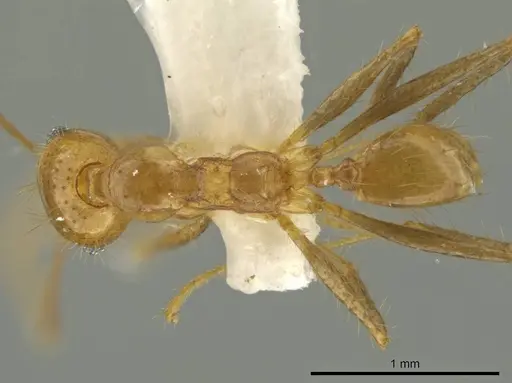
JTLC000016486
View on AntWeb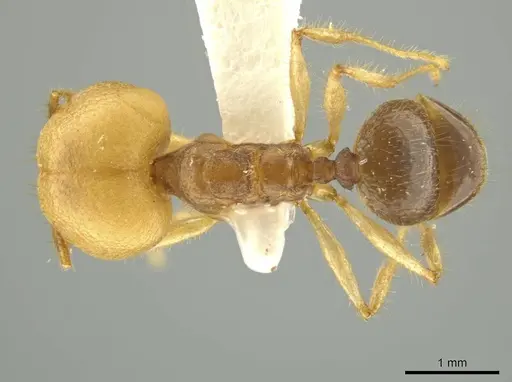
Literature
Loading distribution map...Loading products...