
Pheidole pelor
- Sci. Name
- Pheidole pelor
- Tribe
- Attini
- Subfamily
- Myrmicinae
- Author
- Wilson, 2003
- Distribution
- Found in 2 countries
Introduction
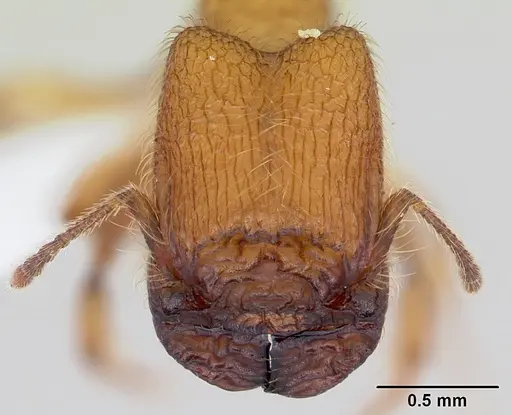
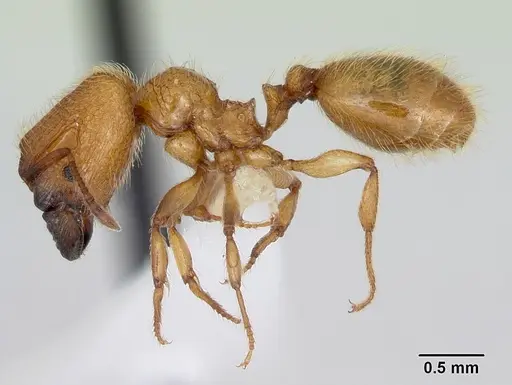
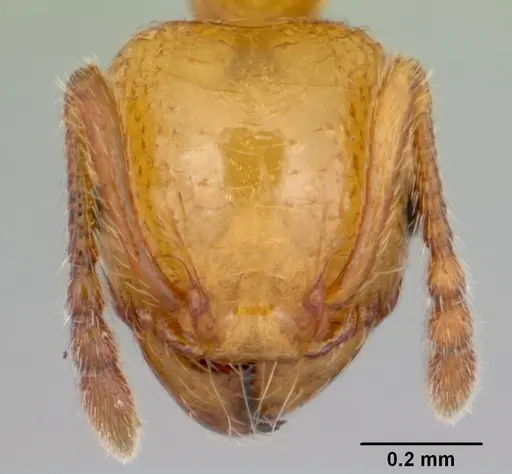
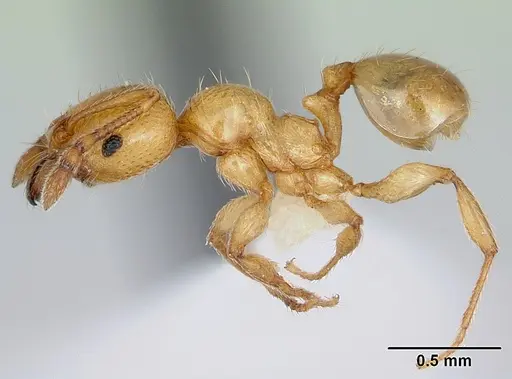
Pheidole pelor is a small North American ant with dramatic major workers that have a bizarre phragmotic head shape. The majors have a flattened, truncated front incorporating the clypeus and mandibles, giving them a monster-like appearance - hence the species name 'pelor', meaning 'monster' in Greek . Workers are yellow-colored, with majors darker than minors . This species is known only from central Texas, including Austin, Pedernales State Park, and Junction .
Quick Summary
- Difficulty: Hard
- Origin & Habitat: Central Texas, United States, in scrubland habitats [1].
- Colony Type: Colony structure is unconfirmed. As a Pheidole species, it may be single-queen, but this is not documented.
- Size & Growth:
- Queen: Size data unavailable, no total length measurements for queens.
- Worker: Size data unavailable, no total length measurements for workers.
- Colony: Unknown, Pheidole colonies can reach several hundred workers, but specific data for P. pelor is unavailable.
- Growth: Unknown
- Development: Unknown, based on typical Pheidole patterns, estimated 6-10 weeks at optimal temperature, but unconfirmed. (Development is temperature-dependent, warmer conditions may accelerate growth.)
- Antkeeping:
- Temperature: Based on central Texas climate, keep between 20-30°C. Provide a thermal gradient if possible [1].
- Humidity: Keep nest substrate moderately moist but not wet, allowing some drying between waterings [1].
- Diapause: Unknown, central Texas has mild winters, so reduced activity may occur rather than true hibernation.
- Nesting: In nature, they likely nest in soil under stones. In captivity, use test tubes for founding, then transition to formicaria with soil or plaster chambers.
- Behavior: Behavior is unstudied. Based on Pheidole patterns, majors may defend with their phragmotic heads, and minors handle foraging. Escape risk is moderate due to small size, use Fluon for prevention. Temperament is likely defensive but not aggressive toward humans.
- Common Issues: no biological data exists, this is an unstudied species with no documented care protocol., colonies may grow slowly due to lack of optimal conditions., wild-caught colonies may have parasites or diseases., the unusual head morphology may affect nest interactions, monitor for issues., this species is rarely available in the hobby.
Appearance and Identification
Pheidole pelor is distinctive due to its bizarre head morphology. The major workers have a phragmotic head, the front is flattened and truncated, incorporating the clypeus and mandibles into a single surface [1]. The head features rugoreticulate sculpturing on the posterior dorsum with parallel longitudinal carinae extending to the frontal lobes [1]. Color is uniformly yellow, majors are dark yellow, minors are medium yellow [1]. This species belongs to the lamia group, which includes Pheidole species with unusual head structures, and can be distinguished from related species by its specific sculpturing pattern [1].
Distribution and Habitat
Pheidole pelor is known only from central Texas, making it a limited-range endemic. It has been collected at Brackenridge Field Laboratory in Austin, Pedernales State Park in Blanco County, and Junction in Kimble County [1]. The habitat is typical central Texas scrubland with mixed grass and shrubs, where ants nest in soil under stones [1].
What We Don't Know
Nothing is known about the biology of Pheidole pelor beyond the worker morphology [1]. There are no published studies on colony structure, founding behavior, diet, development, or natural history. Care must be based on general Pheidole patterns, but this is experimental.
Keeping Pheidole pelor in Captivity
Since no documented care exists, adapt from general Pheidole husbandry. For founding, use a test tube setup. Once the colony has workers, transition to a formicarium with soil or plaster chambers. Provide a foraging area with seeds and protein sources. Keep temperature at 20-30°C with a gradient. Escape prevention is standard, use Fluon on container edges. [1]
Feeding and Diet
Pheidole species are typically granivorous, eating seeds supplemented with protein. Offer small seeds like millet and protein sources like mealworms. Remove uneaten food to prevent mold.
Potential Defensive Role of the Major's Head
The major's phragmotic head may serve a defensive function, such as blocking nest entrances. This behavior is documented in some Pheidole species but unconfirmed for P. pelor. Ensure nest entrances are appropriately sized.
Frequently Asked Questions
How do I care for Pheidole pelor ants?
Care is based on general Pheidole husbandry since no species-specific data exists. Keep them at 20-30°C with moderate humidity. Offer seeds as a staple with occasional protein. Use test tubes for founding, then transition to a formicarium. This is an experimental species, document your observations.
What do Pheidole pelor ants eat?
Based on typical Pheidole diet, they likely eat seeds plus insects for protein. Offer small seeds like millet and protein sources like mealworms.
How big do Pheidole pelor colonies get?
Colony size is unconfirmed. Typical Pheidole colonies reach several hundred workers, but specific data for P. pelor is unavailable.
Where is Pheidole pelor found?
This species is known only from central Texas, specifically around Austin, Pedernales State Park, and Junction [1].
What makes Pheidole pelor unusual?
The major workers have a bizarre phragmotic head, flattened and truncated at the front, with the clypeus and mandibles incorporated into this shape [1]. The species name 'pelor' means 'monster' in Greek, referring to this appearance.
Are Pheidole pelor good for beginners?
No, this species is not recommended for beginners because no biological data exists and care is experimental.
How long does it take for Pheidole pelor to develop from egg to worker?
Development timeline is unconfirmed. Based on typical Pheidole patterns, estimate 6-10 weeks at optimal temperature, but this is a rough guess.
Do Pheidole pelor need hibernation?
Diapause requirements are unknown. Central Texas has mild winters, so reduced activity may occur rather than true hibernation.
Can I keep multiple Pheidole pelor queens together?
Colony structure is unconfirmed. Most Pheidole are single-queen species, but this has not been studied for P. pelor.
What is the Pheidole lamia group?
The lamia group is a species group within Pheidole characterized by members with unusual head morphology, such as phragmotic heads [1]. P. pelor belongs to this group along with P. lamia, P. colobopsis, and P. truncula.
Where can I get Pheidole pelor?
This species is rarely collected or kept due to its limited range in central Texas. You may need to locate colonies in the wild with appropriate permissions.
Report an Issue
The current care sheet is based fully on literature. See inconsistencies, or something that's incorrect? Please , it will be resolved after review from an admin. Contributing to the blogs tab also helps providing information, to make us be able to further improve the caresheets. Thank you for your support!
References

This caresheet is licensed under CC BY-SA 4.0 .
Community Blogs
CASENT0103409
View on AntWeb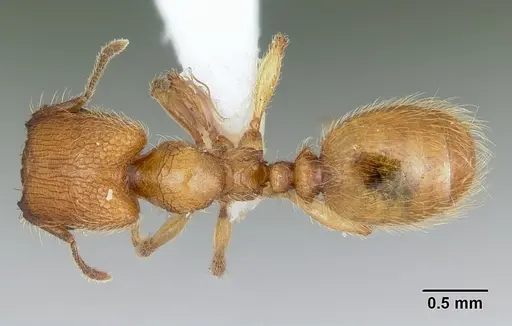
CASENT0103410
View on AntWeb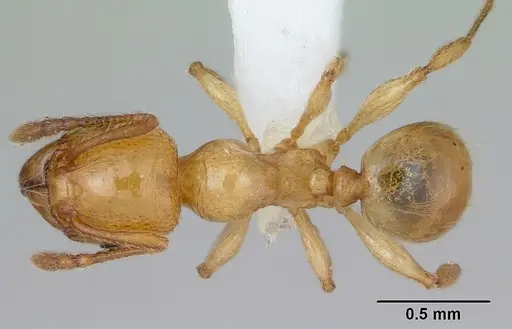
Literature
Loading distribution map...Loading products...