
Pheidole peckorum
- Sci. Name
- Pheidole peckorum
- Tribe
- Attini
- Subfamily
- Myrmicinae
- Author
- Wilson, 2003
- Distribution
- Found in 1 countries
Introduction
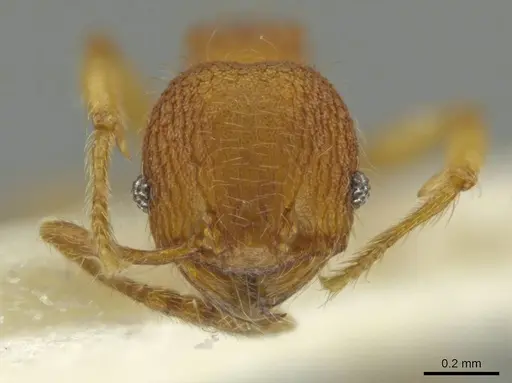
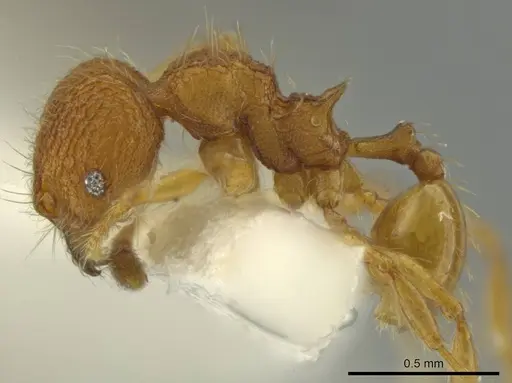
Pheidole peckorum is a small Neotropical ant species native to Ecuador, known only from the Pastaza region near Puyo at approximately 1000 meters elevation . It is a member of the scrobifera group and was described in 2003 . Major workers have a distinctive dense covering of very short erect hairs on the head, giving a comb-like appearance, while minor workers are smaller . The species is the first South American member of the scrobifera group . Biology in the wild is unknown, including colony structure, founding behavior, or dietary needs.
Quick Summary
- Difficulty: Unknown
- Origin & Habitat: Ecuador, Pastaza Province, 22km southwest of Puyo at approximately 1000m elevation in the Neotropical region [1][2]
- Colony Type: Unconfirmed, no direct studies on colony structure
- Size & Growth:
- Queen: Size data unavailable, no total length measurements provided
- Worker: Size data unavailable, measurements in description are head widths, not body size
- Colony: Unknown, no data on colony size
- Growth: Unknown, no data on growth rate
- Development: Unknown, no data on development time (No direct data exists for this species)
- Antkeeping:
- Temperature: Based on tropical Ecuador origin, keep warm around 22-28°C with a gradient [1]
- Humidity: Keep nest substrate consistently moist but not waterlogged, typical of tropical ants
- Diapause: Unlikely, tropical species probably do not require winter rest
- Nesting: No specific data, use standard test tube or moist soil nests for founding colonies
- Behavior: Not directly studied. Based on genus patterns, Pheidole species are generally peaceful with minor workers handling foraging and majors for defense. Escape risk is moderate due to small minor worker size, use standard barriers.
- Common Issues: colony may fail if temperature or humidity conditions are not suitable for this specific species, slow growth and lack of visible progress may frustrate keepers expecting fast development, wild-caught colonies may have unknown parasites or diseases, test tube flooding risk if water reservoir is too large
Species Identification and Background
Pheidole peckorum is a recently described species known only from a single collection in Ecuador's Pastaza Province [1][2]. It belongs to the scrobifera group, characterized by deep antennal scrobes in major workers [1]. The species is distinctive for the dense covering of perfectly erect, uniformly short hairs on major worker heads, resembling a comb [1]. It was named to honor collectors Stewart B. Peck and Jarmila Kukalová-Peck [2].
Housing and Nest Setup
Use standard Pheidole housing approaches. A test tube setup works well for founding colonies, fill with water, plug with cotton, and place the queen in the humid chamber. For established colonies, a small nest with moisture chamber works well. Keep the nest humid but not waterlogged. Given the small minor worker size, ensure connections are large enough for movement. Provide a foraging area with protein and sugar sources.
Feeding and Diet
No specific dietary data exists. Pheidole ants are typically omnivorous with emphasis on protein. Offer protein-rich foods like small insects and sugar sources like honey water. Provide varied diet and observe what the colony accepts. Replace food regularly to prevent mold.
Temperature and Environmental Conditions
Being from tropical Ecuador, this species likely prefers warm, humid conditions. Keep the nest area in the range of 22-28°C with a slight gradient. Humidity should be moderate to high, maintained by a water reservoir or moisture chamber. Year-round warm conditions without seasonal drops are suitable [1].
Colony Development and Growth
Colony development has not been documented. Based on typical Pheidole patterns, expect claustral founding where the queen raises the first brood using stored fat reserves. Development from egg to worker likely takes several weeks at optimal temperatures, but this is an estimate. Colony growth may be moderate, reaching several hundred workers over time.
Behavior and Temperament
No specific behavioral observations exist. Pheidole species have dimorphic workers, minors handle foraging and brood care, majors defend and process food. The species is not typically aggressive toward keepers. Escape prevention should be adequate but not extreme, using standard barriers like Fluon on container edges.
Frequently Asked Questions
How long does it take for Pheidole peckorum to produce first workers?
This has not been directly documented. Based on typical Pheidole development patterns at tropical temperatures, expect approximately 6-10 weeks from egg to first worker, but this is an estimate [1].
What do Pheidole peckorum ants eat?
No specific dietary data exists. Offer small protein sources like fruit flies and sugar sources like honey water, and observe what the colony accepts.
Do Pheidole peckorum ants need hibernation?
Unlikely, being from tropical Ecuador, this species probably does not require a winter rest period. Maintain warm, stable temperatures year-round.
Are Pheidole peckorum good for beginners?
This species is not recommended for beginners due to the complete lack of biological data. Keepers should have experience with other Pheidole species first.
How big do Pheidole peckorum colonies get?
Colony size is unknown for this species. No data on maximum size exists.
What temperature should I keep Pheidole peckorum at?
Based on the species' Ecuadorian origin, aim for 22-28°C with a slight gradient [1].
Do Pheidole peckorum major workers have special functions?
In Pheidole species, major workers typically serve as defenders and food processors. The dense hairs on this species' majors may have a defensive function, but this is not confirmed.
Can I keep multiple queens together?
This has not been studied for this species. Most Pheidole are single-queen colonies, and combining unrelated queens is not recommended without evidence.
What makes Pheidole peckorum unique?
This species is unique as the first South American member of the scrobifera group. Major workers have an unusual dense covering of erect hairs on the head, resembling a comb [1].
Where is Pheidole peckorum found in the wild?
Only known from the type locality in Ecuador's Pastaza Province, approximately 22km southwest of Puyo at about 1000m elevation [1][2].
Report an Issue
The current care sheet is based fully on literature. See inconsistencies, or something that's incorrect? Please , it will be resolved after review from an admin. Contributing to the blogs tab also helps providing information, to make us be able to further improve the caresheets. Thank you for your support!
References

This caresheet is licensed under CC BY-SA 4.0 .
Community Blogs
JTLC000016483
View on AntWeb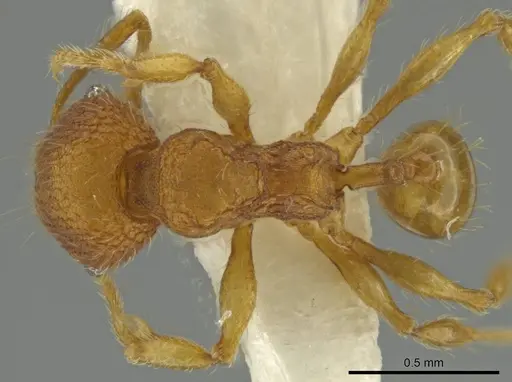
Literature
Loading distribution map...Loading products...