
Pheidole olsoni
- Sci. Name
- Pheidole olsoni
- Tribe
- Attini
- Subfamily
- Myrmicinae
- Author
- Wilson, 2003
- Distribution
- Found in 2 countries
Introduction
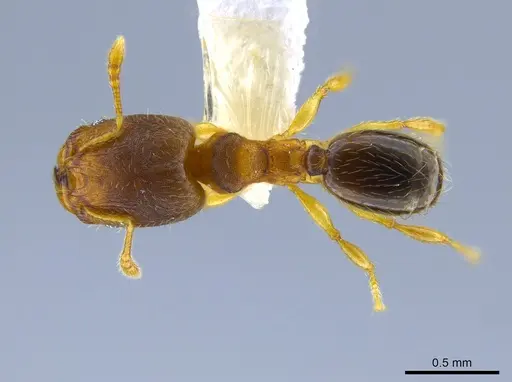
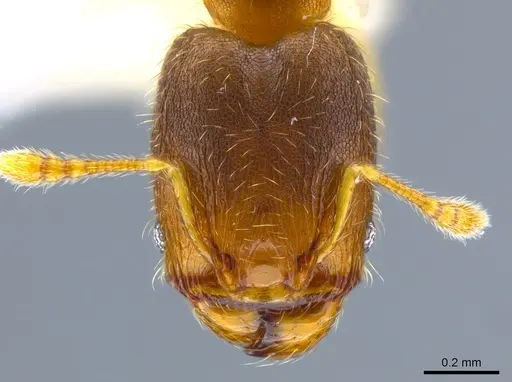
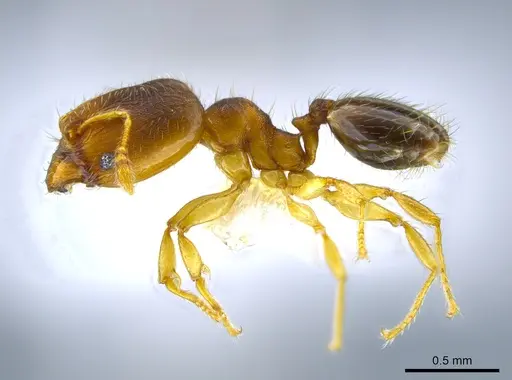
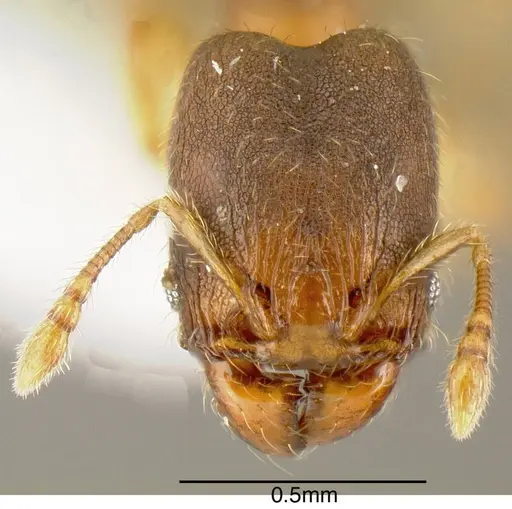
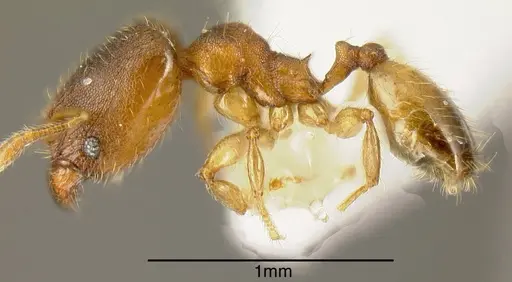
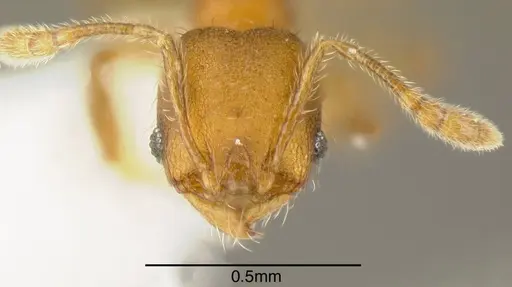
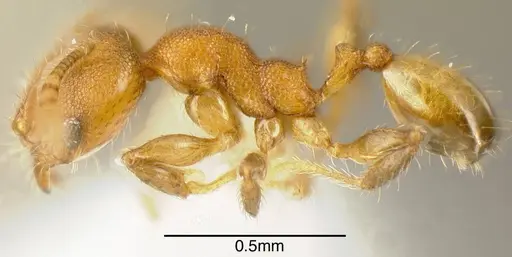
Pheidole olsoni is a dimorphic ant species with major and minor workers, reported from Costa Rica and Guatemala . Worker sizes are approximately 2-6 mm, inferred from the Pheidole genus, and they inhabit tropical forest environments. The species exhibits distinct worker castes, with majors having large heads for seed processing and defense.
Quick Summary
- Difficulty: Easy
- Origin & Habitat: Costa Rica and Guatemala in tropical forest environments [1]
- Colony Type: Likely monogyne (single queen), based on Pheidole genus patterns
- Size & Growth:
- Queen: Size data unavailable, no total length measurements in research. Inferred from Pheidole genus as approximately 6-8 mm.
- Worker: Minor workers: approximately 2-3 mm, major workers: approximately 4-6 mm, inferred from Pheidole genus.
- Colony: Up to several thousand workers, inferred from Pheidole genus.
- Growth: Moderate, inferred from genus patterns.
- Development: Estimated 6-8 weeks at tropical temperatures, inferred from genus patterns. (Development time may vary with temperature.)
- Antkeeping:
- Temperature: Keep at 24-28°C, based on tropical origin [1]. Provide a temperature gradient.
- Humidity: Keep substrate consistently moist but not waterlogged, inferred from tropical habitat.
- Diapause: No, as tropical species do not require hibernation, inferred from range [1].
- Nesting: Prefers dark, humid nests, use test tube setups for founding, then Y-tong or plaster nests, inferred from genus patterns.
- Behavior: Generally peaceful and not aggressive. Major workers use large heads for defense but rarely sting. Escape risk is moderate, use standard prevention measures. Based on Pheidole genus patterns.
- Common Issues: colonies can stall if kept too cool, maintain warm temperatures year-round, overfeeding can lead to mold, remove uneaten food promptly, tropical species are sensitive to temperature drops, avoid cold drafts, large colonies may outgrow small nests quickly, upgrade proactively
Housing and Nest Setup
For founding colonies, use a standard test tube setup with a water reservoir. Queens are likely claustral, sealing themselves in to raise first brood. Once the colony reaches a moderate size, transition to a Y-tong or plaster nest. Provide dark, humid nesting areas to match their natural preferences.
Feeding and Diet
Pheidole olsoni is omnivorous, like most Pheidole species. Offer a mix of small insects, seeds, and sugar water or honey. Minor workers handle foraging while majors process harder foods like seeds. Remove uneaten food within 24 hours to prevent mold.
Temperature and Seasonal Care
As tropical ants from Costa Rica and Guatemala [1], keep temperatures between 24-28°C. Provide a temperature gradient using a heating cable on one side. Do not hibernate this species, they require warm conditions year-round.
Colony Development
The colony starts with a queen laying eggs after mating. She is likely claustral, living off stored reserves while raising the first brood. First workers are typically smaller minors. As the colony grows, major workers appear for seed processing and defense. Growth is steady over months to years.
Behavior and Temperament
This species is generally calm and not aggressive toward keepers. Major workers have large heads for defense but rarely sting humans. Minor workers handle most foraging and brood care. Escape risk is moderate, use Fluon barriers or similar prevention.
Frequently Asked Questions
How long does it take for Pheidole olsoni to produce first workers?
Expect first workers in about 6-8 weeks at optimal temperatures (24-28°C), inferred from Pheidole genus patterns.
What do I feed Pheidole olsoni?
They are omnivorous. Offer small insects, seeds, and sugar water or honey. Minor workers forage while majors process food.
Can I keep multiple Pheidole olsoni queens together?
This species is likely monogyne, so combining unrelated queens is not recommended as they may fight.
Do Pheidole olsoni need hibernation?
No. As tropical ants from Costa Rica and Guatemala [1], they do not require hibernation and should be kept warm year-round.
Are Pheidole olsoni good for beginners?
Yes, they are considered easy to keep. They are forgiving of minor care mistakes and have straightforward requirements.
When should I move Pheidole olsoni to a formicarium?
Move them once the colony reaches a moderate size in a test tube. Use a Y-tong or plaster nest that maintains humidity and darkness.
How big do Pheidole olsoni colonies get?
Mature colonies can reach up to several thousand workers, inferred from Pheidole genus patterns.
Why are my Pheidole olsoni dying?
Common causes include temperatures below 20°C, too dry conditions, or mold from overfeeding. Ensure warm temperatures, adequate humidity, and remove uneaten food promptly.
What makes Pheidole olsoni major workers special?
Major workers have notably large heads, which is the defining feature of the Pheidole genus. They use these heads to process seeds and defend the colony.
Report an Issue
The current care sheet is based fully on literature. See inconsistencies, or something that's incorrect? Please , it will be resolved after review from an admin. Contributing to the blogs tab also helps providing information, to make us be able to further improve the caresheets. Thank you for your support!
References

This caresheet is licensed under CC BY-SA 4.0 .
Community Blogs
Literature
Loading distribution map...Loading products...